
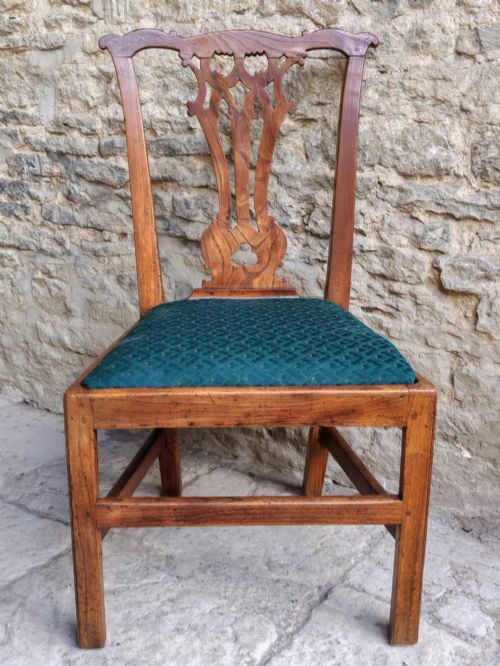
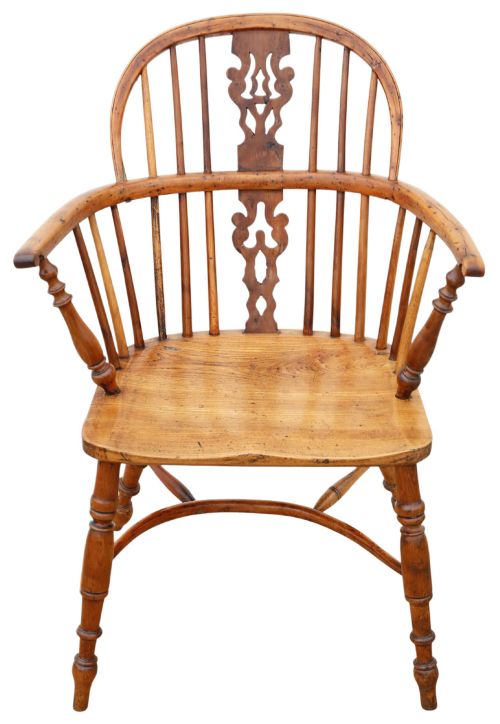
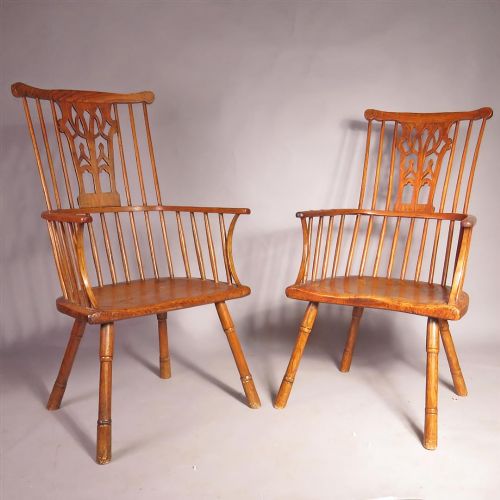
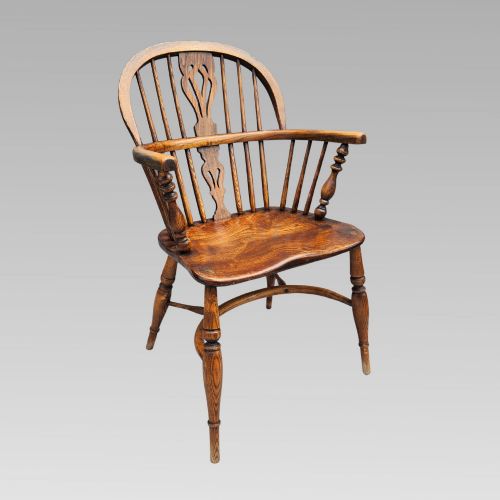
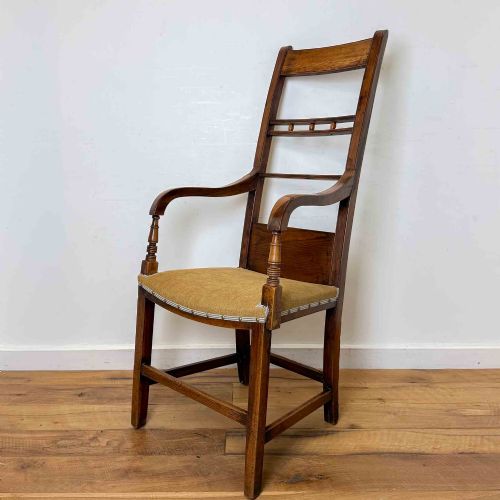


Georgian Elm Accent Chair
A georgian elm accent chair brings tactile country character into a room through honest vernacular timbers and time-worn grain.
Georgian Elm Accent Chair
When you search for a georgian elm accent chair, you encounter sturdy vernacular seating shaped by English country makers during the eighteenth and nineteenth centuries.
Armchairs and side chairs alike display the distinctive warm figuring and rich patination characteristic of period elm.
How they were made
Cabinet makers and rural bodgers utilised solid elm for seats, combining it with ash, yew, beech, and oak for spindles, legs, and bentwood bows.
Traditional construction relied on steam-bending for crest rails and comb backs, alongside pegged mortise and tenon joints to secure the framework.
Listings feature eighteenth and nineteenth century periods, incorporating styles from English Country vernacular to George III and Regency designs.
What varies in quality
The distinction between ordinary and exceptional examples lies in the integrity of the timber, the fluidity of the turned spindles, and the depth of the saddle seat carving.
A harmonious balance of contrasting woods, such as yew wood arms paired with an elm seat, elevates the visual presence of a piece.
The Georgian Elm Accent Chair Glossary
- Windsor chair
- A wooden chair featuring a solid carved wooden seat into which the legs and back spindles are directly joined.
- Comb back
- A Windsor chair variation where the top rail resembles the spine of a comb, holding vertical spindles rising from a lower arm rail.
- Crinoline stretcher
- A bent metal or wooden horseshoe-shaped stretcher connecting the legs of a chair to provide extra rigidity.
- Carver elbow-chair
- An armchair traditionally designed with low arms to allow freedom of movement for domestic tasks.
Georgian Elm Accent Chair: Frequently Asked Questions
What is an elm accent chair?
An elm accent chair is a traditional wooden seat produced in British country workshops, prized for the rich grain and durability of the native timber.
These pieces range from low-back models to high-back Windsors designed for domestic utility and comfort.
How were Windsor chairs constructed?
Makers constructed Windsor chairs by boring tapered holes directly into a thick, solid wooden seat slab to receive the legs and back spindles.
Secondary timbers like ash and yew provided the necessary tensile strength for bentwood bows and slender spindles.
How do I style an antique chair?
An antique elm chair integrates naturally into contemporary or traditional interiors by introducing warmth, texture, and historical contrast.
Place the chair in a hallway, bedroom, or living space as a functional focal point.