




Georgian Dumb Waiter Table
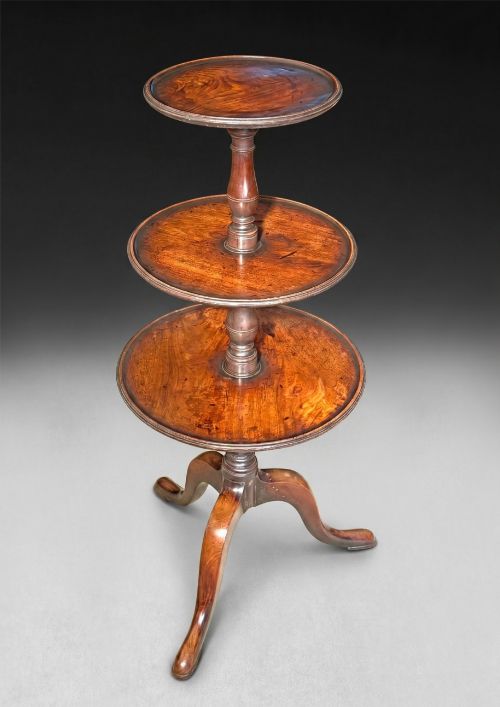
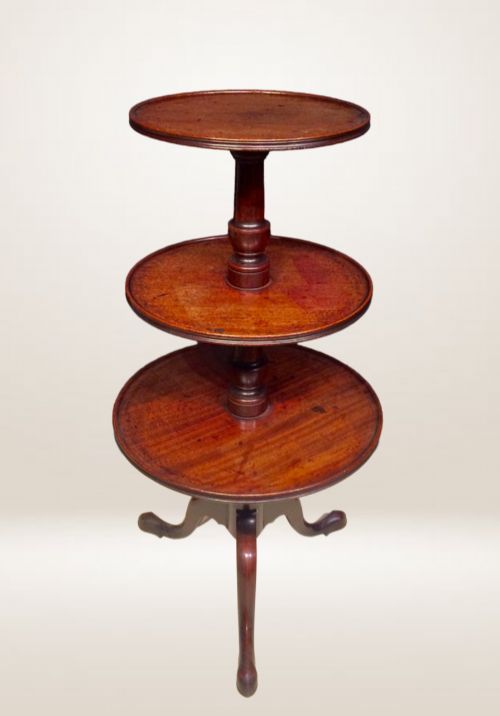
A georgian dumb waiter table is a tiered serving stand designed to hold food or drinks near the dining table without servants present.
Georgian Dumb Waiter Table
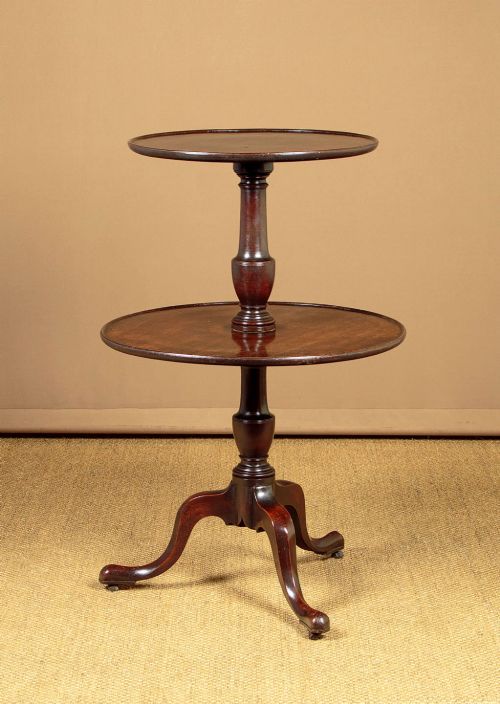
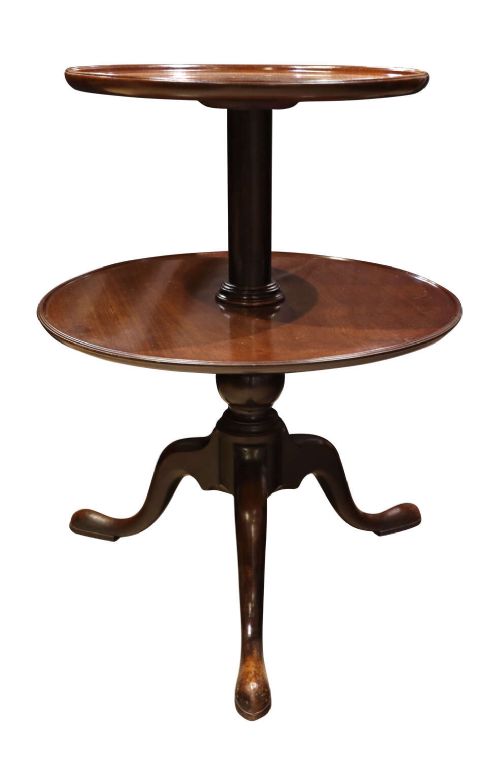
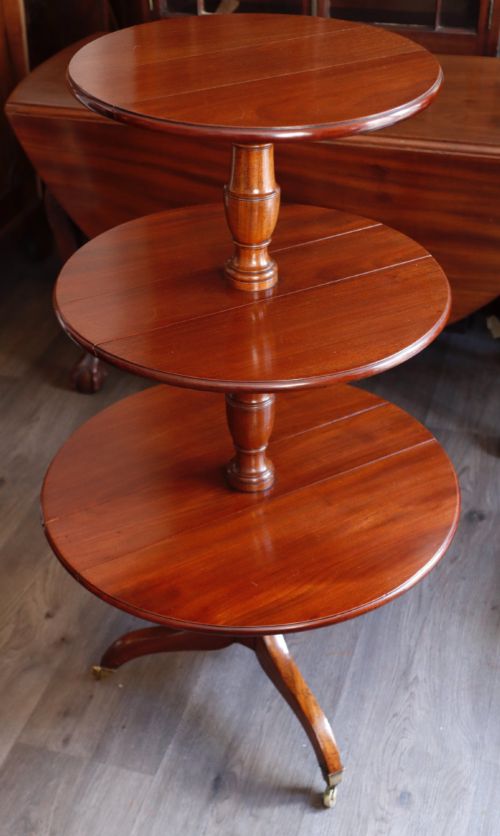
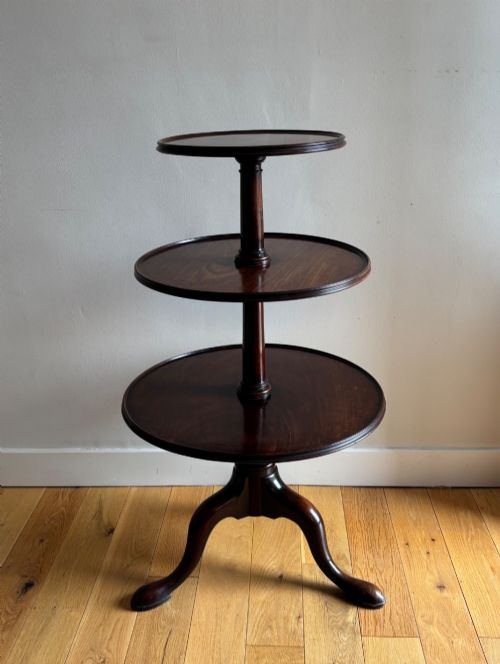
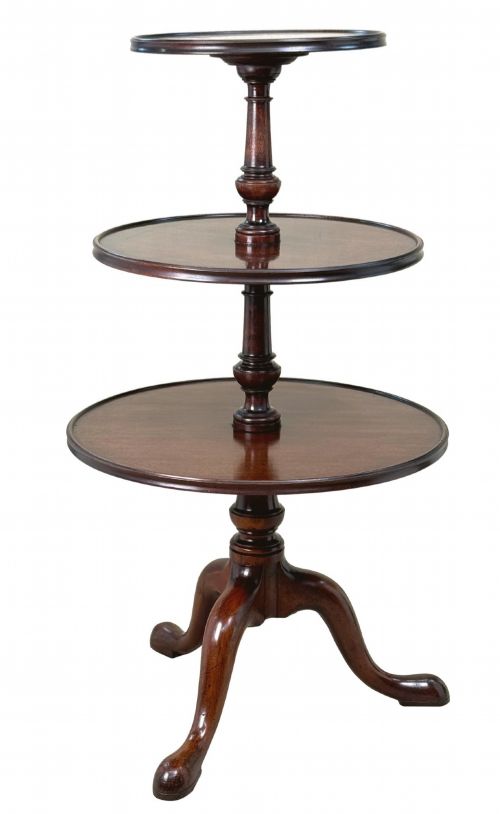
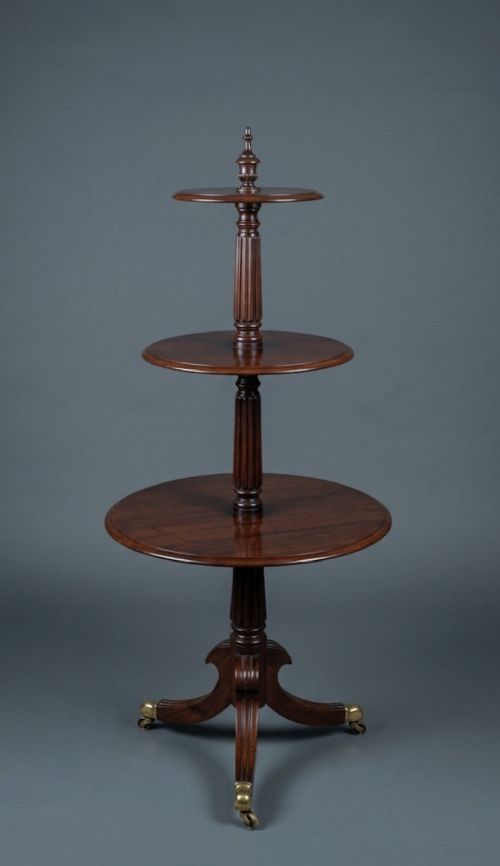
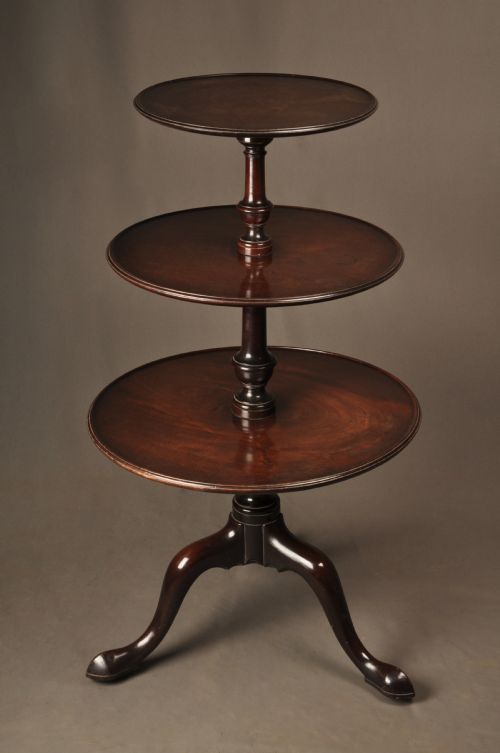
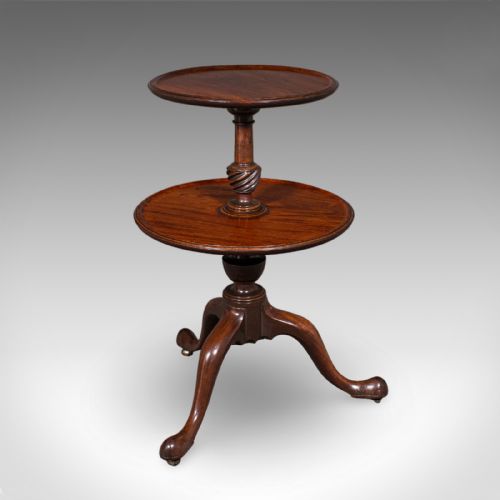
When you search for a georgian dumb waiter table, you encounter revolving tiered tables built for dining rooms. The pieces here predominantly date from the eighteenth century and the Regency period, taking the form of circular trays arranged in two or three progressively smaller tiers.
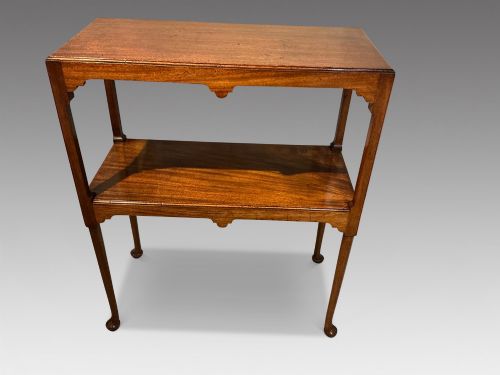
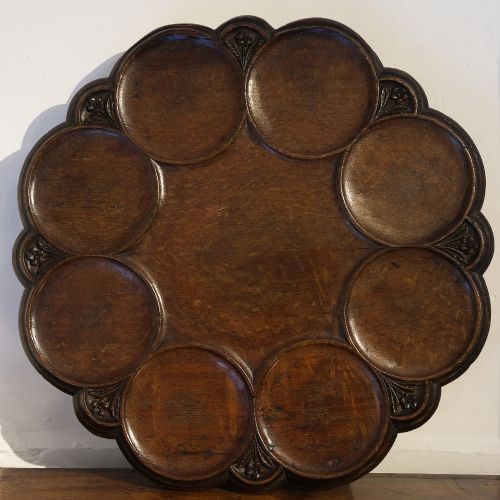
Most examples stand on a central turned column supported by tripod legs, though rectangular drop-leaf variants and occasional oak or pollard oak versions also appear. These tiered tables function as compact serving stands or occasional tables in modern interiors.
How they were made
Cabinet makers constructed these serving stands using solid mahogany, Cuban mahogany, and occasionally oak or pollard oak. Timber selection determined both the weight and stability of the central pedestal design.
Brass fittings frequently secured the revolving mechanisms and supported the tiered trays on their central columns. Joinery techniques focused on balancing the heavy graduated tiers atop slender tripod legs.
The inventory spans the eighteenth century, the Regency period, and the Victorian era, alongside a small group of later twentieth-century pieces.
What varies in quality
The choice of timber creates a distinct separation in the tier construction, with figured Cuban mahogany and rich fiddleback veneers marking out the finer examples. Plain oak or later nineteenth-century adaptations generally sit lower in the scale.
Turning and carving on the central pedestal and tripod base separate standard workshop output from exceptional cabinet work. The smoothness of the revolving action and the proportion of the graduated tiers also define the grade of the piece.
Gillows
The Georgian Dumb Waiter Table Glossary
- Dumb waiter
- A tiered freestanding piece of furniture used to hold dishes and glasses near a dining table. These stands typically feature graduated circular trays on a central column.
- Tripod base
- A three-legged support system providing stability for the central pedestal of the table. This configuration prevents wobbling on uneven dining room floors.
- Cuban mahogany
- A dense, dark timber harvested in the Caribbean and prized for cabinet making during the eighteenth century. Its rich grain distinguishes superior georgian furniture.
- Pollard oak
- Timber taken from trees that were pollarded, creating a dense and highly figured wood grain. This decorative material appears on select nineteenth-century serving stands.
- Graduated tiers
- A series of circular trays diminishing in size from bottom to top. This arrangement allows multiple dishes to sit on a single compact pedestal.
Georgian Dumb Waiter Table: Frequently Asked Questions
What is a georgian dumb waiter table used for?
These tiered stands served meals in dining rooms by holding plates, bottles, and cutlery without requiring a servant in the room.
Today, they function as display stands or side tables in living spaces and hallways.
How many tiers do these tables have?
Most examples feature two or three circular wooden trays arranged vertically on a single central pillar.
The graduated design places the largest tray at the bottom and the smallest at the top.
Do the trays revolve?
Many eighteenth-century and Regency variants incorporate a revolving mechanism that allows diners to access items easily from a seated position.
Fixed-tier constructions also exist within the broader category of tiered serving tables.
What woods are used for these tables?
Mahogany is the primary timber found in these listings, including figured varieties and Cuban mahogany.
Oak and pollard oak appear less frequently in pieces dating from the nineteenth century.