
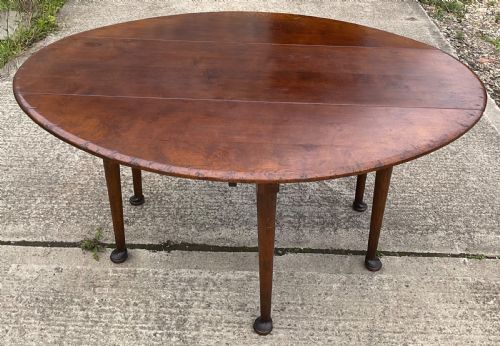


Georgian Dropleaf Dining Table
A georgian dropleaf dining table offers versatile dining space with folding flaps that drop down when not in use.
Georgian Dropleaf Dining Table
A georgian dropleaf dining table provides flexible seating arrangements through hinged flaps supported by swing legs or gates. These tables adapt easily from compact console positions to large surfaces capable of seating six or eight people.
Mahogany and oak dominate the available selection, appearing in both oval and rectangular drop-leaf formats. Examples span periods from the mid-eighteenth century through to later reproductions.
The inventory includes specialised forms such as pembroke tables alongside larger dining pieces. Many specimens retain original patination developed over centuries of domestic use.
Materials and construction methods
Cabinet makers utilised solid mahogany and oak for structural frames and tabletops, occasionally incorporating Cuban mahogany variants. Timber selection dictated the weight and stability of the folding leaves.
Brass hinges and iron fittings secure the pivoting drop leaves to the fixed centre frame. Fine examples employ wood inlay and veneer cross-banding to decorate the borders of the top.
The listings combine mahogany and oak examples spanning the eighteenth and nineteenth centuries.
Factors influencing quality
Timber selection and grain figure separate standard utility items from superior examples. Dense mahogany with rich colour commands greater attention than plain secondary woods.
Construction integrity relies on the tightness of joints where the swing legs meet the main frame. Solid timber thickness in the drop-leaf flaps ensures long-term resistance to warping.
The Georgian Dropleaf Dining Table Glossary
- Gateleg table
- A table with hinged legs that swing outward to support the dropped leaves. This design provides robust support for heavy timber tops.
- Pembroke table
- A small rectangular or oval table with two hinged drop leaves on opposing sides. These pieces often include a single drawer.
- Pad foot
- A rounded foot shape resting flat on the floor, frequently seen on cabriole legs of the period. This form spreads the weight of the table evenly.
- Cross-banding
- A decorative border of veneer laid around the perimeter of a tabletop with the grain running perpendicular to the centre. This technique frames the primary timber.
Georgian Dropleaf Dining Table: Frequently Asked Questions
How many people does a georgian dropleaf dining table seat?
Larger versions accommodate six to eight diners comfortably when fully opened. Smaller formats serve intimate gatherings or function as side tables.
The folding mechanism allows owners to drop one or both leaves to save floor space between meals.
What wood was used for georgian dropleaf dining tables?
Mahogany and oak form the primary materials found across the inventory. Cuban mahogany appears in earlier pieces, offering a dense grain and deep colour.
Oak examples often present an English country aesthetic with robust structural frames.
How do I identify a georgian drop leaf table?
Examine the hinge mechanisms, timber types, and leg styles such as pad feet or gateleg supports. Period pieces display traditional joinery methods appropriate for the eighteenth century.
Cross-banding and wood inlay provide further clues to stylistic dating.
Can I use a drop leaf table every day?
These tables functioned as primary dining furniture for centuries and suit daily domestic use. The folding leaves allow quick adjustments for different household needs.
Proper care for timber surfaces preserves the finish against daily wear.