
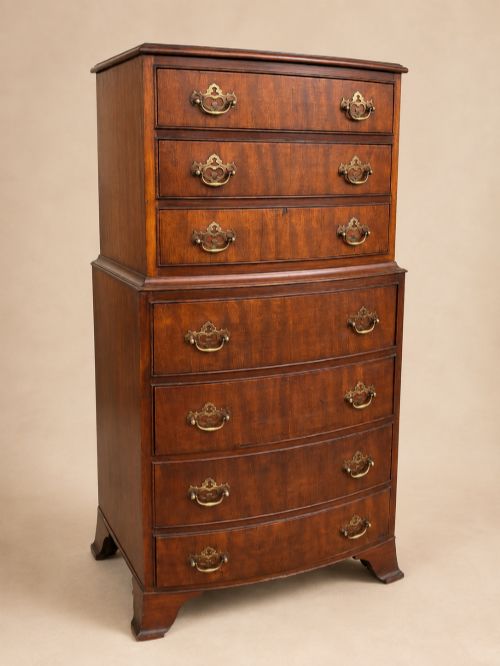
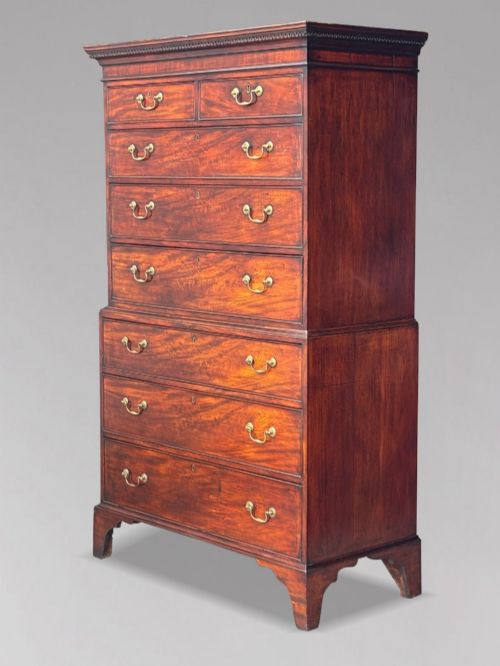
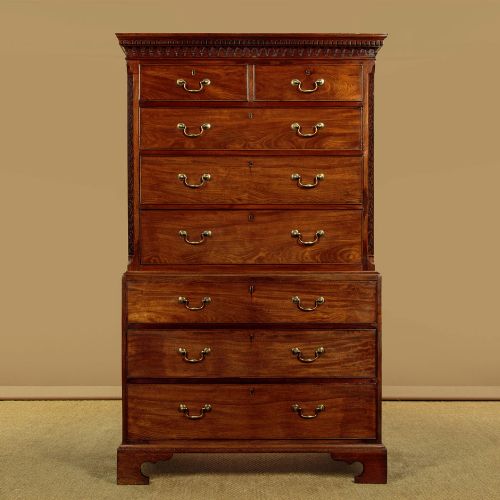
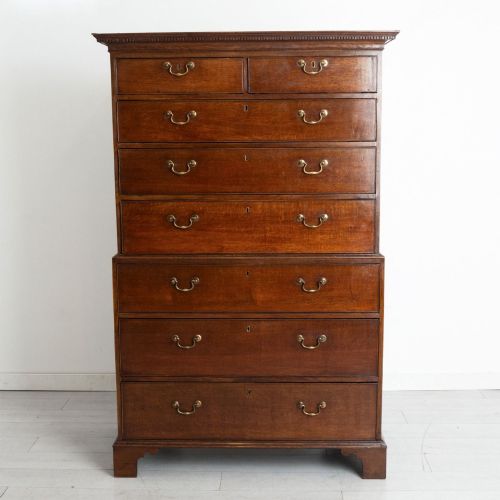
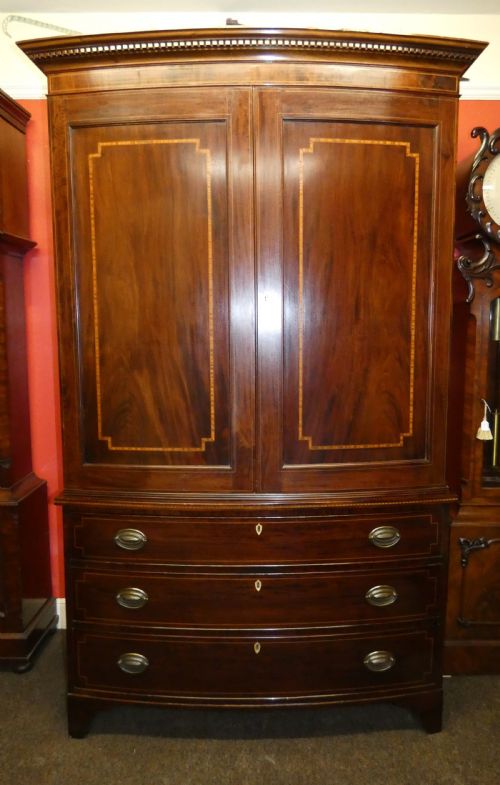
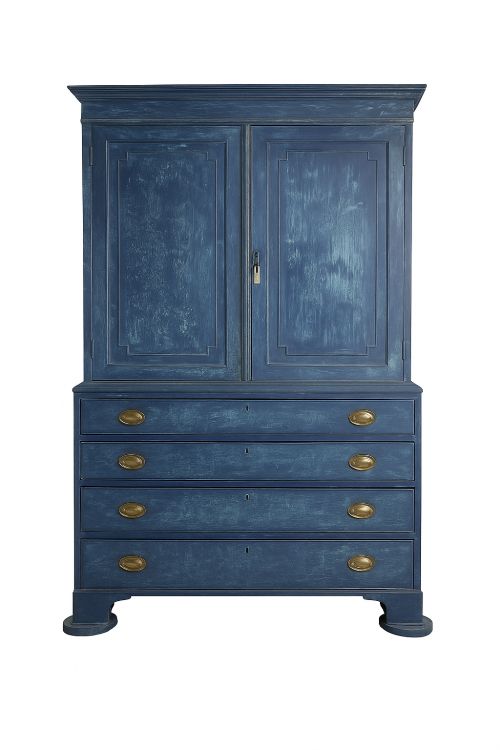
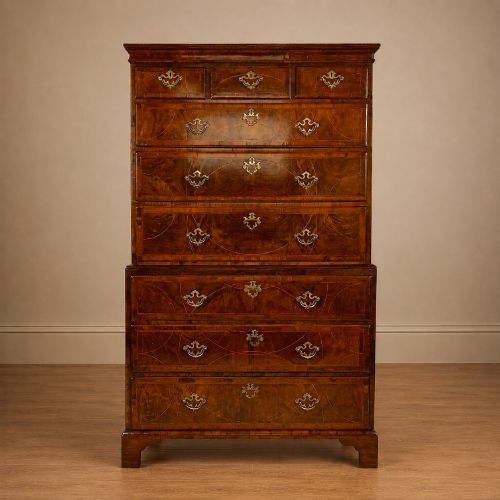
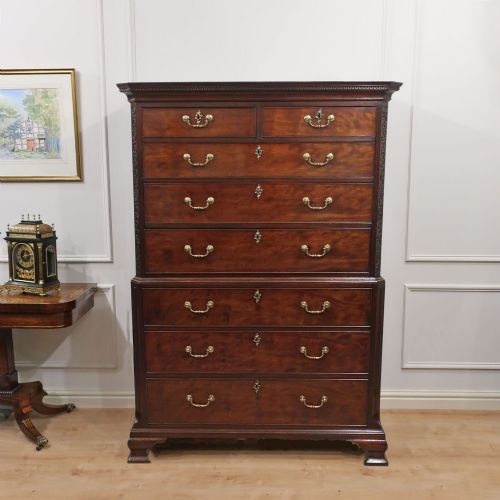
Georgian Double Tallboy
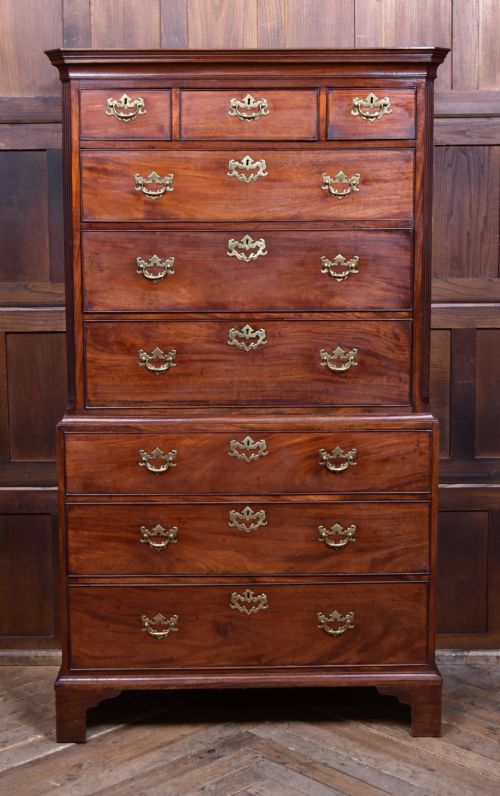
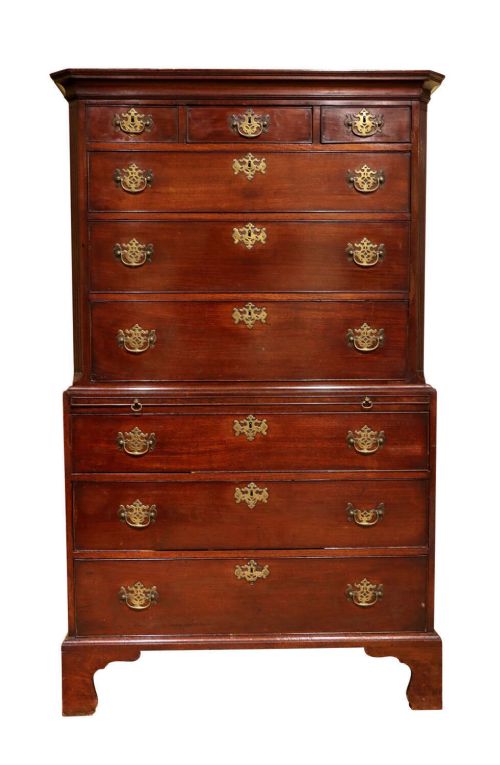
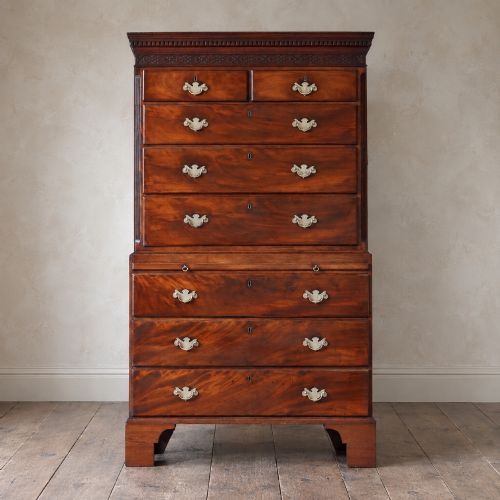
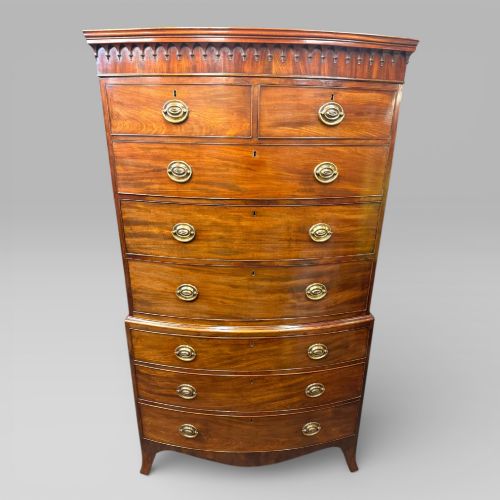
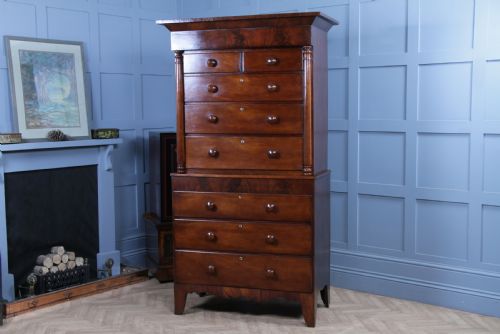
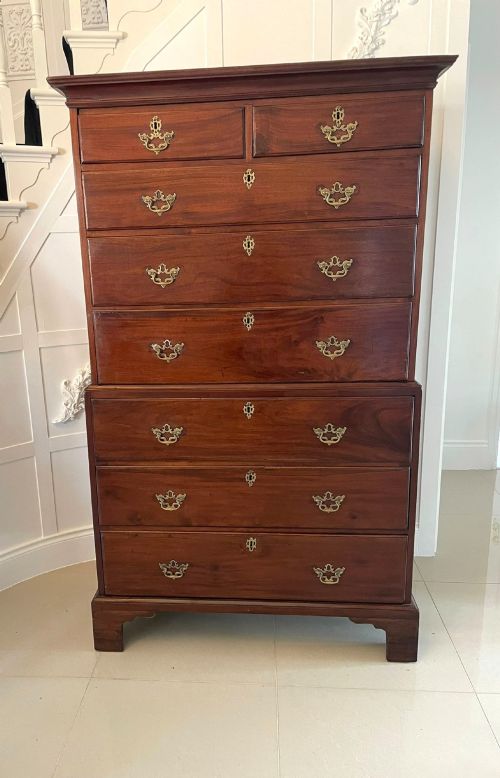
A georgian double tallboy offers commanding vertical storage, combining two distinct drawer sections into a single imposing piece of antique furniture.
Georgian Double Tallboy
When buyers search for a georgian double tallboy, they encounter substantial case furniture designed to maximise storage capacity without claiming extra floor space. These pieces typically comprise a lower chest of drawers surmounted by a slightly shallower upper chest, creating a distinctive stepped silhouette.
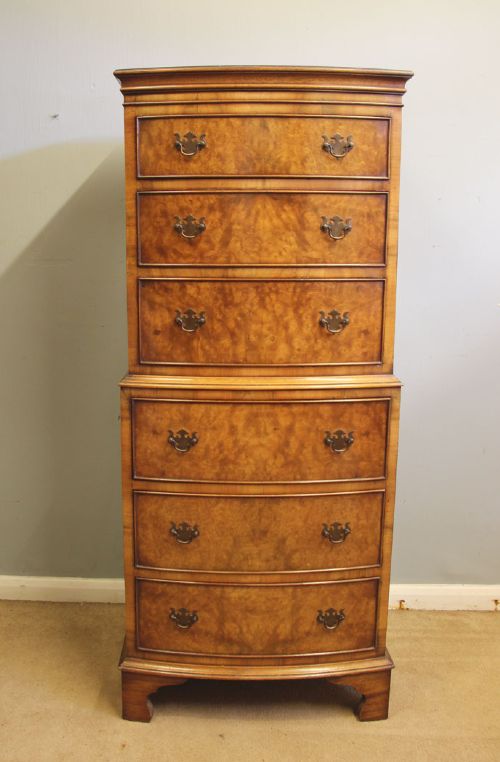
The selections available span multiple decades and stylistic revivals, featuring both authentic 18th-century examples and later 20th-century interpretations. Mahogany and walnut remain the predominant timbers, frequently complemented by specialised forms such as linen presses, secretaire drawers, and brushing slides.
How they were made
Cabinet makers constructed these large carcasses primarily using solid timbers and select veneers of mahogany, walnut, and oak, often incorporating secondary woods like elm for drawer linings. Skilled joiners utilised dovetail joints for drawer construction and applied decorative techniques including line inlay, marquetry, and blind fret cornices.
Hardware played an integral function, with original brass drop handles and escutcheons securing the façades. Surfaces received careful finishing through polishing, painting, or bleaching to highlight the natural grain patterns of figured and flame timbers.
Current listings feature pieces spanning the George I, George II, and George III periods alongside later 20th-century revivals in mahogany, walnut, and oak.
What varies in quality
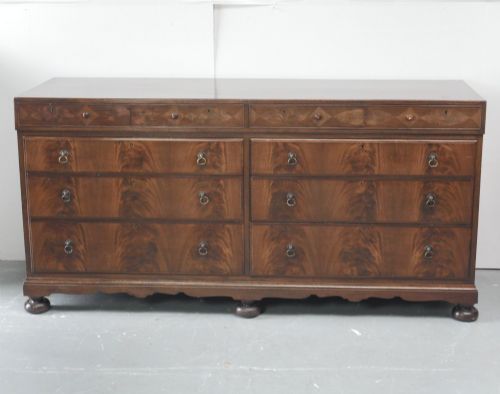
The distinction between average and exceptional pieces rests upon the selection of timber and the sophistication of its grain. Figured mahogany, burr walnut, and matched veneers demonstrate superior craftsmanship compared to plain or heavily restored surfaces.
Proportion and architectural detailing also define the upper tier of execution. Cornices featuring blind fretwork, well-integrated secretaire compartments, and intact original brasswork elevate the architectural presence of the case piece.
Whytock and Reid
The Georgian Double Tallboy Glossary
- Tallboy
- A tall chest of drawers made in two sections, where a smaller upper chest sits upon a larger base chest. This form originated to provide maximum vertical storage.
- Chest on chest
- An alternative name for a tallboy, denoting the distinct upper and lower carcass construction. The upper section is typically narrower than the lower portion.
- Brushing slide
- A pull-out wooden shelf integrated into the carcass, historically used for dusting clothes or writing notes. It slides flush into the furniture when not in use.
- Secretaire
- A drawer fitted with a drop-front that conceals small pigeonholes and writing surfaces. It transforms a standard chest into a compact bureau.
- Blind fret
- Carved decorative ornamentation applied to cornices or friezes in low relief. It mimics open fretwork without piercing the underlying wood.
Georgian Double Tallboy: Frequently Asked Questions
What is a georgian double tallboy?
A georgian double tallboy is a tall storage unit composed of two stacked chest sections, often featuring numerous drawers and sometimes a secretaire or linen press component.
These pieces were built to stand tall against bedroom or dressing room walls, offering deep storage capacity within a compact footprint.
How were tallboys used historically?
These tall chests served primarily for storing garments, linens, and personal valuables in elite households. The upper drawers often held daily wear while lower compartments accommodated bulkier textiles.
Specialised variants included writing drawers or brushing slides for grooming and correspondence tasks.
How do I care for antique mahogany furniture?
Maintain stable indoor humidity levels and keep wooden surfaces away from direct sunlight or intense heat sources. Regular dusting with a soft, dry cloth preserves the aged polish.
Apply quality beeswax sparingly when the timber appears dry, avoiding modern silicone sprays.
How do I distinguish genuine georgian pieces?
Examine the construction methods, timber patination, and secondary woods used inside the drawer carcasses. Hand-cut dovetails and timber shrinkage patterns provide reliable indicators of age.
Compare the cornice styling, brass hardware fixings, and overall proportions against documented examples from the 18th and early 19th centuries.