

Georgian Dining Room Cabinet
A georgian dining room cabinet brings architectural dignity to a dining space, offering deep storage for silver and linen.
Georgian Dining Room Cabinet
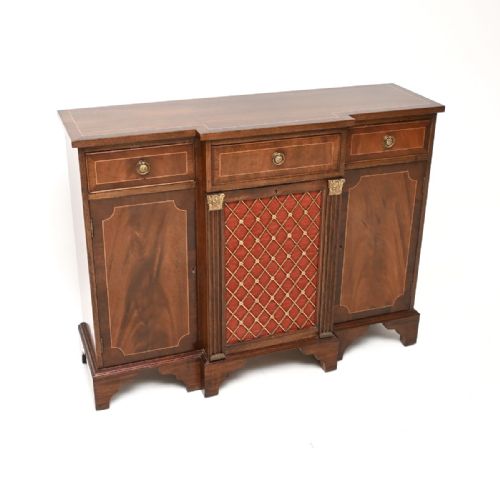
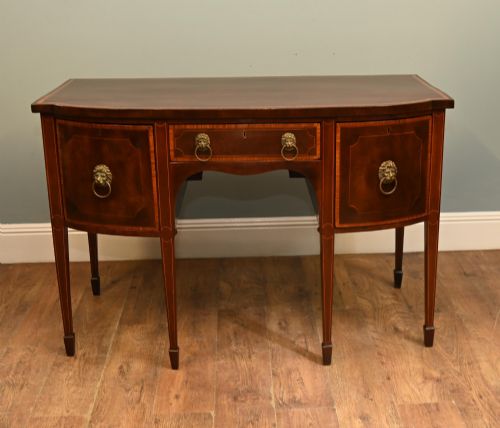
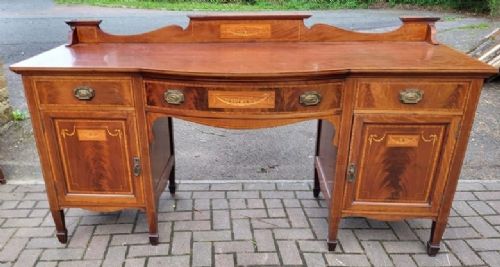
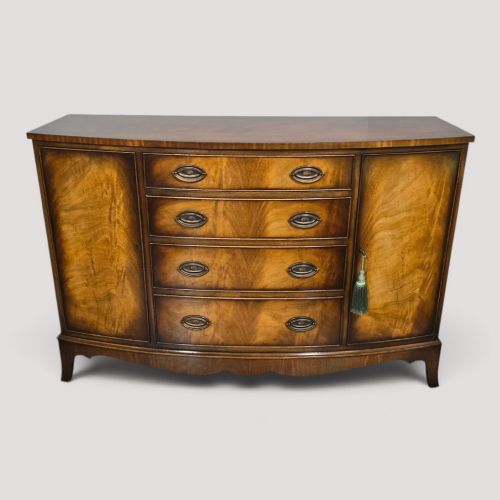
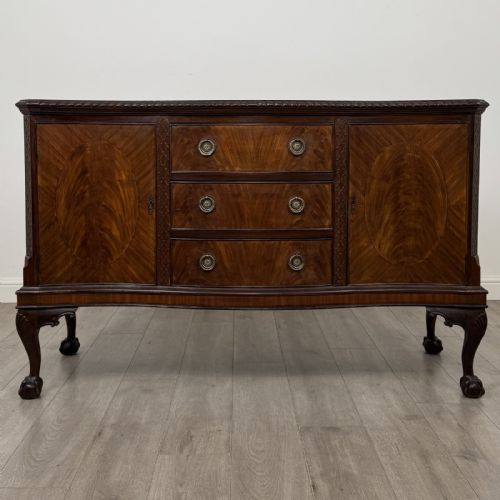
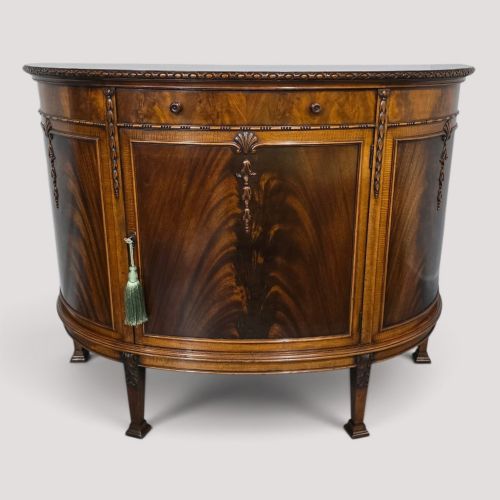
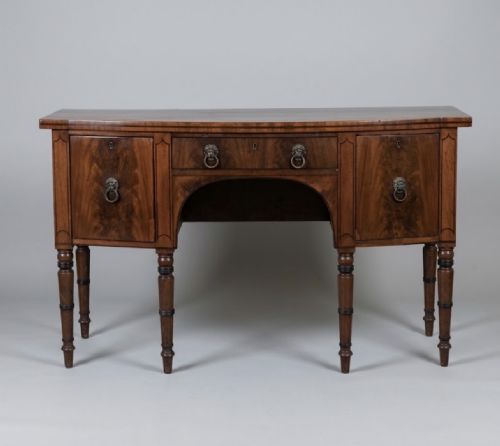
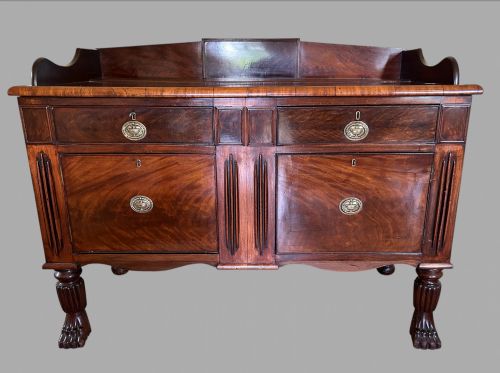
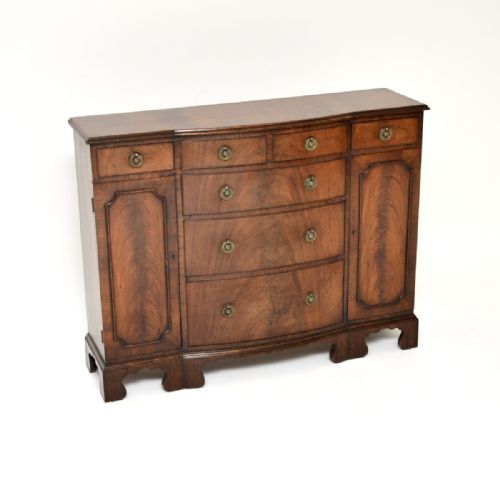
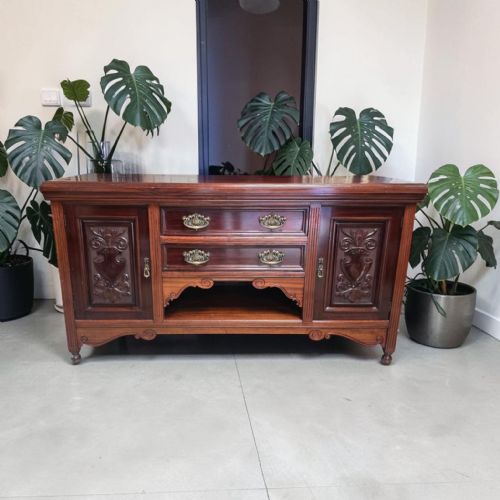
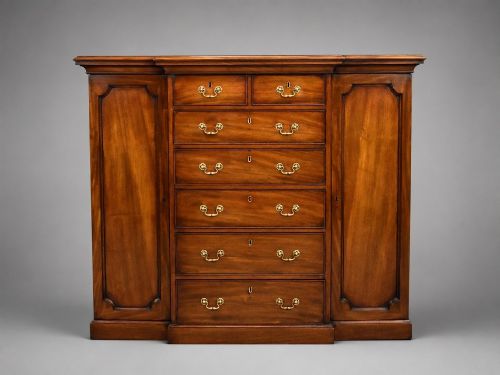
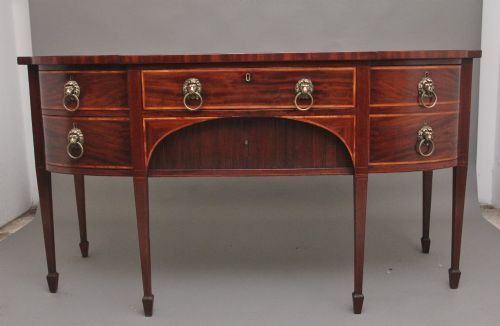
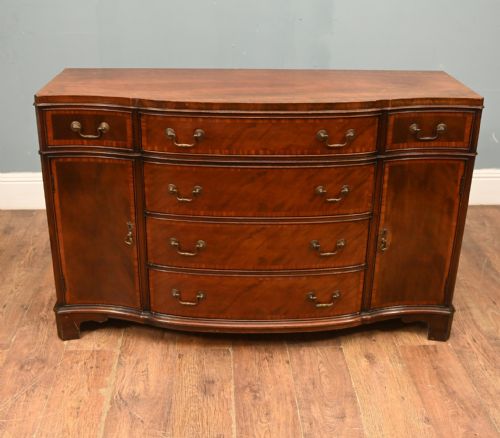
A georgian dining room cabinet typically takes the form of a substantial mahogany sideboard, buffet, or cellarette designed for service during formal meals. Sideboards dominate the selection, featuring long rectangular, bowfront, or serpentine shapes supported by straight or tapered legs.
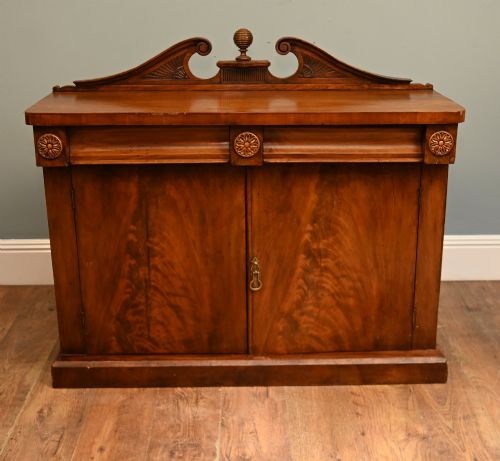
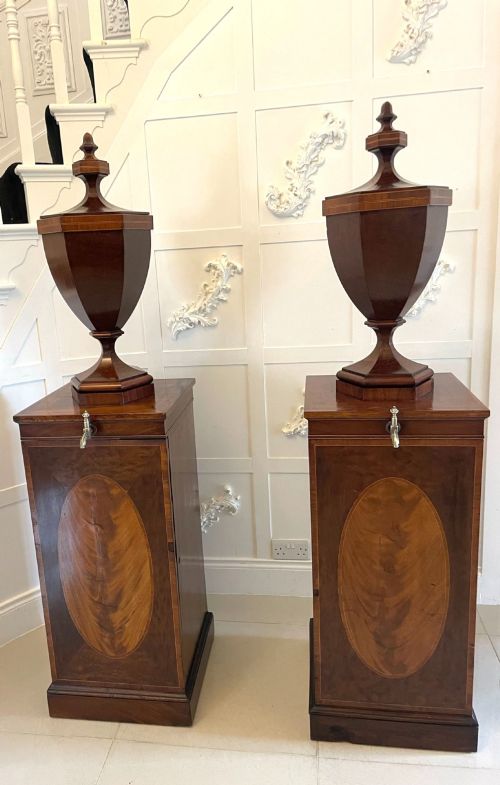
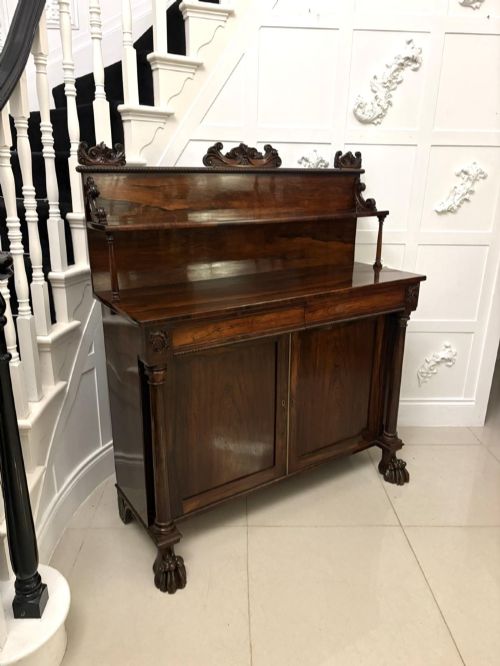
The inventory includes period pieces alongside later revivals from the Edwardian and Victorian eras. Alongside traditional sideboards, buyers encounter chiffoniers, dresser bases, and pedestals with urns that served similar dining room functions.
Origins span the late eighteenth through to the early twentieth century, incorporating Georgian, Regency, and William IV design idioms. Solid timbers and veneered surfaces define the construction across all these historical categories.
How they were made
Cabinet makers relied primarily on solid mahogany and flame mahogany veneer, often laying expensive timber over secondary woods to create dramatic grain patterns. Workshops utilised decorative stringing and contrasting borders of satinwood and boxwood inlay to define the edges of drawer fronts and tabletops.
Structural elements frequently incorporated brass hardware, such as lion mask ring pulls, drop handles, and fine gallery rails on serving surfaces. Carved details like claw and ball feet or subtle fluting appeared on high-status pieces produced by skilled joiners.
Georgian Dining Room Cabinet Retail Price Guide 2026
Typical asking prices for georgian dining room cabinet among the pieces listed under this phrase on Sellingantiques today, from the lower quarter to the upper quarter. They describe what is for sale here now, not the wider market.
Several cabinets still hide their original lead-lined cellarette compartments designed to keep historic wine collections cool beneath the floorboards.
What varies in quality
The choice of primary timber dictates much of the visual impact, with figured flame mahogany and crisp boxwood stringing marking out superior examples from plain stock. The geometry of the facade, particularly the sweep of a bowfront or serpentine curve, reveals the precision of the original maker.
Proportion and the restraint of decorative inlay separate ambitious cabinet work from standard utility items of the period. Original brasses and well-executed secondary framing timbers further distinguish the finest dining room storage furniture.
M. D. Miller and Sons
The Georgian Dining Room Cabinet Glossary
- Bowfront
- A curved cabinet front that swells outward in the centre, creating a convex facade popular in the Georgian and Regency periods. This shape requires advanced timber bending or shaping techniques.
- Cellarette
- A freestanding box or cabinet designed to hold bottles of wine and spirits securely beneath a dining room sideboard. They often feature lead-lined interiors or fitted internal dividers.
- Chiffonier
- A low cabinet equipped with drawers and enclosed shelving below, typically utilised in dining rooms or parlours for serving dishes and glassware. They frequently include panelled doors and raised upper shelves.
- Serpentine front
- A furniture facade featuring an undulating shape with a convex centre flanked by concave curves. This intricate profile demands exceptional woodworking skill.
- Stringing
- Thin bands of contrasting wood inlay used to outline drawers, tabletops, and cabinet doors. Boxwood and satinwood provide the pale contrast against dark mahogany.
Georgian Dining Room Cabinet: Frequently Asked Questions
What is a georgian dining room cabinet used for?
These pieces served as functional servers during formal dining, storing cutlery, linens, and bottles of wine. Their broad tops provided space for laying out dishes before service.
Today they function as sideboard storage in modern dining spaces or living rooms, holding tableware and displaying decorative objects.
How do I tell a georgian piece from a revival?
Original pieces from the eighteenth and early nineteenth centuries show period construction methods, such as hand-cut dovetails and timber shrinkage consistent with age. Hardware fixings and internal secondary woods often align with Georgian workshop practices.
Revival pieces built around nineteen-hundred often utilise machine-sawn timber and standardised fixings while copying the earlier George III or Sheraton styles faithfully.
What wood was used for these cabinets?
Mahogany is the predominant timber found across these listings, ranging from solid dark cuts to highly figured flame mahogany veneers. Cabinet makers enhanced these surfaces with contrasting inlay work in satinwood and boxwood.
Oak also appears in regional pieces such as Welsh dresser bases, offering a heavier rustic character compared to polished mahogany.
Where should I place a sideboard in my home?
A dining room is the traditional and most practical setting, where the cabinet can store serving platters and table linen close at hand. Their long rectangular or bowfront profiles suit placement against a primary dining wall.
They also work well in spacious hallways or living areas as low credenzas for books and glassware storage.