

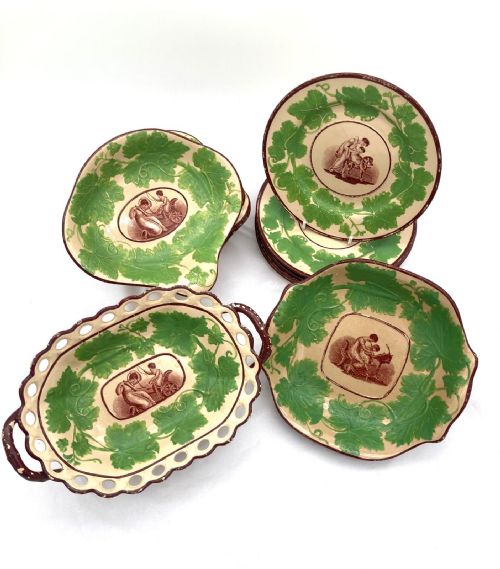


Georgian Dessert Set
These georgian dessert set pieces are formal tableware and cutlery groupings created to finish a meal in style.
Georgian Dessert Set
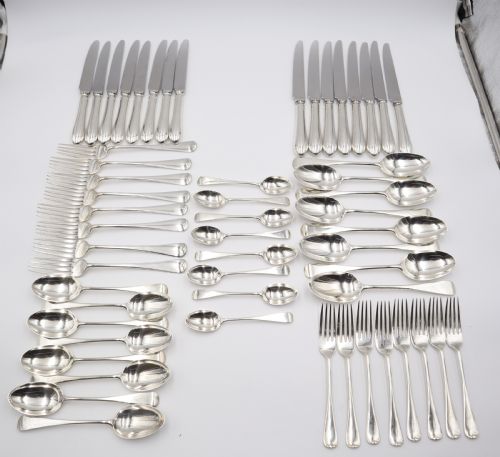
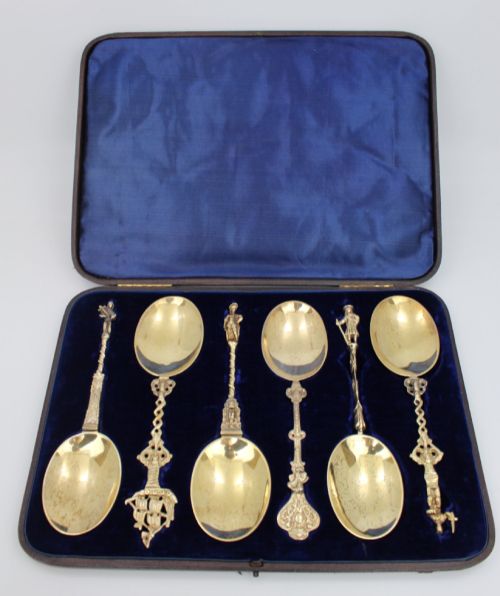
A georgian dessert set typically brings together specialised porcelain dishes, serving spoons, and matched cutlery designed for the final course of a grand meal. You will find earthenware, ironstone china, and creamware services alongside cased silver cutlery sets and individual silver-gilt spoons on this page.
The services span periods from the eighteenth century through the nineteenth century, reflecting changing dining habits and ceramic technologies. Makers such as Grainger Lee and Chamberlains Worcester feature among the porcelain offerings, while sterling silver cutlery ranges from George II three-pronged forks to Victorian canteens.
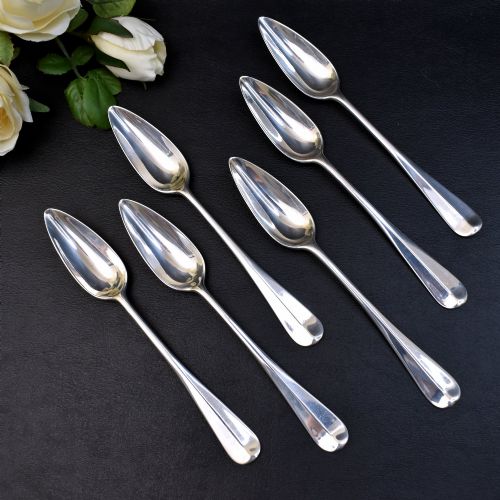
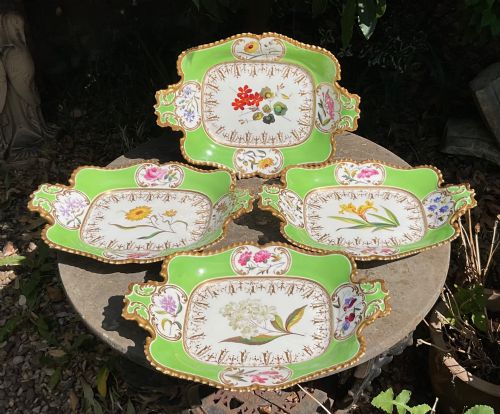
Forms vary from complete dessert services with handpainted floral decoration to boxed pairs of berry spoons and cut crystal finger bowls. Buyers encounter everything from Rockingham pottery and Spode dessert services to Wedgwood drabware and Mason's patent ironstone china.
How they were made
Ceramic services rely on shaped porcelain, earthenware, and ironstone decorated with handpainting, transfer printing, and gold leaf highlights. Glazes protect the pottery surfaces, while creamware and drabware offer distinct body colours and textures popular in the period.
Silver items utilise sterling silver and silver-gilt, shaped into cutlery, serving spoons, and jelly glasses. Cased presentation sets frequently pair metalwork with fitted velvet or silk interiors within wooden boxes.
Georgian Dessert Set Retail Price Guide 2026
Typical asking prices for georgian dessert set among the pieces listed under this phrase on Sellingantiques today, from the lower quarter to the upper quarter. They describe what is for sale here now, not the wider market.
Guests once navigated dessert using three-pronged forks designed specifically to spear slippery fruits.
What varies in quality
Quality rests in the crispness of ceramic moulding, the fineness of handpainted floral details, and the preservation of original gilding on porcelain dishes. Complete services demonstrate greater uniformity across the set than assembled pieces.
Metalwork quality depends on the clarity of hallmarks, the weight of the sterling silver or silver-gilt, and the integrity of cased presentations involving silk and velvet.
Grainger Lee And Co·Chamberlains Worcester·Rockingham Pottery·Spode·E Coker·Wedgwood·Mason S Patent Ironstone China
The Georgian Dessert Set Glossary
- Dessert service
- A matched suite of ceramic plates, dishes, and sometimes bowls intended for serving the final course of a dinner party.
- Drabware
- A type of stoneware or earthenware featuring a dull, brownish-grey or olive body colour, often produced by Wedgwood.
- Silver-gilt
- Sterling silver that has been coated with a thin layer of gold, providing a rich yellow metallic finish.
- Creamware
- A refined earthenware body developed in Staffordshire, characterised by a pale yellowish-cream transparent glaze.
- Ironstone
- A heavy, durable type of earthenware patented to resist chipping and heavy use while mimicking porcelain.
Georgian Dessert Set: Frequently Asked Questions
What is a georgian dessert set?
A georgian dessert set comprises matched porcelain dishes, earthenware plates, or specialised silver cutlery used for serving fruit, sweets, and wine at the conclusion of a meal.
These groupings often include matching knives, forks, spoons, and finger bowls designed to present the final course with elegance.
How were dessert services used?
These services were brought out after the main dinner plates were cleared away, specifically for the dessert course. Guests utilised specialised three-pronged forks, fruit knives, and berry spoons alongside painted porcelain dishes.
Finger bowls filled with water were also provided to clean fingers between courses of fruit and sweet dishes.
How do I identify a period set?
Dating relies on maker marks stamped or painted on the base of ceramics, alongside hallmarks struck into silver cutlery. Stylistic clues such as Regency shapes or George III crests also help place the items.
Material types like creamware, drabware, and ironstone provide further chronological markers for ceramic pieces.
How do I care for antique tableware?
Antique porcelain and earthenware require gentle hand washing in warm water without harsh detergents to protect handpainted details and gold leaf. Silver items benefit from occasional specialised cleaning to maintain their lustre.
Cased sets with silk or velvet linings should be kept away from direct sunlight and damp environments to preserve the interior fabrics.