




Georgian Desk Stationery
Georgian desk stationery comprises portable writing slopes, cabinets and inkstands designed for correspondence when correspondence required timber boxes and brass fittings.
Georgian Desk Stationery
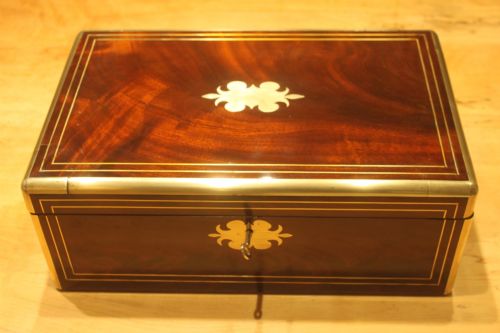
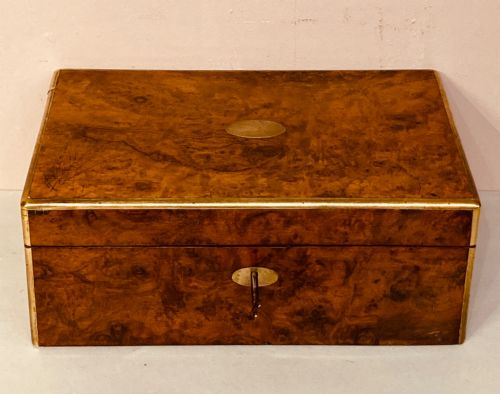
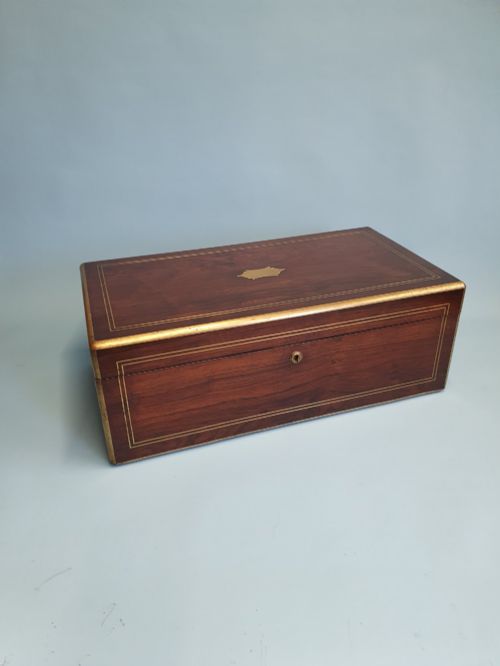
When you search for georgian desk stationery, you encounter portable writing slopes, stationery boxes, and desk sets spanning the Georgian, Regency, and early nineteenth-century periods. The items on this page are predominantly constructed from dense hardwoods like mahogany and rosewood, often fitted with brass banding or inlay.
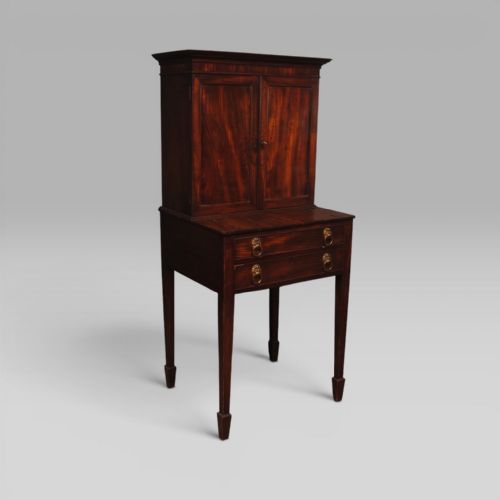
The objects take several distinct shapes, from folding writing slopes with secret drawers to upright stationery cabinets and converted knife boxes. Many pieces bridge the gap between utilitarian desk equipment and fine furniture, reflecting the period's focus on organised writing materials.
Origins span late eighteenth-century workshops through to Edwardian revivals, with core examples rooted firmly in the Georgian era. Buyers meet everything from campaign writing slopes designed for travel to large library desks and Davenport tables.
Evaluating Quality
Quality rests upon the selection of timber veneers, the precision of the brass inlay, and the cleverness of the internal mechanisms. Finer pieces display matched curl grain timber and tightly fitted secret compartments that operate smoothly.
The distinction between standard utility items and superior examples lies in the retention of original fittings, such as glass inkwells and intaglio seals, alongside the crispness of the exterior brass mounts and corner brackets.
Georgian Desk Stationery Retail Price Guide 2026
Typical asking prices for georgian desk stationery among the pieces listed under this phrase on Sellingantiques today, from the lower quarter to the upper quarter. They describe what is for sale here now, not the wider market.
Listings feature brass, mahogany, rosewood, satinwood, oak, glass, metal, and leather across pieces dating from the eighteenth century to the Edwardian era.
Daniel Holy of Sheffield
The Georgian Desk Stationery Glossary
- Writing slope
- A portable box with a hinged, sloping lid that opens to reveal a slanted writing surface and internal compartments for paper and pens.
- Stationery box
- An upright cabinet or desk-top receptacle designed to hold letters, envelopes, and paper upright in dedicated slots.
- Davenport
- A compact form of small desk featuring a sloped writing surface above a pedestal of drawers.
- Cheveret
- A small writing table fitted with a removable book-stand or stationery tier on top, popular in the eighteenth century.
- Intaglio
- A design carved into the recessed surface of a glass or stone seal, used for impressing into hot wax to close letters.
Georgian Desk Stationery: Frequently Asked Questions
What is a writing slope?
A writing slope is a portable wooden box that folds open to provide an angled surface for writing letters. Inside, compartments store stationery, inkwells, and nibs.
These boxes were essential personal items for travellers and homeowners before fitted desks became standard in every room.
How were stationery boxes used?
Stationery boxes sat on desks or tables to keep writing paper, envelopes, and correspondence organised and clean. Their internal dividers kept different sizes of paper separated.
Some examples began life as knife boxes before being adapted for desk use as dining fashions changed.
What is a campaign writing slope?
A campaign writing slope is a robust box reinforced with brass corners and straps designed to withstand military travel. These pieces often feature flush brass handles and secure locks.
Officers carried them on campaigns to maintain correspondence and records in the field.
How do you spot secret drawers?
Secret drawers are hidden behind false panel walls or dummy pigeonholes within writing slopes. They are accessed by lifting a false floor or pressing a concealed wooden spring.
Cabinetmakers built these compartments into desk stationery to secure currency, jewellery, and confidential letters.