

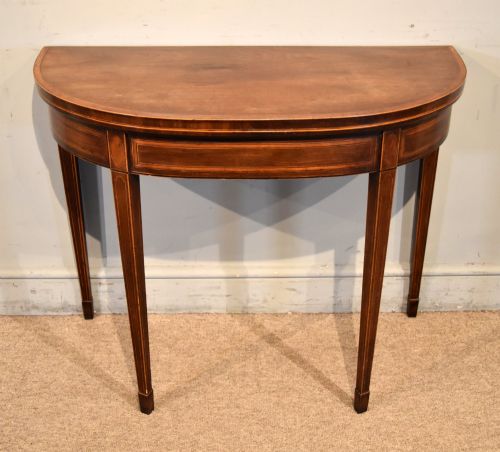
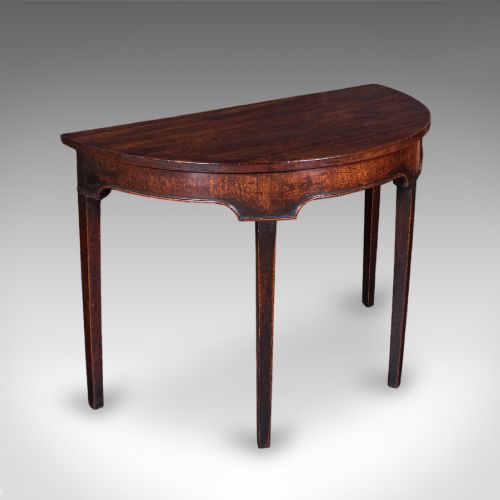
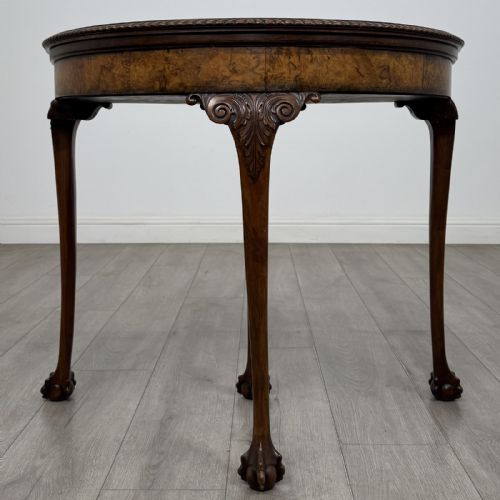
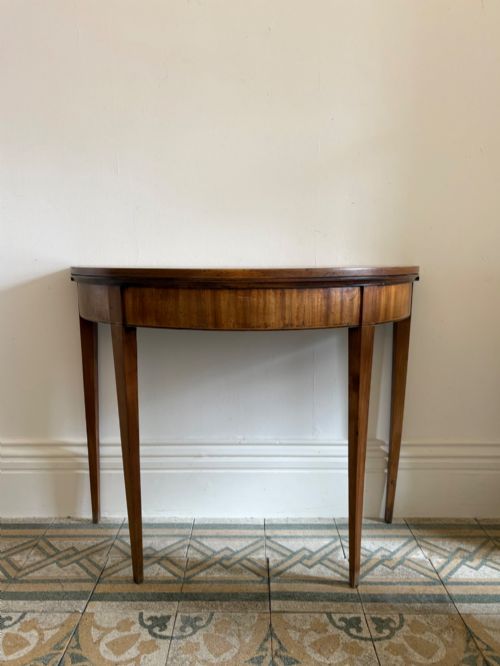
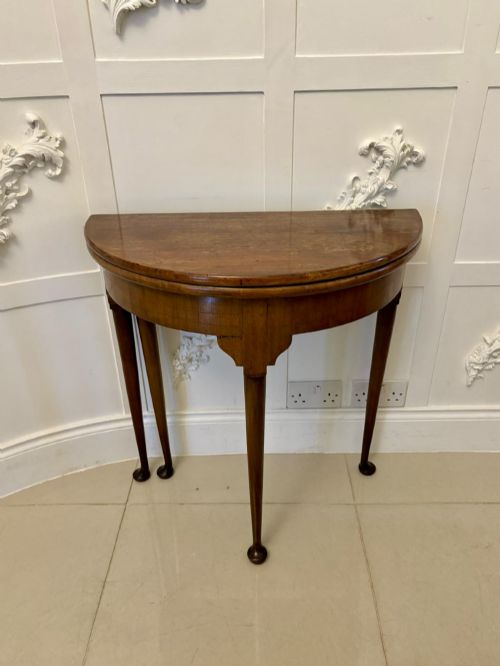
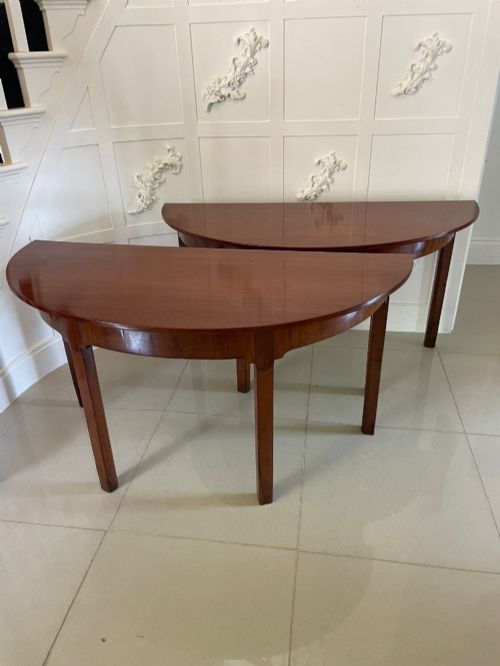
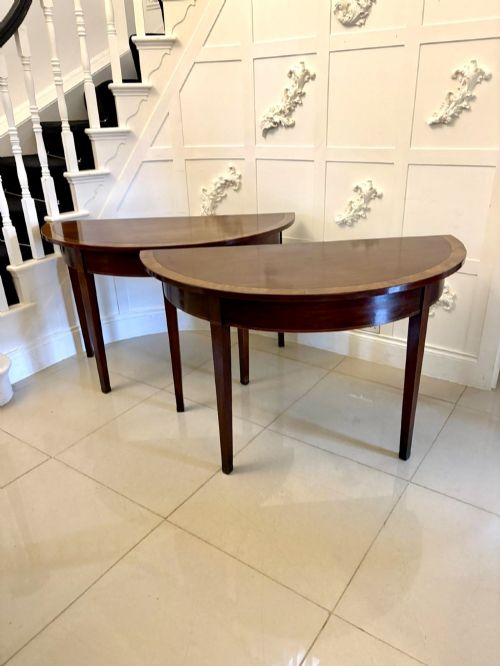
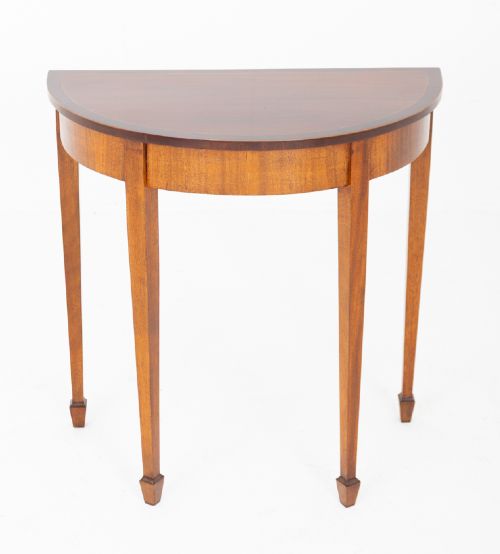
Georgian Demi Lune
A georgian demi lune table brings a graceful half-round footprint to a hallway or drawing room, combining practical surface space with refined architectural proportion.
Georgian Demi Lune
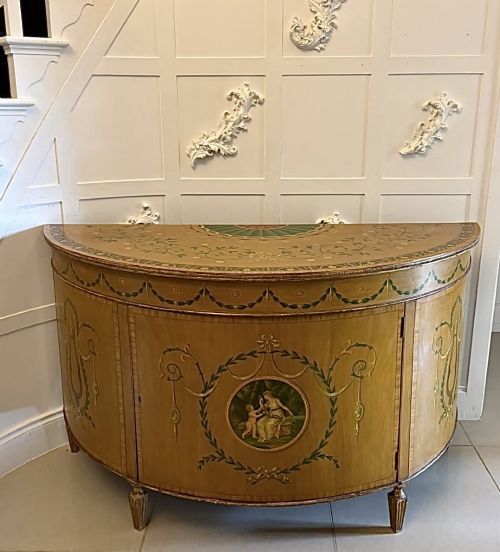
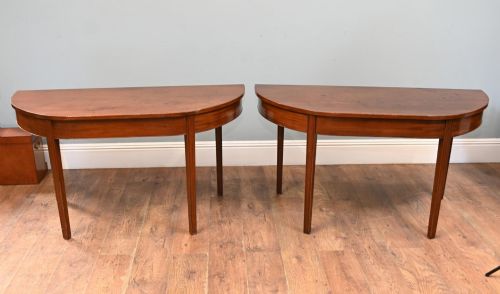
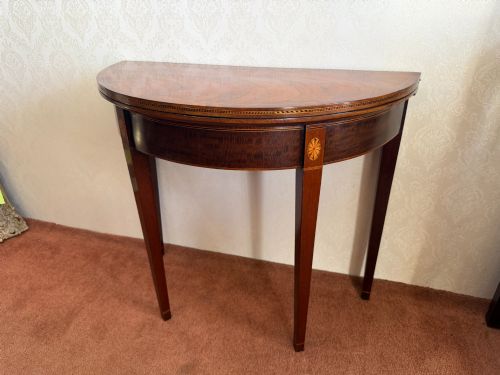
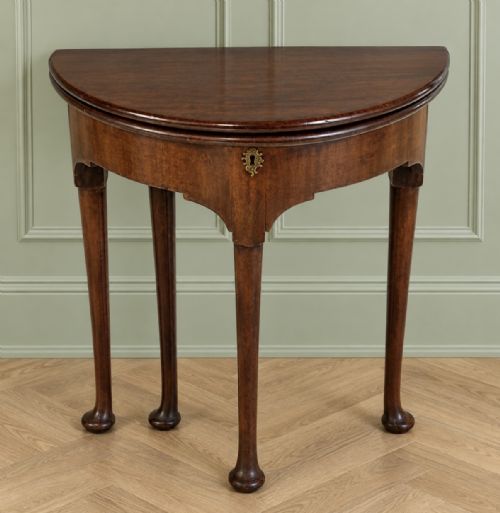
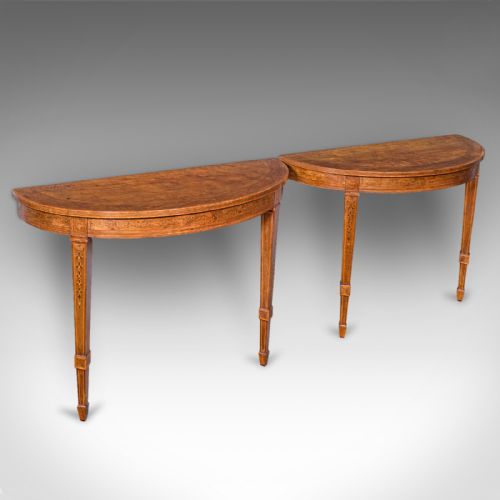
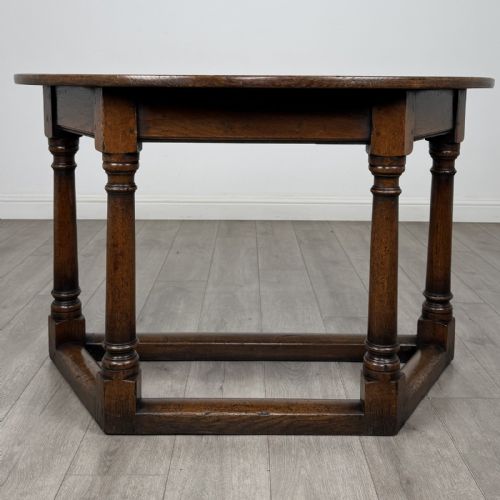
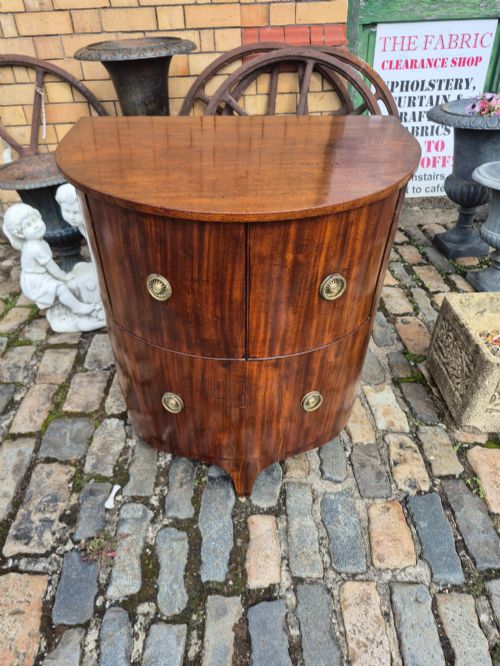
When you search for georgian demi lune, you are looking at semicircular furniture designed to stand flush against a wall, making efficient use of interior space. The selections span the eighteenth century and subsequent revival periods, encompassing console tables, fold-over card tables, and tea tables.
The most common forms on this page are console tables and card tables dating from the Georgian and George III eras, alongside later nineteenth-century interpretations. These half-round items often function as serving surfaces or games tables, transitioning easily from a flat wall position to the centre of a room when unfolded.
How they were made
Joiners and cabinet makers constructed these semicircular frames primarily from timber such as mahogany, walnut, and oak, frequently applying finely figured veneers to the curved top surfaces. Workshops employed structural supports including folding rear legs to bear the weight of hinged leaves on games and tea tables.
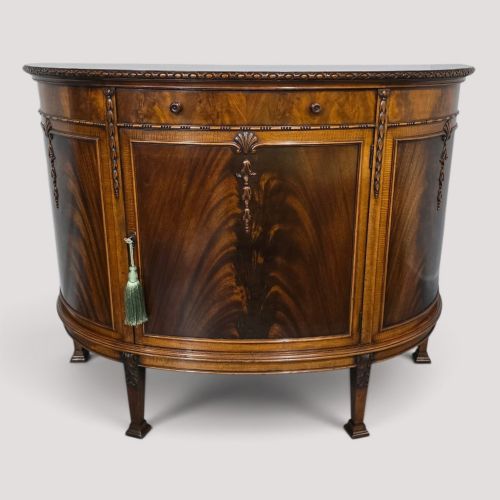
Decoration relied on contrasting timbers and surface embellishment, incorporating satinwood, boxwood, and kingwood inlay, alongside hand-painted finishes, parcel gilt accents, and reeded friezes.
Georgian Demi Lune Retail Price Guide 2026
Typical asking prices for georgian demi lune among the pieces listed under this phrase on Sellingantiques today, from the lower quarter to the upper quarter. They describe what is for sale here now, not the wider market.
Listings feature mahogany, satinwood, and painted wood, with console and card tables spanning the eighteenth century to the twentieth century.
What varies in quality
The distinction between standard examples and the finest pieces rests on the choice of timber figure, such as highly figured mahogany or intricate satinwood and marquetry work, rather than simple utility. Superior execution shows in the precision of the wood inlay and crossbanding, which demands expert hand-fitting along complex curved edges.
Proportion and structural integrity also separate grades, where skilled joinery ensures that folding leaves align perfectly when closed and remain stable on their underframes when open for card play or tea.
The Georgian Demi Lune Glossary
- Demi-lune
- A half-moon shape or semicircular form used for tables and side cabinets designed to sit flat against a wall.
- Crossbanding
- A strip of veneer applied perpendicularly to the grain of the main surface around the border of a table top. This decorative technique creates a neat framing effect.
- Marquetry
- The art of forming decorative patterns using fitted pieces of coloured wood veneer. It adorns the top surfaces of formal console and card tables.
- Console table
- A wall-mounted or freestanding table designed to sit against a vertical surface. Many semicircular variants rely on rear legs for support.
Georgian Demi Lune: Frequently Asked Questions
Where should I place a demi lune table?
These semicircular tables suit narrow hallways, landings, or living room walls where a full rectangular table projects too far into the floor space.
Fold-over versions also move easily into the centre of a room to function as games or tea tables when entertaining guests.
What is the difference between George III and revival pieces?
George III pieces date from the eighteenth and early nineteenth centuries during the reign of King George III, showing period-specific cabinet-making techniques and timber patination.
Revival pieces date from later periods like the Victorian era or twentieth century, imitating earlier styles using traditional forms.
How do I care for polished mahogany surfaces?
Protect the timber by keeping tables away from direct sunlight and sudden temperature changes, which can dry out or crack the wood and veneer.
Dust regularly with a dry cloth and apply a quality beeswax periodically to maintain the sheen.