
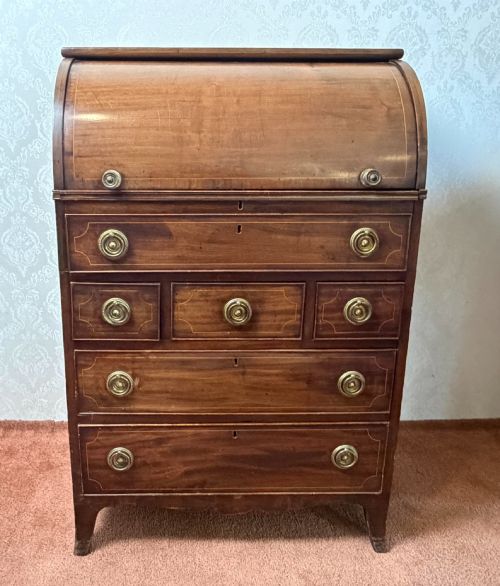
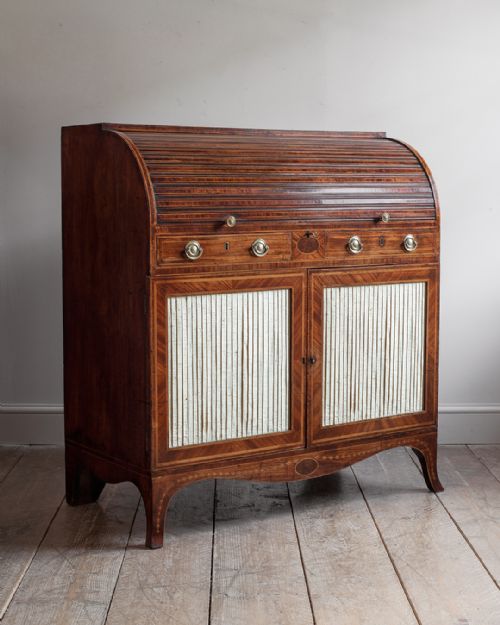
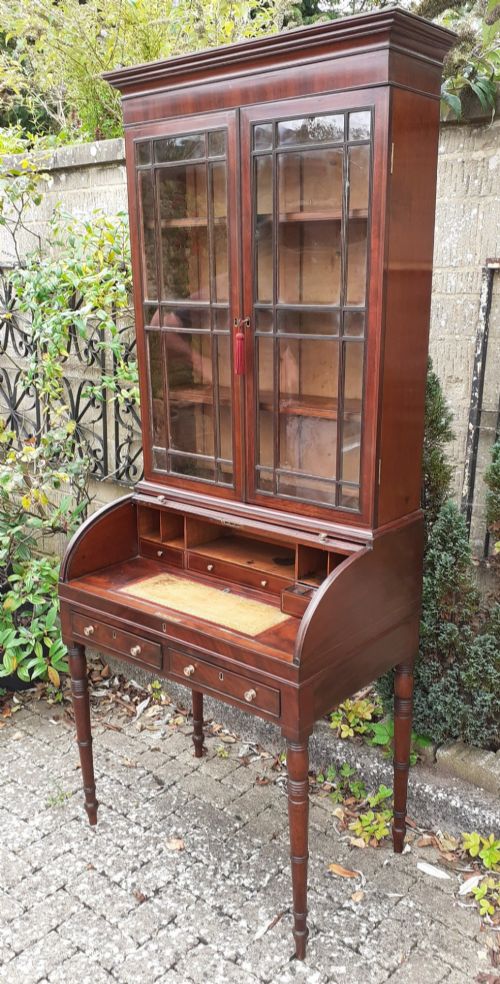
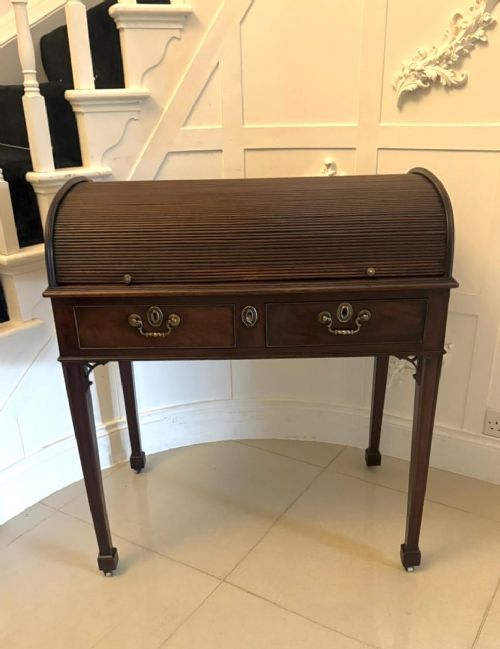
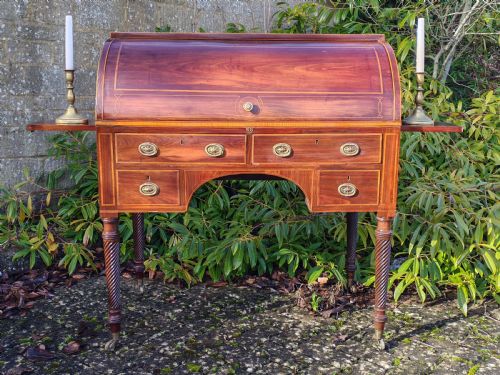
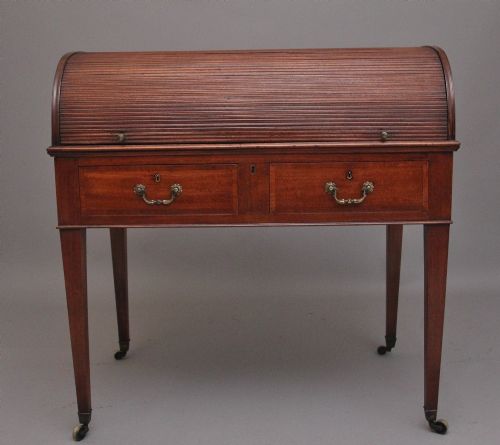


Georgian Cylinder Writing Desk
A georgian cylinder writing desk brings architectural refinement and hidden workspace to a study, prized for its curved roll top that conceals drawers and writing slides.
Georgian Cylinder Writing Desk
A georgian cylinder writing desk combines the enclosed security of a bureau with the clean lines of a library table, operating via a rotating cylindrical shutter. These pieces date principally from the eighteenth and nineteenth centuries, spanning the Georgian, Regency, and Sheraton periods.
You encounter forms ranging from compact ladies writing tables to large bureau bookcases and estate desks. The primary timber is mahogany, often paired with satinwood, partridgewood, or rosewood, sometimes housing integrated upper shelving or glass-fronted cabinets.
How they were made
Cabinet makers constructed the curved cylinder shutter from narrow strips of timber glued to a flexible canvas backing, allowing the mechanism to slide smoothly in routed tracks. Solid mahogany and burr walnut form the structural carcase, ornamented with intricate marquetry, ebony inlay, and satinwood banding.
Some cylinder desks hide secret spring-loaded compartments behind dummy pigeonholes for private letters and valuables.
What varies in quality
The sophistication of the internal stationery fittings and secret compartments distinguishes finer examples from standard production. A smooth action in the cylinder shutter, requiring minimal effort to glide over internal pigeonholes, marks superior joinery.
Selection of timber figure, such as highly figured flame mahogany, burr walnut, or carefully matched satinwood veneers, determines the visual hierarchy. Subtle details like fine stringing, crisp brass mounts, and intact original leather writing slides elevate a piece.
Tudor & Burrey·John Mclean
The Georgian Cylinder Writing Desk Glossary
- Cylinder
- A curved wooden shutter that rolls back over the desk surface to conceal the interior writing compartment. This mechanism protects papers from dust while offering a sleek profile.
- Tambour
- A flexible shutter made from vertical wooden slats glued to canvas, functioning similarly to a cylinder roll top. It slides horizontally or vertically along tracks.
- Marquetry
- Decorative veneer work forming pictorial patterns using various tinted woods, shells, or ivory. It appears frequently on Dutch and Sheraton style cabinetry.
- Secretaire
- A desk or cabinet containing a pull-out writing drawer or drop-front writing flap. These pieces often feature tiered pigeonholes and small drawers inside.
- Satinwood
- A lustrous, hard timber native to Ceylon and the West Indies, displaying a golden sheen. Cabinet makers used it extensively during the late eighteenth century for contrasting veneers.
Georgian Cylinder Writing Desk: Frequently Asked Questions
How do you open a cylinder desk?
The curved wooden cylinder connects to an internal mechanism that automatically draws out the writing slide as the shutter rolls upward. Pulling forward on the main writing surface or turning a key releases the locking tracks.
Ensuring the internal drawers sit flush allows the cylinder to glide freely without catching on pigeonholes or stationery dividers.
Where were these desks placed?
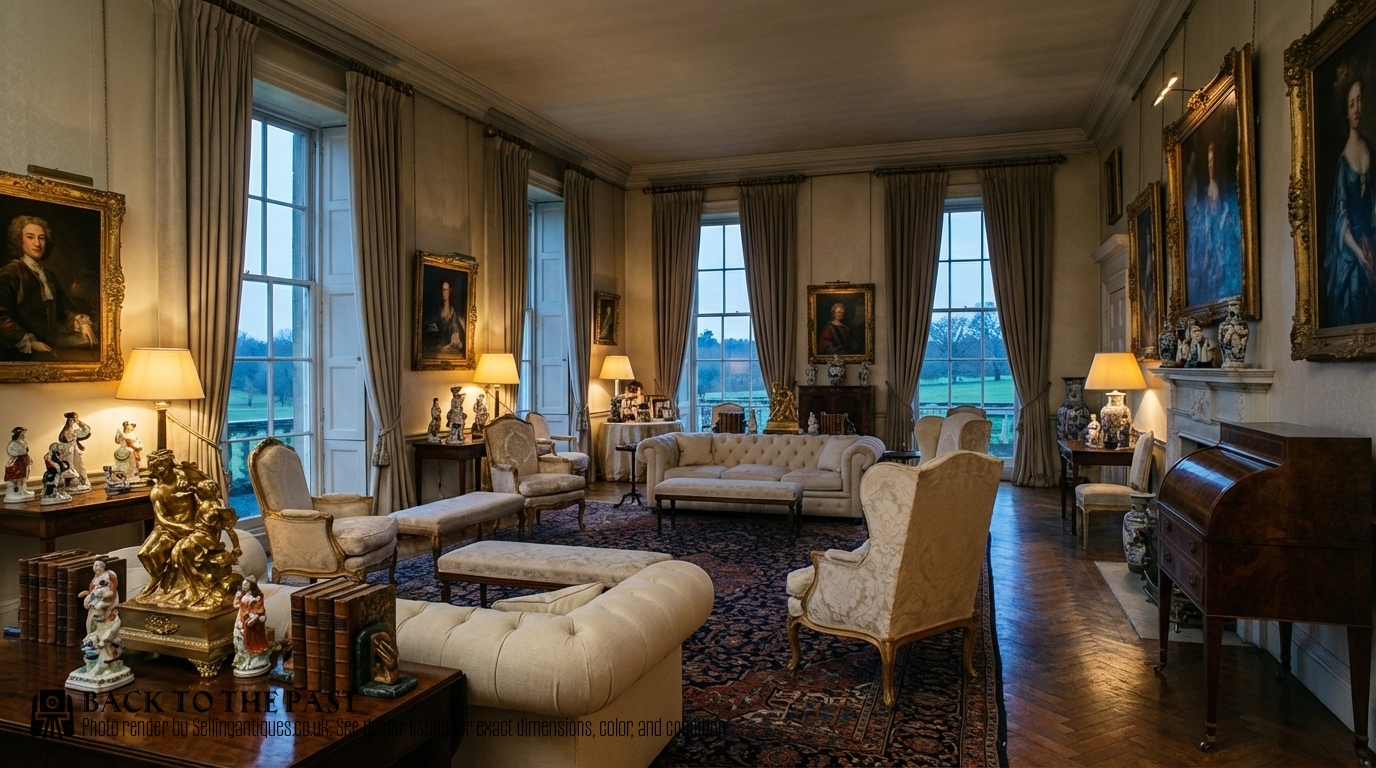
Georgian writing desks stood in private libraries, drawing rooms, and master chambers of large country houses. Their finished backs often allowed them to sit away from the wall in the centre of a room.
Estate desks served land agents and property owners for managing accounts and correspondence securely.
How do I distinguish Sheraton from Regency styles?
Sheraton pieces from the late eighteenth century emphasise classical geometry, lighter satinwood veneers, and subtle floral inlay. Regency designs from the early nineteenth century introduce bolder rosewood, brass inlay, and classical architectural motifs.
Proportions in Sheraton furniture tend to feel restrained and linear, whereas Regency examples display heavier ornamentation.