



Antique Cylinder Fall Bureau
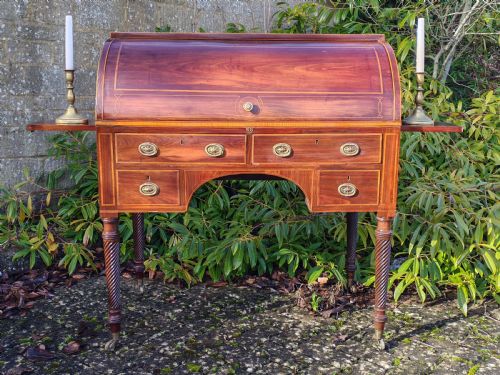
These antique cylinder fall bureau examples offer a clever rolling shutter to hide your correspondence, blending Georgian proportion with Victorian practicality.
Antique Cylinder Fall Bureau
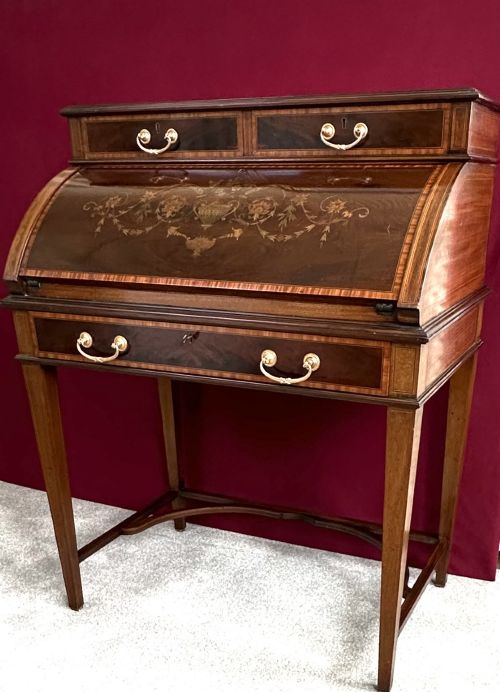
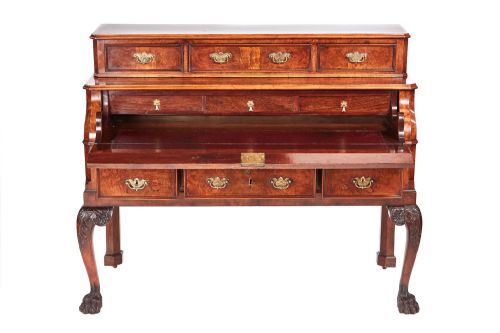
An antique cylinder fall bureau provides a enclosed writing surface covered by a curving, semi-cylindrical wooden shutter that rolls back into the body of the piece. When closed, the mechanism conceals drawers, pigeonholes and the writing slide in one tidy architectural block.
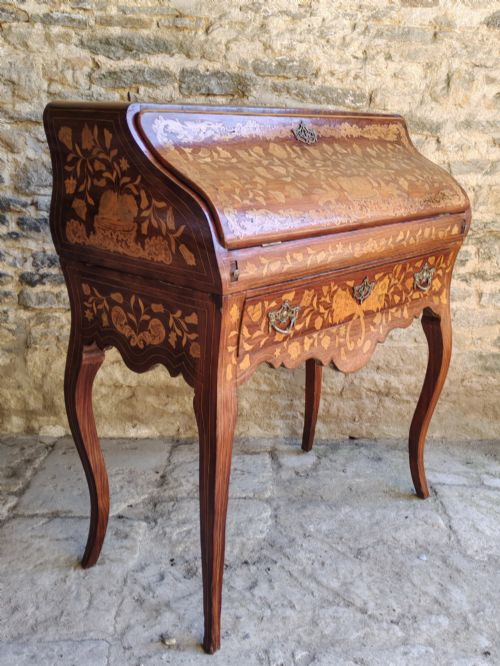
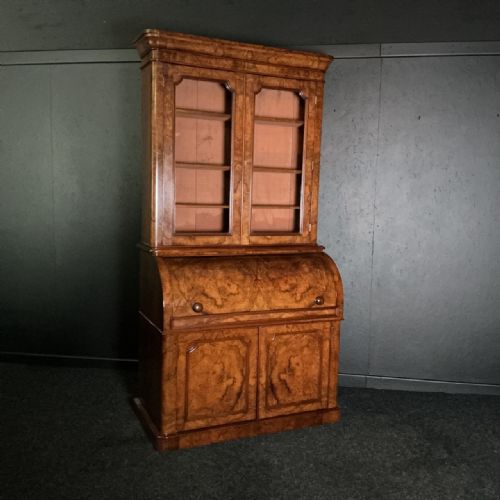
The versions met most often on this page date from the Georgian and Victorian eras, taking the form of freestanding desks or taller bookcase combinations. They appear in varied regional idioms, including English mahogany constructions and Dutch marquetry interpretations.
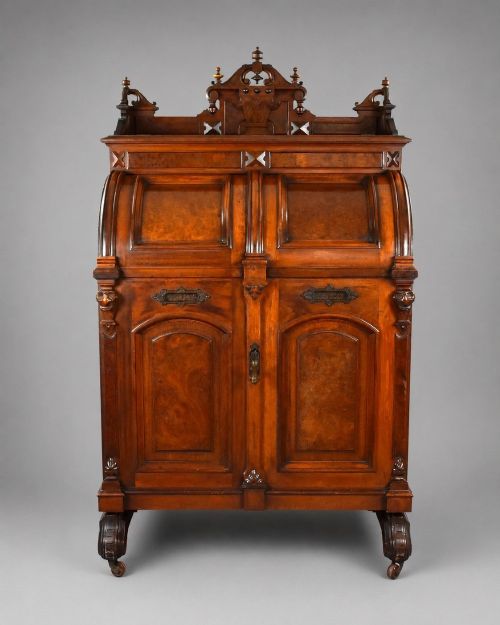
Makers adapted the form for intimate boudoirs as ladies desks or grand libraries as secretaire cabinets. Each piece balances writing utility with display architecture, housing letters behind panelled doors or open glass fronts.
Materials and construction
Cabinetmakers constructed these desks from dense timbers like mahogany, satinwood and walnut, frequently selecting burr veneers and yew wood to show dramatic grain patterns. Marquetry versions incorporate floral and scrolling inlay across the curved shutter and writing flap.
The signature cylinder action relies on curved wooden laths glued to a flexible canvas backing, which slides smoothly within concealed side tracks. Brass fittings, ormolu mounts and leather writing inserts complete the functional mechanics of the fall front.
This selection spans centuries of cabinetmaking, featuring Georgian mahogany desks, Victorian burr walnut pieces and Edwardian satinwood creations.
Variations in quality
Quality rests upon the precision of the rolling cylinder mechanism and the joinery of the internal pigeonholes and small drawers. A superior desk operates with silent, even travel along its tracks, whereas lesser examples bind or rattle during movement.
The selection of timber veneers and the intricacy of marquetry inlay dictate the visual standing of the piece. Master craftsmen matched wood grains symmetrically across the curve of the fall, while standard workshops used simpler cuts.
The Antique Cylinder Fall Bureau Glossary
- Cylinder top
- A curved, quarter-circle wooden shutter that conceals the desk interior when pulled down. It operates on tracks recessed into the sides of the bureau carcass.
- Secretaire
- A cabinet or desk incorporating a pull-out writing drawer or fall front. The term often denotes a piece with upper bookcase shelving.
- Marquetry
- Decorative veneer work forming pictures or patterns using various tinted woods. Craftsmen applied these patterns across drawer fronts and cylinder shutters.
- Satinwood
- A lustrous, fine-grained yellow timber favoured in late eighteenth and nineteenth-century cabinetmaking. It provides a pale, reflective surface for inlaid furniture.
- Burr walnut
- Wood taken from the abnormal growth of a walnut tree, yielding swirling, knotty grain patterns. Cabinetmakers sliced it into thin veneers for decorative impact.
Antique Cylinder Fall Bureau: Frequently Asked Questions
How does a cylinder fall bureau work?
The curved wooden shutter runs on internal grooves, sliding backward into the desk body when pushed. Pulling the writing slide forward often draws the cylinder back automatically.
Internal linkages synchronize the movement so the shutter clears the writing surface smoothly, revealing small drawers and pigeonholes without snagging.
What is the difference between a bureau and a cylinder desk?
A traditional bureau uses a sloping, flat flap that hinges downward to form a writing surface. A cylinder desk employs a rounded, rolling shutter that retracts upward.
Cylinder models keep papers and writing materials permanently enclosed without requiring users to clear the slanted flap every time the desk closes.
Where should I place a cylinder desk at home?
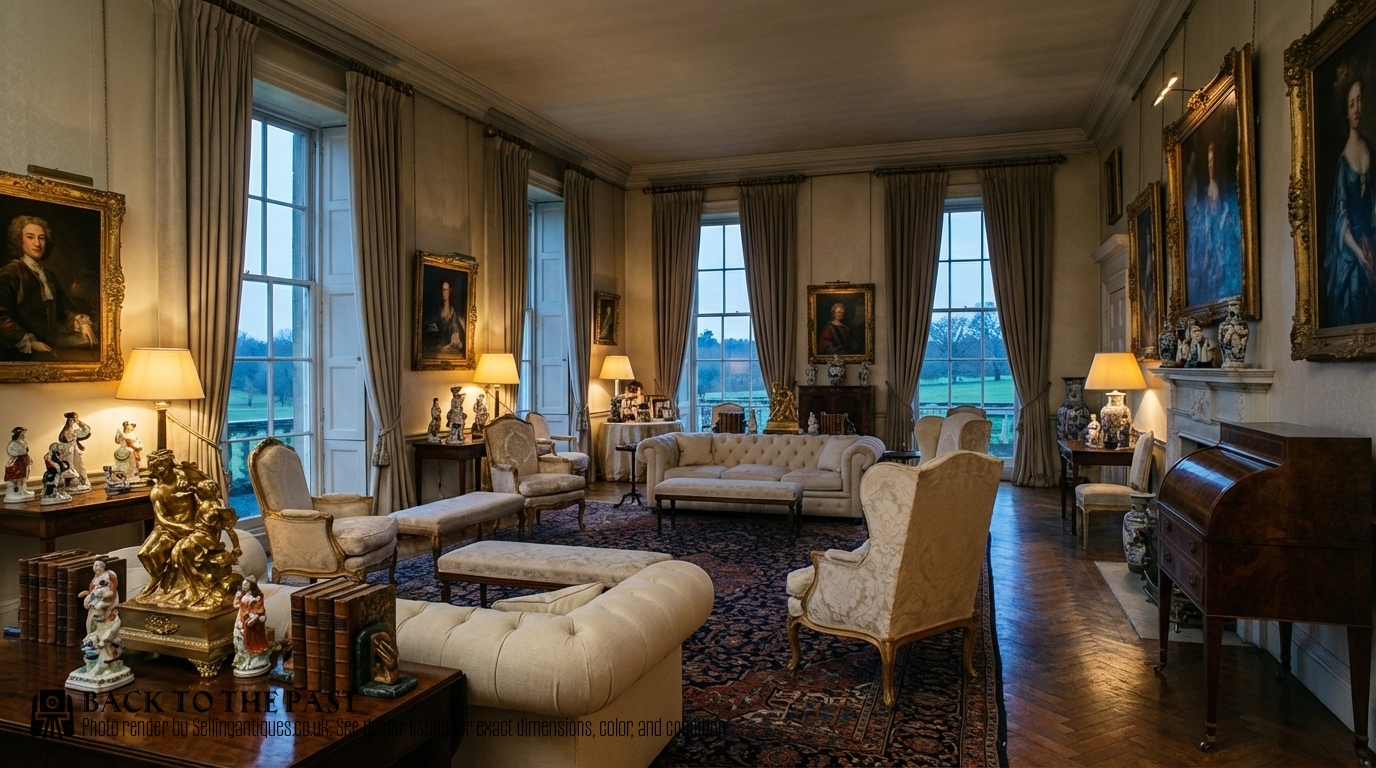
These desks suit studies, libraries and living rooms where their finished backs and sides can remain visible. Ensure adequate clearance around the piece for chair movement and shutter operation.
Keep the timber away from direct sunlight and heat sources to prevent the dry veneers and curved cylinder tracks from warping.
How do I date a mahogany cylinder desk?
Examine the secondary timbers inside the small drawers, the style of the brass handles and the complexity of the veneer work. Georgian examples display lighter proportions and refined satinwood stringing.
Victorian and Edwardian versions tend to be heavier in scale, sometimes featuring carved paw feet or revival marquetry patterns derived from earlier Dutch styles.