








Georgian Crystal Flutes
Georgian crystal flutes are slender glass vessels designed for celebration, bringing tactile weight and historical form to the modern table.
Georgian Crystal Flutes
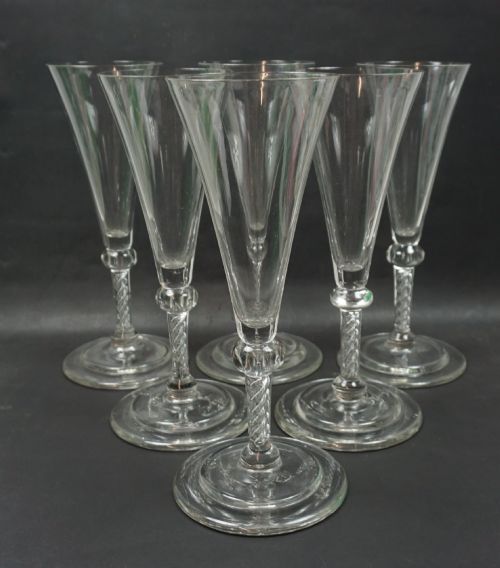
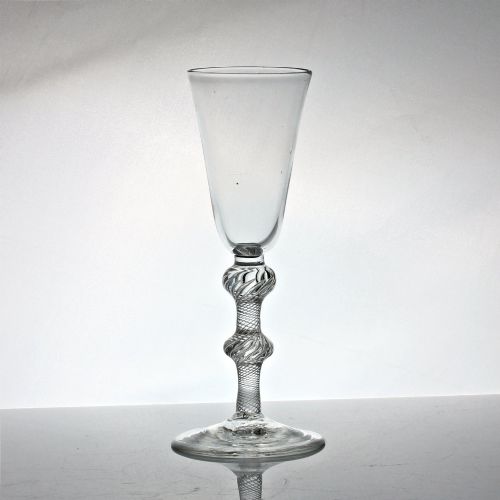
Georgian crystal flutes encompass tall drinking glasses made during the 18th and early 19th centuries, designed primarily for sparkling wines, champagne, and ale. The pieces found here typically take the form of stemware featuring elongated bowls, air twist or opaque twist stems, and folded feet.
While the search specifies crystal, the listings reveal a broader material reality spanning lead glass, flint glass, and clear glass shaped by hand-blowing and facet-cutting. Alongside traditional flutes, buyers encounter related glassware such as ale glasses, rummers, and wine glasses from the Georgian and Regency periods.
How they were made
The manufacture of these drinking vessels relied on lead glass and flint glass, manipulated while molten by skilled blowers to achieve clarity and resonance. Hand-blown glass forms the foundation of many pieces, shaped into fluted-moulded ogee bowls or straight-sided flutes.
Intricate internal stems were created by trapping air bubbles within the glass and drawing them into single, double, or multi-series spirals known as air twists or opaque twists. Subsequent decoration involved wheel-engraving, such as hop and barley motifs, or surface facet-cutting to catch the light.
Georgian Crystal Flutes Retail Price Guide 2026
Typical asking prices for georgian crystal flutes among the pieces listed under this phrase on Sellingantiques today, from the lower quarter to the upper quarter. They describe what is for sale here now, not the wider market.
Listings feature lead glass and flint glass spanning the 18th century, Regency period, and Victorian era, alongside later 1930s interpretations.
What varies in quality
Quality in these drinking vessels rests upon the crispness of the twist formation within the stem and the symmetry of the bowl. Examples with well-defined air or opaque twists and evenly proportioned hop and barley engravings demonstrate superior glasshouse execution.
The weight and clarity of the lead glass or flint glass dictate the tactile presence of the piece, alongside the stability and finish of the folded foot. Subtle variations in hand-blowing indicate individual artisan work rather than mass production.
The Georgian Crystal Flutes Glossary
- Air twist
- A stem decoration formed by drawing out elongated air bubbles within the molten glass into a spiral thread. This technique requires exceptional skill from the glassblower to maintain an even helix.
- Opaque twist
- A stem containing white or coloured enamel glass threads twisted within the clear metal. These threads create solid, highly visible white ribbons inside the transparent stem.
- Folded foot
- A base whose outer edge is turned underneath to create a thickened, rounded rim. This adds physical stability and weight to the bottom of the drinking vessel.
- Flute-moulded
- A bowl decorated with vertical, shallow indentations radiating up from the base. It diffuses light and adds texture to the lower portion of the glass.
- Rummer
- A heavy, large drinking glass introduced in the late 18th century for punch, ale, or wine. They typically feature short stems or pedestal bases with bucket bowls.
Georgian Crystal Flutes: Frequently Asked Questions
What is an air twist stem?
An air twist stem contains internal helical channels of trapped air that catch the light. Glassmakers created these by manipulating bubbles within the molten metal before drawing and twisting the stem.
This method produced lightweight yet visually complex supports for champagne flutes and wine glasses during the 18th century.
How do I identify a genuine Georgian flute?
Genuine Georgian flutes display the characteristic weight, tool marks, and pontil scars associated with 18th-century hand-blowing techniques. Look for the composition of lead glass and the subtle irregularities of handmade manufacture.
The presence of period-specific stem forms, such as opaque twists and balustroids, further confirms the era.
Were these flutes used for champagne?
These tall glasses served sparkling wines, champagne, and strong ales during formal dining and social gatherings. Their elongated bowls helped maintain effervescence while displaying the clarity of the lead crystal.
Collectors often refer to specific tall variants as champagne flutes or ale flutes based on their proportions.
What is an opaque twist?
An opaque twist is a decorative stem feature made by incorporating white enamel glass rods into clear metal. The glassmaker then twisted the molten assembly to form intricate interior threads.
This technique gained popularity in mid-18th-century English drinking vessels, offering a stark visual contrast to air twists.