




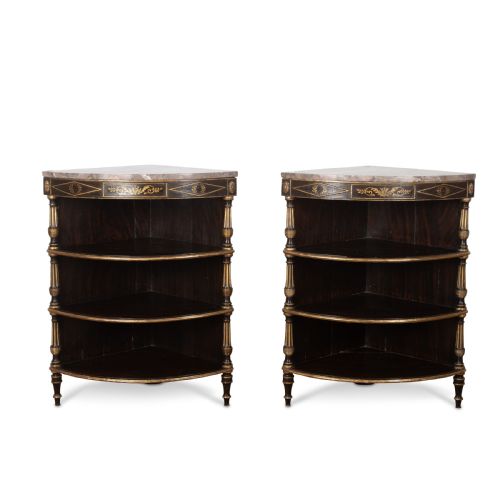
Georgian Corner Display Shelves
Georgian corner display shelves are timber tiered structures and cupboards built to fit room angles, offering functional display space for interiors.
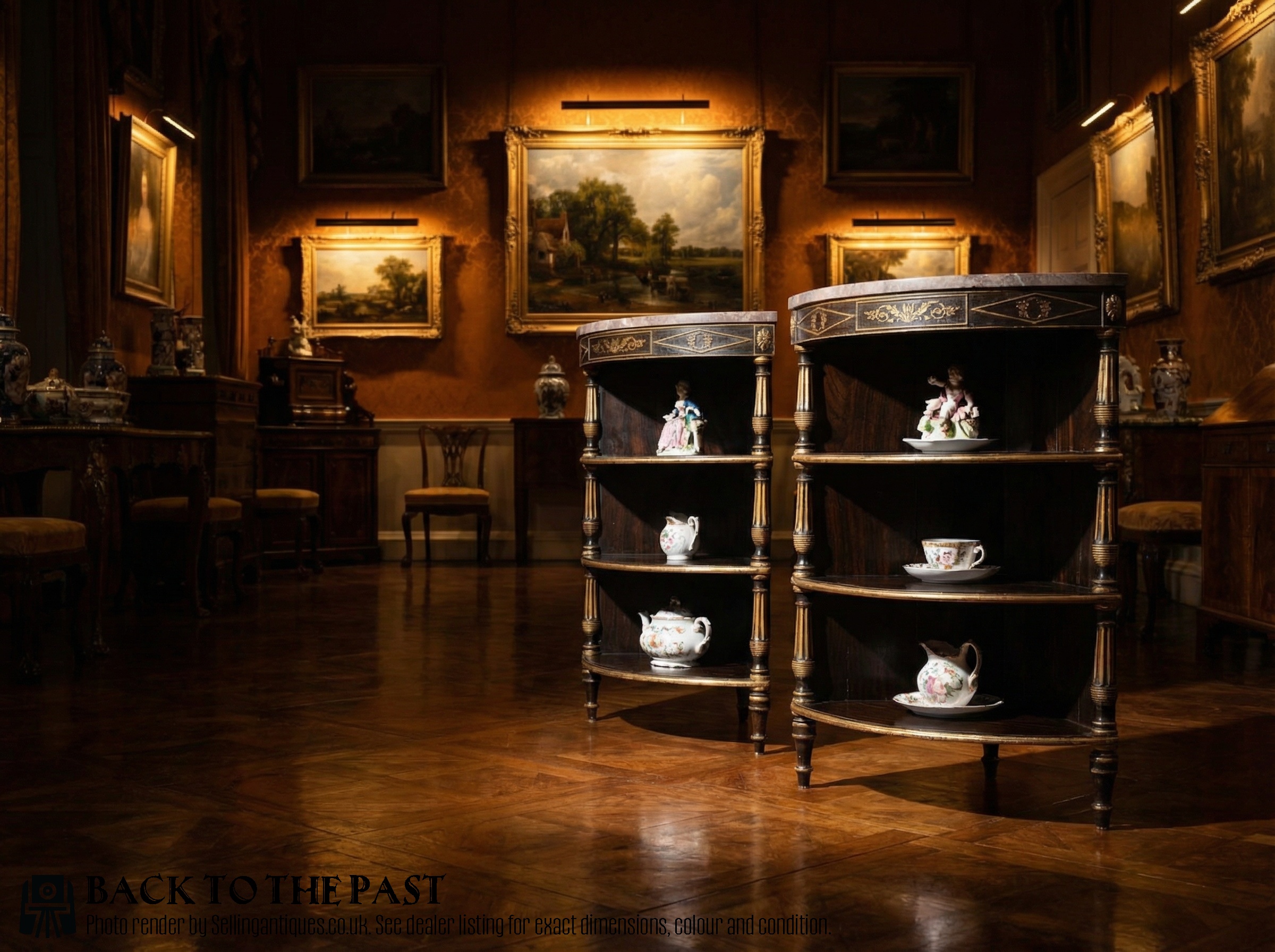
Georgian Corner Display Shelves
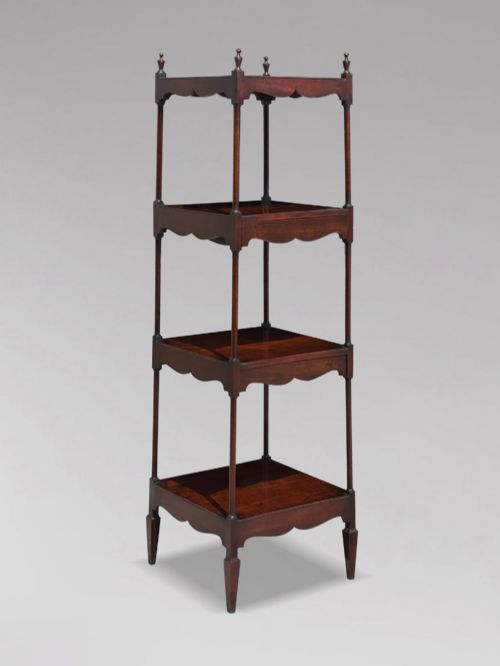
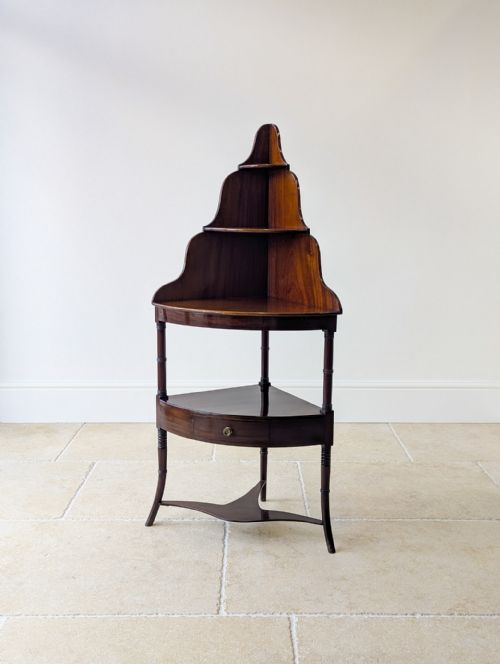
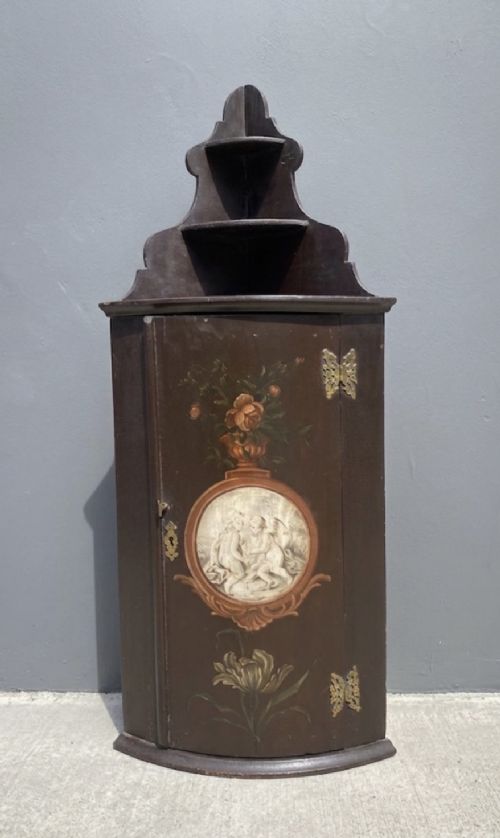
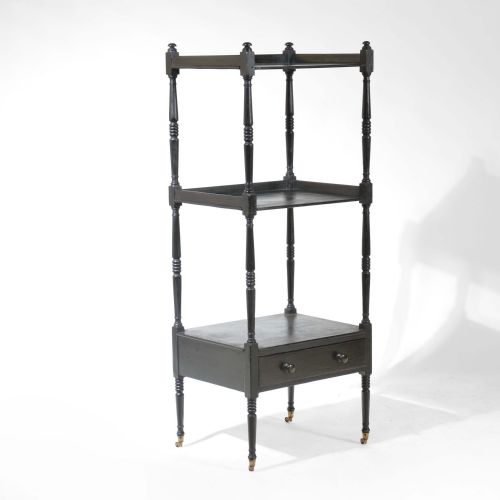
When buyers search for georgian corner display shelves, they find pieces spanning the eighteenth and nineteenth centuries, including the Regency and George III periods. These items appear primarily as corner cabinets, etageres, tier stands, and hanging cupboards designed to utilise awkward angles in rooms.
Materials and construction methods
Cabinet makers built these pieces using solid timber and veneers, frequently selecting mahogany for its strength and grain depth, or oak for robust framing. Surfaces often show painted finishes, ebonisation, or applied gold leaf alongside functional brass hardware.
Construction techniques include tiered shelf supports, A-frame assemblies, and tapering uprights designed to fit flush into room corners. Glazed or solid panel doors feature on enclosed cabinet versions while open etageres rely on slender turned or carved supports.
Listings feature mahogany, oak, and birdseye maple across Georgian, Regency, and Edwardian periods.
Distinctions in construction and design
Quality rests upon the selection of timber figures, such as figured mahogany or birdseye maple, and the precision of the joinery in tiered or bow fronted structures. Superior examples display refined proportions, careful carving, and integrated architectural mouldings.
The integrity of original brass fittings, the execution of painted or ebonised surfaces, and the stability of multi-tier assemblies also divide standard domestic furniture from finer workshop output.
Gillows
The Georgian Corner Display Shelves Glossary
- Etagere
- An open piece of furniture with shelves tiered one above another for displaying small objects or books. These originated in France and appear frequently in Regency variations.
- Whatnot
- A standing set of open shelves used for storing or displaying ornaments. They emerge in various configurations including A-frame and tapering formats.
- Bow front
- A convex curved front profile common on cabinets and shelving units. This shape softens room angles and provides increased internal capacity.
- George III
- The period of British history spanning from 1760 to 1820, noted for refined cabinet making styles. Pieces from this era often utilise dense mahogany and classical proportions.
Georgian Corner Display Shelves: Frequently Asked Questions
What is an etagere?
An etagere is an open shelved furniture piece designed for displaying ornaments and small decorative objects. They provide multiple tiers supported by upright posts.
In corner configurations, these structures maximise floor space while keeping collections visible from several angles in a room.
How do I clean mahogany?
Maintenance requires soft dusting cloths and periodic treatment with appropriate furniture waxes to nourish the timber. Avoid using harsh chemical sprays that degrade the polished finish.
Keeping pieces away from direct sunlight and sudden temperature changes protects the wood grain and prevents veneer lifting over time.
Where should I place a corner cabinet?
These cabinets suit empty room junctions where standard rectangular furniture cannot fit efficiently. They draw the eye upward and anchor vacant wall spaces.
Dining rooms, hallways, and living areas benefit from corner units by gaining display surface without blocking main circulation routes.
What distinguishes Regency pieces?
Regency furniture reflects the style popular during the early nineteenth century, marked by classical influences and clean architectural lines. These items frequently incorporate brass mounts and dark timbers.
Proportions tend to be compact and functional, suiting smaller rooms while retaining decorative presence through painted details or figured veneers.