
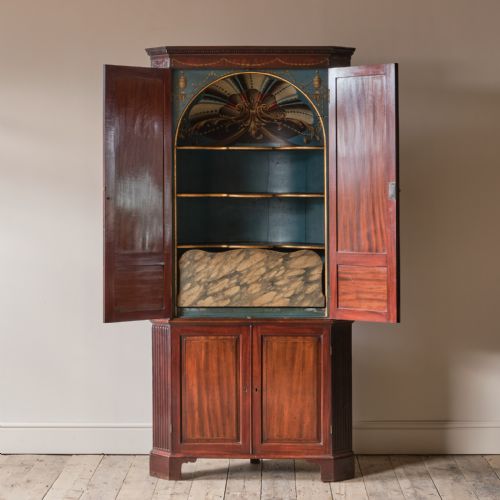
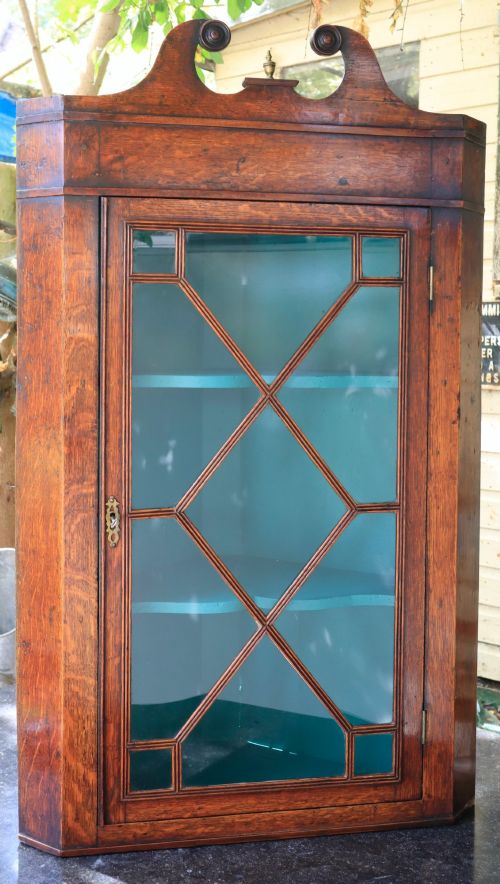
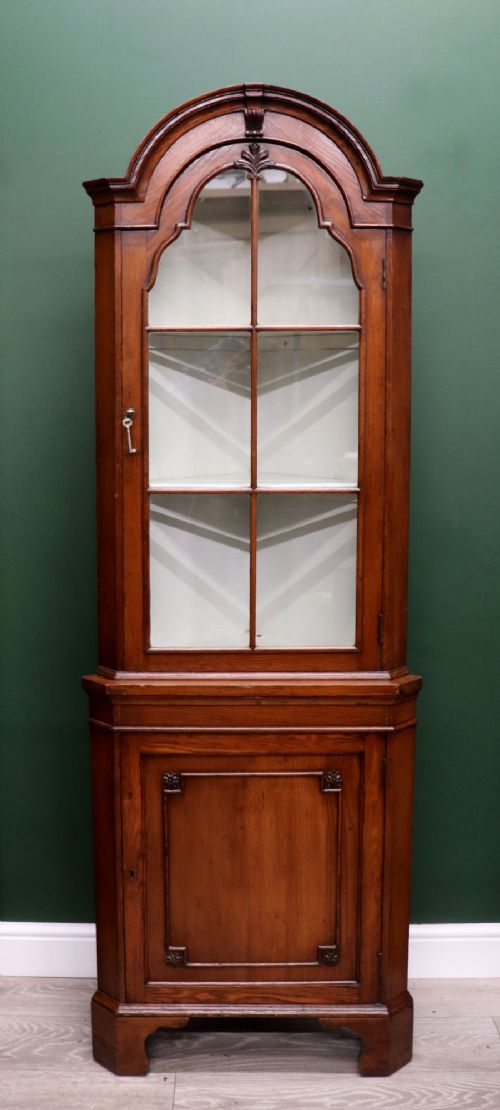


Georgian Corner Display Case
These georgian corner display case pieces bring architectural polish to neglected angles, framing collections behind glass with quiet authority.
Georgian Corner Display Case
A georgian corner display case utilises awkward interior angles by turning dead space into a focal point for storage and display. The pieces met here span hanging wall cabinets, floor-standing units, and glazed cupboards from the eighteenth century onwards.
Mahogany and oak dominate the timber choices, often finished with glass fronts or triple aspect panels to exhibit ceramics and glassware. You will encounter both wall-hanging formats with doors and substantial two-part cabinets resting on stands or bases.
The aesthetic vocabulary stretches from early Georgian styles through George III interpretations to later revival pieces including Sheraton and Queen Anne influences. Bow fronts and serpentine shapes appear alongside traditional flat-faced designs.
Construction and materials
Cabinet makers relied primarily on figured mahogany, oak, and walnut, frequently enhancing surfaces with delicate satinwood inlay or brass hardware. Timber selection dictated the structural integrity required to support heavy glazed doors and internal shelving.
Glazing bars divided the glass into geometric panes, whilst specialist joinery ensured the right-angled carcase fitted snugly into room corners. Back panels typically utilised simpler pine or oak boards, finished with fitted shelves to hold porcelain or glassware.
Secret drawers occasionally hide beneath internal shelving, waiting for someone to spot the concealed compartment.
Assessing craftsmanship
Excellence in a georgian corner display case rests on timber selection, particularly the grain matching on door panels and the crispness of inlaid details. Superior examples display refined proportions where the glazing bars remain slender and elegant.
The presence of original brass hinges, working locks with keys, and well-preserved timber patination elevates an item above standard utility pieces. Quality timber framing ensures the heavy doors hang truly without sagging over decades of use.
The Georgian Corner Display Case Glossary
- Glazing bar
- The narrow wooden strip that holds individual panes of glass within a door frame. Slender bars indicate finer cabinet making.
- Bow front
- A gently curved cabinet face that softens the hard right angle of a room corner. This shape required advanced joinery skills to construct.
- Sheraton Revival
- A late nineteenth-century design movement inspired by the lighter classical furniture of the eighteenth century. Pieces often feature satinwood inlay and refined proportions.
- Triple aspect glass
- A configuration featuring glass panels on the front and angled sides to maximise light penetration. This allows exhibits to be viewed from multiple angles.
Georgian Corner Display Case: Frequently Asked Questions
How do I hang a wall cabinet?
Wall-hanging corner cupboards require secure fixing into solid masonry or direct wall studs to bear the considerable weight of timber and glass.
Professional installation is recommended to ensure the cabinet stays level and the doors swing freely without binding.
Are these cabinets secure?
Many period examples retain their original working brass locks and keys for securing valuable contents.
Modern buyers should check the mechanism functions smoothly before relying on it to secure fragile collections.
How do I clean the interior?
Access depends on whether the piece is a hanging wall unit or a floor-standing model with fixed or adjustable shelving.
Use soft cloths and gentle timber cleaners, avoiding excessive moisture on aged veneers and historical glass panes.
Can I adjust the shelves?
Most period interiors feature fixed wooden shelving grooved directly into the carcase sides to maintain structural rigidity.
Items selected for display must fit the pre-determined vertical clearances built by the original cabinet maker.