
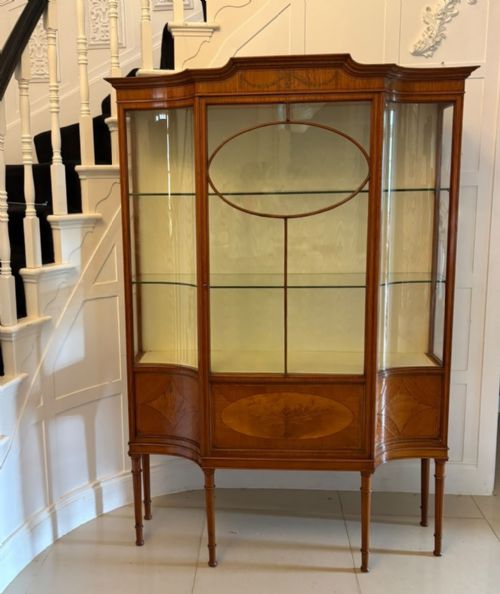
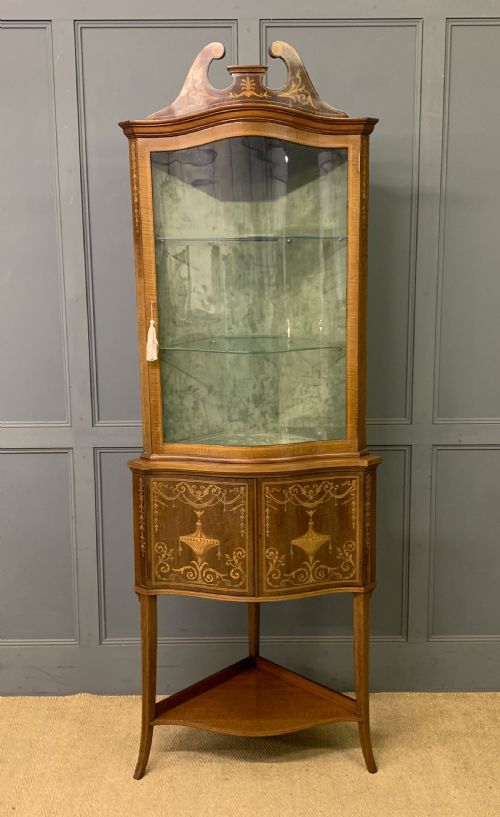

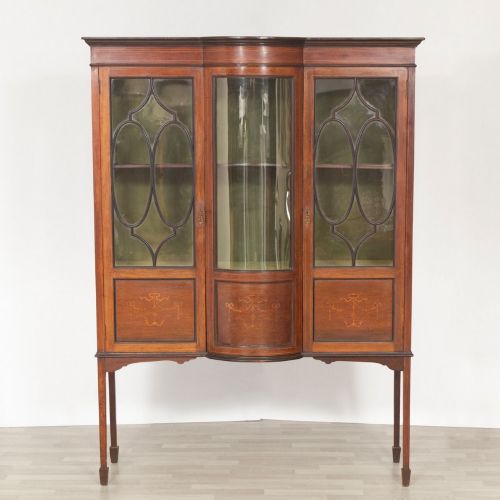


Inlaid Bowfront Display Cabinet
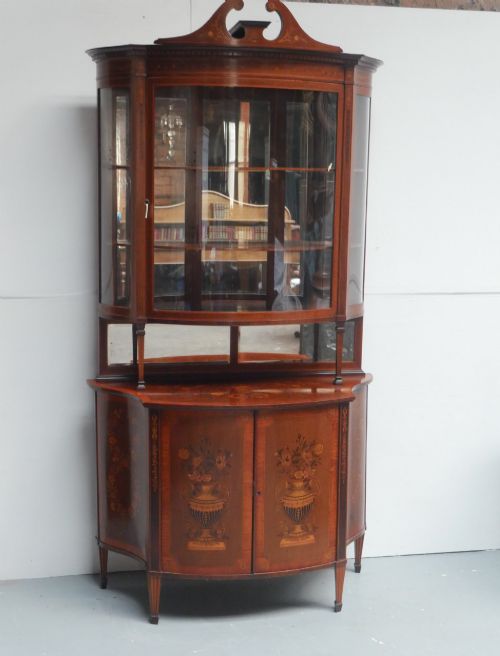
The inlaid bowfront display cabinet gathers light through curved glass and delicate stringing, uniting the utility of storage with the grace of formal reception rooms.
Inlaid Bowfront Display Cabinet
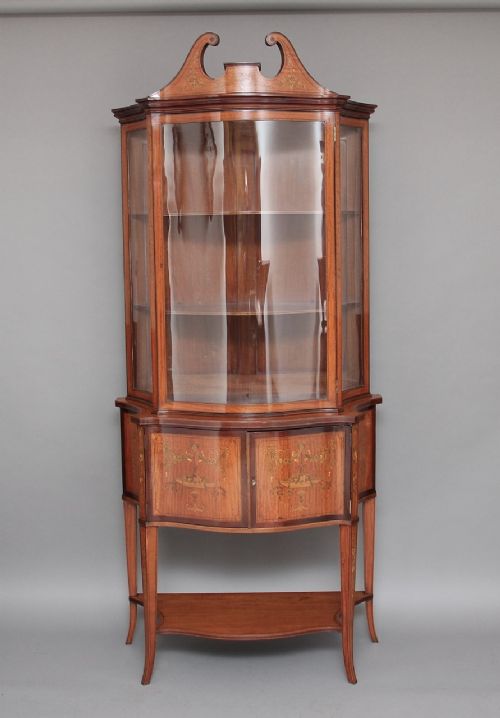
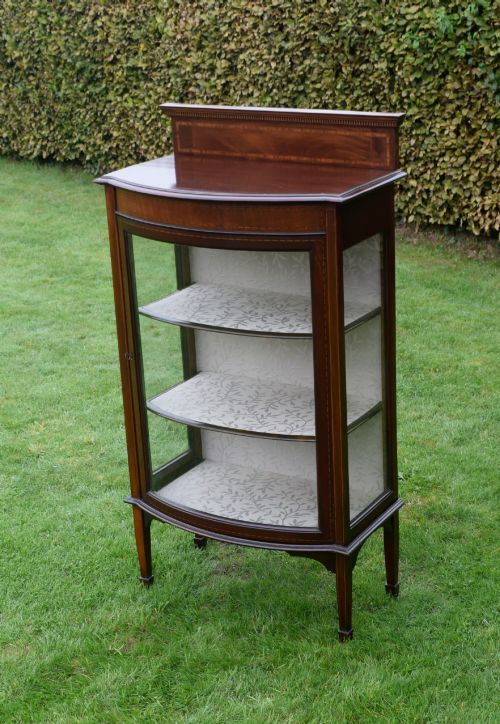
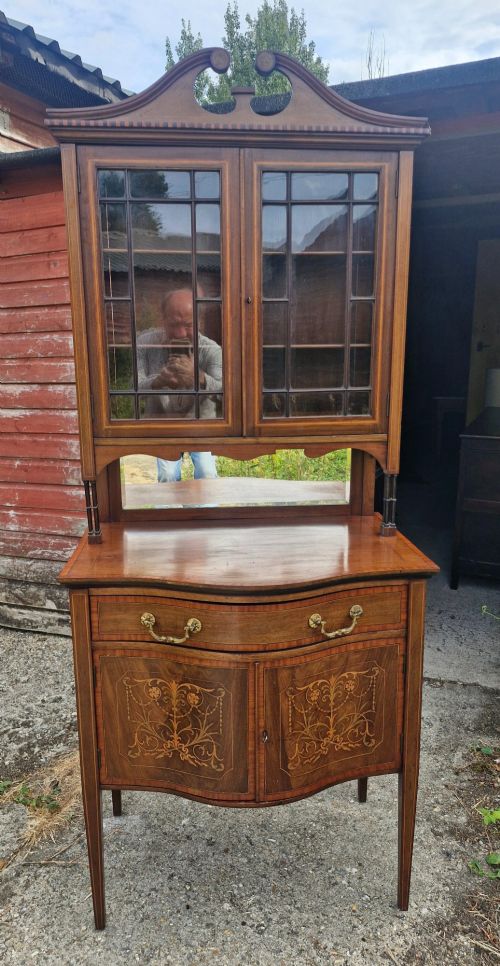
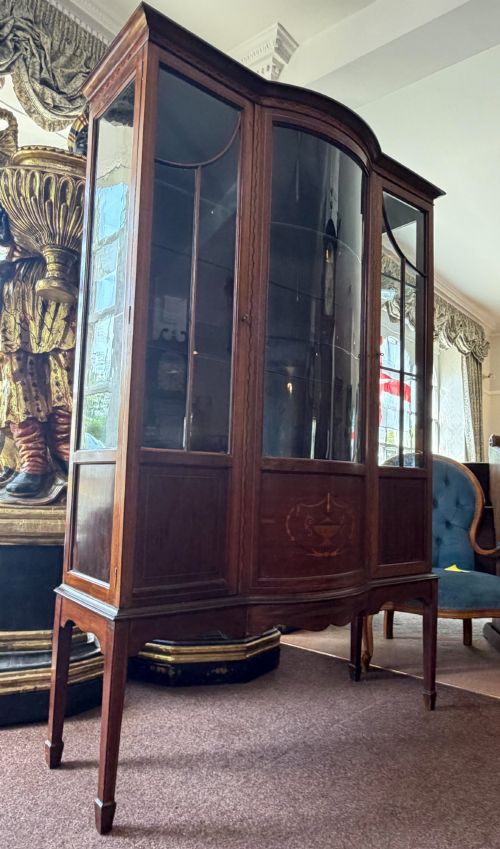
An inlaid bowfront display cabinet combines a projecting curved front with glazed doors to showcase porcelain, glass and small treasures. These pieces emerge predominantly from the Edwardian era and the nineteenth century, often following Sheraton Revival or Georgian design principles.
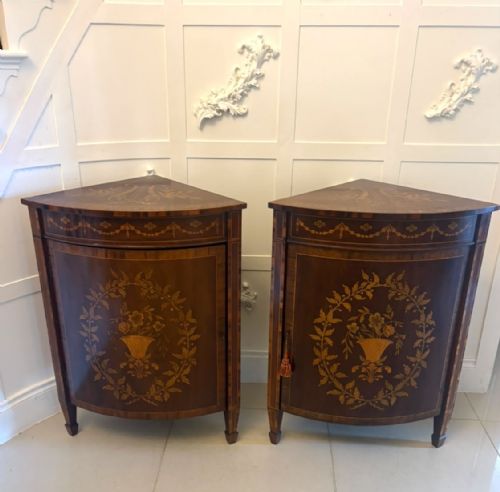
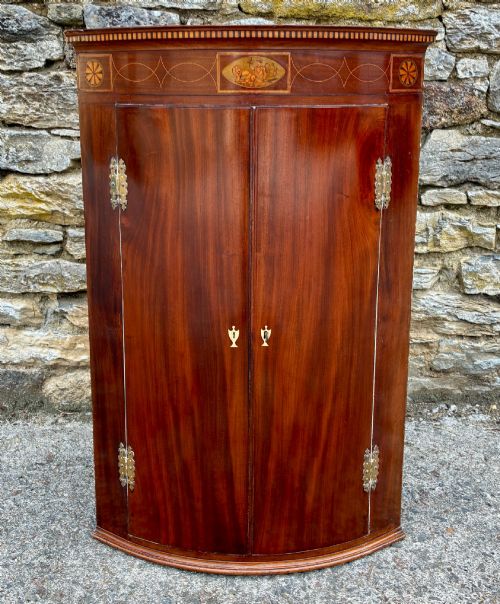
The form ranges from tall freestanding cabinets and china display cases to smaller hanging corner cupboards and side cabinets. Walnut, mahogany and satinwood provide the primary carcases, shaped to soften interior corners and reflect ambient light.
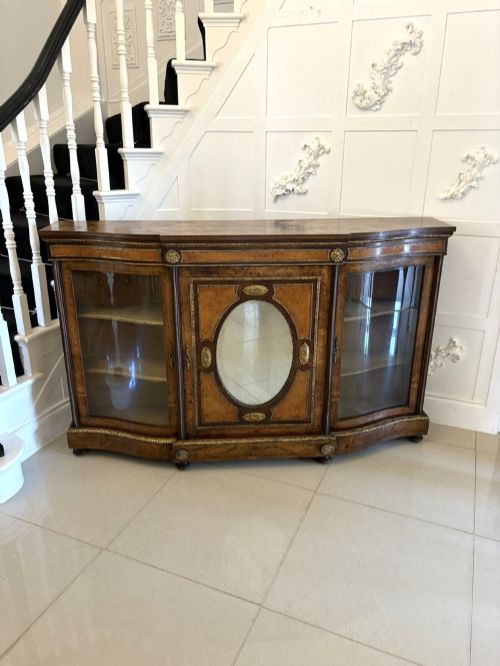
Edwardian interpretations frequently employ lighter mahogany framing paired with meticulous marquetry, whereas Victorian examples lean towards burr walnut and ebonised finishes. Buyers seek these forms to anchor a drawing room or dining space with period elegance.
How they were made
Cabinet makers constructed these carcases using solid timbers and veneered panels of mahogany, walnut and satinwood over supportive softwood or oak foundations. The curved bowfront doors required specialist steam bending or segmented framing to achieve the outward sweep without losing structural integrity.
Marquetry and stringing involved hand-cutting contrasting woods like boxwood, ebony and fruitwoods to form floral motifs, urns or geometric borders. Glazing relied on small individual panes held in wooden bars or bowed glass panels fitted carefully into rebated frames.
Ormolu mounts, brass handles and mirrored backs finished the construction, adding reflective depth to the interior display space while protecting the timber joints from movement.
Several Edwardian cabinets offer bowed glass doors specifically curved to catch the afternoon drawing room light.
What varies in quality
The refinement of the marquetry and stringing dictates the visual success of the piece, separating crisp, hand-cut floral details from simpler stamped or painted substitutes. Timber selection also plays a vital role, with heavily figured burr walnut or carefully matched mahogany veneers indicating superior workshop standards.
Construction details such as the smoothness of the curved door action, the integrity of the bowed glass and the quality of the original brass or ormolu mounts reveal the original investment in craftsmanship. Superior examples maintain tight joints and balanced proportions across both freestanding and corner formats.
Edwards and Roberts
The Inlaid Bowfront Display Cabinet Glossary
- Bowfront
- A convex, outward-curving front elevation typical of select cabinets and sideboards. This curve softens room angles and magnifies the interior display.
- Marquetry
- Decorative veneer work forming pictures or patterns from thin slices of diverse woods. Craftsmen inlay these pieces into the primary timber ground.
- Ormolu
- Gilded bronze used for mounts, feet and decorative hardware on nineteenth-century furniture. It provides a bright metallic contrast against dark walnut or ebonised surfaces.
- Satinwood
- A pale, lustrous hardwood prized for its golden sheen and smooth grain. It frequently forms the primary surface or contrasting banding on late Victorian and Edwardian pieces.
- Vitrine
- A glass-fronted cabinet or display case designed specifically for showing porcelain and objets d'art. The term emphasises visibility from multiple angles.
Inlaid Bowfront Display Cabinet: Frequently Asked Questions
How do I clean the glass?
Use a soft, lint-free cloth with a mild, ammonia-free glass cleaner applied to the cloth rather than directly onto the panel. This prevents moisture from seeping into the wooden glazing bars or damaging fragile antique veneers.
Take care around hand-painted details or delicate stringing near the edges of the door frames. Gentle wiping preserves both the glass clarity and the surrounding historic finish.
Can these hold heavy books?
Most bowfront display cabinets and china cabinets are designed for lighter decorative items, porcelain and glassware rather than heavy libraries. The internal wooden shelves rest on fixed supports or simple pin systems suited to moderate weight distributions.
For substantial book collections, dedicated bookcases provide reinforced shelving and deeper carcases built to withstand concentrated loads.
Where should I place it?
Position your cabinet away from direct sunlight and strong heat sources such as radiators to protect the timber veneers and historic polishes from drying out or splitting. Placing the piece on a level floor ensures the curved doors hang evenly and latch correctly without straining the hinges.
Rooms with stable ambient humidity help maintain the structural stability of both the solid timber carcases and the delicate marquetry.
How do I tell Edwardian from Victorian?
Edwardian cabinets generally feature lighter timbers like satinwood and slender mahogany frames with refined, delicate inlay and painted swags. Victorian pieces frequently rely on darker burr walnut, ebonised finishes, heavier proportions and cast ormolu mounts.
Reviewing the interior construction, drawer linings and backboards alongside the overall decorative vocabulary helps clarify the period of origin.