


Georgian Copper Tea Kettle
A georgian copper tea kettle brings warmth and genuine period utility to a hearth, uniting robust metalwork with the quiet ritual of boiling water.
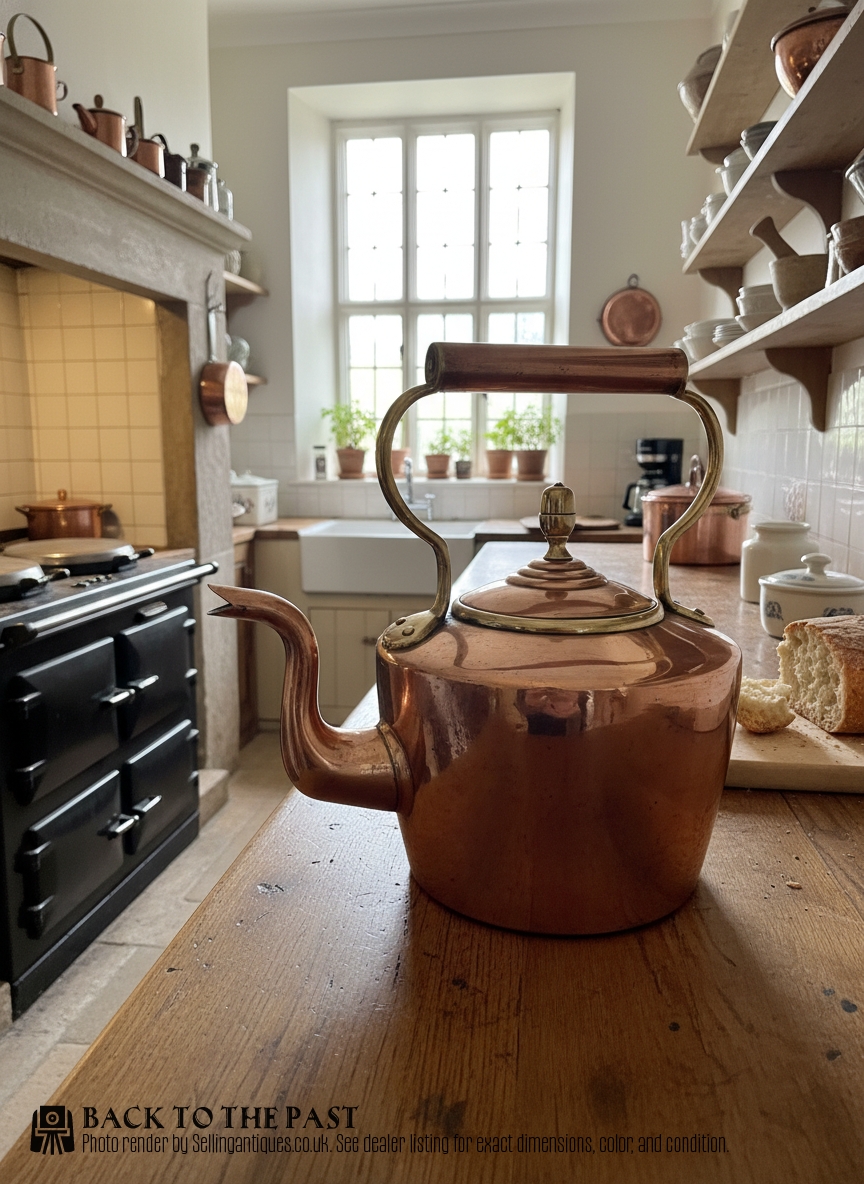
Georgian Copper Tea Kettle
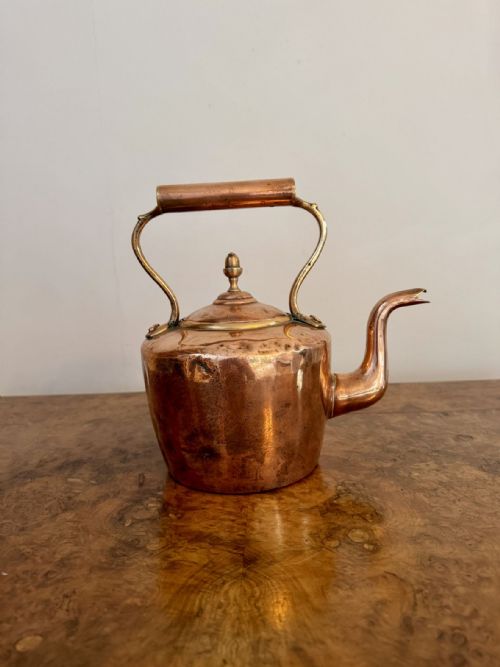
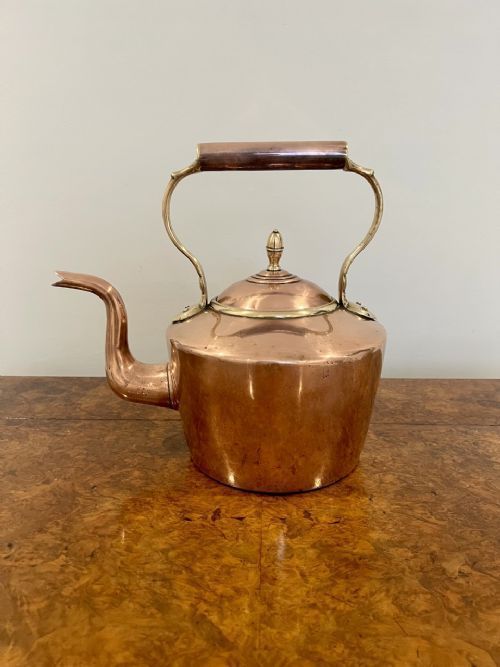
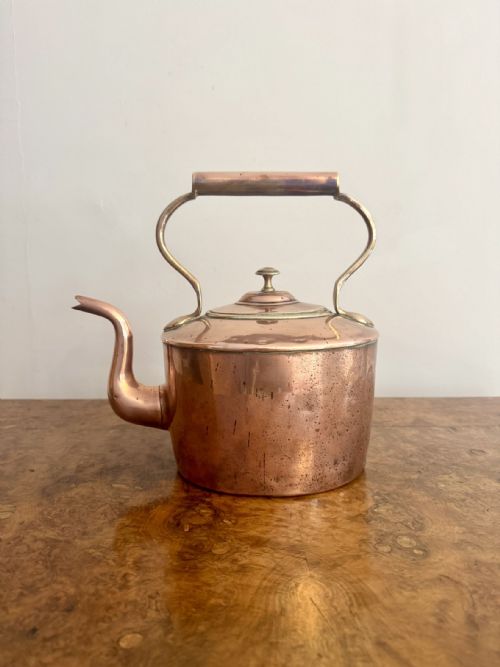
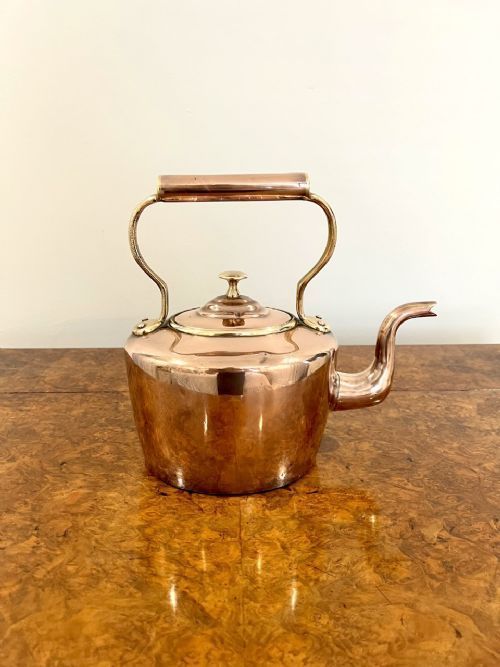
A georgian copper tea kettle is a utilitarian vessel designed for heating water, typically taking a generous rounded or oval form suited to coal or wood fires. When searching for a georgian copper tea kettle, you encounter pieces spanning the late eighteenth century into the early nineteenth century, predominantly associated with the George III and Regency periods. The selection here leans heavily towards George III examples, alongside related forms such as copper water urns and samovars.
These pieces emerge in various sizes, from small domestic vessels to large examples intended for substantial households. Alongside standard kettles, the inventory includes specialised shapes like oval vessels and hanging water urns that incorporate bronze and brass fittings. Each object reflects the practical domestic requirements of the period, shaped for heavy use over open hearths and grates.
Materials and construction
Makers fashioned a georgian copper tea kettle primarily from sheet copper, hammering and joining the metal to withstand intense heat. Brass and iron frequently appear in handles, spouts, and fixings, providing structural rigidity where the copper alone might flex or wear.
Wood elements also feature on handles, offering insulation against the heat of the fire. Bronze integrates into more complex vessels such as samovars and urns, demonstrating the varied metalworking techniques employed during the Regency and Georgian eras.
Some kettles are so large they surely boiled enough water to drown a small terrier.
Understanding quality differences
Quality in a georgian copper tea kettle rests largely on the heaviness of the gauge and the precision of the construction. Superior pieces display careful dovetailing or seam work and retain well-formed handles in brass, wood, or iron that complement the body.
The overall proportion and shape dictate distinction, with oval formats and substantial scaling often marking out finer examples. Original surface patination and minimal structural alteration separate standard utility vessels from the most desirable survivors.
The Georgian Copper Tea Kettle Glossary
- George III
- The period spanning from 1760 to 1820, encompassing much of the refined metalwork and domestic equipment seen in these listings. Pieces from this era often display robust proportions and classical restraint.
- Regency
- The stylistic era following the Georgian period, noted here through refined samovars and varied bronze and copper combinations. It introduces distinct classical revival influences to domestic vessels.
- Samovar
- A heated metal container traditionally used to boil and heat water for tea, combining copper and bronze in more complex assemblies. These vessels often feature spigots and intricate internal construction.
- Water urn
- A large vessel designed for storing and dispensing heated water, frequently found in hanging formats during the Georgian period. They offer a larger capacity than standard tea kettles.
Georgian Copper Tea Kettle: Frequently Asked Questions
What is a georgian copper tea kettle?
A georgian copper tea kettle is a heavy metal vessel made for heating water over a coal or wood fire during the late eighteenth and early nineteenth centuries.
These pieces combine functional copper bodies with brass, iron, or wooden elements designed to endure daily domestic use.
How were these kettles used originally?
They sat directly on hearths, grates, or trivets to boil water for tea and general household needs.
Servants heated water continuously throughout the day, making durability and reliable heat transfer essential for these vessels.
Can I use an antique kettle on a modern stove?
Most antique kettles are intended for display or collection rather than daily modern heating due to age and historic repairs.
Thermal shock on modern induction or gas burners can compromise old soldered seams and original metal integrity.
How do I distinguish George III from Victorian kettles?
George III pieces date from 1760 to 1820 and generally display distinct hand-hammered construction details and heavier copper gauges.
Later Victorian examples often shift in weight, handle attachment style, and manufacturing standardisation compared to earlier hand-finished work.