




Georgian Copper Box
A georgian copper box is a pocket-sized container for snuff or patches, valued for its painted enamel work and metal construction.
Georgian Copper Box
When you search for a georgian copper box, you find small receptacles designed for pocket use, primarily snuff boxes, patch boxes, and trinket boxes from the eighteenth and nineteenth centuries. These items served a practical daily purpose in polite society, holding scented patches or ground tobacco.
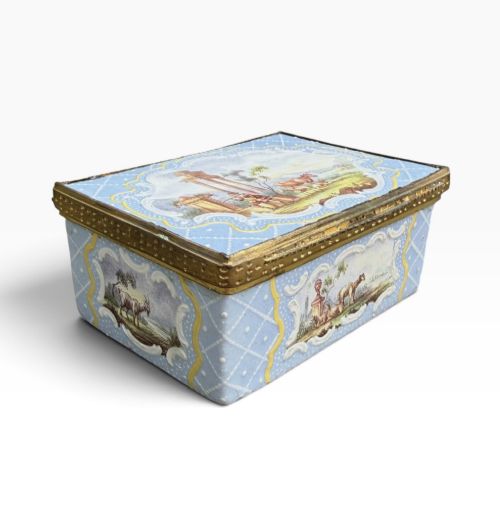
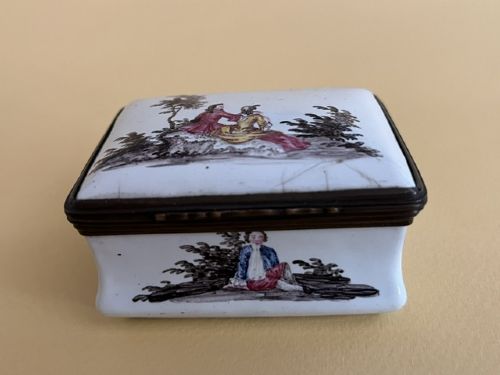
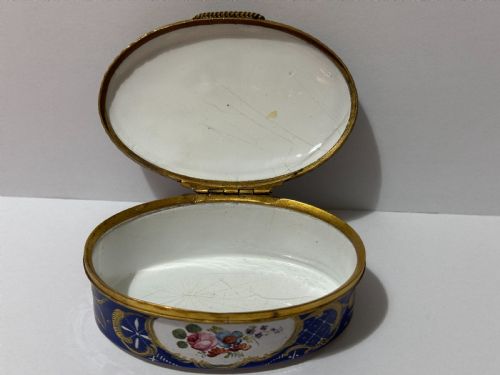
The version you are most likely to meet on this page is the Bilston or South Staffordshire enamel box, frequently oval or rectangular in shape. These pieces combine a copper body with a white enamel coating painted with figures, landscapes, or inscriptions.
Other forms appear less often, including novelty designs like bellows or spaniels, and larger domestic items such as coal boxes, spice boxes, and hanging spill containers. The materials range from plain copper to gilt metal and brass combinations.
How they were made
The construction of these pieces relies on sheet copper, shaped by hand or mechanical means to form the base and hinged lid. Metal components like brass and gilt metal are frequently incorporated into the mounts and frames.
Enamel provides the primary decorative surface, fused to the copper base through high-temperature firing. Artisans then hand-painted these white enamel surfaces with detailed scenes, such as musicians in parkland or topographical views.
Engine turning appears on alternative materials like horn paired with copper gilt, creating textured geometric patterns across the surface.
Georgian Copper Box Retail Price Guide 2026
Typical asking prices for georgian copper box among the pieces listed under this phrase on Sellingantiques today, from the lower quarter to the upper quarter. They describe what is for sale here now, not the wider market.
What varies in quality
The precision and detail of the hand-painted enamel scenes separate standard production from finer examples. Painted lids featuring specific subjects, such as named views or complex figurative groups, demonstrate greater artisan skill.
The integrity of the copper base and the survival of the original enamel coating dictate the overall condition and desirability of the piece. Crispness in the metal mounts and the smooth operation of the hinge mechanism further distinguish superior specimens.
The Georgian Copper Box Glossary
- Bilston enamel
- Enamelled copper items produced in the Staffordshire town of Bilston during the eighteenth century. These boxes often feature delicate copper frames and hinged lids.
- Patch box
- A small pocket container fitted with a mirror inside the lid, used for holding cosmetic silk patches. Ladies wore these patches on their faces during the Georgian period.
- Snuff box
- A small container designed to hold powdered tobacco for nasal consumption. They were carried in the pocket and made from materials including copper, enamel, and horn.
- Rose engine turning
- A decorative mechanical lathe technique that cuts intricate geometric patterns into a surface. This method appears on the casing of certain metal and horn boxes.
- Spill box
- A container hung on a wall to hold thin wooden matches used for lighting candles and fires. Dutch examples often utilise copper construction.
Georgian Copper Box: Frequently Asked Questions
What is a georgian copper box?
A georgian copper box is a small receptacle made in the eighteenth or early nineteenth century, typically designed for carrying snuff or cosmetic patches.
Most examples feature an enamelled copper body with hand-painted decoration on the lid.
How were these boxes used?
People carried them daily in pockets or reticules to hold personal items like tobacco snuff or small silk beauty patches.
Larger versions remained in the home as spice containers or hanging spill boxes for lighting fires.
How do I date a copper box?
Dating relies on stylistic evidence, manufacturing techniques, and the typical output periods associated with Staffordshire enamel workshops.
Pieces from the eighteenth century often display characteristic Bilston enamel work and specific subject matter on the lids.
Are all these boxes from Bilston?
Many enamel boxes originate from Bilston and South Staffordshire, but production also occurred across other English workshops.
Some listings include Dutch domestic items and novelty pieces made in alternative shapes like bellows.
How should I display my box?
Because of their small size, these boxes suit placement on tabletop cabinets, desks, or within dedicated display cases.
Keeping them away from direct sunlight and excessive moisture protects the delicate enamel surfaces.