



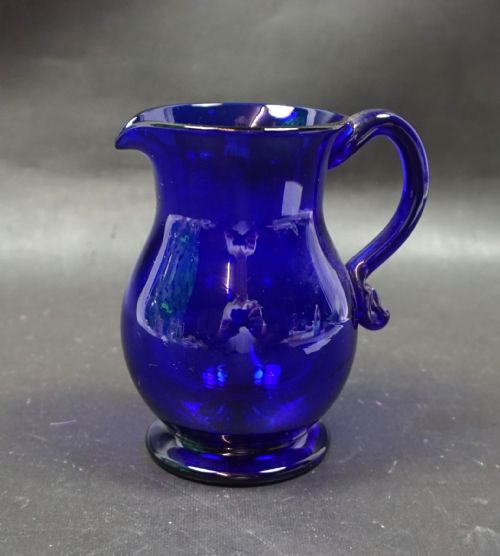


Georgian Cobalt Glasses
Georgian cobalt glasses bring rich sapphire tones to the table, uniting 18th-century glassblowing with deep blue hues.
Georgian Cobalt Glasses
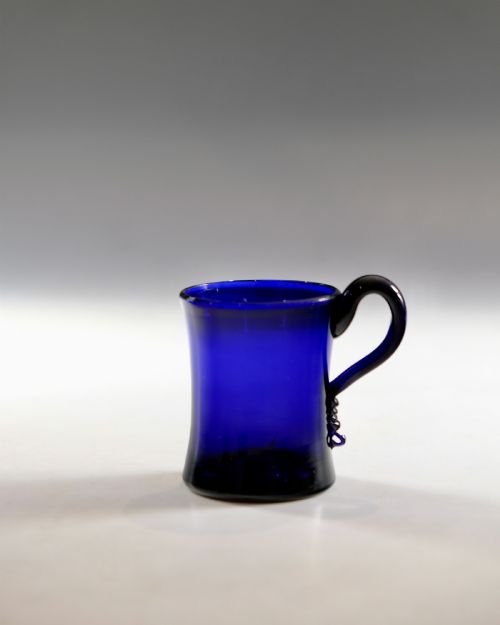
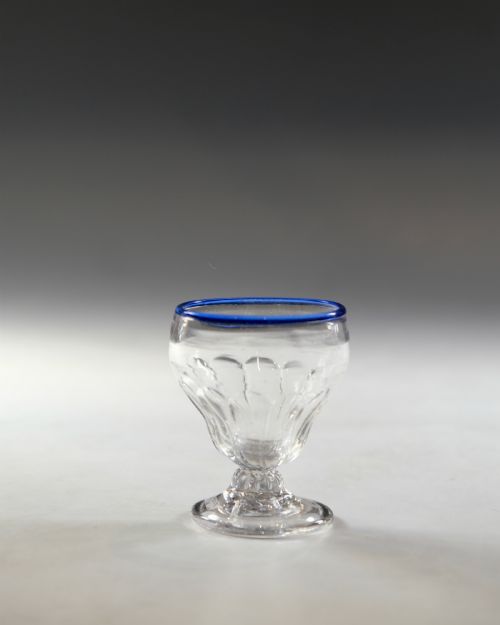
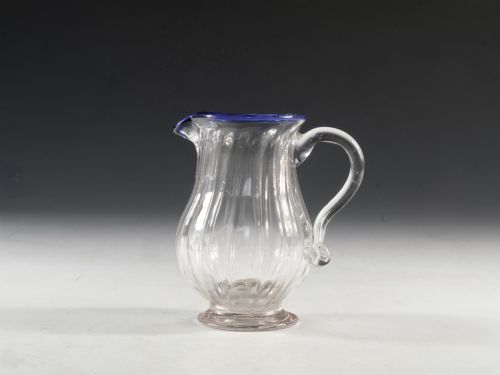
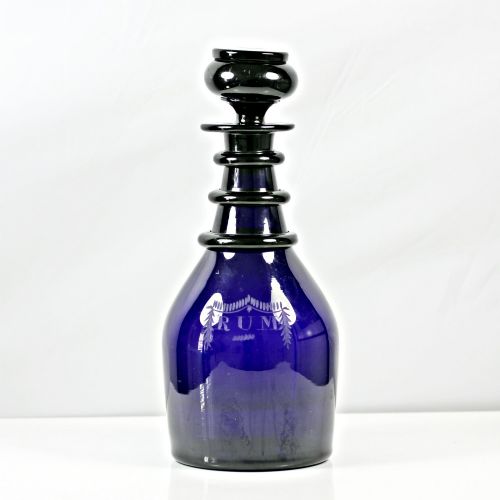
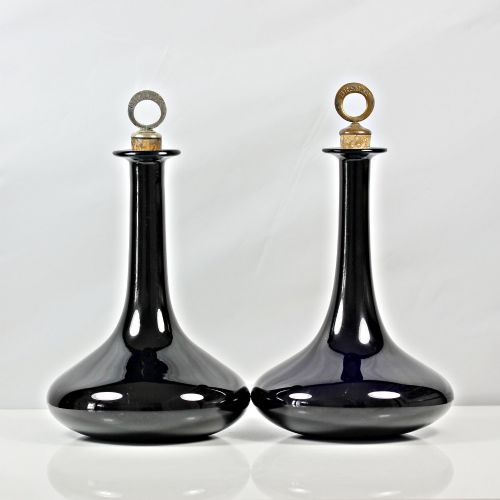
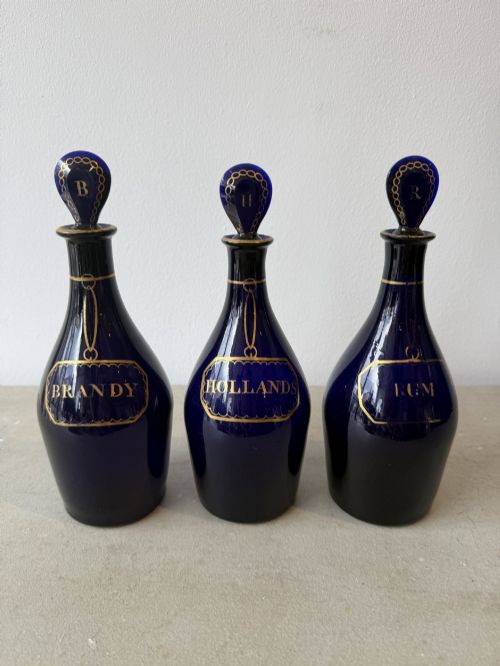
Georgian cobalt glasses encompass tableware items such as decanters, cream jugs, salt cellars, sugar baskets, and bonnet glasses produced during the Georgian era and associated periods. These pieces showcase deep blue glass, often referred to as Bristol blue, alongside related items featuring blue glass liners or rims.
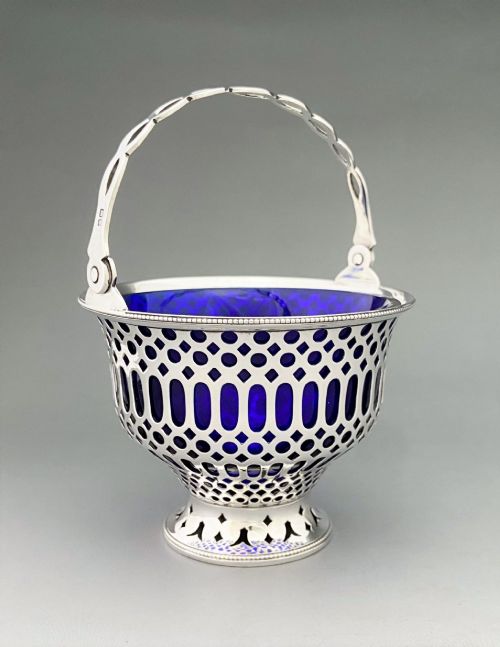
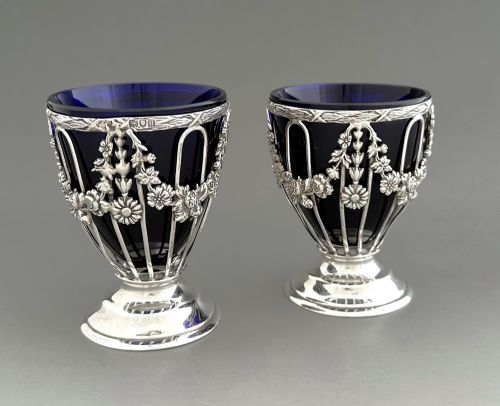
The objects on this page most frequently appear as table glass, including decanters, cream jugs, and salt cellars dating from the eighteenth and early nineteenth centuries. Alongside pure glass pieces, the selection includes silver baskets, salts, and dish rings fitted with cobalt glass liners.
Makers and craftsmen applied this distinctive blue glass across various tableware forms, sometimes combining it with silver wirework, enamel, or hand-painted decoration. The resulting items range from small bonnet glasses to multi-ring rum decanters.
How they were made
Glassmakers utilised lead glass and cobalt glass formulations to achieve the characteristic deep blue coloration seen in these pieces. Techniques such as wrythen moulding created spiral ribbed surface patterns on items like egg cups and cream jugs.
Metalworkers combined sterling silver, gold, and silver wirework with the glass elements, producing fitted containers like salt cellars and sugar baskets. Enamel work and hand-painted details were occasionally added to enhance the surface appearance.
Georgian Cobalt Glasses Retail Price Guide 2026
Typical asking prices for georgian cobalt glasses among the pieces listed under this phrase on Sellingantiques today, from the lower quarter to the upper quarter. They describe what is for sale here now, not the wider market.
Ring of the Heavens items combine diamonds, pearls, and blue glass into wearable Georgian romance.
What varies in quality
The refinement of the glass body and the depth of the cobalt colour distinguish finer examples from standard production. Uniformity in the blue tone and clarity in lead glass components indicate superior craftsmanship.
The integration between glass inserts and their silver or metal mounts reflects the skill of the makers. Pierced silverwork, swing handles, and hand-painted motifs demand precise execution, separating simpler items from more elaborate tableware.
The Georgian Cobalt Glasses Glossary
- Bonnet glass
- A small glass bowl or tazza, often featuring a patterned rim, used for sweetmeats or desserts in the eighteenth century. These pieces frequently display blue glass rims or bodies.
- Bristol blue
- A deep cobalt blue lead glass historically associated with the West Country glass industry. The intense coloration results from the addition of cobalt oxide to the molten glass batch.
- Wrythen
- A decorative optical twist moulded into the body of glassware during production. This technique creates a diagonal ribbed pattern across the surface of jugs and egg cups.
- Monteith
- A bowl with a scalloped or notched removable rim used for chilling wine glasses. Examples may incorporate blue glass elements or liners.
- Dish ring
- A spool-shaped stand, also known as a potato ring, made from pierced silver to support bowls on the dining table. They frequently incorporate cobalt glass liners.
Georgian Cobalt Glasses: Frequently Asked Questions
What are Georgian cobalt glasses used for?
These items served functional dining roles on Georgian tables, holding condiments, spirits, cream, and sugar.
Today, collectors utilise them as decorative tableware or display pieces that highlight historic glassmaking.
How do you identify Georgian blue glass?
Authentic pieces exhibit the characteristic deep cobalt hue known as Bristol blue, often combined with lead glass weight and pontil marks on the base.
Stylistic markers such as wrythen moulding, hand-painted details, and pairing with Georgian silver help confirm the period.
How should I care for antique cobalt glass?
Gentle hand washing in lukewarm water with mild soap preserves the integrity of both the glass and any associated silver elements.
Avoid sudden temperature changes and harsh abrasive cleaners to protect the historic surface.