

Georgian Chippendale Chairs
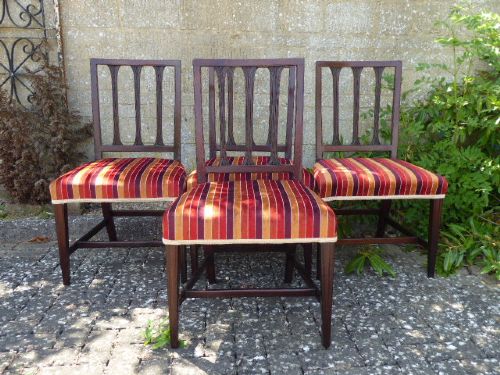
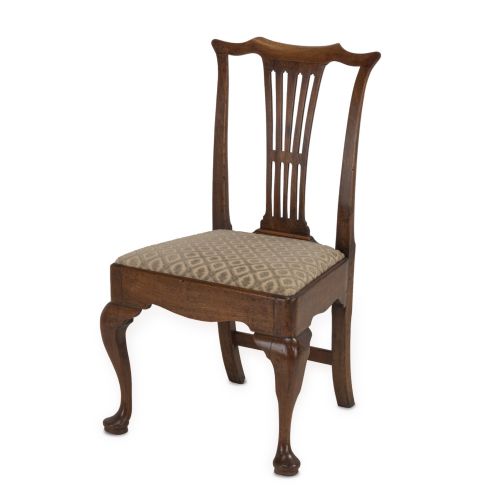
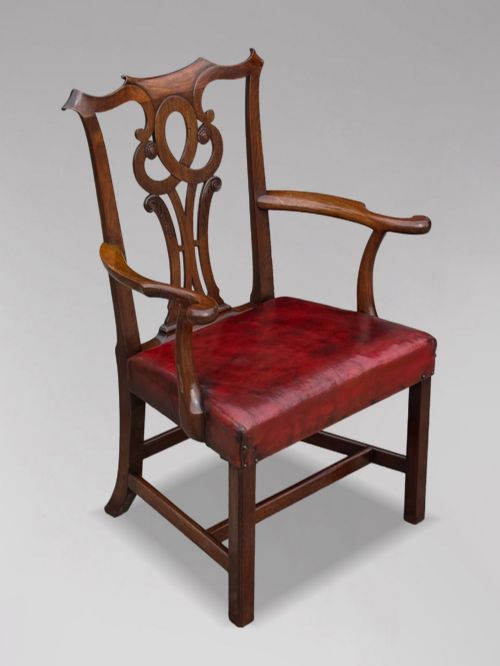
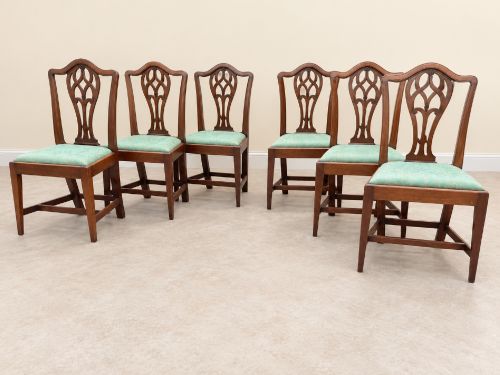
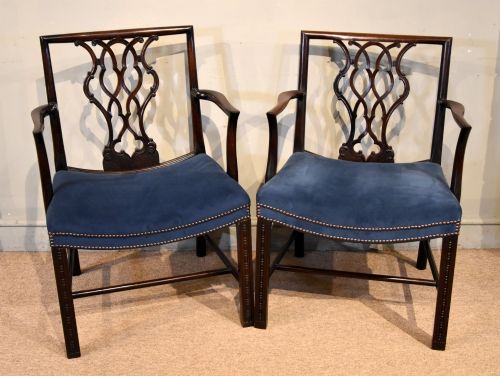
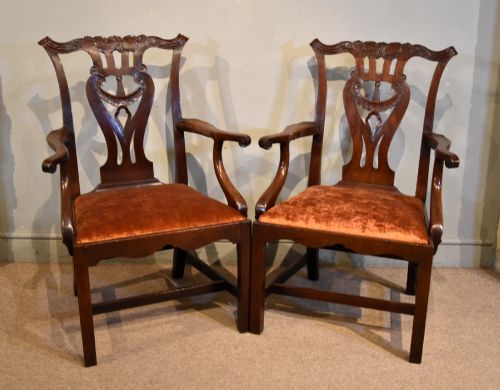
Georgian chippendale chairs bring architectural distinction to a room through sculpted timber and pierced splats.
Georgian Chippendale Chairs
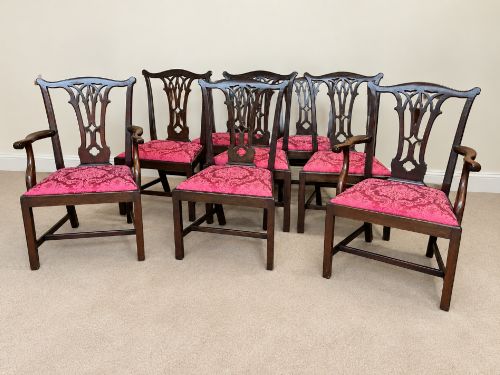
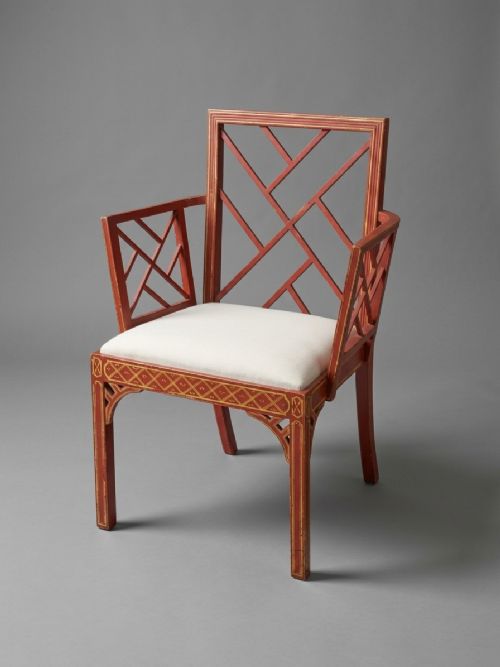
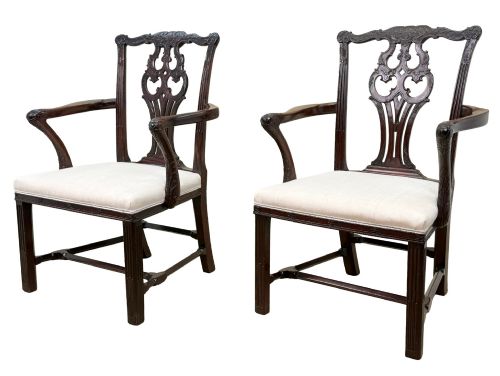
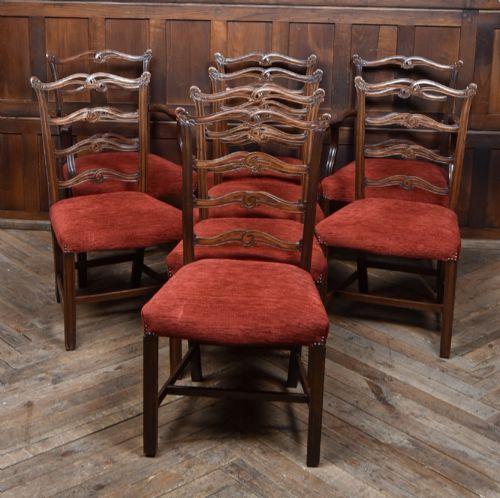
You are most likely to meet mahogany dining chairs from the eighteenth century or Chippendale style revival sets dating from the Edwardian period and the early twentieth century. These pieces range from simple country chairs in elm or fruitwood to elaborate carved carver armchairs and library chairs.
The regional variations include English, Scottish, and Irish examples, demonstrating local interpretations of the London pattern books. Whether configured as a single desk chair or a matched set of ten dining chairs, the seating provides both utility and decorative presence.
Materials and Construction
Makers relied principally upon dense mahogany, augmented by regional timbers such as walnut, oak, elm, fruitwood, and yew wood. Giltwood also appears on specialised pieces, while frames frequently support drop-in or upholstered seats covered in leather, fabric, velvet, damask, or tapestry.
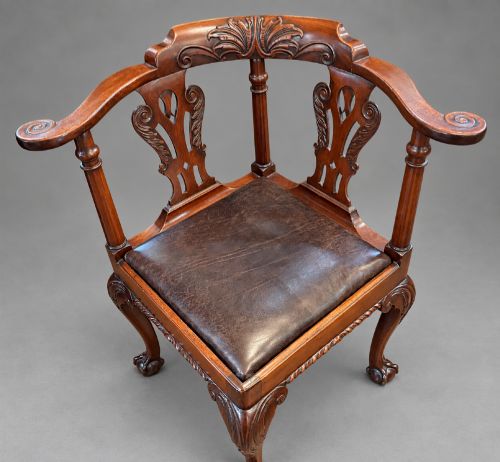
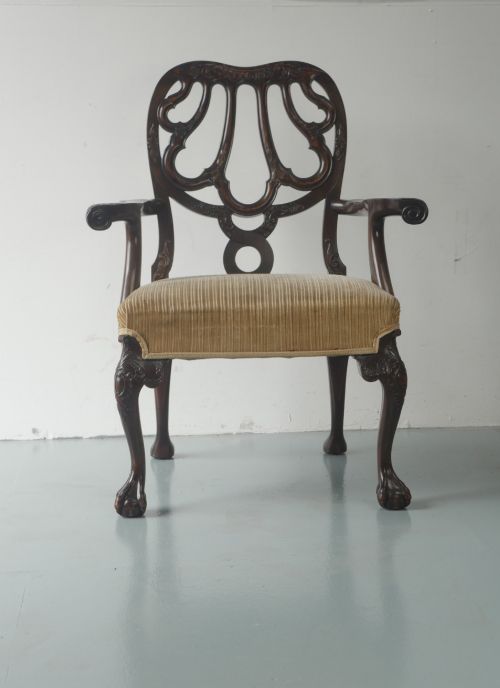
Joinery techniques involved mortise and tenon frames, allowing craftsmen to carve intricate details directly into the solid timber. Splats were carefully pierced and shaped, and legs were joined with stretchers or finished with claw and ball feet depending on the period.
Georgian Chippendale Chairs Retail Price Guide 2026
Typical asking prices for georgian chippendale chairs among the pieces listed under this phrase on Sellingantiques today, from the lower quarter to the upper quarter. They describe what is for sale here now, not the wider market.
Some elm country chairs retain traces of old tapestry seats that have absorbed centuries of fireside warmth.
Evaluating the Craftsmanship
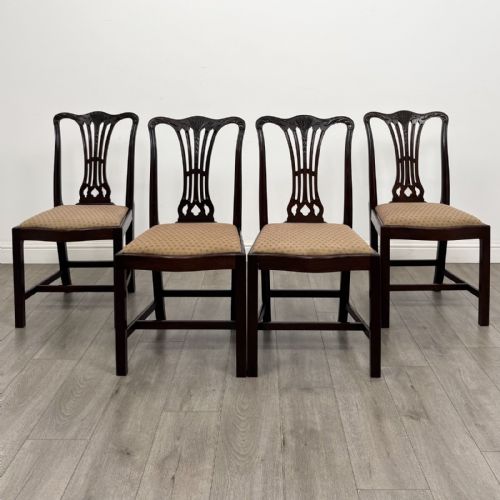
The distinction between ordinary and exceptional work rests upon the depth and crispness of the carving on the crest rail and splat. Eighteenth-century originals display fluid hand-carved lines, whereas revival pieces often rely on machine-milled uniformity or simpler execution.
Timber selection dictates overall weight and stability, with dense grain and rich patination marking superior examples. The integrity of the original frame construction and the subtlety of proportion separate standard dining seats from fine library armchairs and Gainsborough chairs.
Waugh & Son
The Georgian Chippendale Chairs Glossary
- Pierced Splat
- The vertical wooden centre piece of a chair back cut through with decorative openwork designs. This technique defines the silhouette of eighteenth-century seating.
- Gainsborough Chair
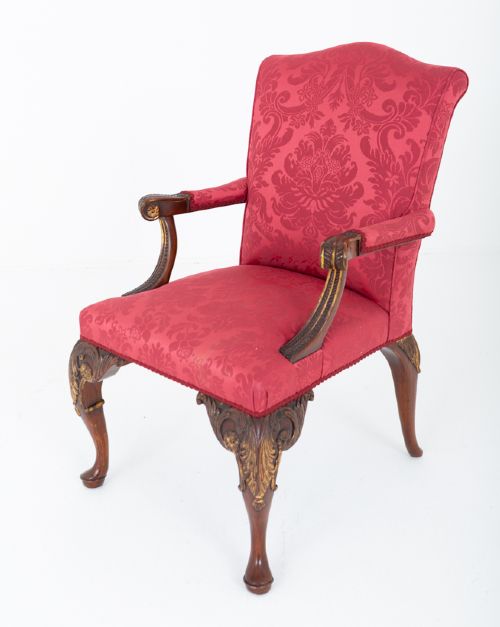
- A wide-seated, upholstered armchair with open padded arms, designed for writing desks or libraries during the Georgian period.
- Carver Armchair
- An open armchair with wooden elbow supports, traditionally placed at the head of a dining table alongside matching side chairs.
- Chippendale Revival
- Furniture manufactured during the late nineteenth and early twentieth centuries copying eighteenth-century aesthetic principles.
- Tray Top Commode
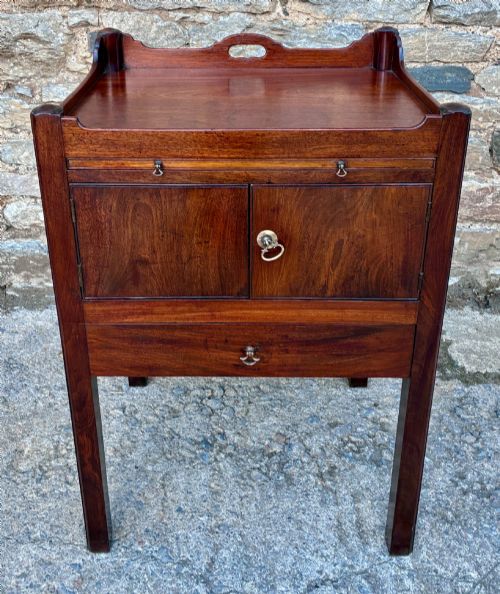
- A small cabinet or table featuring a raised moulded edge resembling a serving tray, produced during the Georgian era.
Georgian Chippendale Chairs: Frequently Asked Questions
How do I identify a genuine eighteenth-century piece?
Examine the timber patination, tool marks on the underside, and the hand-carved details of the splat and crest rail.
Eighteenth-century examples show natural wear patterns and construction methods distinct from later nineteenth and twentieth-century revival furniture.
What is a Gainsborough chair?
A Gainsborough chair is a large, upholstered armchair featuring open padded wooden arms designed for library or desk use.
These pieces offer wider proportions than standard dining seats and are typically covered in leather or historic textiles.
How were these chairs used historically?
They functioned primarily as formal dining seats, desk chairs, or library seating for the landed gentry.
Carver armchairs sat at the heads of dining tables, while side chairs lined the walls of formal rooms until needed.
Can I mix eighteenth-century chairs with revival pieces?
Matched sets from the twentieth century often provide uniformity for daily dining use, while eighteenth-century originals serve as focal points.
Combining period and revival items requires attention to timber tone, scale, and carved detailing.