

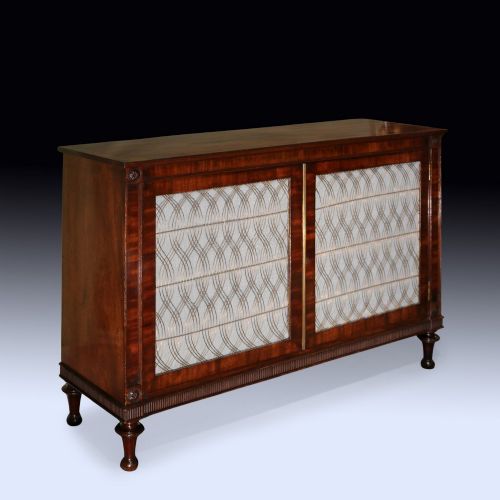


Georgian Chiffonier Sideboard
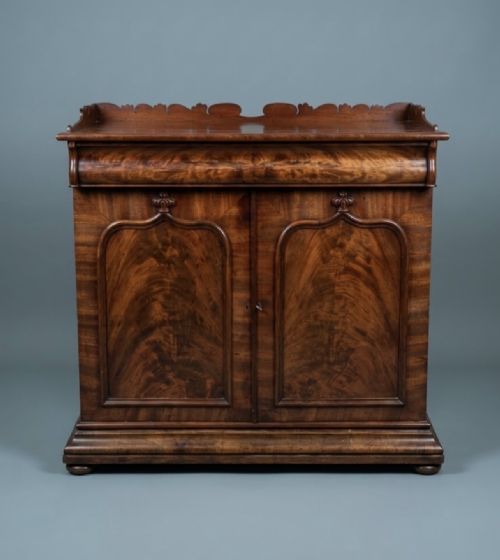
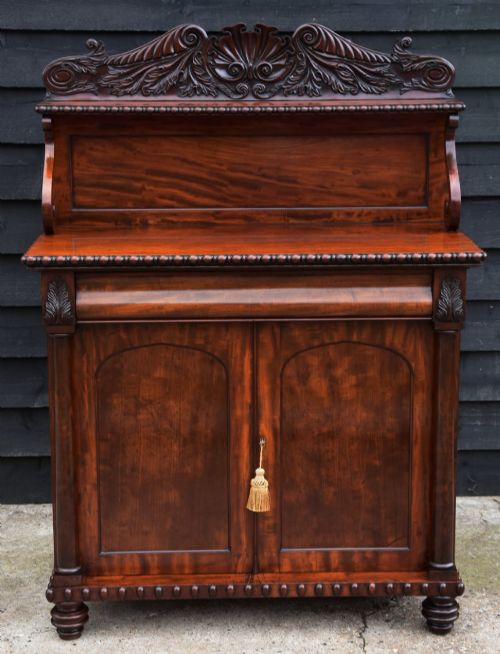
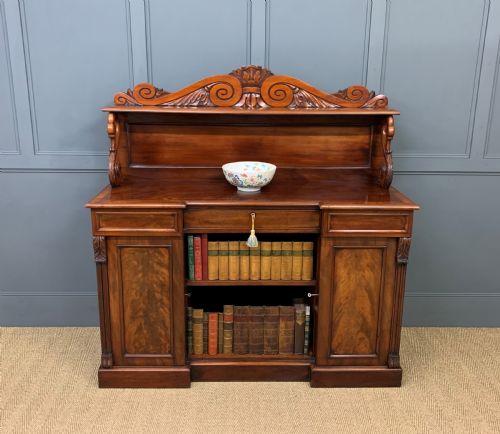
A georgian chiffonier sideboard brings compact, formal storage to a room through finely figured timbers and brass mounts.
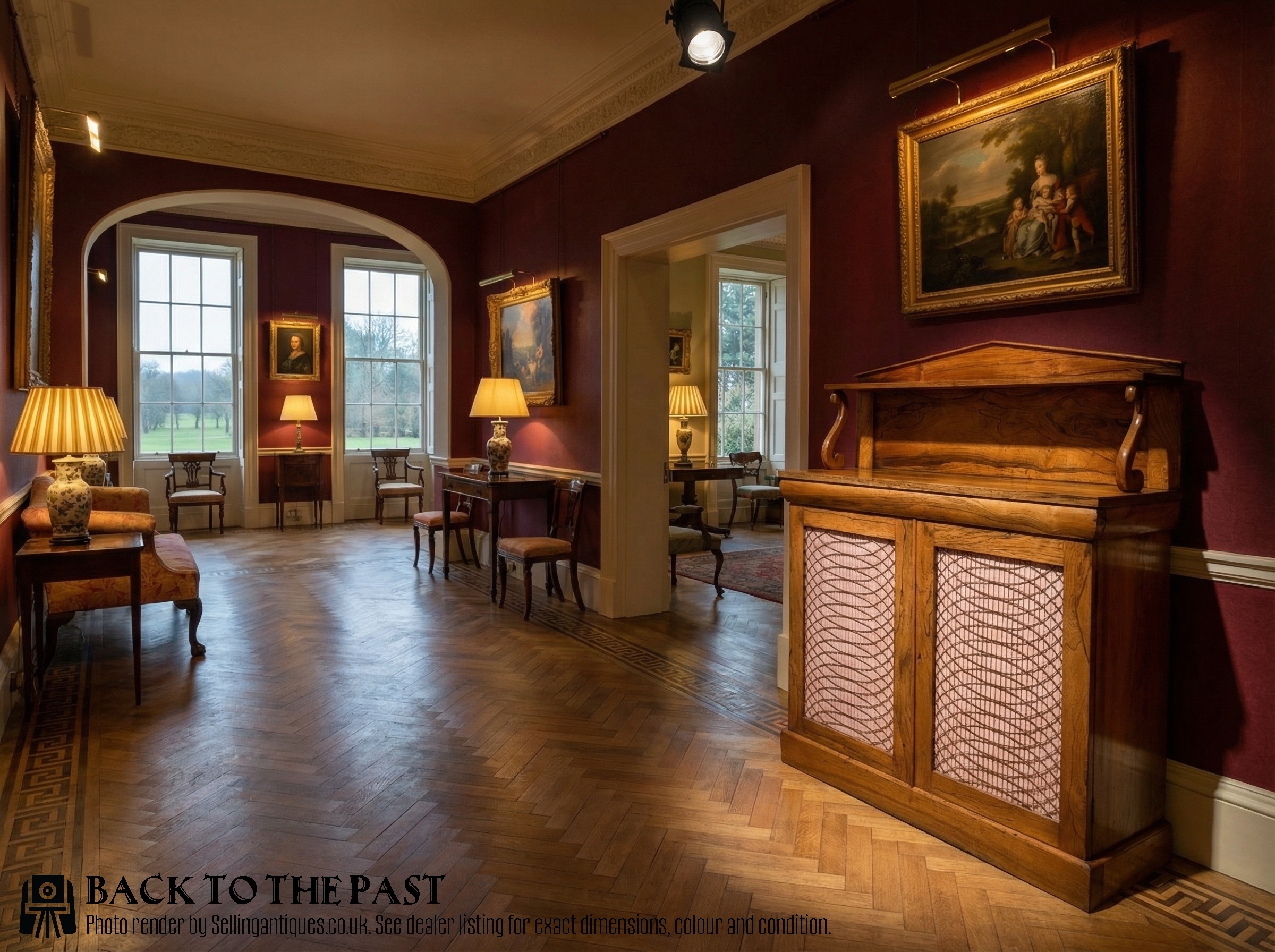
Georgian Chiffonier Sideboard
A georgian chiffonier sideboard bridges the gap between a serving surface and an enclosed cabinet for silver or books. The pieces gathered here span periods from George III and the Regency through to William IV and the Victorian era, alongside later revival interpretations.
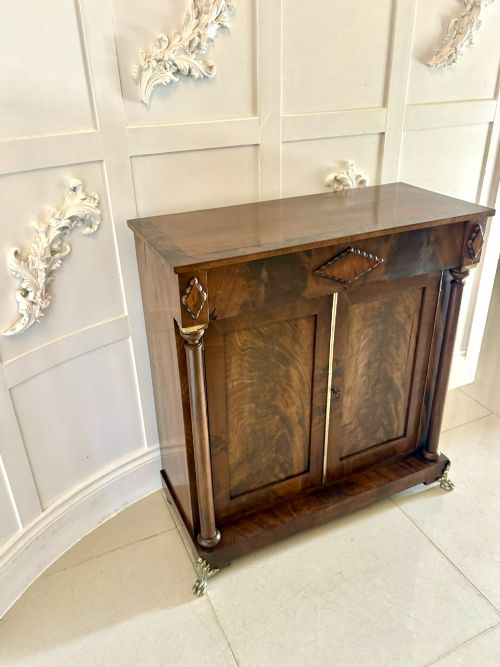
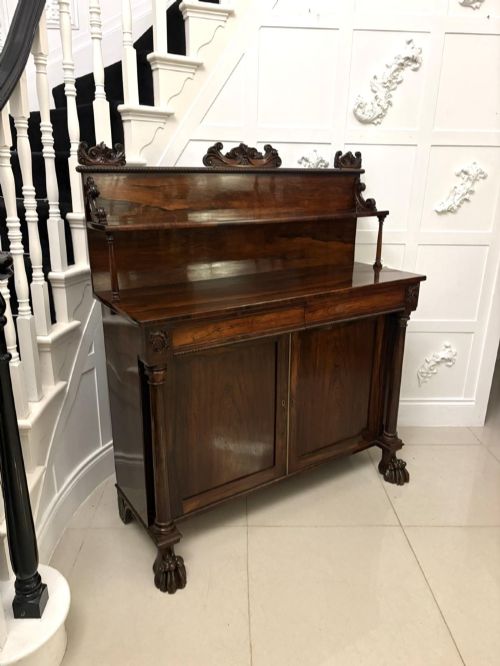
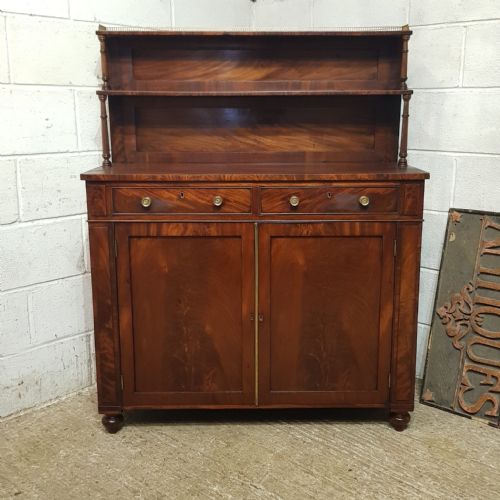
You will most commonly meet mahogany, flame mahogany veneer, and rosewood constructions, often outfitted with lower doors or open shelf superstructures. These low-profile side cabinets served dining rooms and parlours where space required a shallower footprint than a traditional sideboard.
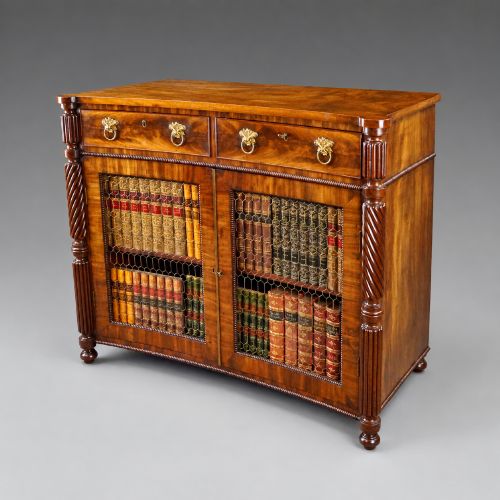
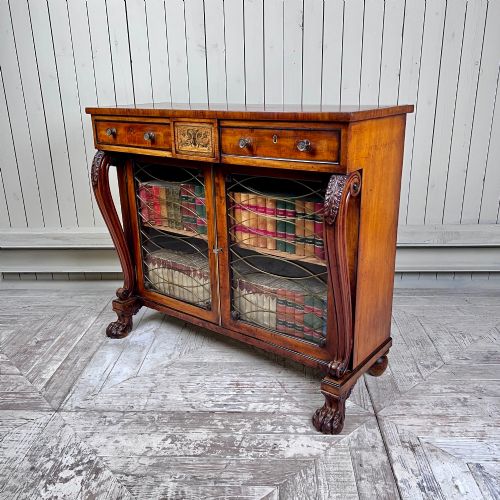
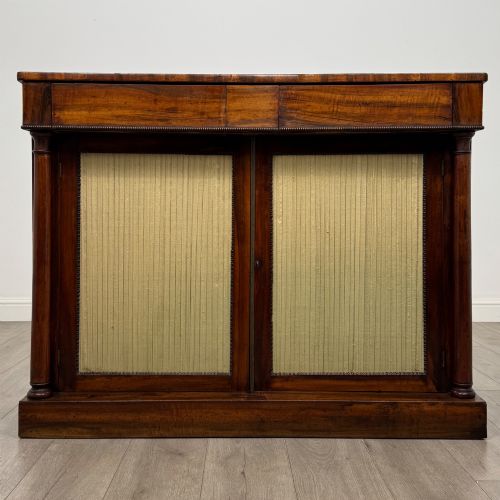
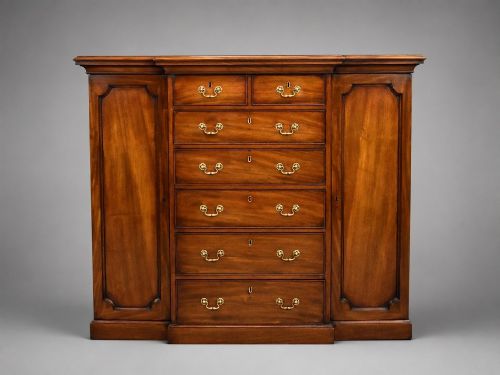
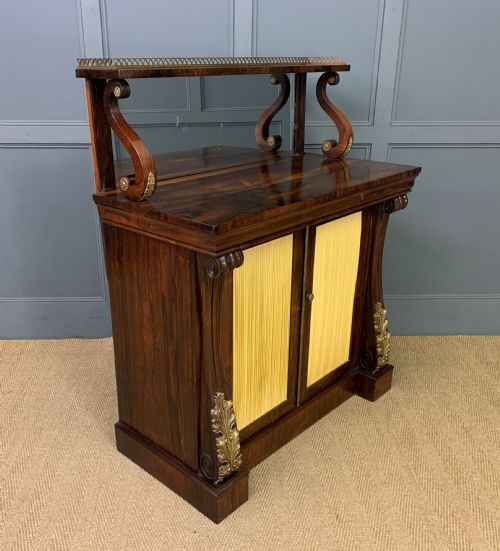
The forms range from straight-fronted two-door cupboards to breakfront designs and dwarf bookcases. Many examples incorporate brass grilles or fabric-backed panels behind glazed or open doors, reflecting the refined domestic interiors of their origin.
How they were made
Cabinet makers utilised dense primary hardwoods like mahogany, rosewood, and pollard oak over secondary structural timbers such as pine. Flame mahogany veneers were carefully selected to create symmetrical grain patterns across door panels and drawer fronts.
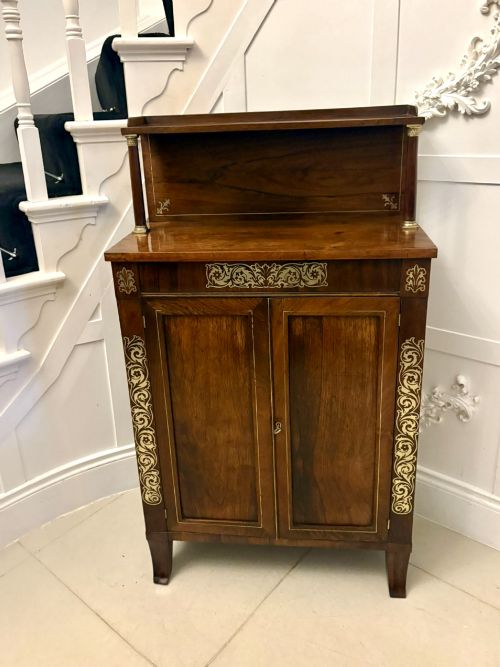
Brass formed an integral part of the construction, appearing as delicate inlay lines, cast grilles, gallery rails, and escutcheons. Silk and other fabrics lined the interiors of glazed compartments to conceal contents while adding texture and colour to the design.
Listings feature mahogany, rosewood, oak, and ebony across Georgian, Regency, and Victorian periods.
What varies in quality
The sophistication of the timber selection dictates much of the visual appeal, moving from plain sawn boards to highly figured flame mahogany and richly contrasted rosewood. Cabinetry execution is visible in the tightness of the joinery and the precision with which brass inlay is sunk into the wood surface.
Proportion and scale separate standard production pieces from those of finer workshops. Details such as turned columns, finely cast brass mounts, and well-proportioned brass grilles elevate an ordinary storage cabinet into a piece of notable cabinet work.
Gillows
The Georgian Chiffonier Sideboard Glossary
- Chiffonier
- A low sideboard or cabinet, typically equipped with doors enclosing shelves and sometimes topped with a small bookcase or gallery. It originated in France before becoming a staple of British formal rooms.
- Breakfront
- A cabinet design where the central section projects forward from the flanking outer sections. This arrangement creates visual depth and breaks up a flat wall line.
- Flame mahogany veneer
- A thin slice of timber cut from the fork of a mahogany tree where the branch meets the trunk. The resulting grain resembles flickering flames.
- Pollard oak
- Timber taken from an oak tree that has been pruned at a height above livestock reach, producing a dense and highly figured burl-like grain pattern.
Georgian Chiffonier Sideboard: Frequently Asked Questions
What is a chiffonier sideboard?
A low cabinet designed for dining rooms or parlours to store tableware, linens, or books while providing a surface on top. These pieces combine enclosed lower cupboards with optional upper shelving.
They emerged to suit rooms where traditional full-sized sideboards proved too bulky for everyday domestic space.
How do I date a chiffonier?
Dating relies on observing timber choices, hardware styles, and overall proportions. Pieces from the Regency and George III periods often display crisp brass inlay and rosewood veneers.
Later Victorian and revival examples tend to show heavier mouldings and different interior construction methods.
Were these used in dining rooms?
They served primarily in dining rooms and libraries to hold serving dishes, cutlery, and reference volumes. The enclosed lower section kept items dust-free and out of sight.
Some variants included upper book shelves for display alongside the lower storage.
What is the difference between a sideboard and a chiffonier?
A standard sideboard is generally longer and designed explicitly for serving food and displaying silver during meals. A chiffonier is more compact and frequently incorporates a bookcase superstructure or simpler enclosed cupboards.
Chiffoniers are better suited to smaller sitting rooms or drawing rooms.