

Georgian Carved Writing Table
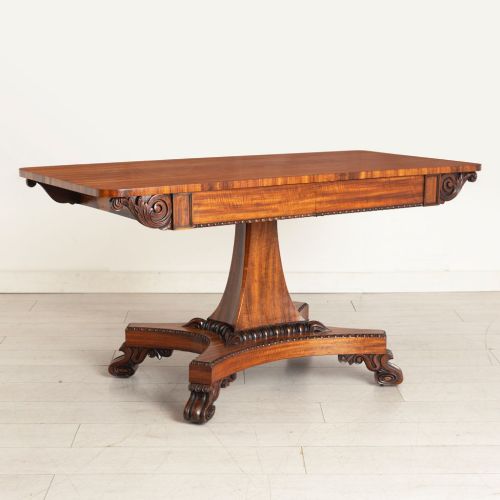
A georgian carved writing table brings honest period proportion and timber warmth into a working study.
Georgian Carved Writing Table
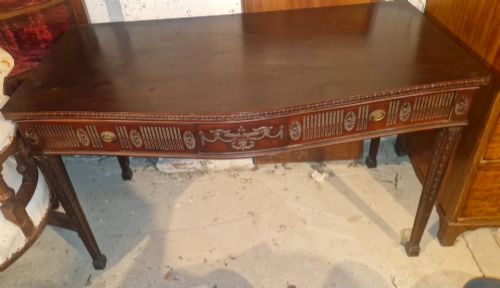
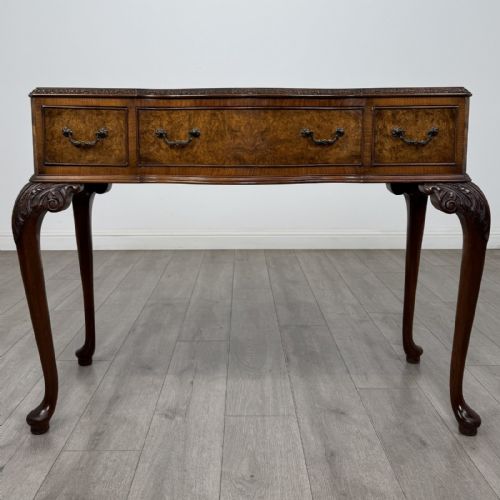
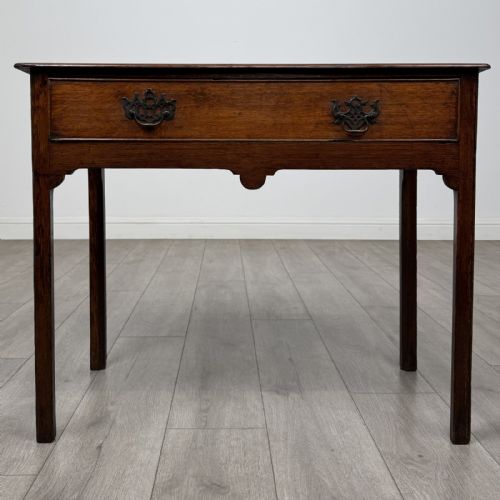
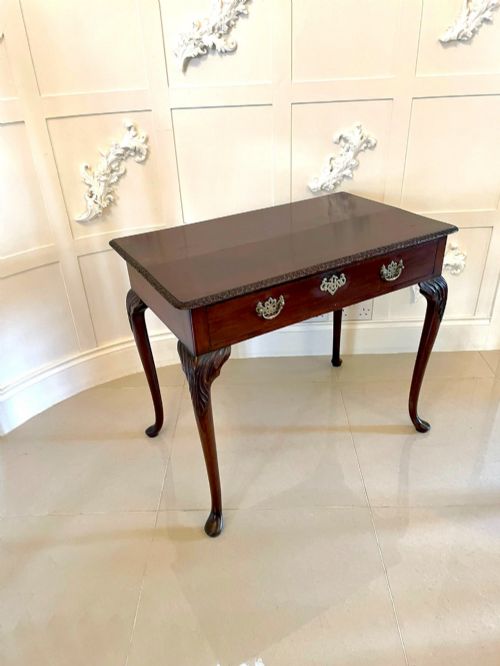
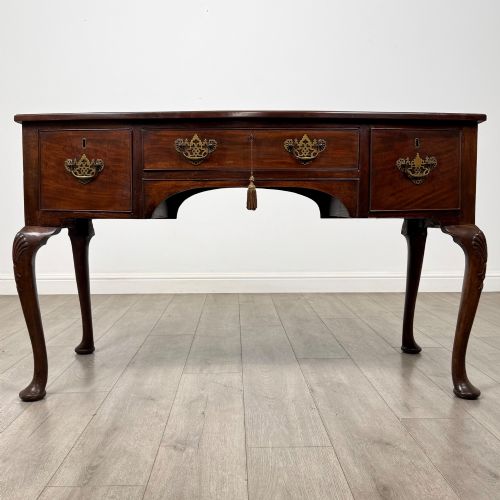
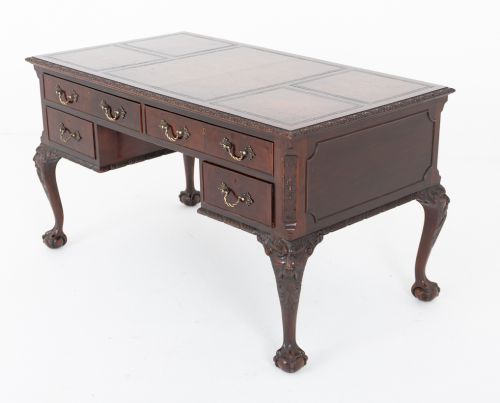
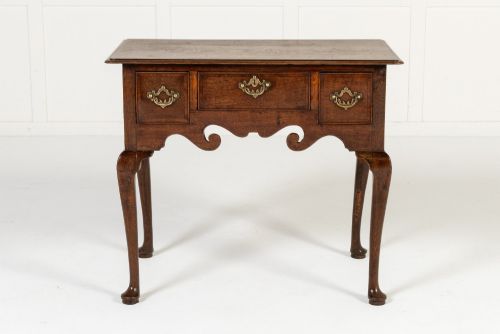
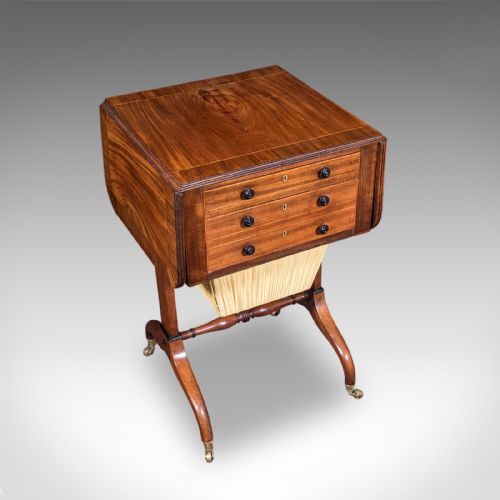
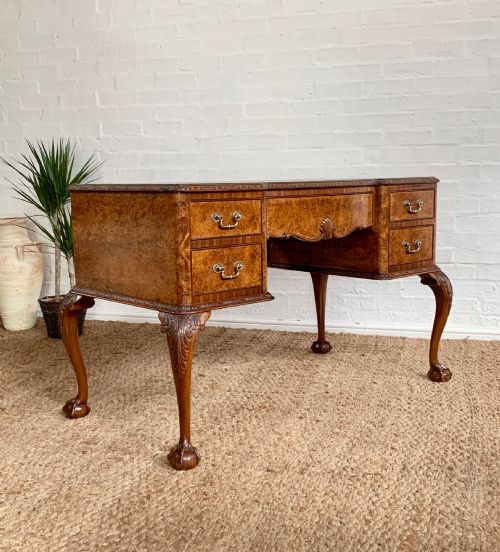
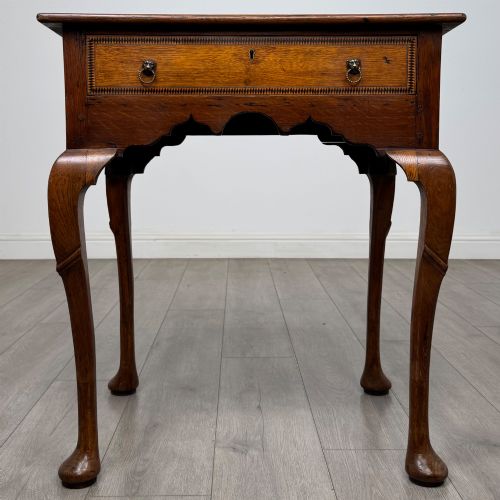
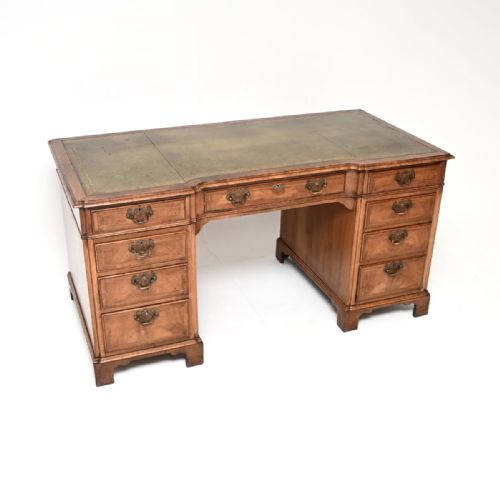
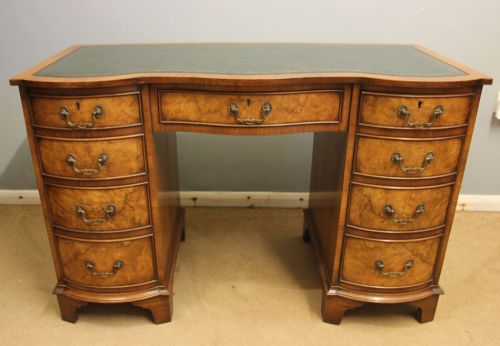
A georgian carved writing table sits comfortably between practical workspace and refined furniture, appearing in formats from kneehole desks to side tables and lowboys. The selection spans genuine Georgian construction alongside later revivals from the nineteenth and early twentieth centuries.
Makers utilised resilient native and imported timbers, shaping mahogany, oak, and walnut into functional forms fitted with brass hardware. Many examples feature inset leather writing surfaces alongside fitted drawers for storage.
The aesthetic vocabulary draws upon Georgian, Regency, and Chippendale traditions, showing carved detail alongside simpler vernacular designs. These tables serve equally well as writing desks or occasional console surfaces in contemporary rooms.
Materials and construction methods
Cabinetmakers selected solid timber and figured veneers, applying mahogany, burr walnut, and oak to sturdy carcases. Grain patterns were chosen with care, particularly on flame mahogany and burr walnut surfaces.
Working surfaces often incorporated tooled leather inserts framed by timber borders. Drawers relied on traditional joinery, complemented by cast brass handles and escutcheons.
Carving was executed by hand directly into the solid wood, following Chippendale and classical Georgian motifs. Structural integrity was maintained through pegged joints and robust secondary timbers.
Distinguishing quality across periods
The standard of timber selection sets the finest tables apart, particularly the depth of figure in walnut veneers and the density of San Domingo or Honduras mahogany. Superior pieces display thoughtful grain matching across drawer fronts and top surfaces.
The crispness of the hand carving dictates the artistic merit of a piece. Well-executed carving retains sharp undercut details and symmetry, whereas hurried work appears soft and uniform.
Proportion and interior construction reveal the skill of the original workshop. Clean secondary wood inside drawers and well-fitted joints indicate a higher grade of manufacture, whether from the eighteenth century or later revival periods.
The Georgian Carved Writing Table Glossary
- Lowboy
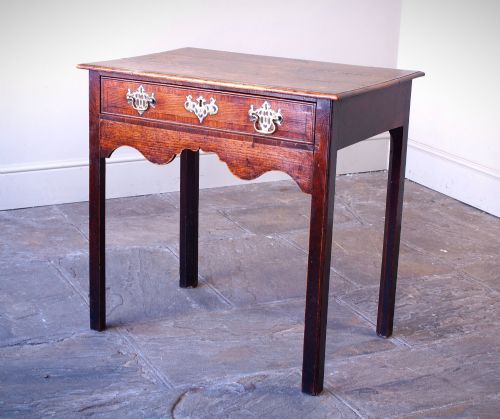
- A small oak or walnut table with drawers, originating in the eighteenth century and commonly used for writing or as a dressing surface.
- Kneehole desk
- A pedestal form featuring a recessed central space for the user's legs, flanked by banks of smaller drawers.
- Drum table
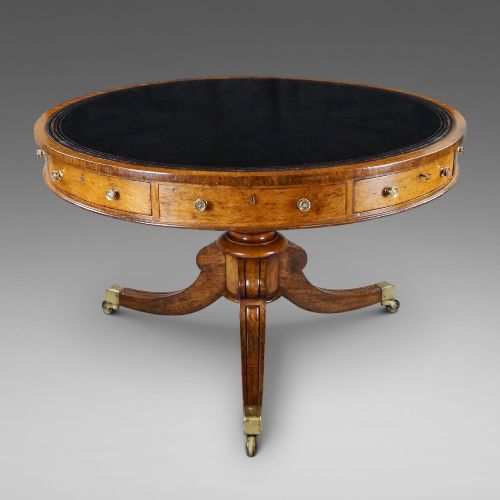
- A circular library table with a deep top containing drawers, usually supported on a central pillar with sabre legs.
- Flame mahogany veneer
- Timber sliced to reveal a distinctive flickering flame-like grain pattern, prized for decorative cabinet fronts.
- Tooled leather
- Leather treated with gold or blind tooling to create a decorative border around the perimeter of a writing surface.
Georgian Carved Writing Table: Frequently Asked Questions
How do I spot a genuine Georgian desk?
Examine the construction methods visible inside the drawers and beneath the top. Eighteenth-century pieces typically show hand-cut dovetails and timber shrinkage consistent with age.
Check the secondary woods used for drawer linings and internal framing, as these reveal the regional workshop traditions of the period.
Where should I place a writing table?
Freestanding models with finished backs work effectively in the centre of a room. Desks with plain backs sit naturally against panelled or plastered walls.
Ensure adequate natural light falls across the leather writing surface from the side to reduce glare during daily use.
What is the difference between a lowboy and a desk?
A lowboy is a compact side table with one or more tiers of drawers, originally designed for diverse household tasks including writing and dressing. A dedicated desk prioritises knee clearance and surface area for paperwork.
Many lowboys serve successfully as writing tables in smaller rooms where standard pedestals prove too bulky.
How do I care for leather desk tops?
Clean the leather surface gently using a soft, dry cloth to remove dust. Apply specialist leather cream periodically to maintain flexibility and prevent the surface from drying out.
Avoid placing damp cups or unshielded fountain pens directly onto the leather to protect the historical tooling and gold leaf.