

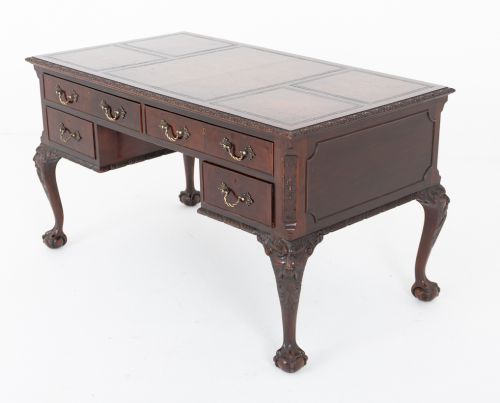
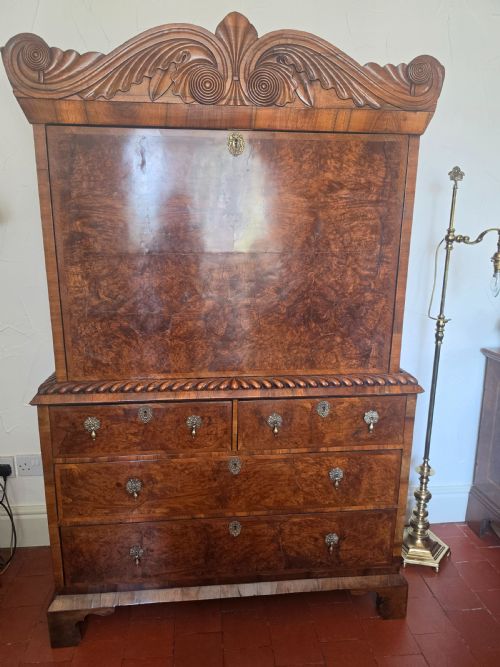
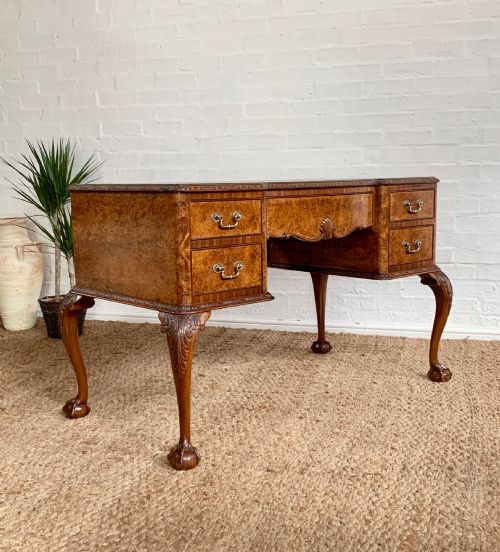
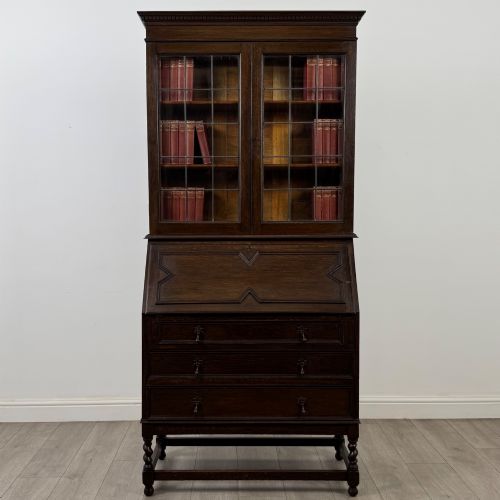
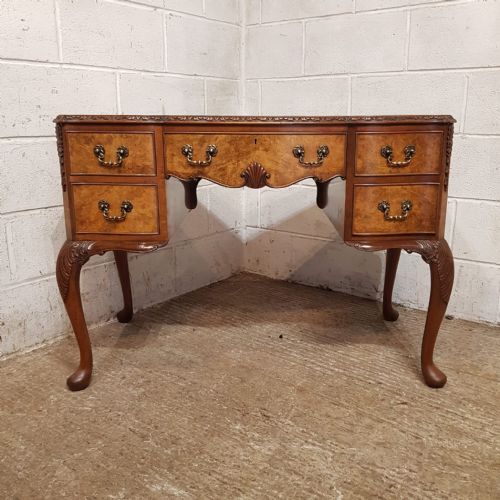
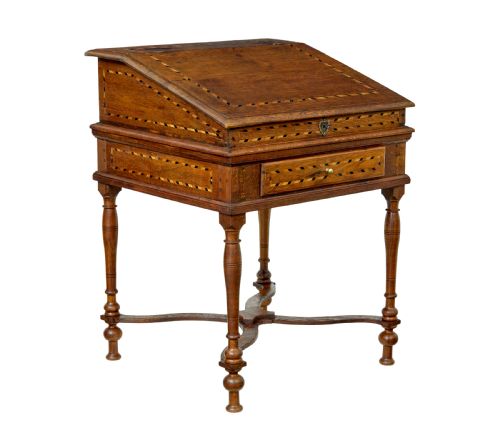
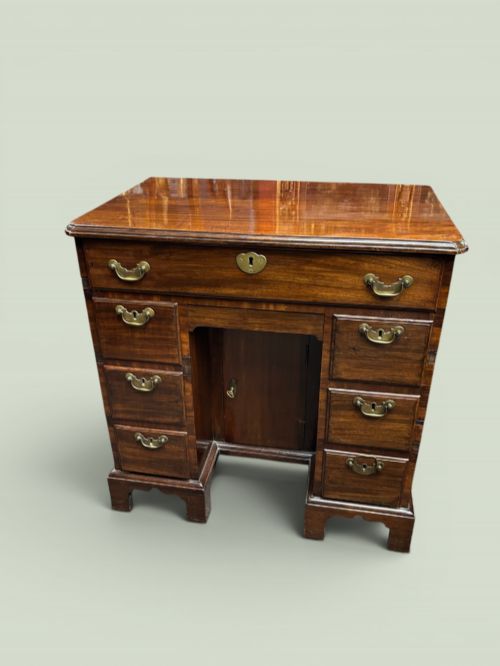
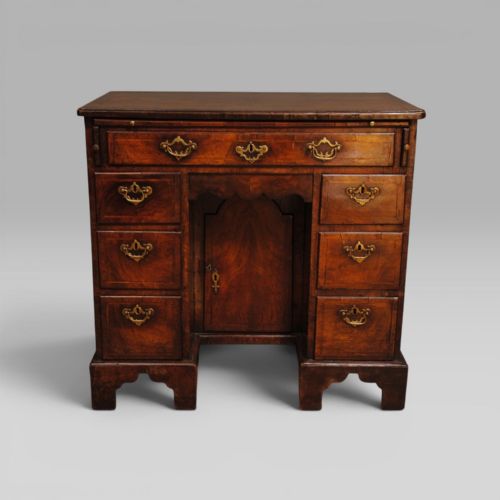

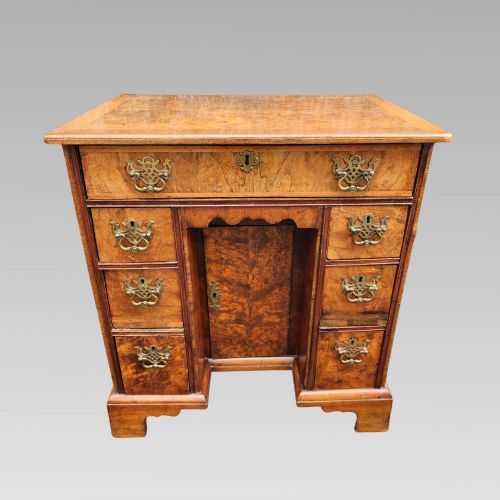
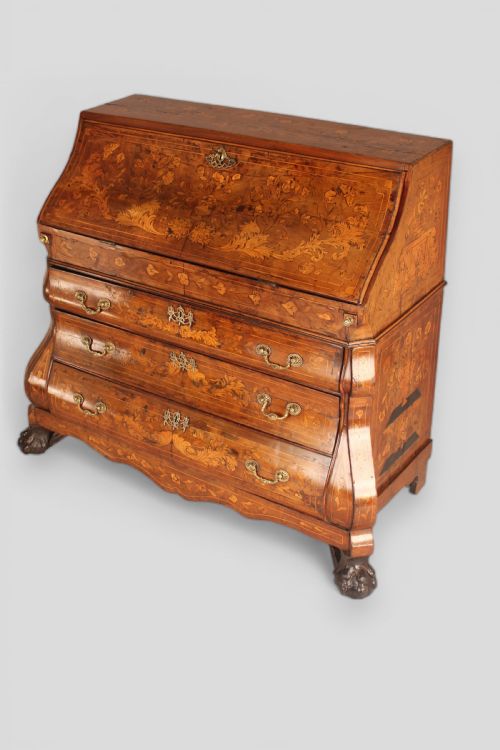


Georgian Carved Writing Bureau
A georgian carved writing bureau brings a practical workspace and rich timber character into a room.
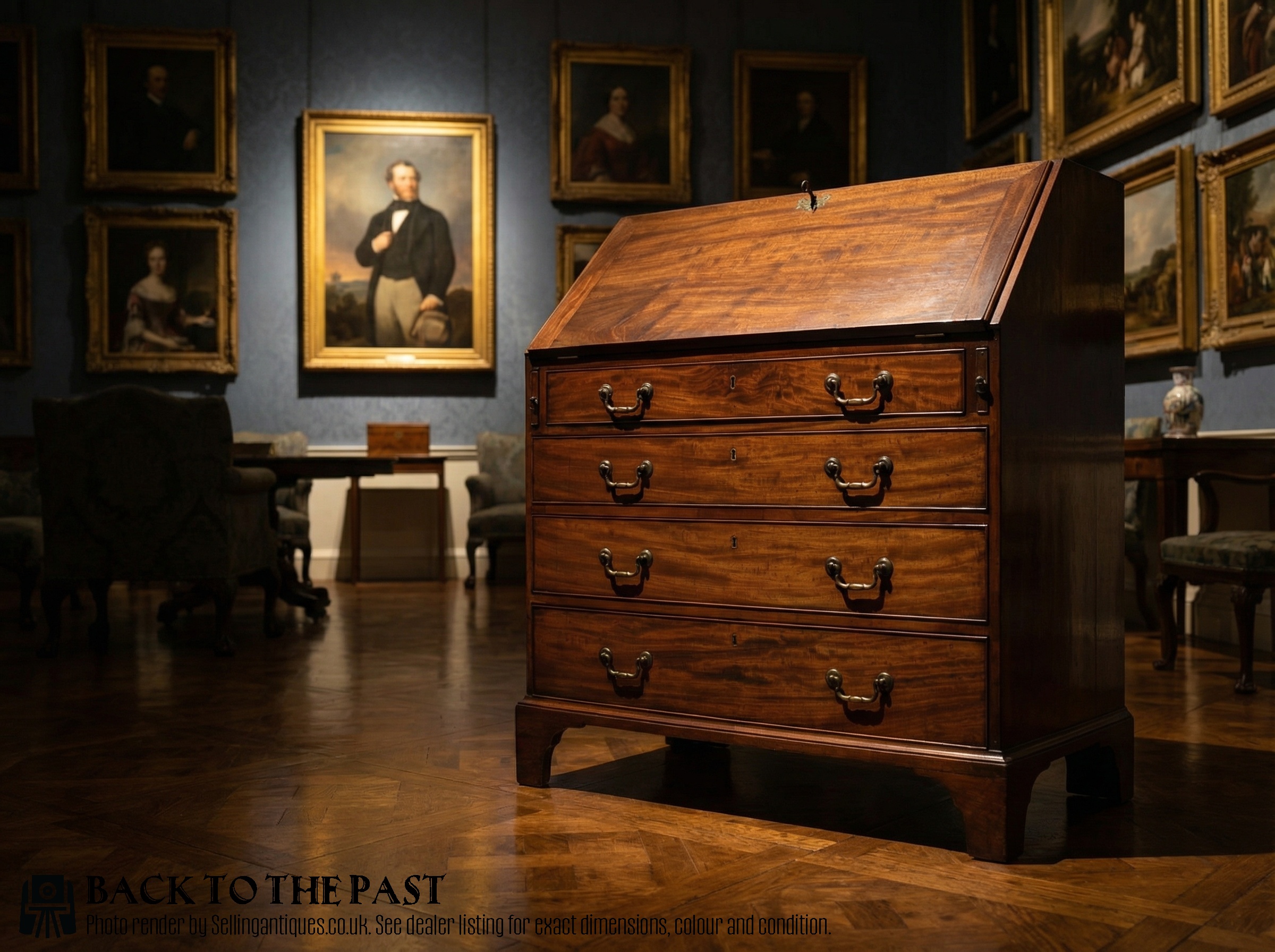
Georgian Carved Writing Bureau
When you search for a georgian carved writing bureau, you encounter a variety of forms including fall-front bureaux, bureau bookcases, and kneehole desks. These pieces originate from periods spanning the 18th century, the Georgian era, and later revival movements.
The pieces on this page range from vernacular oak examples to refined mahogany and burr walnut creations. They serve as functional writing furniture with fitted interiors containing drawers and pigeonholes.
You will also find styles incorporating Queen Anne, Chippendale, and Regency influences. The construction often pairs a writing surface with tiered drawer storage below.
How they were made
Cabinetmakers constructed these desks using solid timbers and decorative veneers such as mahogany, oak, walnut, and burr walnut. Brass handles, escutcheons, and hinges provide structural and decorative hardware.
Surfaces frequently feature inset leather writing panels alongside hand-carved details and marquetry inlay. Joinery methods rely on traditional cabinetmaking techniques to build robust carcases and fitted internal compartments.
Secret compartments hidden within the pigeonholes of these desks reward those who enjoy a touch of historical subterfuge.
What varies in quality
The standard of timber selection and veneer matching defines the visual impact of a piece. Figured grains and carefully chosen burr walnut or flame mahogany elevate the appearance significantly.
The crispness of the hand-carving and the execution of internal drawer dovetails demonstrate the skill of the original maker. Original brass hardware and well-preserved fitted pigeonholes add distinction.
The Georgian Carved Writing Bureau Glossary
- Bureau
- A desk featuring a sloping hinged flap that opens to reveal a fitted interior of small drawers and pigeonholes. This form provides a concealed writing surface.
- Escritoire
- A tall writing cabinet or desk used for correspondence and document storage. It typically includes a drop-front writing surface.
- Kneehole desk
- A compact pedestal desk with a central recess for the sitter's legs, flanked by banks of small drawers. These pieces often feature a concealed long drawer above the kneehole.
- Secretaire
- A piece of furniture containing a drawer or compartment that drops down to form a writing desk. It often disguises the workspace within the facade of a bookcase or chest.
- Marquetry
- The art and craft of applying pieces of veneer to a structure to form decorative patterns. Craftsmen utilise different timber tones to create elaborate pictorial designs.
Georgian Carved Writing Bureau: Frequently Asked Questions
How do I use a writing bureau today?
A writing bureau functions well as a compact laptop desk or a traditional station for correspondence. The fall-front flap provides a stable surface for writing when lowered.
Internal compartments organise stationery and small items efficiently. Closing the flap conceals work materials entirely when not in use.
What is the difference between walnut and mahogany?
Walnut dominated English cabinetmaking during the late 17th and early 18th centuries, offering rich brown tones and decorative grain patterns. Burr walnut variants display swirling figure details.
Mahogany gained popularity later in the 18th century due to its strength and dark reddish-brown hue. It allowed for sharper carved details, particularly in Chippendale style pieces.
Where were these desks placed in a home?
These desks typically sat in libraries, drawing rooms, or private bedchambers for managing correspondence and household accounts. Their finished backs sometimes allowed them to stand away from walls.
In grander houses, they served as functional display furniture in reception spaces. Smaller variations suited private dressing rooms and boudoirs.