

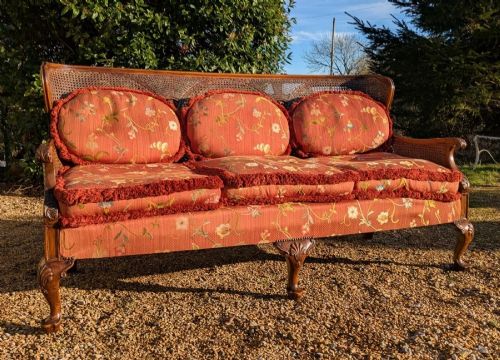


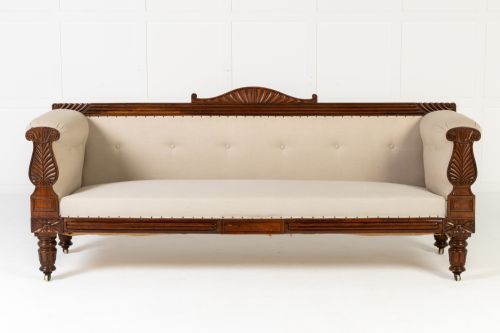


Georgian Carved Settee
A georgian carved settee brings lasting presence to a room, offering generous seating rooted in centuries of cabinet-making tradition.
Georgian Carved Settee
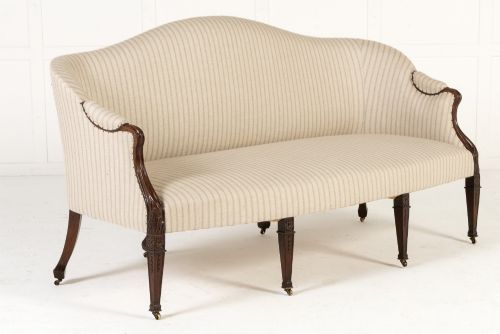
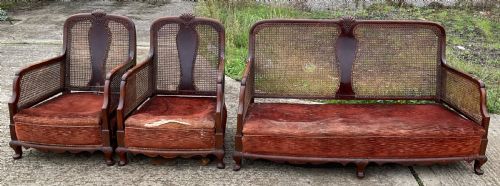
A georgian carved settee is a substantial seating form designed for formal interiors, appearing across various centuries and revival periods. Buyers searching this term encounter everything from authentic eighteenth-century examples to later nineteenth-century interpretations inspired by classic designs.
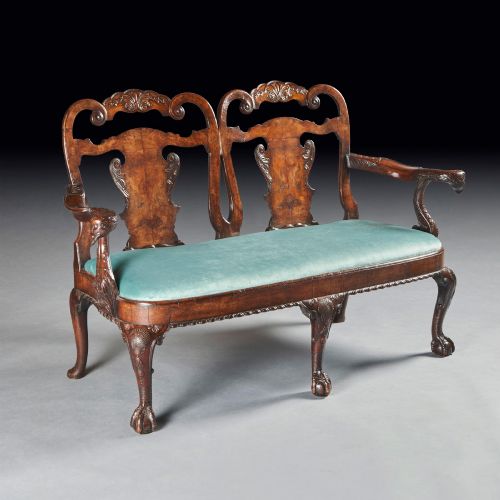
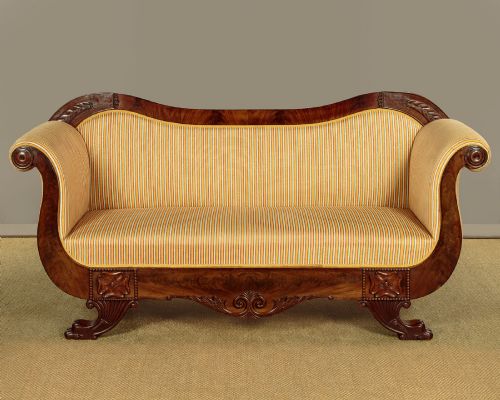
The selection ranges widely in silhouette and proportion, including double chair backs, scroll-ended couches, and camelback frames. Mahogany and walnut dominate the offerings, often shaped to reflect specific historical styles such as Chippendale, Hepplewhite, and Regency.
How they were made
Cabinet-makers relied on dense timbers like mahogany, walnut, and satinwood to construct robust frames capable of supporting intricate hand-carved details. Structural integrity depended on traditional joinery techniques, while decorative elements such as scroll ends and shield backs were shaped directly from the solid wood.
Upholstery completed the construction, utilising fabrics, leather, velvet, and feather cushions supported by internal webbing and stuffing. Brass accents occasionally appeared on feet or fittings, complementing the rich tones of the polished wood frames.
Georgian Carved Settee Retail Price Guide 2026
Typical asking prices for georgian carved settee among the pieces listed under this phrase on Sellingantiques today, from the lower quarter to the upper quarter. They describe what is for sale here now, not the wider market.
Listings span eighteen-century originals through to twentieth-century revival pieces, utilising mahogany, walnut, rosewood, and satinwood.
What varies in quality
The distinction between tiers of quality lies principally in the depth and crispness of the woodwork carving, alongside the harmony of the overall proportions. Master carvers produced crisp, undercut foliage and ribbon motifs that catch the light, whereas lesser pieces show shallower, mechanical definition.
Choice of timber grain and the integrity of the underlying frame construction further separate standard examples from exceptional ones. Original period surfaces and well-balanced framing retain greater character than heavily altered or clumsily proportioned alternatives.
The Georgian Carved Settee Glossary
- Chippendale
- A style originating in the eighteenth century characterised by ribbon backs, cabriole legs, and ornate carving influenced by Thomas Chippendale's published designs.
- Camelback
- A sofa style featuring a graceful, undulating serpentine top rail that resembles the hump of a camel.
- Scroll end
- A decorative furniture arm or terminal that curls inward or outward in a tight spiral curve, common on nineteenth-century couches.
- Shield back
- A chair or settee back shaped in the exact outline of a heraldic shield, popularised during the Hepplewhite period.
- Twin chair back
- A settee design where the backrest resembles two distinct dining chairs joined together side by side.
Georgian Carved Settee: Frequently Asked Questions
How do I date a settee?
Dating relies on examining the timber species, secondary woods used in the frame, and the specific carving vocabulary. stylistic details often point directly to the prevailing taste of a particular decade.
Construction methods also reveal age, as hand-cut joints differ visibly from later machine-made elements. Comparing the silhouette against known eighteenth and nineteenth-century forms helps clarify the period of origin.
Were these settees used in bedrooms?
These large seating forms primarily occupied principal reception rooms, parlours, and formal drawing spaces. Their scale and decorative carving suited areas meant for entertaining guests.
Smaller variants occasionally appeared in private chambers or dressing rooms, but the main output served communal living areas in country houses and town residences.
How do I care for antique upholstery?
Maintaining upholstered surfaces involves gentle vacuuming with a soft brush attachment to remove dust without stressing the fabric. Direct sunlight should be avoided to prevent fading on silk, velvet, or leather.
Professional cleaning is advisable for older textiles to preserve the integrity of the internal stuffing and horsehair layers. Leather surfaces benefit from periodic conditioning to maintain flexibility.