

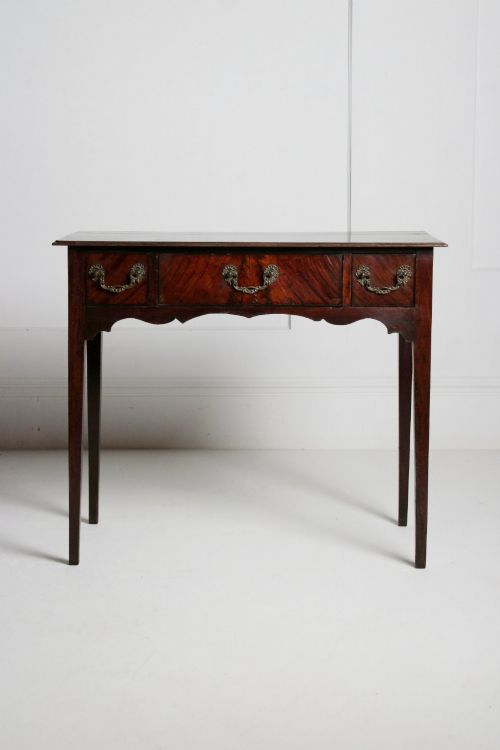


Georgian Carved Apron Lowboy
A georgian carved apron lowboy brings compact utility and understated refinement to a room, offering small-scale drawer storage disguised as an elegant side table.
Georgian Carved Apron Lowboy
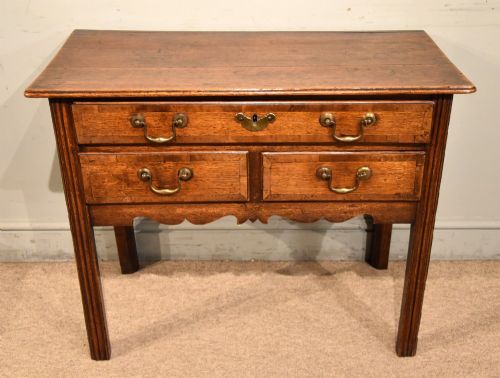
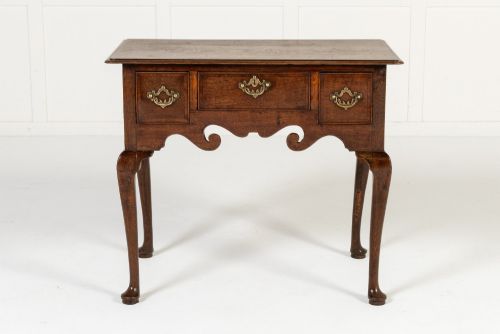
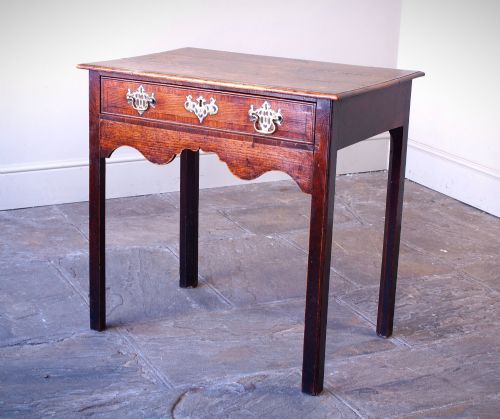
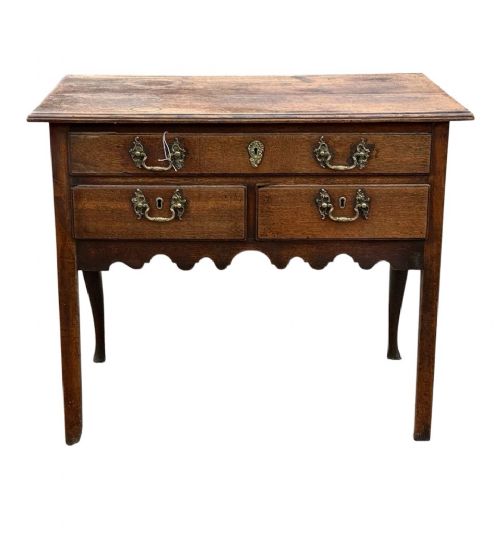
When you search for a georgian carved apron lowboy, you are looking at low-set tables designed primarily for dressing or serving, frequently fitted with multiple drawers beneath the timber top. The examples you meet on this page span the eighteenth century and later revivals, crossing various regional interpretations.
The form appears most commonly in oak and mahogany, often functioning as a side table or dresser base in smaller rooms. You will also encounter walnut and fruitwood variations, reflecting the timber preferences of different periods.
Regional vernacular pieces, particularly from Wales, sit alongside refined urban examples in mahogany and walnut. This mix demonstrates how cabinetmakers adapted the lowboy form for different domestic settings.
Materials and construction
Cabinetmakers built these tables using solid native and imported timbers, relying on oak for vernacular pieces and mahogany or walnut for more formal commissions. Timber inlay and brass hardware frequently accent the primary woods.
Construction methods involved pegged joints for earlier oak examples and more precise dovetailing for drawer construction in later mahogany and walnut pieces. Cabriole legs and shaped aprons required skilled carving and shaping of the solid wood.
The listings on this page span the eighteenth and nineteenth centuries, alongside twentieth-century revivals, utilising oak, mahogany, walnut, fruitwood, and brass.
Assessing quality and proportion
Quality rests in the crispness of the carving on the apron and the proportional balance between the legs and the drawer section. Finer pieces display careful timber selection, particularly where burr walnut or figured mahogany is utilised.
The integrity of the structural joints and the retention of original brass pulls distinguish master-carved regional or urban examples from later revival pieces.
The Georgian Carved Apron Lowboy Glossary
- Lowboy
- A small table with drawers, typically standing on four legs and used as a dressing table or side table. The form became popular in the late seventeenth century and persisted through the Georgian era.
- Cabriole leg
- A furniture leg that curves out and then in, resembling the leg of an animal. This form is common on eighteenth-century lowboys and dresser bases.
- Dresser base
- A low sideboard or table base fitted with drawers, closely related to the lowboy in function and form. They appear frequently in oak across the eighteenth century.
- Timber inlay
- The technique of inserting pieces of contrasting wood into a surface to form decorative patterns. It adds visual texture to the primary wood of the table.
Georgian Carved Apron Lowboy: Frequently Asked Questions
What is a lowboy used for?
Originally utilised as a dressing table or a small side table for serving and storage, a lowboy fits easily into modern hallways or living spaces.
Its compact footprint and drawer arrangement make it practical for holding small household items while serving as a display surface.
How do I identify a Georgian period lowboy?
Look at the timber selection, leg shape, and construction details such as drawer dovetailing. Oak and walnut typify the earlier decades, while mahogany gains prominence later in the eighteenth century.
Regional pieces often display distinctive vernacular carving on the apron, setting them apart from standard urban cabinetwork.
Where should I place a lowboy in my home?
A lowboy suits narrow hallways, bedrooms as a dressing table, or living rooms positioned against a wall. Its shallow depth ensures it does not crowd smaller rooms.
Pair it with a simple mirror or hang artwork above to create a balanced focal point.
What is the difference between an oak and a mahogany lowboy?
Oak examples often reflect earlier vernacular traditions, sometimes showing heavier construction and Welsh or English country origins. Mahogany versions tend to present a more formal appearance with smoother grain and sharper carving.
Both timbers offer distinct visual textures that suit different interior styles.