
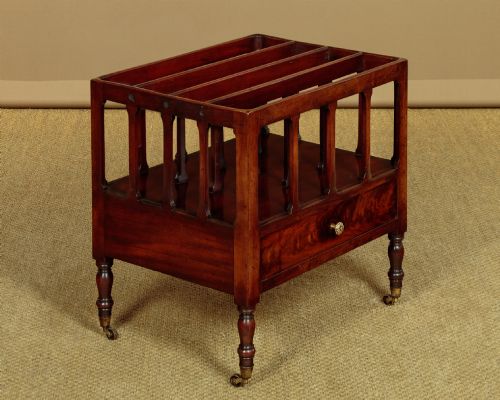
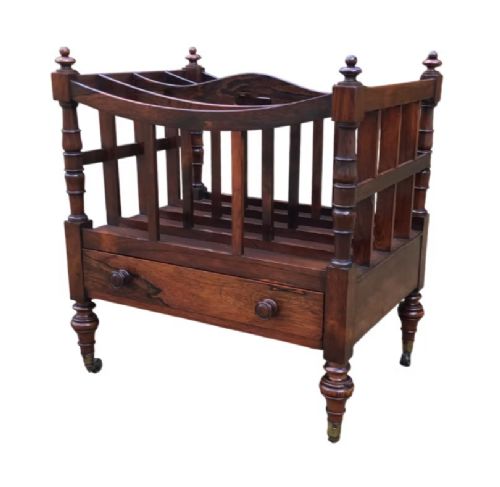
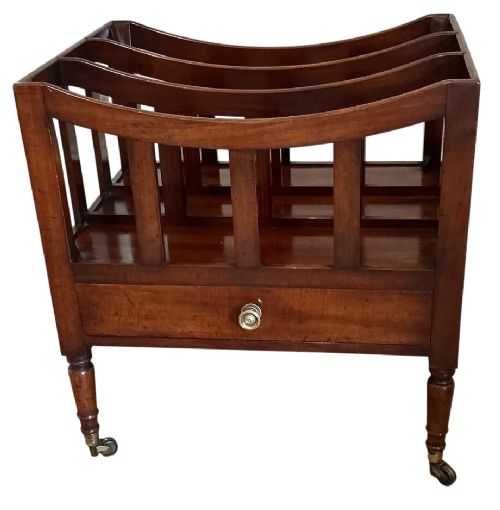
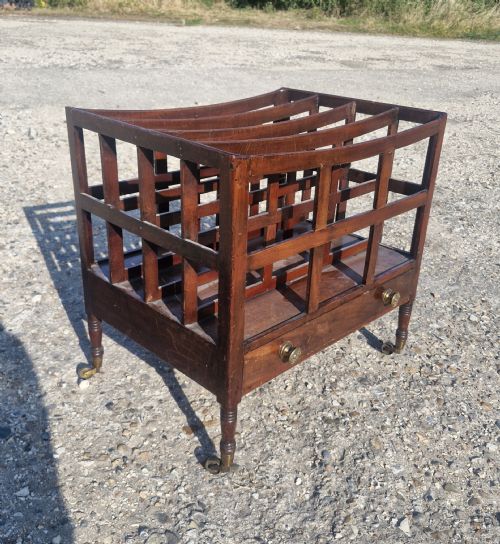


Georgian Canterbury with Drawer
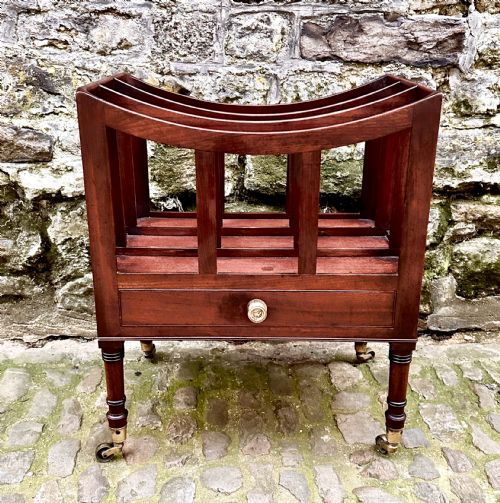
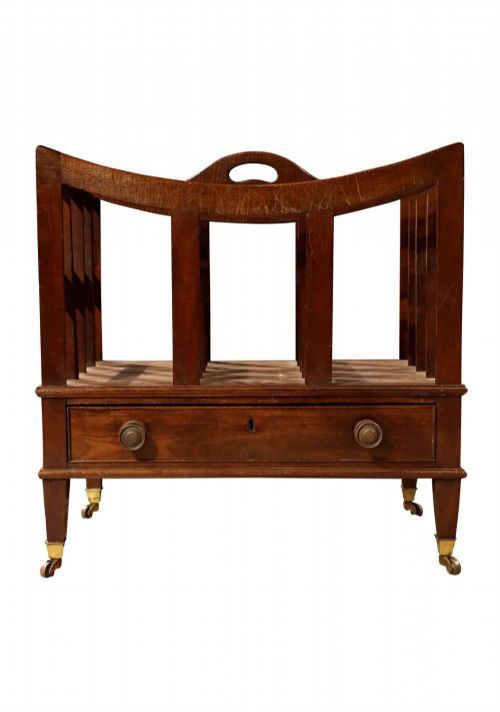
A Georgian canterbury with drawer combines partitioned vertical storage for sheet music or periodicals with a functional base compartment.
Georgian Canterbury with Drawer
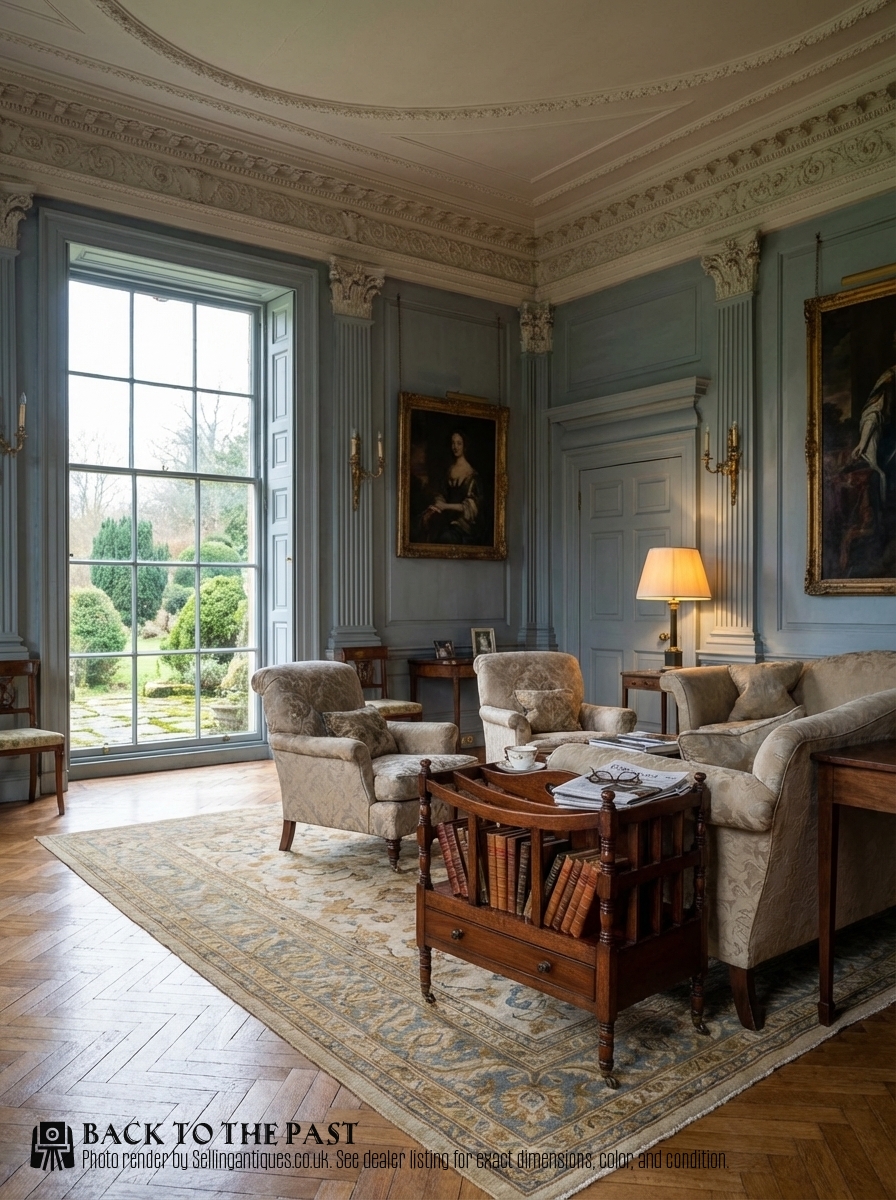
A Georgian canterbury with drawer is a piece of domestic furniture designed to hold newspapers, books, and sheet music while providing enclosed storage in a lower drawer. The form typically stands on short legs or castors, making it easy to move beside a chair or table in a parlour.
Buyers browsing this selection will encounter various iterations spanning the Georgian, Regency, and early Victorian eras. Most examples rely on classic timber construction with multiple upright divisions forming the upper rack.
Makers configured these stands with three or four distinct partitions, sometimes incorporating pierced scrollwork, carved wreath motifs, or carrying handles into the framework. The addition of the single base drawer distinguishes this specific variant from simpler open rack designs.
Assessing Quality and Craftsmanship
The distinction between standard examples and superior pieces rests on the refinement of the timber and the crispness of the carved details. Higher quality pieces often feature figured mahogany or rich rosewood veneers alongside delicate pierced scrollwork rather than plain wooden slats.
Structural integrity also separates workshop standards, evidenced by the thickness of the divisions and the smooth operation of the drawer. Well-preserved original brass castors and subtle decorative flourishes like carved Prince of Wales feathers elevate the standing of the piece.
Listings feature 19th-century pieces spanning the Georgian, Regency, and Victorian periods, constructed in mahogany and rosewood.
The Georgian Canterbury with Drawer Glossary
- Canterbury
- A low stand featuring vertical partitions, used historically for holding sheet music, books, and periodicals. The form gained popularity during the late eighteenth century.
- Regency
- An architectural and decorative style spanning the early nineteenth century, characterised by classical restraint and influences from ancient Greece and Rome. Pieces from this era often display bolder grain patterns and brass inlay.
- George III
- The period of British history covering the reign of King George III, noted for refined cabinet making and the prominent use of solid mahogany. Furniture from this span emphasises structural proportion and understated elegance.
- Division
- One of the individual vertical partitions or slats that creates the separate slots in a rack. These sections are frequently shaped with curved or pierced tops.
- Castor
- A small wheel mounted in a swivel housing attached to the base of a piece of furniture for mobility. Many nineteenth-century examples retain their original brass swivel mounts.
Georgian Canterbury with Drawer: Frequently Asked Questions
What were canterburys originally used for?
These stands served primarily to hold unbound sheet music, folios, and current periodicals near a pianoforte or sitting room chair.
The lower drawer provided a secure space for smaller writing materials, manuscript papers, or tuning keys.
How do I date a mahogany canterbury?
Dating relies on observing the timber choice, leg style, and the profile of the vertical divisions. Earlier pieces from the George III era tend to feature simpler linear framing and solid mahogany construction.
Items from the Regency and William IV periods often incorporate rosewood veneers, bolder carved motifs, and more elaborate scroll-cut partitions.
Are these stands sturdy enough for daily use?
The robust hardwoods used in their construction make them well-suited for holding modern magazines, books, and vinyl records. The vertical divisions provide solid lateral support for stored items.
Care should be taken when moving the stand across uneven flooring to protect the original brass castors and joints.
What is the difference between a music rack and a magazine rack?
While both terms describe the same fundamental form, pieces designated as music racks historically sat beside keyboard instruments to hold bound scores. Magazine or newspaper racks emerged from the same furniture type as reading habits shifted in the nineteenth century.
The physical construction remains largely identical across both descriptions, featuring partitioned upper sections and an enclosed drawer.