





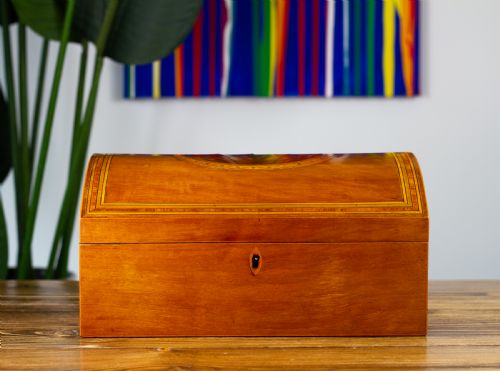


Georgian Caddy Top
A georgian caddy top brings architectural authority to a chest of drawers, tea caddy or bracket clock, offering a refined profile collectors prize.
Georgian Caddy Top
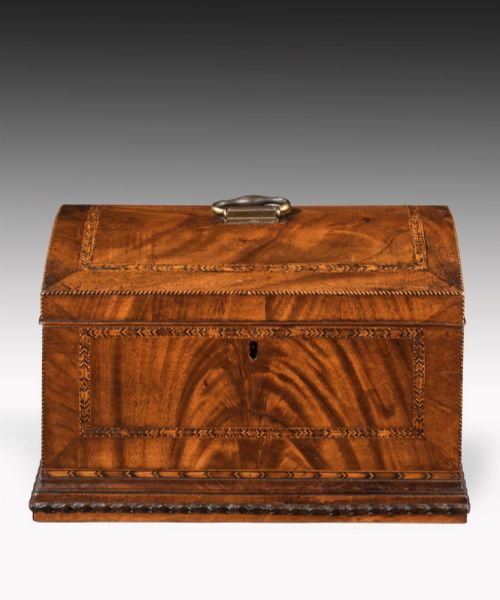
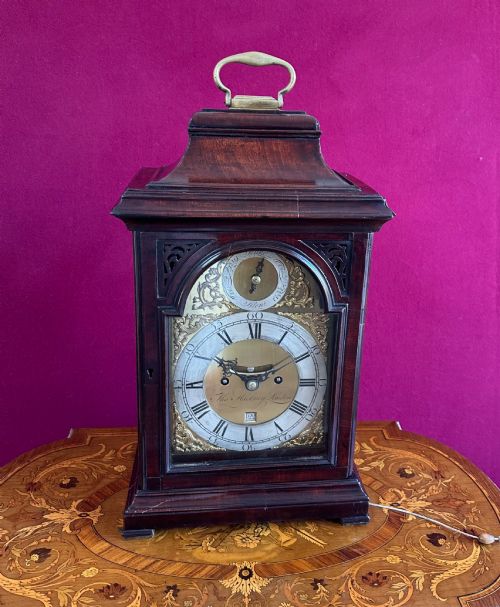
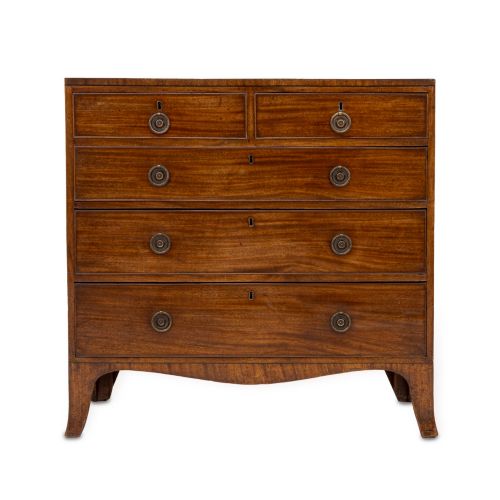
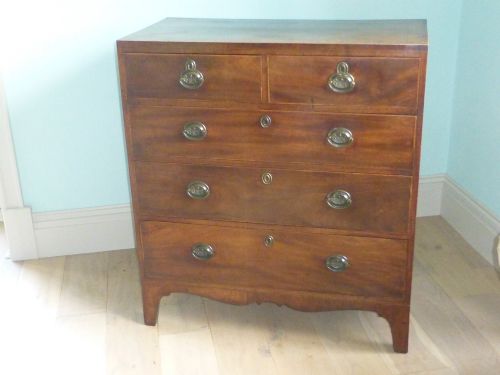
A georgian caddy top refers to the distinctive stepped or domed profile seen on period furniture, clocks and boxes. When searching for a georgian caddy top, buyers encounter chests of drawers, bracket clocks and tea caddies spanning the eighteenth and nineteenth centuries, alongside later revival pieces.
The form draws its name from the traditional tea caddy shape, featuring a moulded lid that rises to a flattened or domed centre. Pieces from this selection range from compact mahogany chests to striking table clocks housed in architectural timber cases.
Judging quality in design
The distinction between standard examples and superior pieces rests on the precision of the timber matching and the crispness of the moulded top. Finer chests and clocks display harmonious proportions where the caddy lid integrates seamlessly with the body of the piece.
Inlaid decoration and secondary woods also reveal the maker's hand, with superior boxes and furniture utilising rich satinwood banding rather than simpler line inlay. Movement quality dictates the standing of clocks, with bell-striking and quarter-striking mechanisms elevating the piece.
Georgian Caddy Top Retail Price Guide 2026
Typical asking prices for georgian caddy top among the pieces listed under this phrase on Sellingantiques today, from the lower quarter to the upper quarter. They describe what is for sale here now, not the wider market.
Several clocks still retain their original keys tucked inside, ready to wind up a mechanical movement from the seventeen-nineties.
Mappin and Webb·Goldsmiths and Silversmiths Co·John Taylor·Watson
The Georgian Caddy Top Glossary
- Caddy top
- A moulded lid profile resembling the shape of a traditional tea caddy, featuring stepped or domed edges. This architectural flourish defines the silhouette of specific period chests and clock cases.
- Bracket clock
- A portable spring-driven clock designed to sit on a bracket or table. These timepieces frequently feature brass carrying handles and elaborate dial work.
- Verge movement
- An early mechanical clock escapement regulating the speed through a crown wheel and balance. It represents traditional horological construction in eighteenth-century pieces.
- Stringing
- Fine inlay of a contrasting timber used to outline panels and drawer fronts. Cabinetmakers employed this technique to add geometric definition to mahogany surfaces.
Georgian Caddy Top: Frequently Asked Questions
What is a caddy top?
A caddy top is a distinctive moulded lid shape inspired by period tea caddies, featuring tiered or domed profiles that finish off the top of a chest or clock case.
Cabinetmakers applied this architectural feature to give height and visual structure to case furniture and wooden boxes.
How do I date a caddy top chest?
Dating relies on timber selection, handle styles, construction methods and the specific profile of the moulding.
Eighteenth-century examples often feature solid mahogany with hand-cut dovetails, while later nineteenth-century pieces may incorporate machine-sawn elements and different secondary woods.
Were caddy top clocks meant to be moved?
Bracket clocks with caddy tops were designed to be portable timepieces moved between rooms within large houses.
The brass handles fitted to the top of the timber cases allowed owners to lift and carry the heavy brass and iron movements securely.
How should I care for mahogany?
Mahogany furniture and clock cases require stable indoor humidity away from direct sunlight and heat sources to prevent timber splitting.
Regular dusting with a dry, soft cloth maintains the polished finish without the need for heavy modern aerosol polishes.