

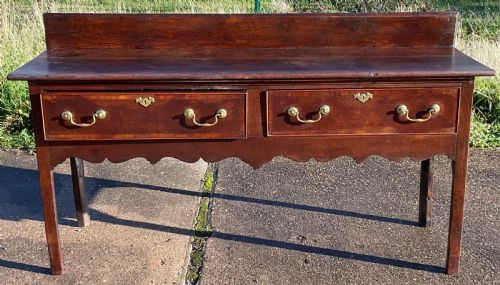
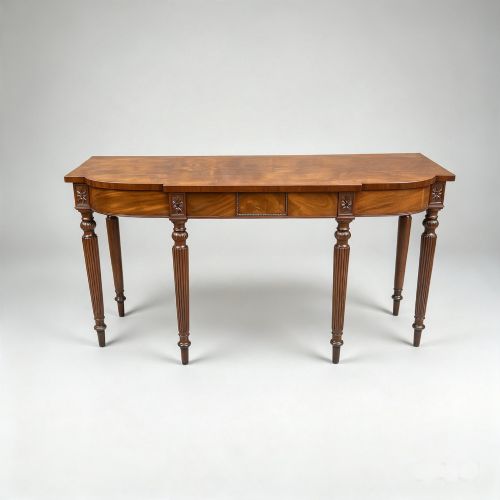
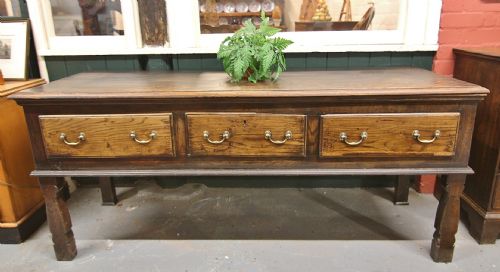
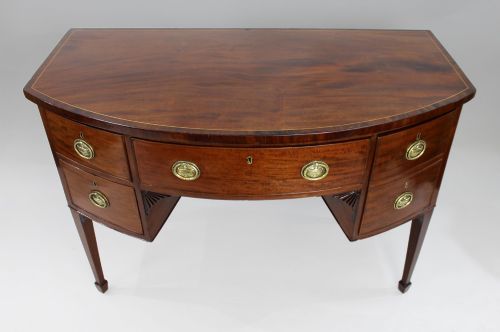






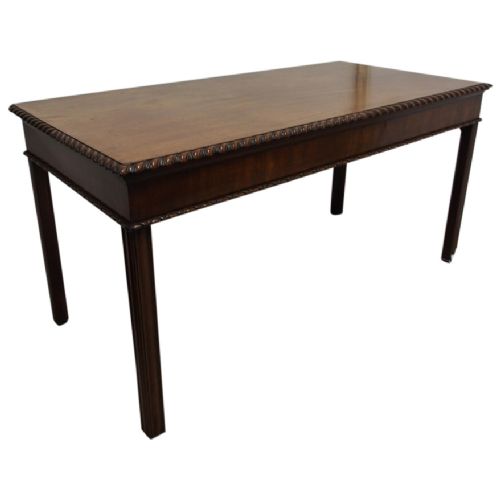

Georgian Buffet Console
A georgian buffet console brings stately mahogany timber and refined proportions to a dining room or hallway.
Georgian Buffet Console
A georgian buffet console serves as a substantial yet elegant surface for dining rooms, often taking the form of serving tables, sideboards, or dresser bases. When searching this phrase, buyers encounter pieces spanning the eighteenth and nineteenth centuries, alongside revival interpretations from later decades.
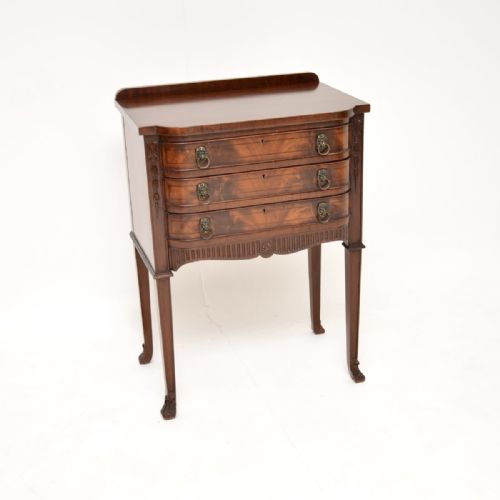
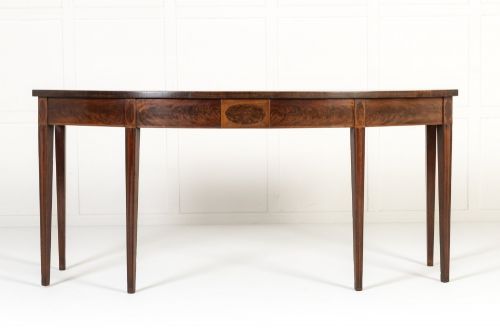
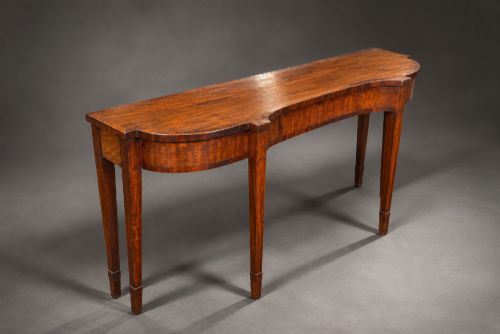
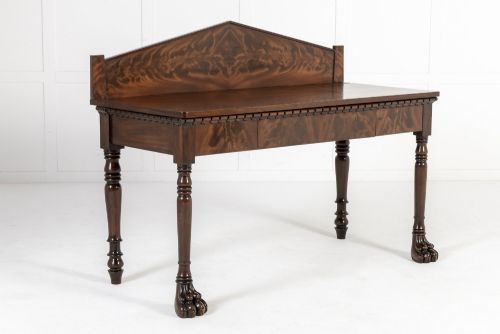
The most common iterations on this page feature mahogany or oak construction, ranging from straight lines to bow front and serpentine profiles. Examples extend from simple country furniture to sophisticated metropolitan pieces with inlaid decoration.
Materials and construction
Cabinet makers utilised dense timbers such as mahogany and oak, often applying flame mahogany veneer to prominent drawer fronts and cupboard doors. Secondary woods provide structural stability while brass handles and pulls add functional contrast.
Surface decoration relies on precision woodworking techniques, including boxwood and satinwood inlay to create geometric borders and panels. Joinery traditions dictate the robust construction of drawers and frames designed for heavy domestic use.
Georgian Buffet Console Retail Price Guide 2026
Typical asking prices for georgian buffet console among the pieces listed under this phrase on Sellingantiques today, from the lower quarter to the upper quarter. They describe what is for sale here now, not the wider market.
Determinants of quality
The distinction between tiers rests upon timber selection and the crispness of the cabinet work. Superior items display carefully matched wood grain across the entire frontage, particularly on curved or serpentine surfaces.
Refinement in secondary details elevates a piece, such as finely executed stringing, well-turned legs, and the retention of original brass hardware. The depth of colour achieved through traditional finishing methods further separates standard examples from exceptional ones.
Gillow
The Georgian Buffet Console Glossary
- Bow front
- A convex curved cabinet front that projects outward in the centre, softening the linear geometry of a room. This shape appears frequently on eighteenth and nineteenth century servers.
- Serpentine
- A horizontally undulating front edge featuring a convex centre flanked by concave curves. It requires advanced carpentry skills to construct properly.
- Dresser base
- A low wooden storage unit with drawers or cupboards, originating from country houses. These pieces provide sturdy utility alongside display surfaces.
- Inlay
- A decorative technique where contrasting woods like satinwood or boxwood are fitted flush into the primary timber surface. It creates geometric borders and focal motifs.
Georgian Buffet Console: Frequently Asked Questions
How do I use a buffet console today?
These surfaces suit dining rooms for serving food or displaying silver and glassware. They also function in hallways as console tables for correspondence and decorative objects.
Their deep drawers provide practical storage for table linen or household items while maintaining a slim profile against the wall.
How do I tell an original from a revival piece?
Original pieces display period construction methods, timber oxidation, and wear patterns consistent with age. Examination of the drawer linings and backboards reveals hand tool marks.
Revival items from later periods often show machine sawing and different finishing agents despite using period styles.
What is the difference between a sideboard and a serving table?
Serving tables typically consist of an open frame with drawers beneath the top surface, lacking lower cupboards. Sideboards often incorporate enclosed cabinet space or tiered shelving for storage.
Both forms served similar functions in dining rooms across the Georgian and Regency periods.
How do I care for antique mahogany wood?
Keep wooden surfaces away from direct heat sources and strong sunlight to prevent the timber from drying and fading. Regular dusting with a soft cloth maintains the natural lustre.
Apply traditional wax polish sparingly when the wood appears dry, buffing gently to preserve the finish.