


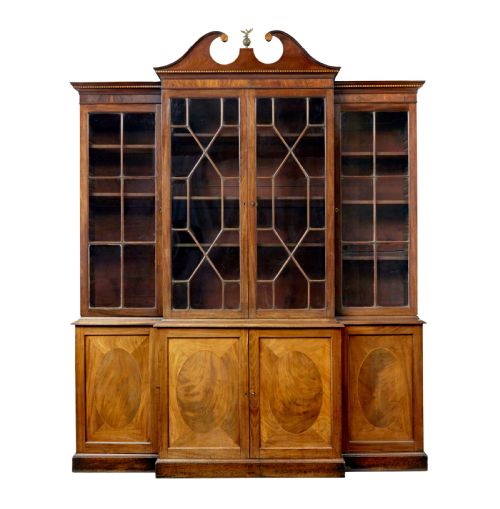
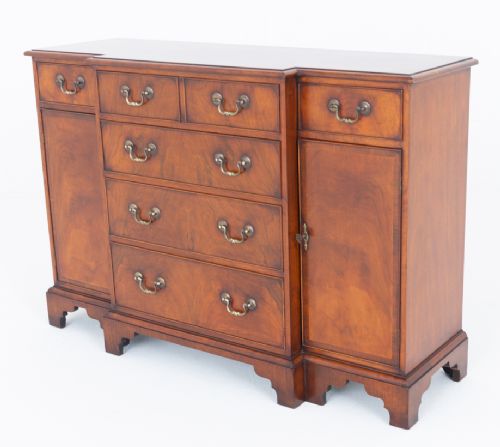


Georgian Breakfront Cupboard
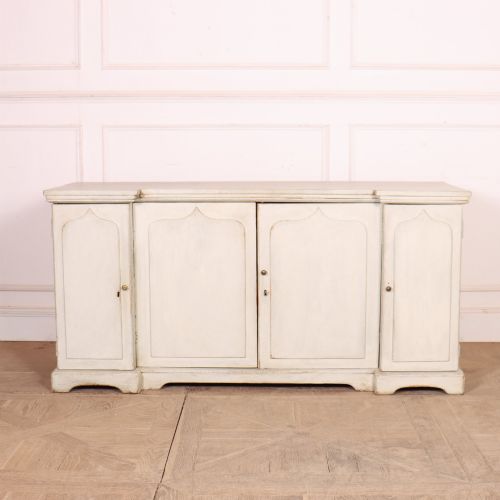
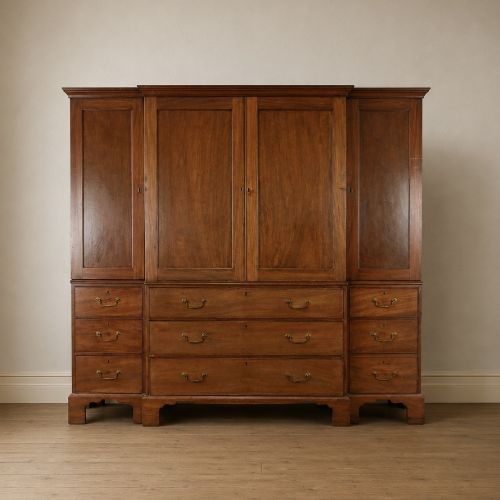
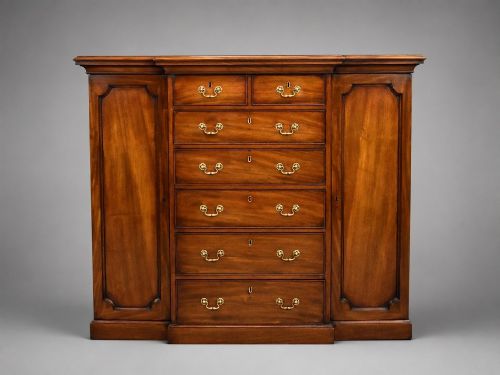
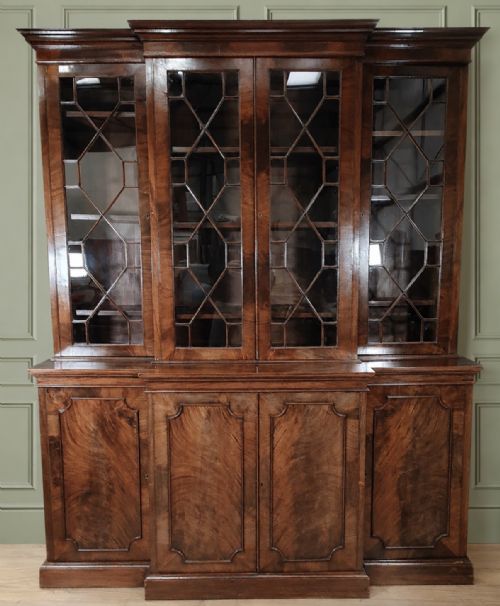
A georgian breakfront cupboard offers substantial architectural presence and divided storage, bringing classic proportions and rich timber grain to an interior.
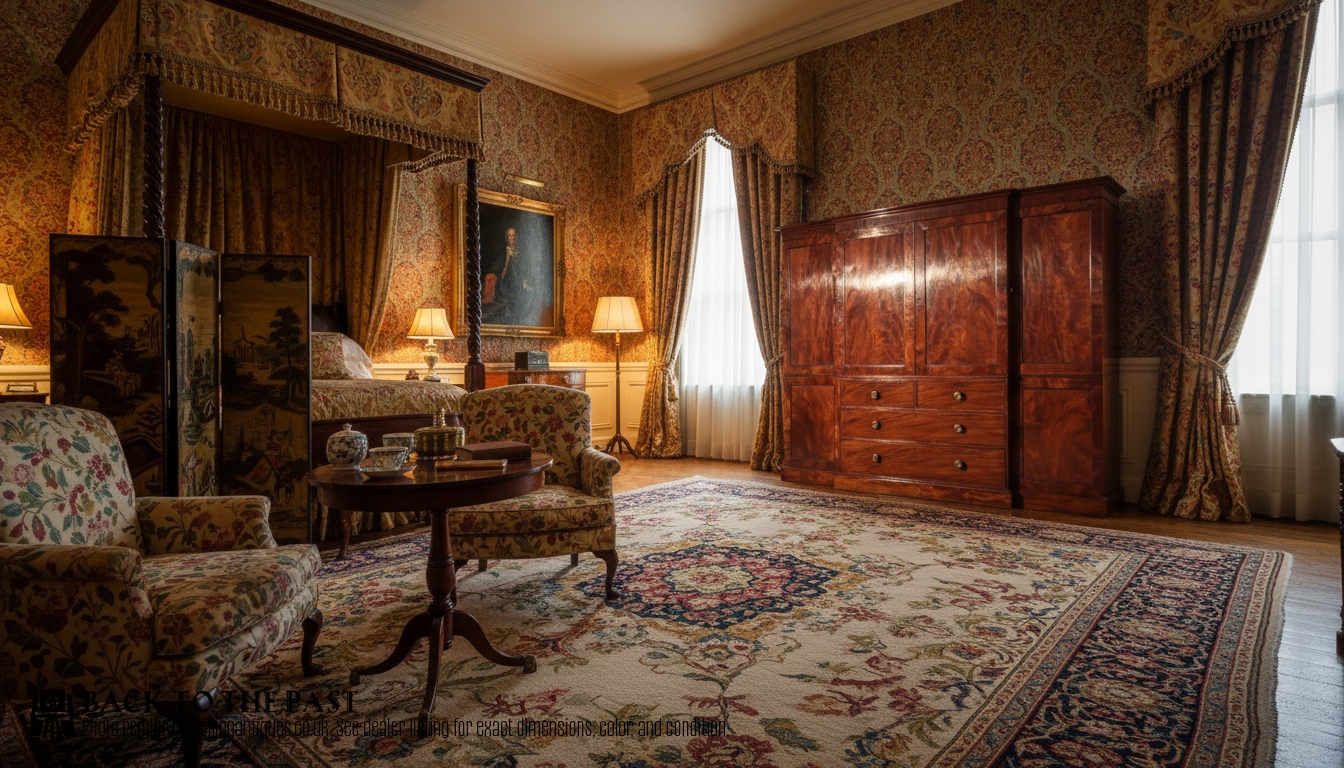
Georgian Breakfront Cupboard
When you search for a georgian breakfront cupboard, you encounter large storage furniture featuring a central section that projects forward from the flanking wings. The listings here span foundational 18th-century pieces from the George III period up to later Victorian and revival interpretations.
Beyond formal bookcases and library cabinets, the form extends to dresser bases, linen presses, housekeepers cupboards, and sideboards. These large items served domestic storage needs in country houses and town residences alike, constructed with distinct proportions.
Mahogany predominates among the surviving pieces, accompanied by oak, walnut, and painted wood finishes. Examples range from vernacular oak dressers to grand library bookcases and satinwood cabinets with inlay.
Materials and construction
Cabinet makers utilised solid timbers alongside veneers, applying flame mahogany veneer and curl mahogany to larger surfaces to display dramatic grain patterns. Secondary woods such as pine appear in internal shelving and carcase construction.
Glazing bars divide the upper cabinet doors into geometric panes on bookcase variants, whilst drawers and lower cupboards utilise sturdy frame and panel methods. Brass hardware, including handles and escutcheons, secures doors and drawers across the periods represented.
Materials appearing across these architectural storage pieces include brass, glass, oak, pine, flame mahogany veneer, and satinwood.
Assessing quality and character
Quality rests upon the selection of timber figures, such as symmetrical flame mahogany or figured walnut, and the crispness of applied mouldings and stringing. The integration of the projecting centre section with the side wings requires precise joinery.
Proportion and scale distinguish finer cabinetwork from simpler utility pieces, alongside original painted decoration or surviving brass fittings. The presence of original glazed doors and interior configuration further separates standard regional items from ambitious urban commissions.
Maple & Co.
The Georgian Breakfront Cupboard Glossary
- Breakfront
- A cabinet front where the central section projects forward from the two flanking ends. This architectural device breaks the flat facade to create visual depth and rhythm.
- Linen Press
- A tall piece of furniture designed for storing folded garments and linen, typically featuring upper sliding trays or shelves above a chest of drawers.
- Flame Mahogany Veneer
- A thin slice of mahogany timber cut from the point where a branch joins the main trunk, producing a fiery, flamelike pattern of grain. Cabinet makers laid this across prominent door panels for decorative impact.
- Glazing Bar
- A narrow wooden strip holding individual panes of glass within a cabinet door. Finer pieces employ delicate, slender bars arranged in gothic or geometric patterns.
Georgian Breakfront Cupboard: Frequently Asked Questions
What is a breakfront cupboard?
A breakfront cupboard is a large piece of case furniture characterised by a central section that projects forward from the flanking wings, creating a distinct three-tier facade.
This design was favoured for bookcases, wardrobes, and sideboards to add architectural depth and formal presence to a room.
How do I date a georgian piece?
Dating relies on examining timber choices, construction techniques, hardware, and stylistic details such as cornice mouldings and foot design.
Earlier pieces from the George III era typically display dense mahogany and hand-cut dovetails, whereas revival pieces from later periods often incorporate machine manufacturing methods.
Where were housekeepers cupboards used?
Housekeepers cupboards were utilitarian storage pieces placed in large country houses and estates to store household linens, dry goods, and provisions.
They generally featured sturdy oak or pine construction with deep lower cupboards and upper shelving rather than fine display glass.
How do I care for mahogany veneer?
Mahogany veneer requires stable room temperatures and protection from direct sunlight to prevent the timber from drying out and the glue beneath from failing.
Regular dusting with a dry, soft cloth and occasional application of appropriate wax maintains the lustre of the polished surface.