
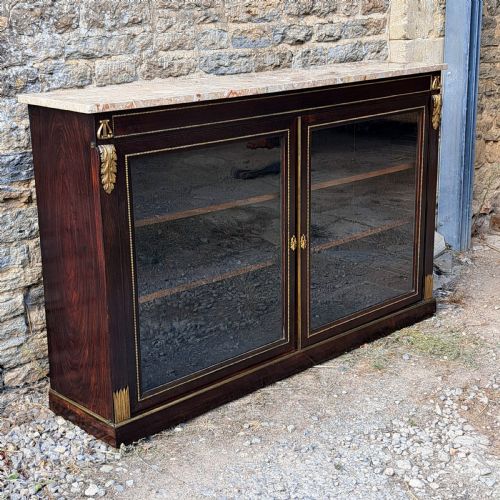

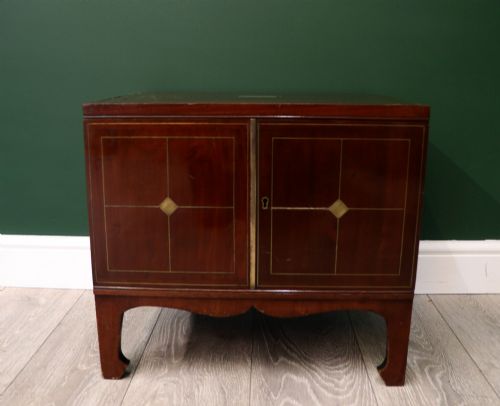
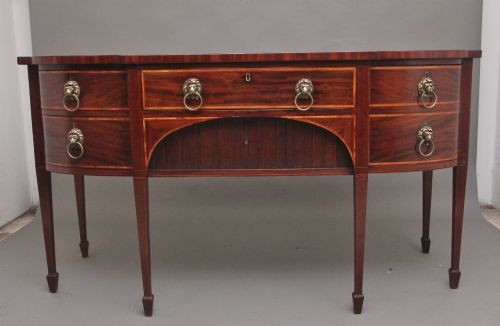
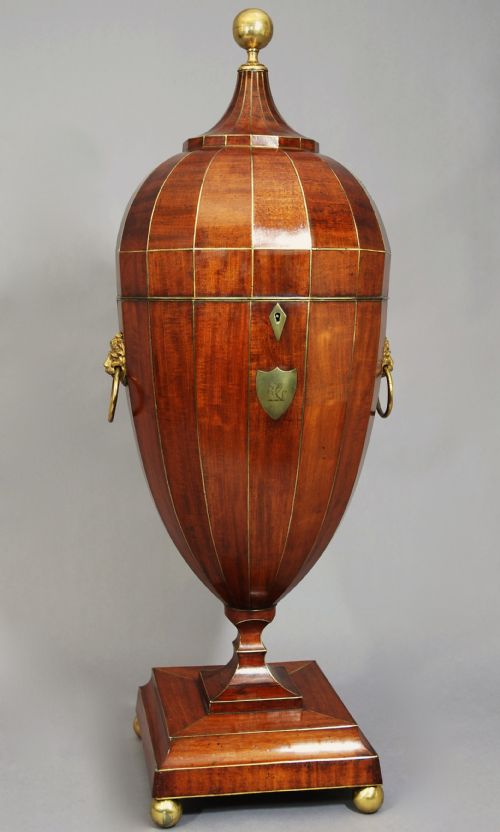


Georgian Brass Inlaid Sideboard
A georgian brass inlaid sideboard brings warmth and architectural precision to a room, offering both generous storage and striking decorative contrast.
Georgian Brass Inlaid Sideboard
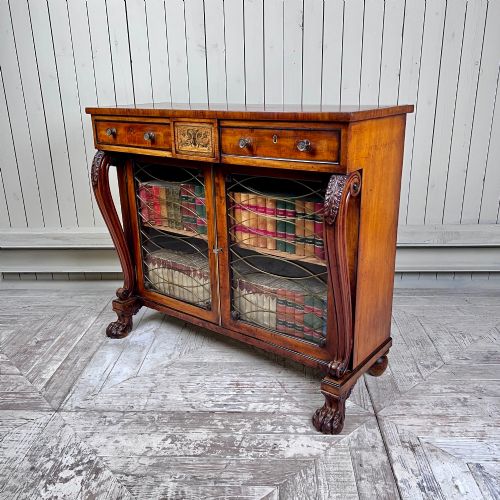
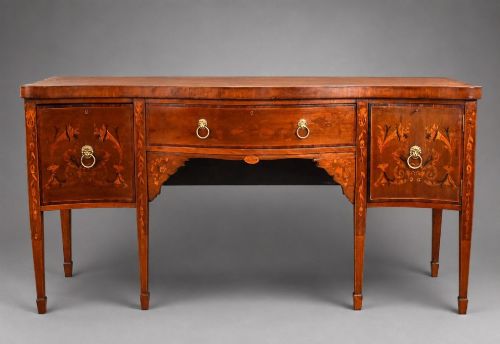
When you search for a georgian brass inlaid sideboard, you encounter case furniture designed for dining rooms and large parlours to serve food and store plate. The pieces appearing here span the Georgian and Regency periods alongside later revivals, reflecting a long tradition of cabinet making.
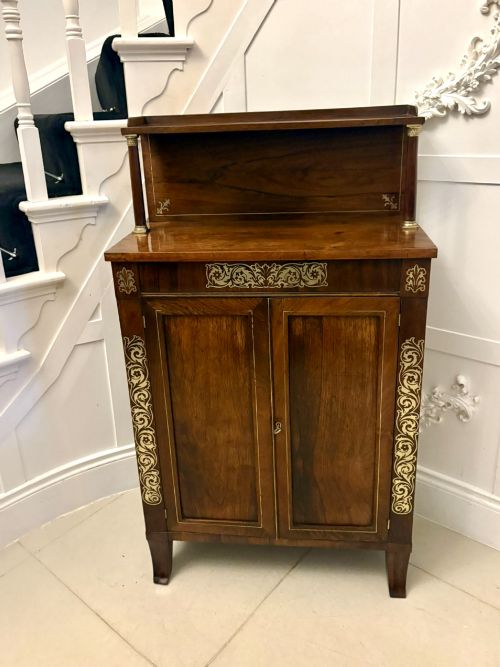
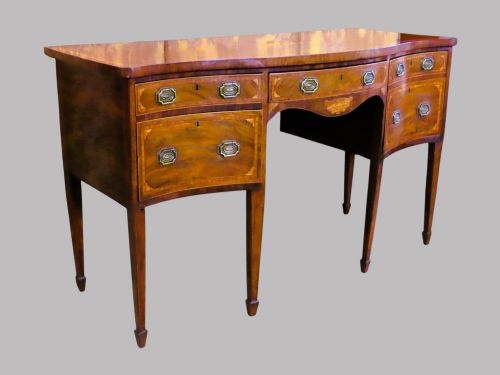
The most common forms on this page include mahogany and rosewood sideboards, side cabinets, and chiffoniers. These items often feature serpentine or bow fronts, combining utilitarian storage with sophisticated aesthetic details.
Originating primarily from British workshops, these items incorporate secondary timbers and decorative veneers that define their character. Buyers encounter variations from formal George III designs to later Sheraton Revival interpretations.
Materials and construction methods
Cabinet makers utilised dense primary timbers such as mahogany and rosewood to build the structural carcase and drawer fronts. These woods were chosen for their rich grain and ability to take a fine polish.
Decoration relied on contrasting lighter woods like boxwood and satinwood, alongside precision-cut brass inlay. Craftsmen channelled the solid timber surfaces to embed delicate brass lines and floral motifs, securing them flush with the wood.
Construction techniques involved traditional joinery, including dovetailed drawers and panelled carcases. Secondary woods provided internal stability while the polished exterior displayed the primary veneer.
Listings feature pieces spanning the Georgian, Regency, and Edwardian periods, constructed primarily in mahogany and rosewood.
Distinctions in quality and execution
The standard of a georgian brass inlaid sideboard depends on the crispness of the inlay and the selection of the timber. Finely figured mahogany or rosewood matched with meticulously fitted brass stringing elevates a piece above simpler variants.
Proportion and the handling of curved fronts, such as serpentine or bow shapes, dictate the overall elegance of the form. Master craftsmen achieved seamless transitions around complex curves where lesser makers showed visible disruption in the grain or metalwork.
Howard And Sons
The Georgian Brass Inlaid Sideboard Glossary
- Serpentine front
- A curved furniture front featuring a convex centre flanked by concave ends. This undulating shape requires advanced woodworking skill to execute properly.
- Chiffonier
- A low cabinet equipped with shelves or doors, frequently fitted with a superstructure on top. These pieces developed during the Regency period for domestic utility.
- Stringing
- Thin lines of contrasting wood or metal inlaid into furniture surfaces. It defines the edges of tabletops, drawer fronts, and cabinet doors.
- Breakfront
- A large piece of furniture where the central section projects forward from the flanking wings. This architectural arrangement creates depth and shadow in large rooms.
- Pedestal sideboard
- A form consisting of two separate pedestals linked by a central serving table or board. They emerged in dining rooms during the late eighteenth century.
Georgian Brass Inlaid Sideboard: Frequently Asked Questions
How do I identify a Regency period piece?
Regency pieces often display classical motifs, bold rosewood veneers, and precise brass inlay work reflecting early nineteenth-century taste.
They frequently draw inspiration from Greek and Roman architecture, distinguishing them from earlier Georgian designs.
Where should I place a sideboard in my home?
These items suit dining rooms, large hallways, or living spaces where they provide substantial surface area and storage. Their finished backs and detailed fronts allow them to anchor a prominent wall.
Ensure placement avoids direct sunlight or strong heat sources to protect the delicate wood veneers and brass elements.
How do I care for brass inlaid furniture?
Maintain the wood with a gentle beeswax polish applied sparingly and buffed with a soft cloth. Avoid harsh chemical cleaners that can discolour the timber or loosen the brass stringing.
Regular dusting prevents particulate buildup in the recessed channels where the metal meets the grain.