



Georgian Brass Handle Cooler
These georgian brass handle cooler pieces are historic vessels in wood and metal built to hold wine, water, or plants.
Georgian Brass Handle Cooler
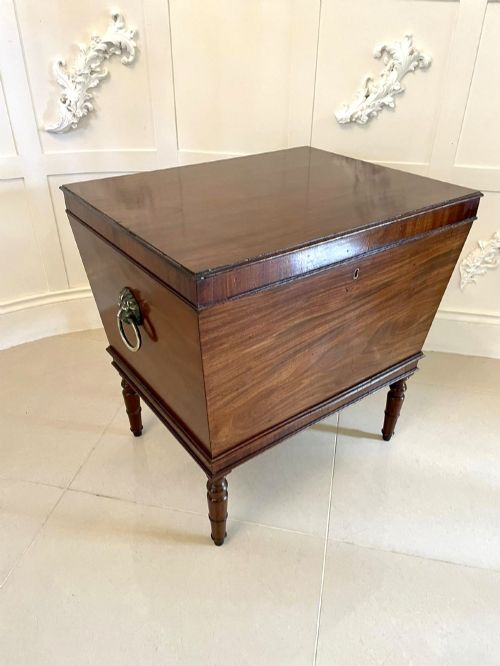
A georgian brass handle cooler is a functional vessel designed to hold wine bottles, ice, or plants in domestic rooms. The selection here spans cellarettes, wine coolers, jardiniere stands, and planters from the eighteenth century through to the early twentieth century.
Most examples found on this page are constructed from mahogany, often fitted with metal liners or zinc interiors to handle moisture safely. Styles range from plain George III and Regency designs to later Edwardian revivals and Dutch marquetry pieces.
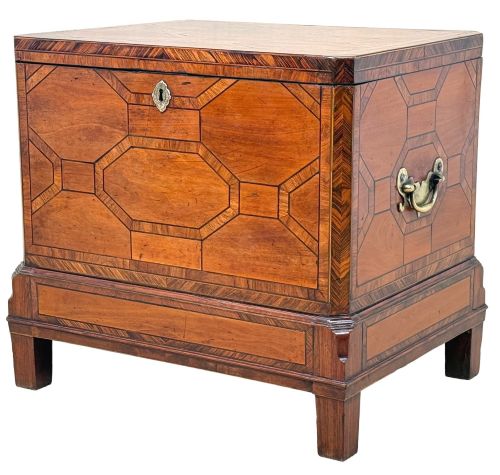
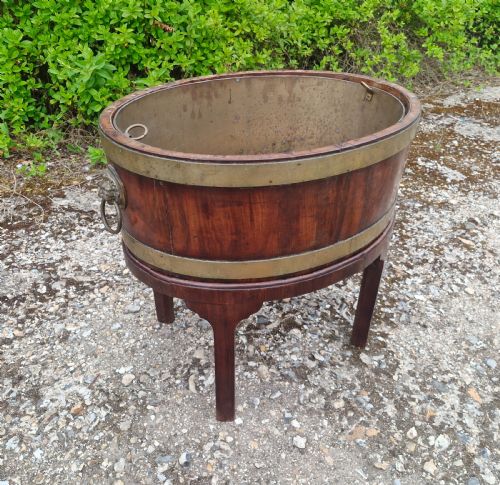
Form takes several distinct shapes, including octagonal buckets, oval vessels, and sarcophagus boxes. Makers of these pieces utilised brass bands and drop handles to secure the timber staves and provide portability.
How they were made
Construction relies heavily on traditional cooperage techniques, joining curved wooden staves with tight seams to hold interior water or ice without leaking. Metal bands of brass are heated and fitted tightly around the timber bodies as they cool.
Cabinetmakers selected dense hardwoods such as mahogany, walnut, and satinwood, frequently finishing surfaces with marquetry inlay or boxwood stringing. Internal metal liners in zinc or copper were added to protect the wooden structure from damp contents.
Some seventeenth-century warming buckets survived by quietly reinventing themselves as nineteenth-century flower pots.
What varies in quality
Quality rests in the precision of the cooperage and the selection of timber figure, such as well-matched mahogany grains or intricate satinwood and rosewood marquetry. Superior pieces exhibit crisp brasswork on handles and binding that matches the scale of the vessel.
The survival of original metal liners and internal divisions marks the difference between practical utility and altered state. Later revivals show differing standards of hand-carving compared to eighteenth-century originals.
Whytock And Reid
The Georgian Brass Handle Cooler Glossary
- Cellarette
- A lockable container used for storing wine bottles in the dining room before serving. They sat beneath sideboards or on the floor.
- Jardiniere
- An ornamental stand or pot, usually lined with metal, designed to hold indoor plants and flowers. These share many construction traits with wine coolers.
- Coopered
- Built from curved wooden staves bound together with metal hoops, much like a traditional barrel. This method prevented warping from moisture.
- Sarcophagus
- A box-like shape with a sloping lid, popular for Regency wine coolers and large cellarettes. It drew inspiration from classical stone tombs.
- Teestoof
- A Dutch foot stove or warming bucket used to hold hot embers, often adapted or styled similarly to small planters and coolers.
Georgian Brass Handle Cooler: Frequently Asked Questions
What is a cellarette?
A cellarette is a specialised storage container built to hold wine bottles safely near the dining table. They often featured internal divisions and lockable lids.
Most examples from the Georgian period incorporate metal liners to hold ice alongside the bottles during long meals.
How do I spot an original?
Look closely at the construction methods, such as hand-cut dovetails, traditional coopered staves, and period brass mountings. Timber shrinkage and patination provide clues to genuine age.
Compare the proportion of the brass handles and bands to the wooden body, as later revivals often use standardised hardware.
Can I use these as planters?
Many historic wine coolers and buckets were lined with metal specifically to handle damp soil and plants. Contemporary owners frequently use them as indoor jardiniere stands.
Ensure the interior zinc or metal liner is sound before adding water or earth to protect the historic timber.
What woods were used?
Mahogany remains the predominant timber found in these pieces, valued for its density and stability against moisture. Walnut, satinwood, and kingwood also appear in decorative marquetry work.
Secondary woods like oak or pine often form the internal framing of the staves and bases.