



Georgian Brass Fire Curb
A georgian brass fire curb grounds a hearth with bright metalwork, bringing period proportion and functional warmth to a room.
Georgian Brass Fire Curb
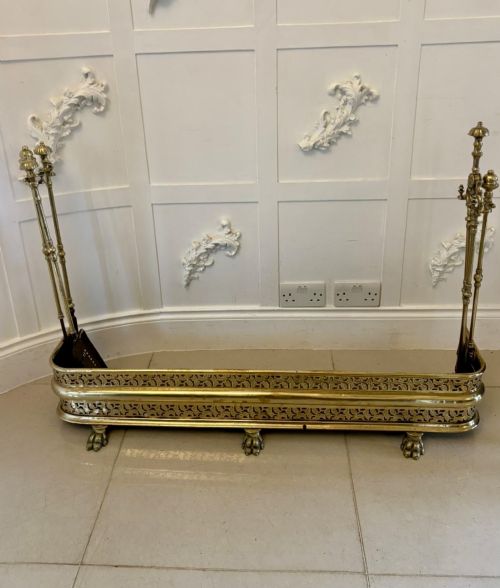
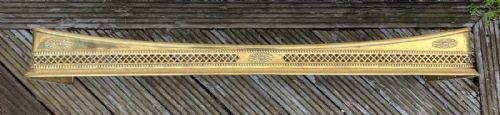
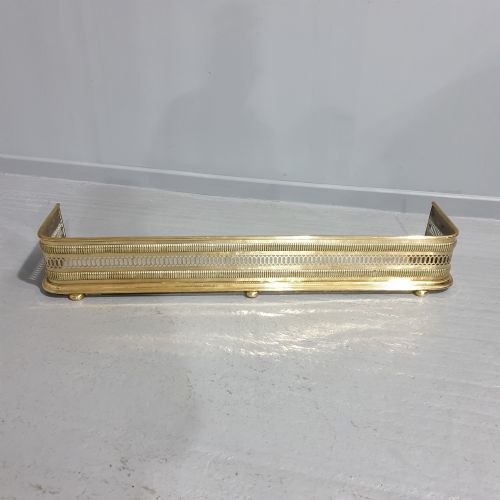
A georgian brass fire curb provides a protective barrier for the hearth, keeping embers contained while framing the fireplace. These functional hearth accessories appear in forms ranging from simple linear rails to curved designs with pierced decoration.
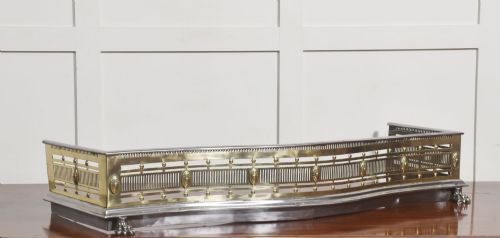
The pieces on this page span the Georgian, Regency, and Victorian periods, including examples from the nineteenth century. Buyers encounter styles such as Neoclassical and Adam alongside simpler polished metal rails.
How they were made
Craftsmen utilised brass, cast brass, and polished brass to build the primary structures, frequently combining them with iron and steel components for added weight and stability. Surfaces were polished to a high finish or pierced with decorative patterns.
Makers shaped metal through casting and forging, creating scrolled details and architectural motifs characteristic of Regency and Adam designs.
Georgian Brass Fire Curb Retail Price Guide 2026
Typical asking prices for georgian brass fire curb among the pieces listed under this phrase on Sellingantiques today, from the lower quarter to the upper quarter. They describe what is for sale here now, not the wider market.
Some nineteenth-century fenders arrived complete with their original fire irons, proving that hearth accessories have a habit of staying together.
What varies in quality
Quality rests in the crispness of the casting and the thickness of the metal used for the fender rail. Heavier gauge brass and carefully detailed piercing distinguish finer examples from simpler production.
The integration of steel parts and the retention of original components, such as accompanying fire irons, separate standard hearth furnishings from exceptional items.
The Georgian Brass Fire Curb Glossary
- Fender
- A low metal guard placed in front of an open fireplace to contain falling coals. These pieces protect the floor and anchor the hearth visually.
- Curb
- An alternative term for a fender, often denoting a heavy metal barrier surrounding the hearth stone. It sits directly on the floor.
- Neoclassical
- A style drawing on classical antiquity, frequently seen in Adam design with symmetrical motifs and urn details. It dominated late eighteenth and early nineteenth-century interiors.
- Pierced
- Metalwork perforated with decorative patterns such as lattices or geometric shapes. This technique lightened the visual weight of heavy brass.
- Polished steel
- Iron treated and polished to a bright, silver-coloured finish, often paired with brass in Regency grates and fenders.
Georgian Brass Fire Curb: Frequently Asked Questions
What is a brass fire curb?
A brass fire curb is a hearth guard designed to stop hot embers from rolling onto the floorboards. It defines the boundary of the fireplace.
These pieces also serve a decorative purpose, reflecting light from the fire and tying together the metalwork of the room.
How do I style a hearth fender?
Position the fender squarely in front of the fireplace opening, leaving enough clearance for fire tools and ash trays. Match the metal finish to other fittings in the room.
Keep the brass polished to maintain its brightness, or allow a softer patina to develop naturally over time.
Are these fenders adjustable?
Period fenders were made to specific dimensions for individual hearths and do not feature mechanical adjustments. Measure your fireplace opening carefully before selecting a piece.
Curved and straight models come in fixed lengths suited to particular room proportions.
How do I date a brass fender?
Dating relies on stylistic clues such as Neoclassical symmetry, Regency curves, or Victorian pierced brass patterns. Construction methods like cast versus sheet metal also indicate the period.
Comparing the materials, such as the use of polished steel alongside brass, helps narrow down the decade of manufacture.