

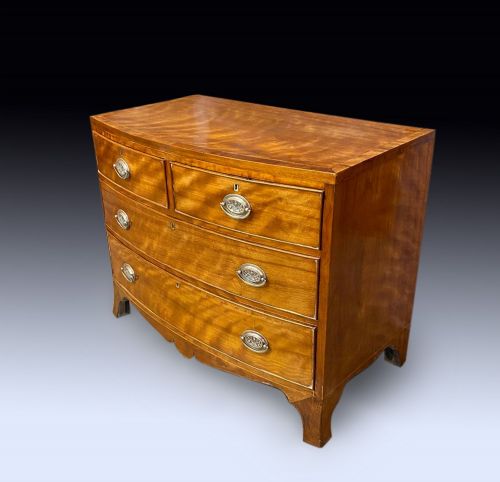
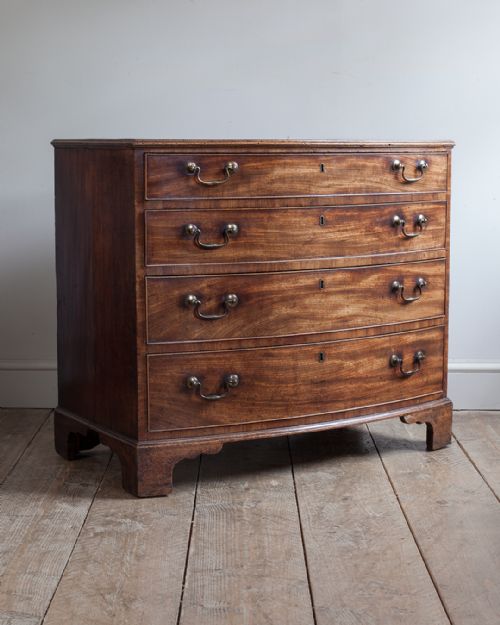


Georgian Bowfront Bureau
A georgian bowfront bureau offers graceful curved fronts and exceptional timber grain, making it a sophisticated choice for any traditional interior.
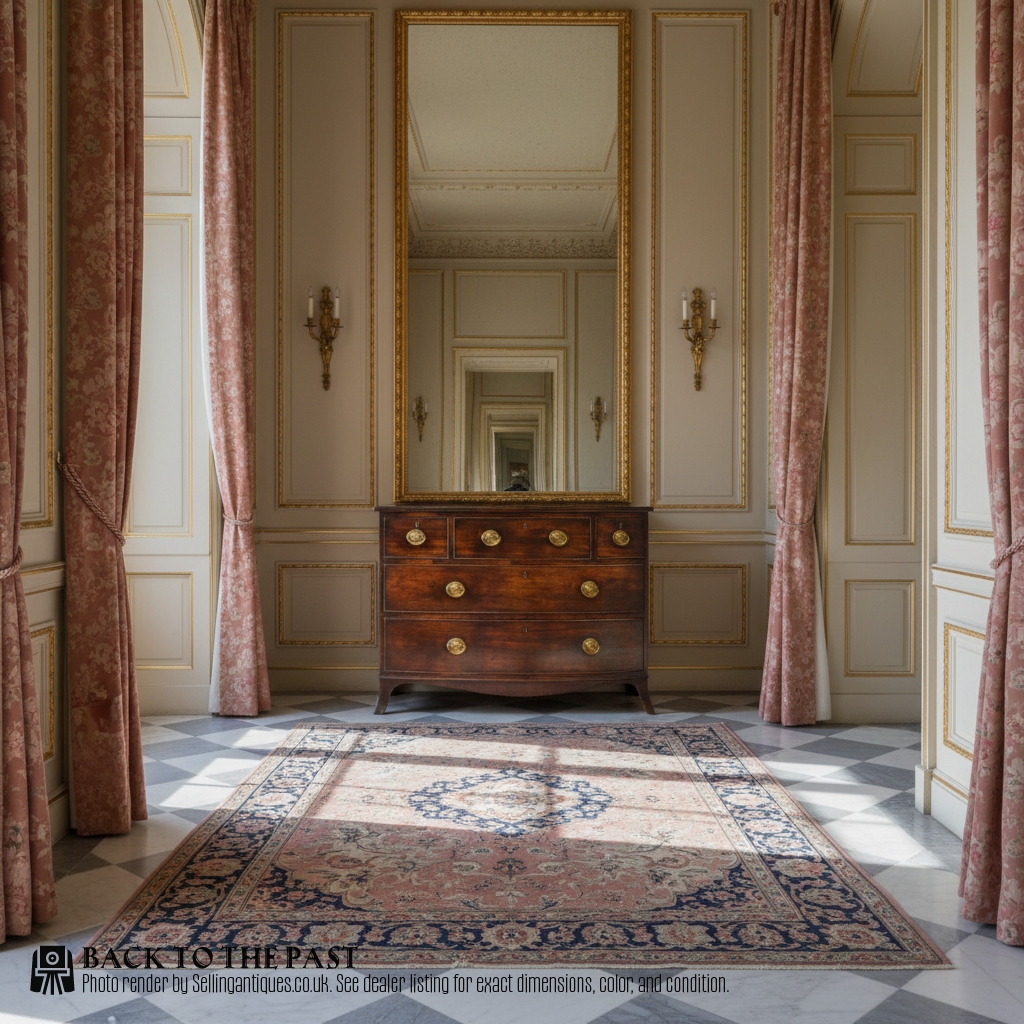
Georgian Bowfront Bureau
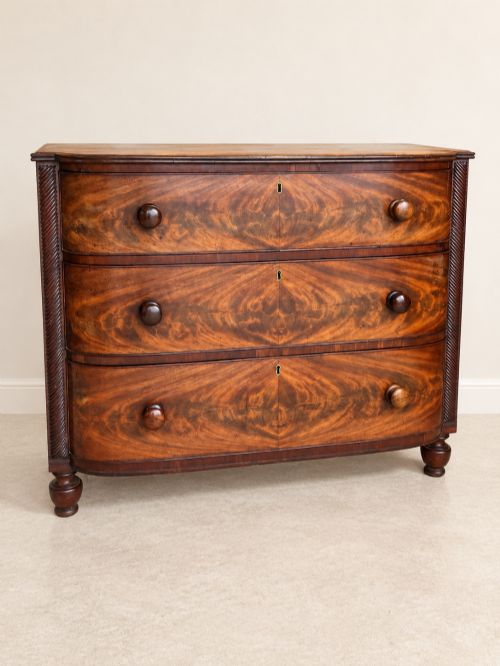
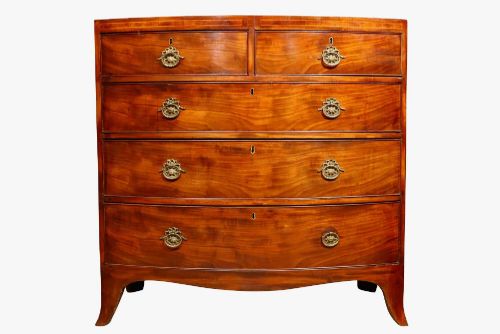
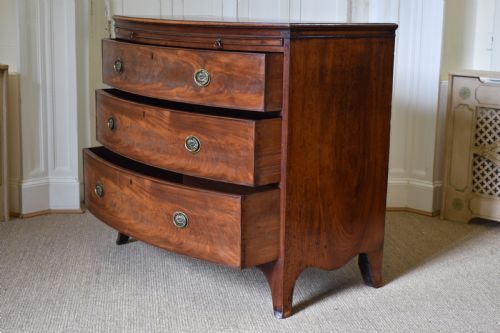
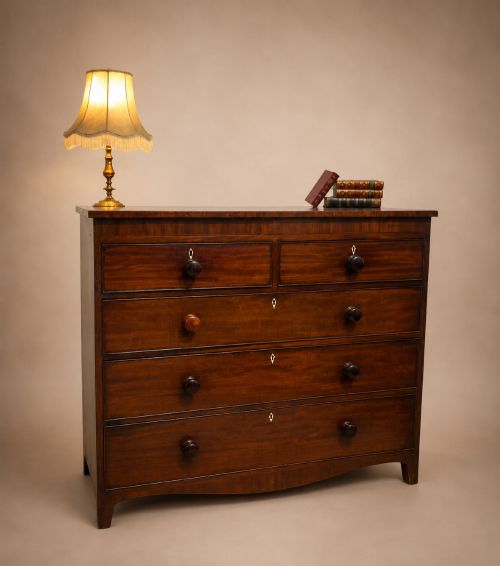
A georgian bowfront bureau typically presents as a chest of drawers featuring a prominent curved front facade. You will frequently encounter mahogany and flame mahogany veneer examples originating from the Georgian, Regency, and nineteenth-century periods.
These pieces range from compact proportions designed for smaller spaces to larger commode chests equipped with pull-out writing slides. The surviving examples showcase the enduring appeal of curved cabinetry from the eighteenth and nineteenth centuries.
Materials and construction
Cabinetmakers relied heavily on solid mahogany and rich flame mahogany veneer to construct these curved carcases, often incorporating secondary timbers such as pine. Brass hardware and occasional bone escutcheons completed the exterior fittings.
The distinctive curved drawer fronts required skilled timber bending and precise shaping techniques. Craftsmen applied fine veneers to accentuate the natural figuring of the wood across the sweeping drawer faces.
Several pieces include hidden writing slides designed for standing correspondence long before modern desks took over.
Assessing quality
Superior examples display continuous, book-matched flame mahogany veneers that flow seamlessly across the curved drawer fronts. The crispness of the cockbeading around the drawers and the weight of the brass handles indicate finer cabinetmaking.
Proportion and timber selection dictate the standing of a piece within the range. Pieces retaining their original surfaces and proportional balance command greater appreciation among discerning buyers.
The Georgian Bowfront Bureau Glossary
- Bowfront
- A convex curving cabinet front that projects outward in a smooth arc. This shape gained immense popularity during the Georgian and Regency periods.
- Flame mahogany
- A highly figured wood veneer displaying characteristic ripple patterns resembling flickering flames. Cabinetmakers reserved this striking timber for primary display surfaces.
- Writing slide
- A pull-out shelf housed above the top drawers designed for correspondence. It tucks away flush when not in use.
- Cockbeading
- A small rounded moulding projecting around the edges of drawer openings. It provides structural protection to the drawer edges while adding a neat visual border.
- Commode chest
- A chest of drawers built with a more decorative or architectural presence. These often combine storage utility with refined surface detailing.
Georgian Bowfront Bureau: Frequently Asked Questions
What is a bowfront chest?
A bowfront chest is a set of drawers featuring a convex, outward-curving front facade. This design softens the room's angles while providing generous internal storage capacity.
Cabinetmakers adopted this curved profile extensively during the Georgian and Regency eras to showcase highly figured mahogany veneers.
How do I identify a Georgian piece?
Georgian furniture is identified through period construction methods, traditional timber choices like solid mahogany, and classical proportions. Examining the drawer linings and backboards reveals the hand-craftsmanship of the eighteenth and early nineteenth centuries.
Stylistic cues such as bracket feet, subtle stringing, and cockbeaded drawer edges further confirm the era of manufacture.
Where should I place a bureau?
These chests suit bedrooms, hallways, or living rooms where their curved profiles can be admired without blocking narrow walkaways. Their modest depth relative to storage capacity makes them remarkably versatile in period and modern homes alike.
Ensure placement avoids direct sunlight to protect the rich mahogany veneers and polished finishes from fading over time.
What is a writing slide?
A writing slide is a pull-out wooden shelf integrated just beneath the top surface or upper drawers. It provided a convenient pull-out writing surface in rooms where a full desk was impractical.
When pushed fully home, the slide disappears neatly into the cabinet frame, maintaining the clean lines of the bowfront.