

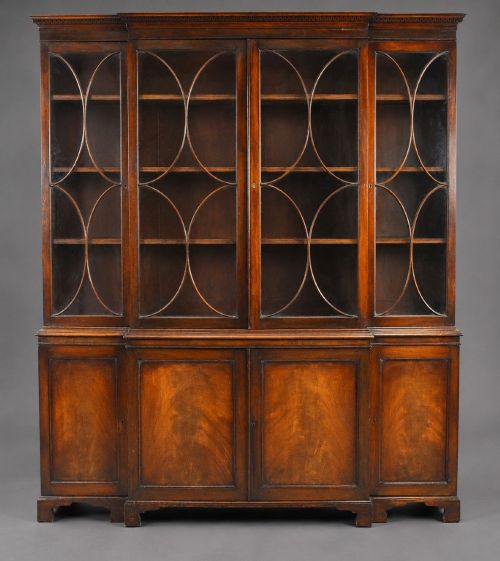
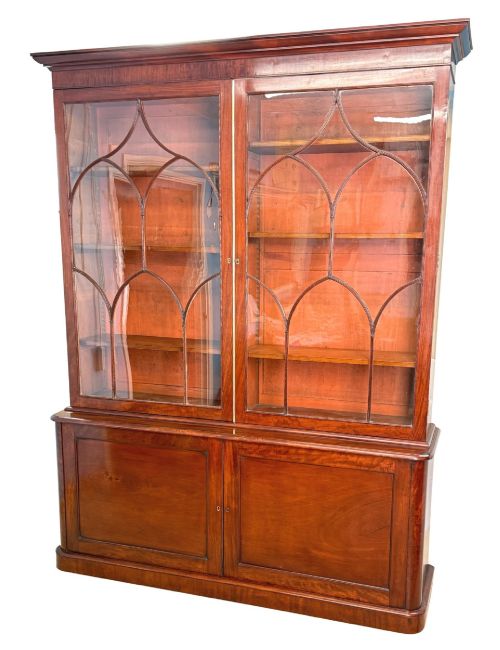
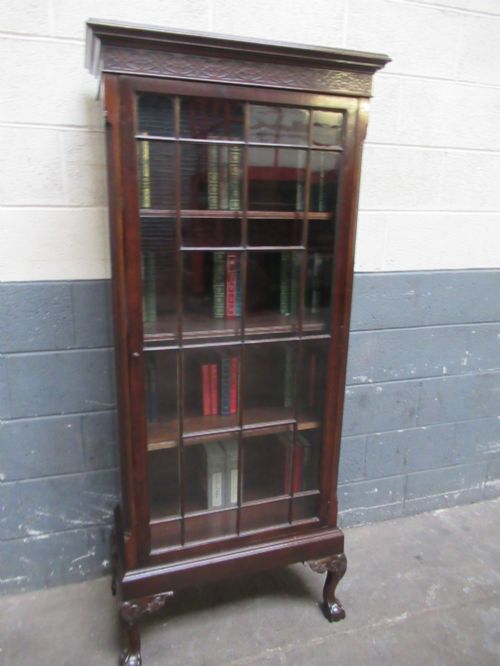
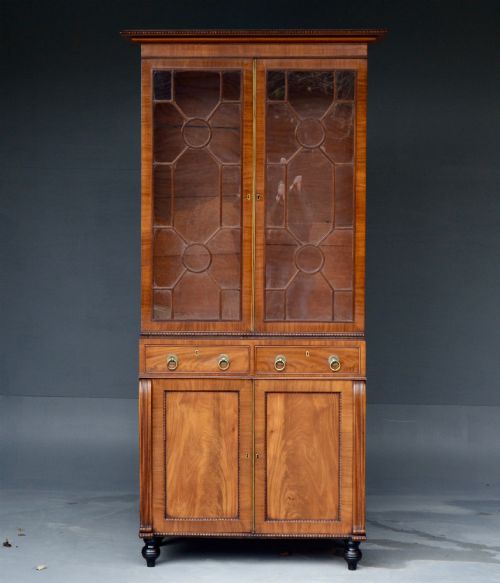
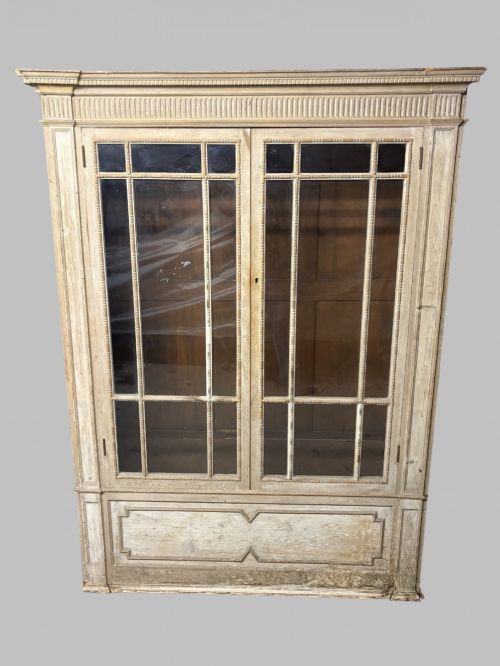
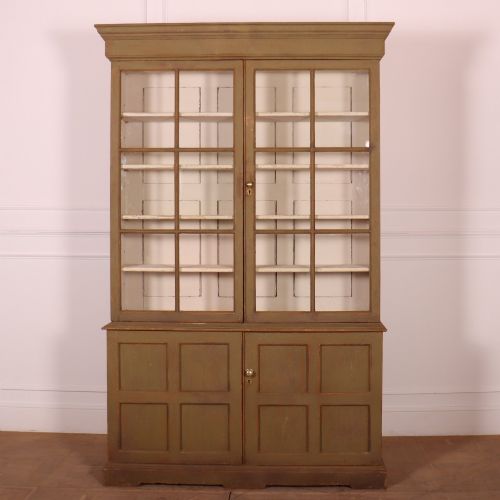
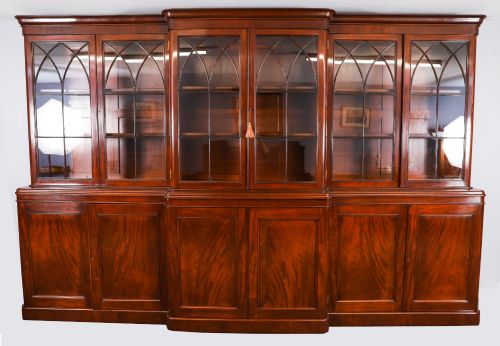
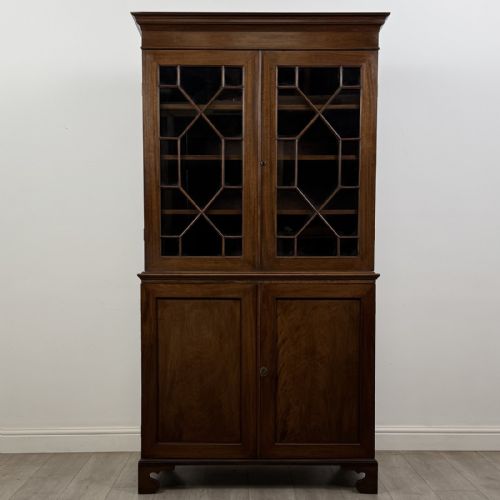
Georgian Bookcase with Glazed Doors
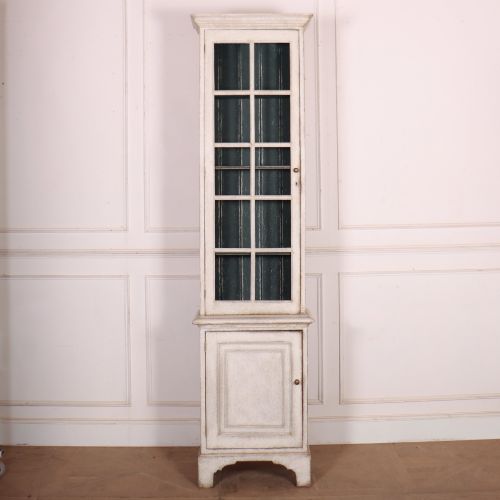
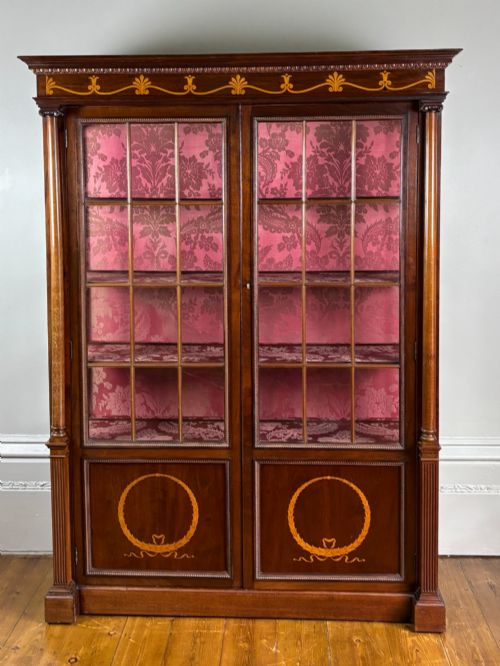
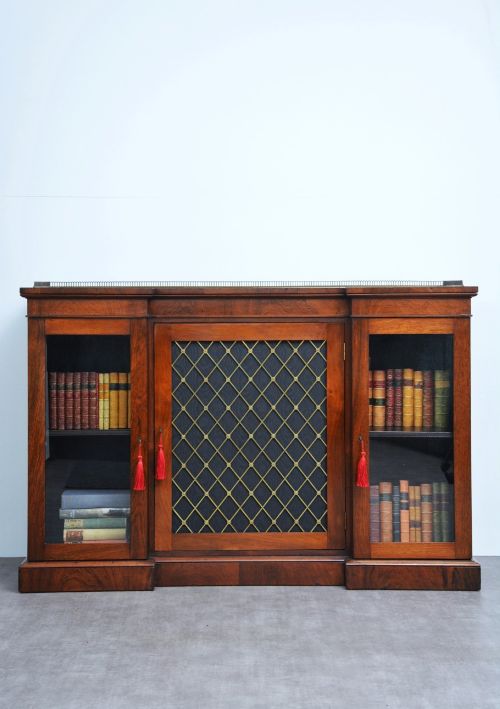
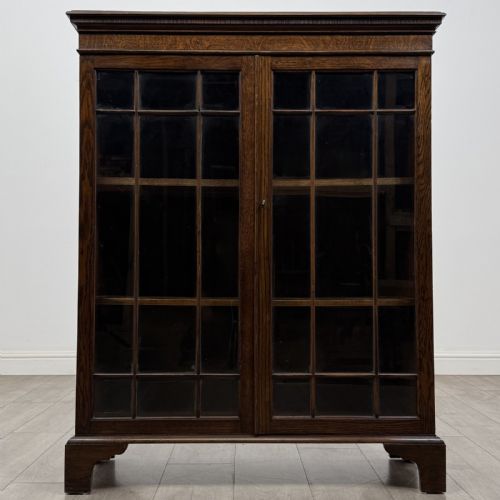
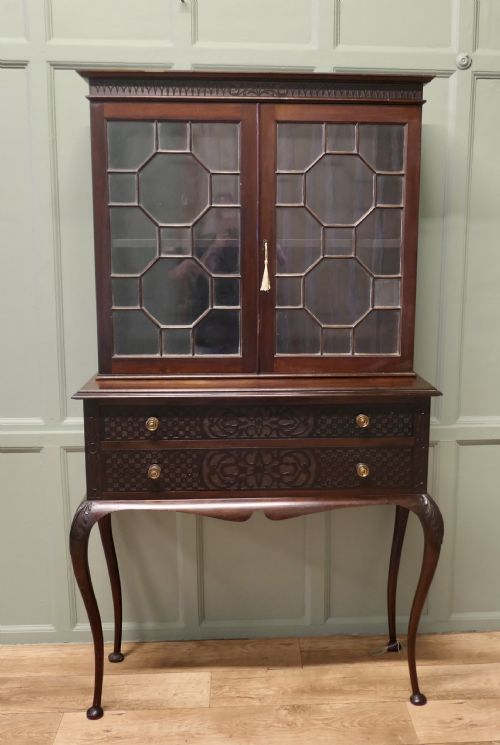
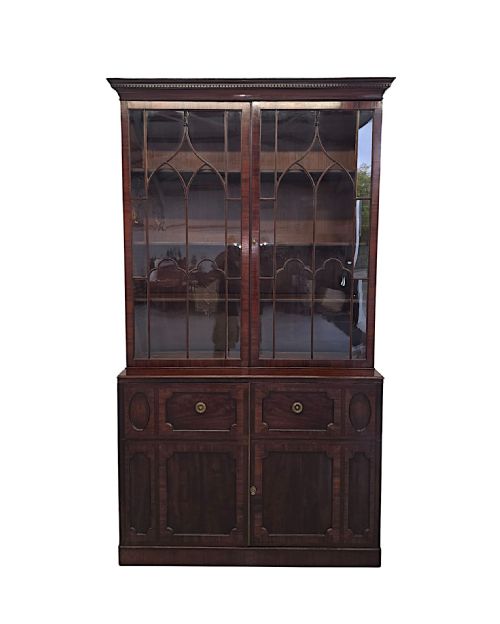
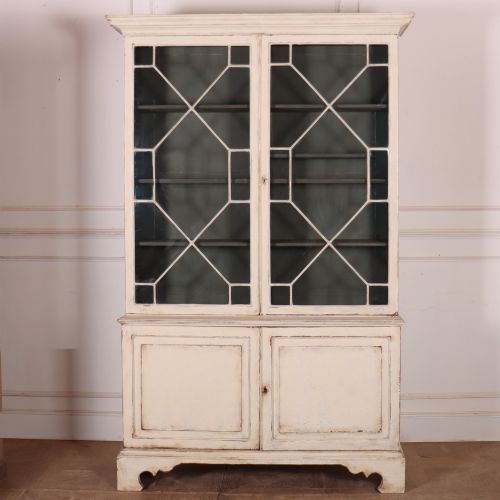
A georgian bookcase with glazed doors offers architectural presence and generous shelving, holding books and display pieces behind clear glass panels.
Georgian Bookcase with Glazed Doors
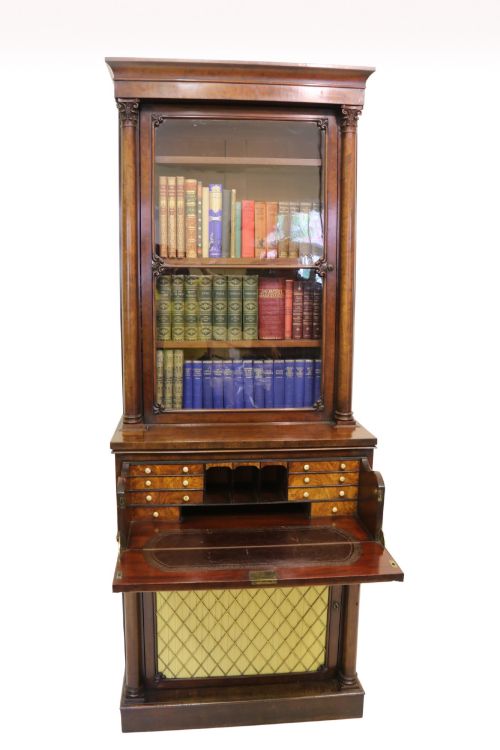
A georgian bookcase with glazed doors primarily appears in forms such as bureau bookcases, secretaire bookcases, and tall two-door cabinets. These pieces date across the Georgian and Regency periods, alongside later revival styles from the Edwardian era and the early twentieth century.
The construction typically pairs an upper glazed cabinet section with a lower chest of drawers, a bureau writing flap, or a secretaire drawer. Mahogany serves as the dominant timber, often enhanced with flame mahogany veneers or marquetry inlay.
Materials and construction
Cabinet makers utilised solid mahogany and flame mahogany veneers over secondary timbers like pine, shaping panels and framing doors to house individual glass panes. Brass hardware, including handles and escutcheons, provides functional and decorative accents.
Internal joinery incorporates dovetailed drawer construction and adjustable shelving supported by wooden bearers or racks. Glass is held securely within timber astragal bars that divide the upper doors into geometric or arched patterns.
Georgian Bookcase with Glazed Doors Retail Price Guide 2026
Typical asking prices for georgian bookcase with glazed doors among the pieces listed under this phrase on Sellingantiques today, from the lower quarter to the upper quarter. They describe what is for sale here now, not the wider market.
Listings feature mahogany, flame mahogany, satinwood, brass, glass, and leather across pieces dated from the eighteenth to the twentieth century.
Judging execution and finish
Quality rests in the selection of timber figures, where matched flame mahogany veneers and crisp inlay demonstrate superior workshop output. The slenderness and precision of the timber astragal bars on the glazed doors indicate the maker's skill.
Proportions and structural integrity separate standard utility pieces from finer cabinet work. Well-executed pieces maintain balanced sightlines between the upper display section and the lower chest or bureau.
Tudor & Burrey·John Alexander
The Georgian Bookcase with Glazed Doors Glossary
- Astragal
- The moulded timber bars that hold the individual panes of glass within a glazed door. These often form intricate geometric patterns across the cabinet front.
- Bureau bookcase
- A combination furniture form featuring a sloping writing flap that opens to reveal small drawers and pigeonholes, surmounted by a glazed bookcase.
- Secretaire bookcase
- A tall cabinet incorporating a fitted pull-out writing drawer with a drop front, hiding a writing surface and internal compartments.
- Flame mahogany
- A highly figured timber veneer cut from the fork of the mahogany tree, producing a distinctive flickering flame pattern across large drawer fronts and panels.
- Marquetry inlay
- Decorative patterns formed by fitting contrasting wood veneers into prepared recesses on the cabinet surface.
Georgian Bookcase with Glazed Doors: Frequently Asked Questions
How do I clean the glass?
Use a mild glass cleaner applied to a cloth rather than directly onto the glass, preventing liquid from seeping into the timber astragal joints.
Dry the surface immediately with a soft lint-free cloth to maintain clarity without damaging the surrounding antique wood finish.
Where should I place it?
Position the cabinet against an interior wall away from direct sunlight and heat sources to protect the mahogany timber and veneers from drying out.
Ensure the floor is level so the tall structure remains stable and the heavy glazed doors hang true on their hinges.
Can shelves be adjusted?
Many examples feature adjustable wooden shelving supported by fixed wooden bearers or traditional vertical racks cut into the cabinet interior.
Adjusting shelf heights allows for the storage of varied book sizes and display items behind the glazed doors.
How do I maintain the wood?
Apply a traditional beeswax polish sparingly with a soft cloth and buff gently to nourish the mahogany surface and preserve its natural sheen.
Avoid silicone-based sprays, which can penetrate old timber finishes and attract dust over time.