


Georgian Bone China
Georgian bone china pieces bring delicate handpainted floral patterns and rich gilding from the early nineteenth century straight to the modern table.
Georgian Bone China
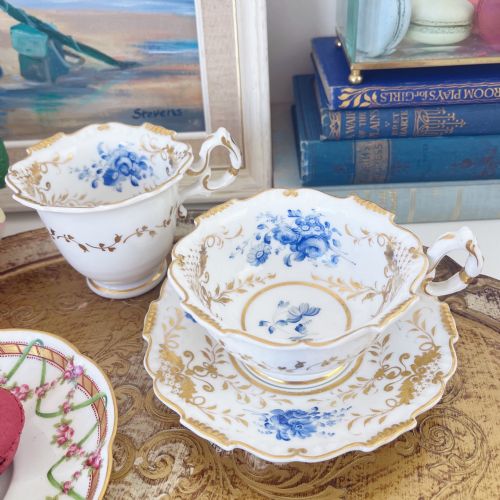
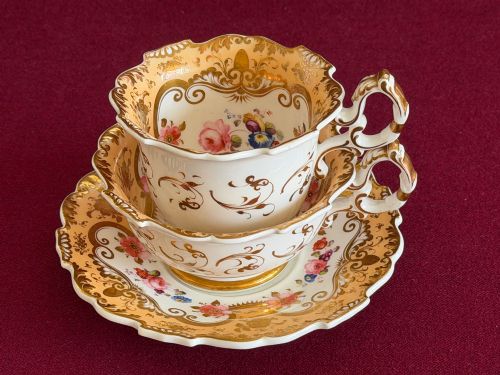
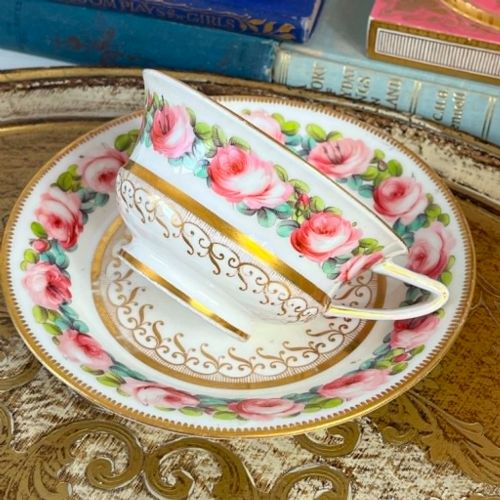
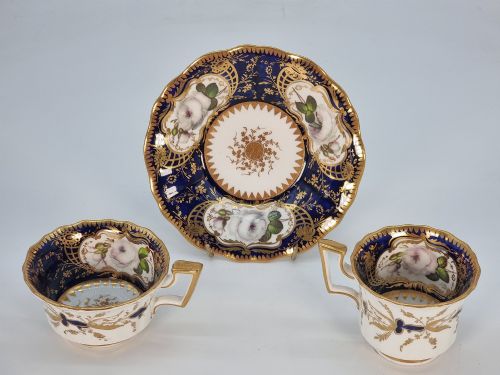
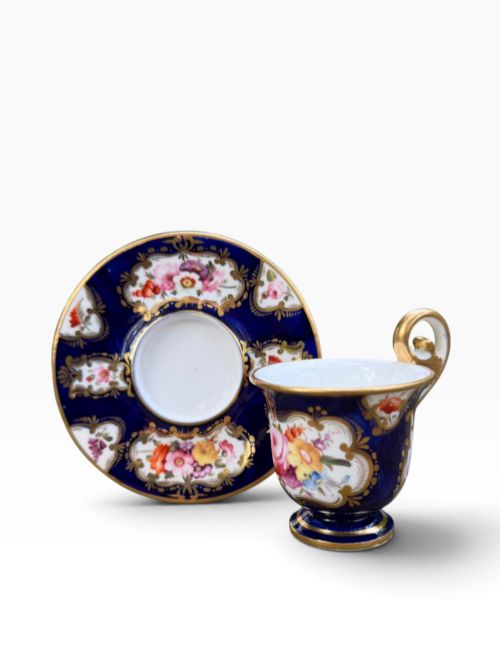
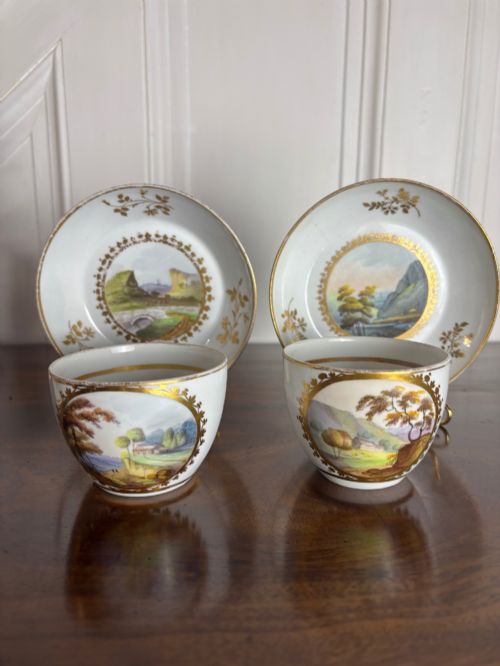
Georgian bone china encompasses refined tablewares and decorative objects produced primarily during the Regency and Georgian periods. The selection on this page focuses heavily on teacups and saucers, cabinet plates, and serving dishes from English kilns.
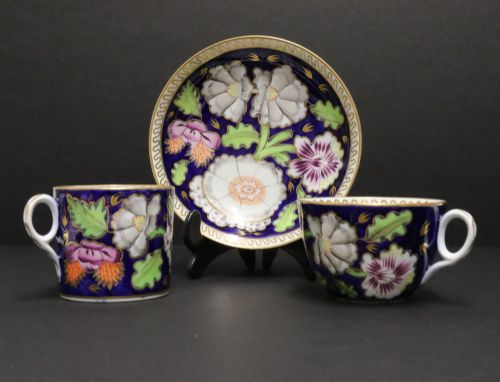
Makers ranged from major factories like Spode and Minton to smaller potteries active in the early nineteenth century. Buyers encounter trios, coffee cans, and sucriers featuring botanical motifs, armorial designs, and Imari patterns.
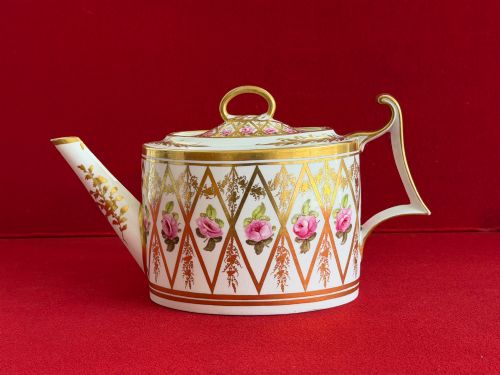
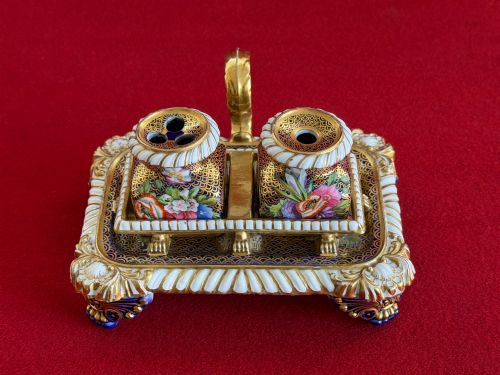
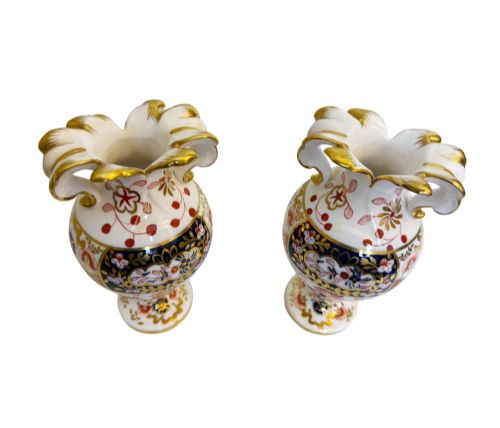
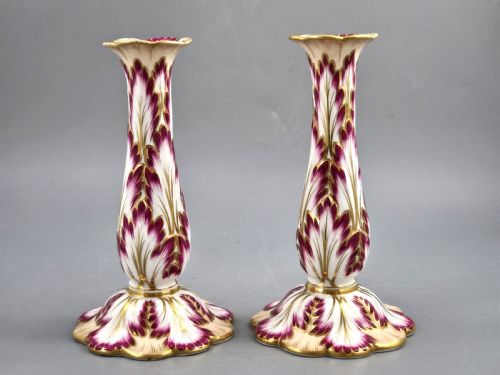
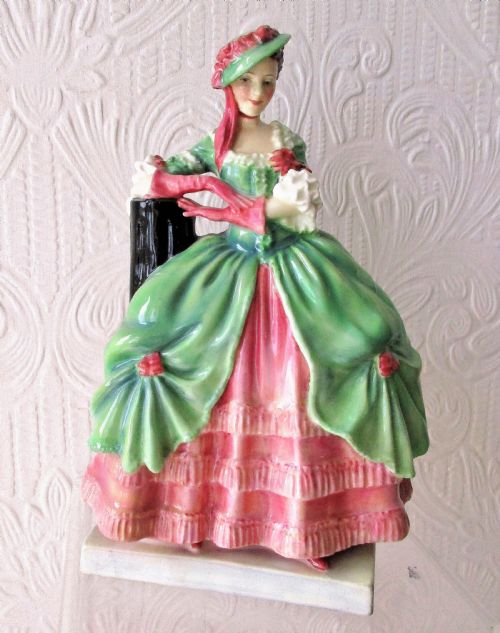
Forms span from practical inkstands and teapots to display pieces such as porcelain figurines and twin-handled vases. Most surviving examples date from around eighteen hundred to eighteen thirty, bridging the late eighteenth and early nineteenth centuries.
How they were made
Potters utilised bone ash mixed with china clay and stone to create a strong, translucent ceramic body capable of holding fine forms. Glaze was applied to smooth the surface before pieces entered the kiln for firing.
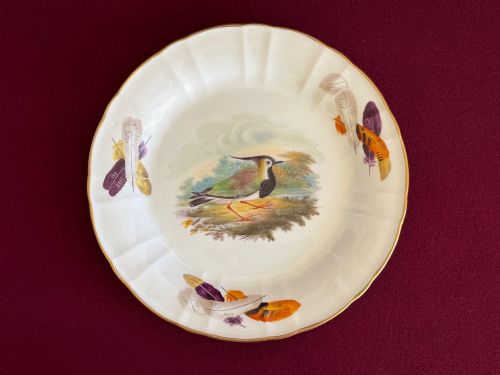
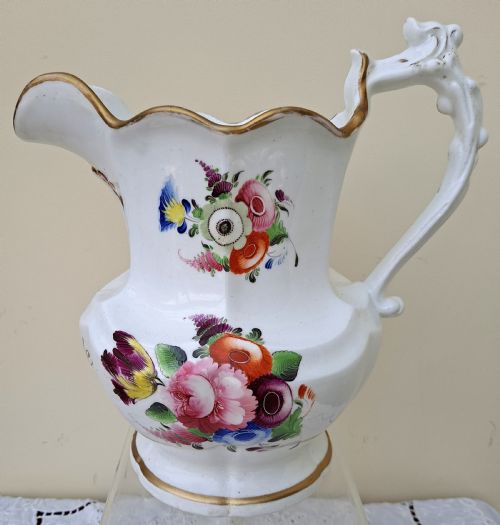
Decoration relied on handpainted brushwork, enamel colours, and applied gold leaf or gilding. Skilled painters executed intricate landscapes, botanical studies, and exotic birds directly onto the fired glaze.
Early nineteenth-century tea drinkers apparently needed protection for their sugar, prompting potters to craft elaborate covered vessels known as sucriers.
What varies in quality
Excellence in these ceramics rests upon the precision of the handpainted details and the crispness of the moulded form. Works featuring named botanical artists or complex armorial patterns command greater attention than standard floral transfers.
The application of gold leaf and the vibrancy of the enamel colours reveal the skill invested in the piece. Well-preserved gilding without rubbing elevates the overall standard of any teacup, plate, or vase.
H & R Daniel·Derby Porcelain·Wedgwood·Davenport·Newhall·Coalport·Spode·Ridgway·Minton·Royal Doulton·Worcester·Hicks, Meigh and Johnson·Chamberlain Worcester·Yates·Machin
The Georgian Bone China Glossary
- Bone china
- A type of porcelain incorporating bone ash for strength and translucency. This mixture allowed potters to form thinner, lighter vessels than traditional hard-paste porcelain.
- Cabinet plate
- A decorative plate intended for display rather than dining use. These pieces often feature elaborate handpainted scenes or botanical studies by known artists.
- Imari
- A decorative style inspired by Japanese export wares featuring iron red, cobalt blue, and gold. English factories adopted this palette eagerly during the early nineteenth century.
- Trio
- A matching set comprising a teacup, coffee cup, and saucer. These breakfast and tea sets were popular in fashionable households.
- Sucrier
- A covered vessel designed for holding sugar. They often mirrored the shape of contemporary teapots and formed part of larger tea service suites.
Georgian Bone China: Frequently Asked Questions
How do I date georgian bone china?
Dating relies on factory marks, pattern numbers, and stylistic markers such as handle shapes and floral styles. Early nineteenth-century pieces often display hand-written pattern numbers on the base rather than printed factory stamps.
Comparison with documented examples from kilns like Spode or Minton helps narrow the production window. Most items on this page fall between eighteen hundred and eighteen thirty.
Can I use these cups for tea today?
While these pieces were originally created for daily dining and tea service, their age and delicate bone china construction suggest careful handling. Hand washing in warm water without harsh detergents protects the delicate enamel and gold leaf.
Thermal shock from boiling water poured directly into a cold antique cup can cause hairline fractures. Many collectors prefer to keep them for display or occasional gentle use.
What is the difference between porcelain and bone china?
Bone china includes animal bone ash in the clay body, which creates a whiter, more translucent material than traditional continental porcelain. This formula allowed English potters to throw thinner walls while retaining structural strength.
Continental hard-paste porcelain relies entirely on kaolin and petuntse. British factories developed bone china to compete with imported Asian wares.
How do I display cabinet plates safely?
Displaying cabinet plates requires sturdy wire hangers designed specifically for antique ceramics or dedicated plate grooves in display cabinets. Ensuring the weight rests securely prevents accidental slips.
Keeping plates away from direct sunlight protects the delicate enamel colours and gold leaf from fading over time.