







Georgian Blue Glass Liner
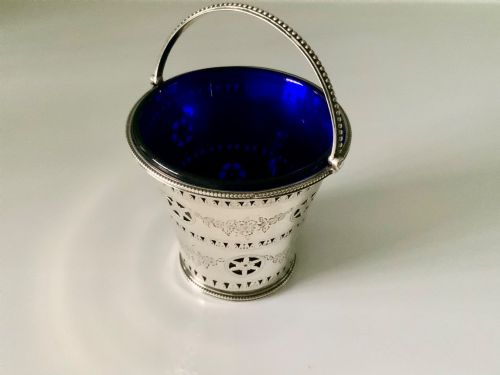
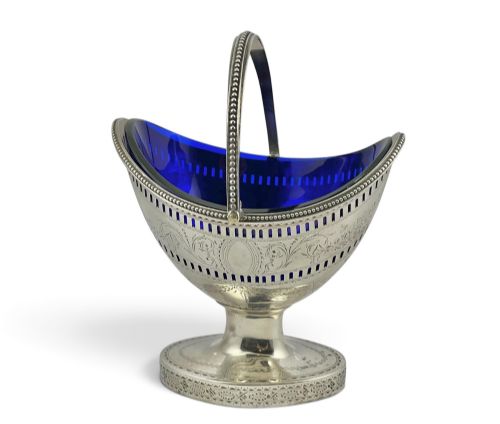
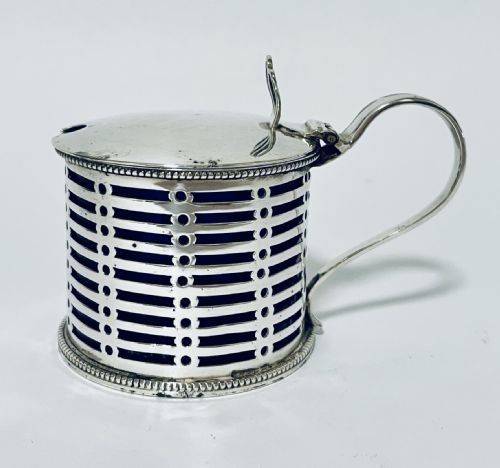
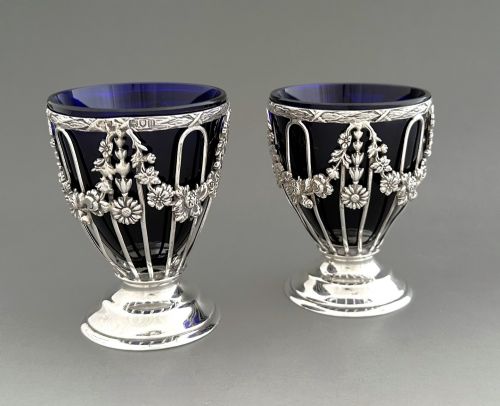
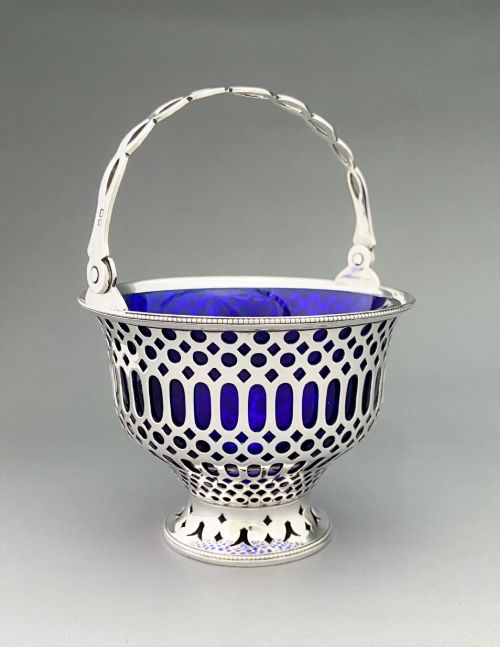
Georgian blue glass liner pieces are brilliant coloured inserts that slip inside open salt cellars, mustard pots, and sugar baskets.
Georgian Blue Glass Liner
When you search for georgian blue glass liner examples, you encounter small blown vessels designed to sit within pierced or wirework silver tableware. These cobalt inserts protect the silver frame from corrosive salts and vinegars while adding a rich flash of colour to the dining table.
You meet these items in forms such as salt cellars, mustard pots, and sugar baskets spanning the eighteenth century through to the Edwardian period and later revivals. The selection includes eighteenth century originals alongside Georgian style pieces made in Victorian and Edwardian workshops.
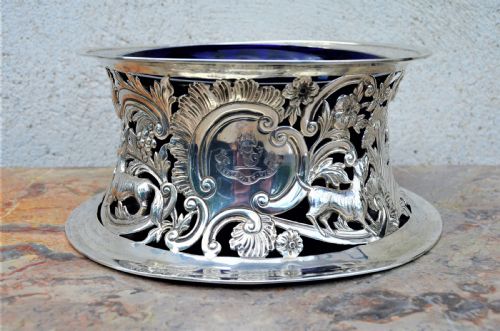
The objects combine openwork silver frames with removable glass vessels, allowing the vibrant blue tone to show through pierced geometric patterns and wirework scrolls. Many pieces survive with their original glass inserts intact, representing useful accessories for traditional table settings.
How they were made
Makers produced these items by combining free-blown or mould-blown glass with hand-worked sterling silver and silver frames. Artisans shaped the cobalt glass to fit snugly within pierced salt cellars, sugar baskets, and mustard pots.
Silversmiths constructed the outer vessels using techniques like piercing, wirework, and casting to create decorative vessels in Georgian, Adam, and later revival styles. The combination of deep blue glass and bright silver created a sharp contrast favoured by period dining hosts.
Georgian Blue Glass Liner Retail Price Guide 2026
Typical asking prices for georgian blue glass liner among the pieces listed under this phrase on Sellingantiques today, from the lower quarter to the upper quarter. They describe what is for sale here now, not the wider market.
Listings span the eighteenth century, Victorian era, and Edwardian period, featuring sterling silver, silver, and cobalt blue glass materials.
What varies in quality
Quality in these items rests upon the crispness of the silver work and the depth of colour in the glass insert. Finer examples display detailed piercing and heavy gauge silver wirework paired with richly saturated cobalt glass vessels.
The relationship between the glass insert and the silver frame dictates the integrity of the piece, with well-fitted liners showing proper proportion and balance. Pieces that retain their matching period glass demonstrate greater historical completeness than those with later replacements.
Aldridge & Green·Charles Stuart Harris
The Georgian Blue Glass Liner Glossary
- Cobalt glass
- Deep blue glass coloured with cobalt oxide, commonly used for tableware inserts. This material provides the characteristic vivid hue seen in period salt cellars.
- Salt cellar
- An open or enclosed vessel used to hold table salt before the invention of free-flowing salt shakers. These small dishes typically require a coloured glass liner to protect the metal.
- Pierced silver
- Metalwork decorated by cutting holes through the silver sheet in geometric or scroll patterns. This technique allows the blue glass liner to remain visible from the exterior.
- Wirework
- Silver fashioned into fine wires and soldered together to form open cages or baskets. Edwardian makers utilised this method to create lightweight condiment tubs.
- Mustard pot
- A small lidded jar designed to serve prepared mustard at the dining table. They frequently incorporate a blue glass liner to contain the acidic condiment.
Georgian Blue Glass Liner: Frequently Asked Questions
What is a georgian blue glass liner used for?
These glass vessels serve as protective inserts inside open silver salt cellars, mustard pots, and sugar baskets. They prevent acidic condiments and salts from tarnishing or corroding the silver framework.
They also provide a vibrant flash of cobalt colour that shows through the pierced or wirework patterns of the outer silver vessel.
Are all blue glass liners from the eighteenth century?
Many examples date from the eighteenth century, but the selection also includes Victorian, Edwardian, and later revival pieces made in the Georgian style. Makers continued producing these combinations well into the twentieth century.
Examining the silver hallmarks and the manufacturing traits of the glass helps determine whether a piece is an eighteenth century original or a later reproduction.
How do I know if the glass liner is original?
An original liner fits the contours of the silver vessel precisely, matching the depth and interior shape without rocking or leaving excessive gaps. Slight bubbles or unevenness in the blown glass often point to period manufacture rather than modern machine production.
Checking the wear marks on the base of both the glass and the silver can also indicate how long the two components have lived together.
How should I clean a silver basket with a glass liner?
Remove the glass liner from the silver frame before cleaning either piece to avoid exposing the glass to harsh silver dips or polishes. Wash the cobalt glass gently in warm soapy water using a soft cloth.
Polish the sterling silver frame separately with a non-abrasive cloth, taking care around delicate pierced sections and wirework before reinserting the dry glass.