
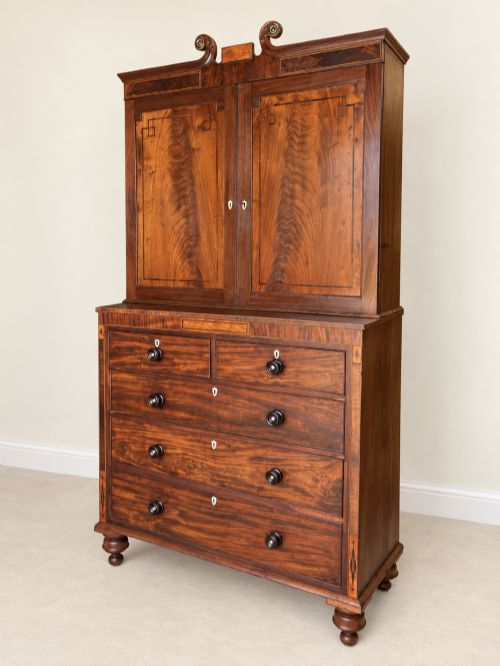
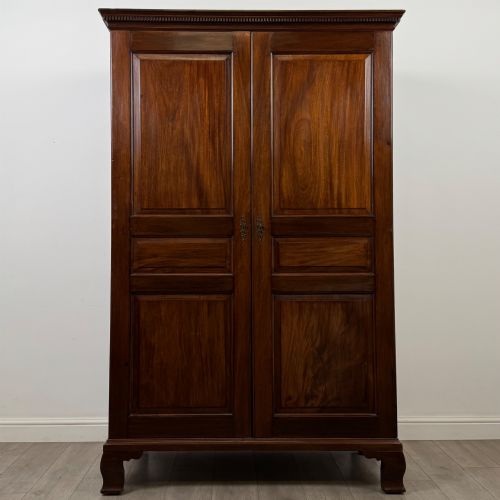
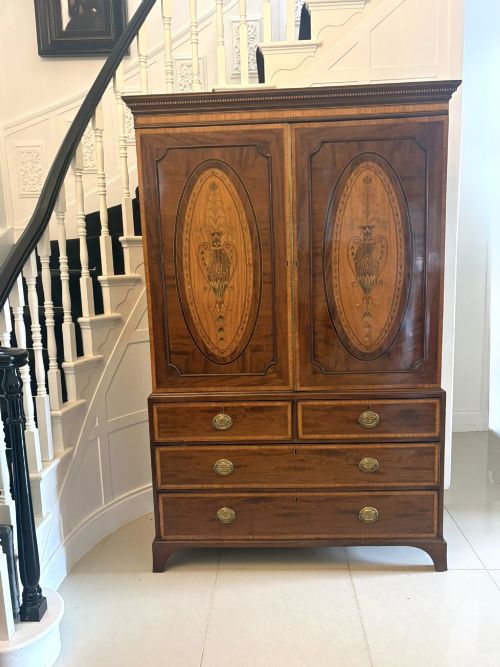
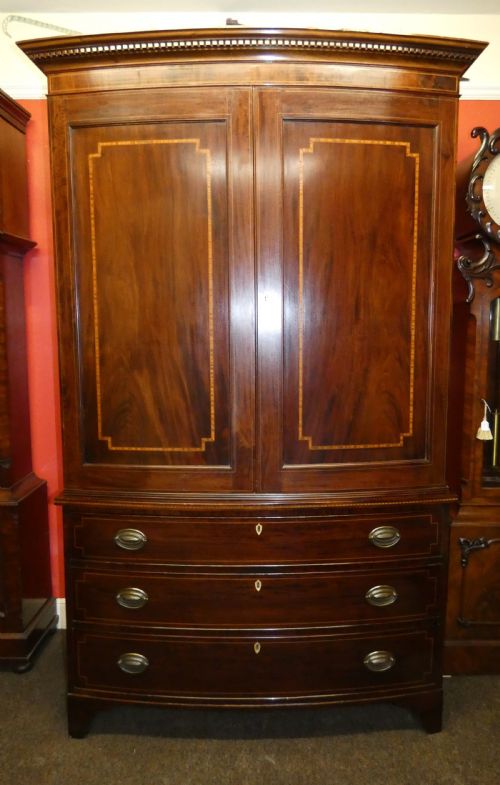
Georgian Bedroom Wardrobe
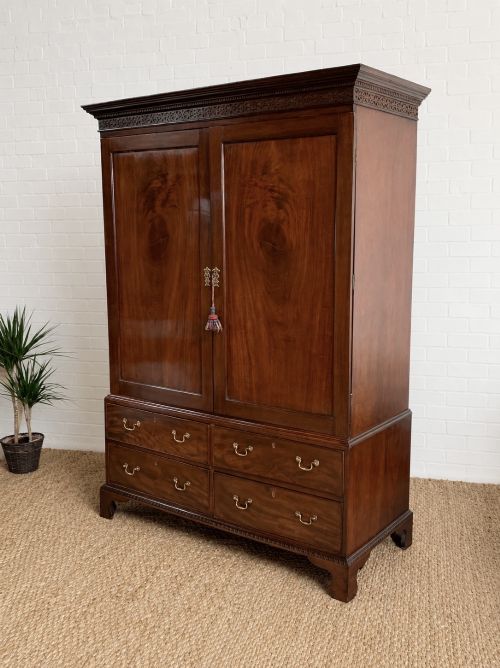
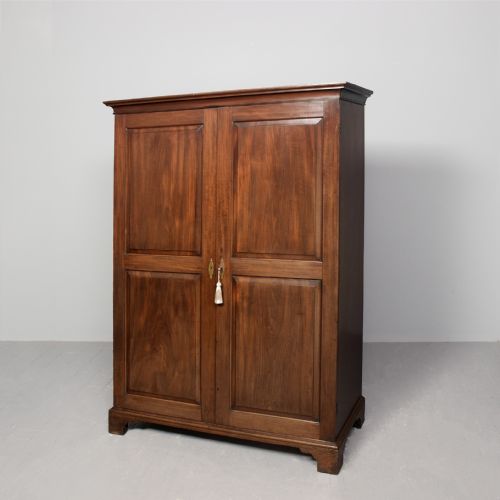
A georgian bedroom wardrobe combines grand architectural presence with deep internal storage, built from figured timbers to organise linen and hanging garments.
Georgian Bedroom Wardrobe
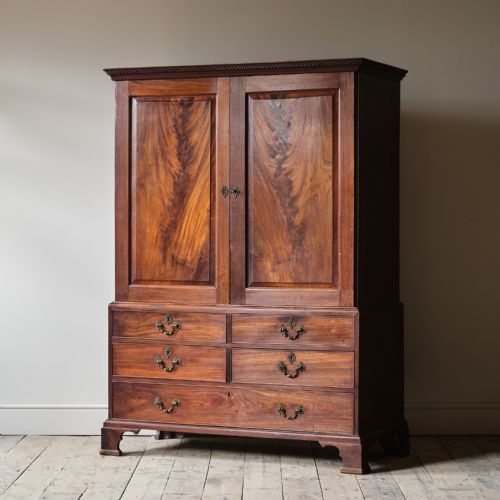
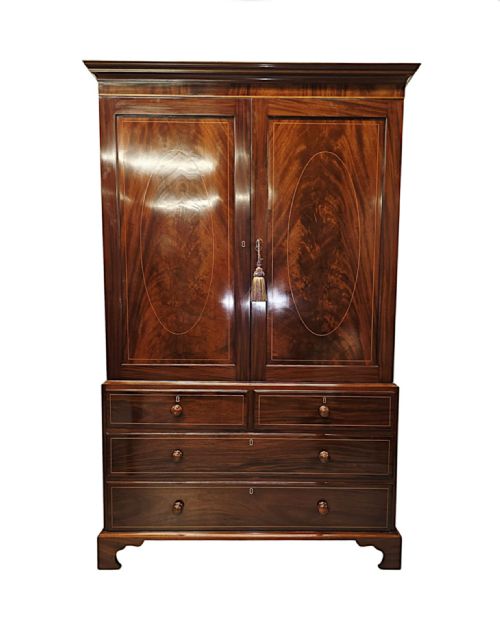
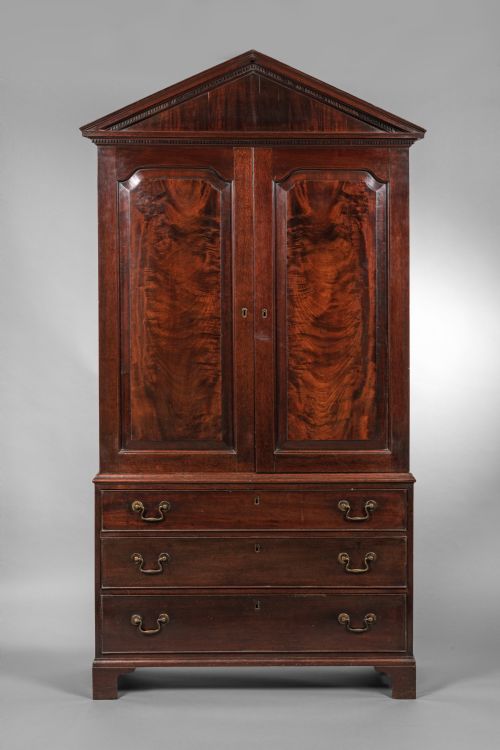
A georgian bedroom wardrobe encompasses substantial storage pieces designed for clothing and linen, frequently taking the form of a linen press or cupboard on chest. These items bridge the gap between traditional chest of drawers and modern hanging space, often housing sliding trays in the upper section above drawers below.
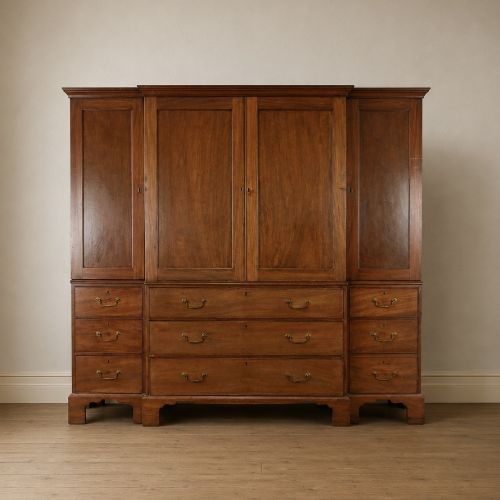
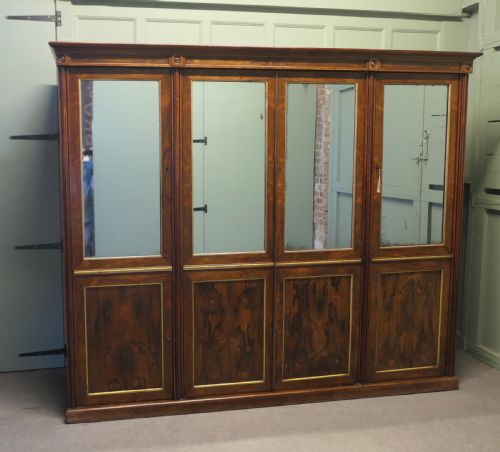
The pieces appearing on this page span genuine Georgian periods alongside later nineteenth-century revivals and pine cottage furniture. Buyers encounter formal George III and Regency examples alongside Sheraton styles, antique pine knockdown alternatives, and breakfront designs.
Makers and cabinetmakers of the eighteenth and nineteenth centuries utilised architectural proportions, bracket feet, and dental cornices to anchor these large case pieces in domestic interiors. Whether configured as a compactum, a hanging wardrobe, or a bowfront press, each piece reflects the changing storage requirements of period bedrooms.
How they were made
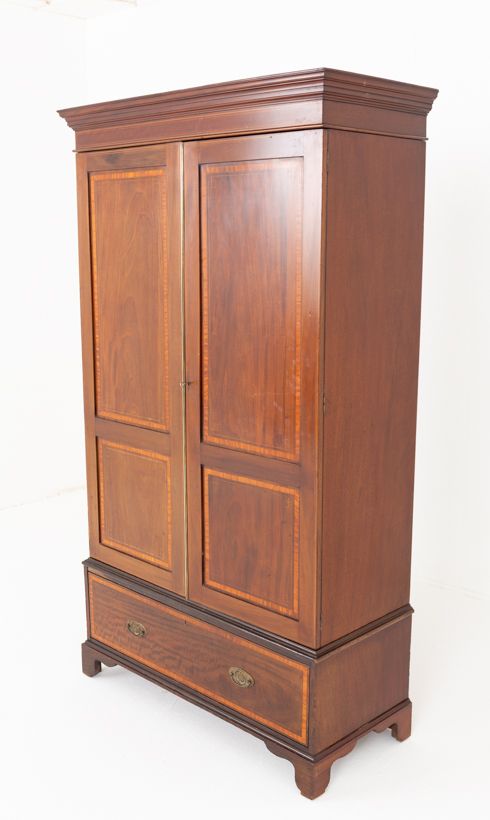
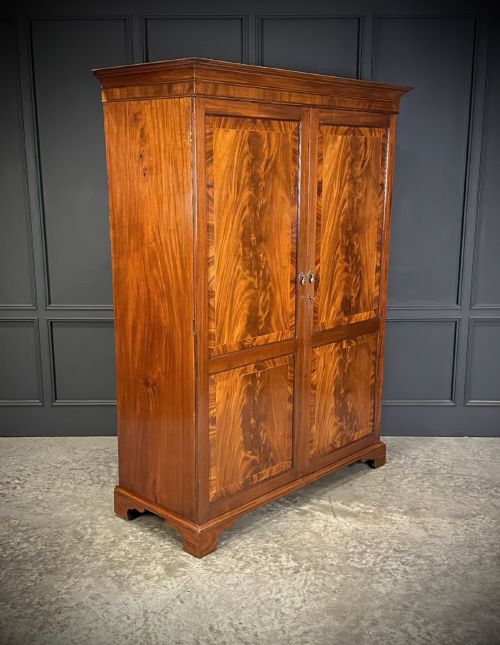
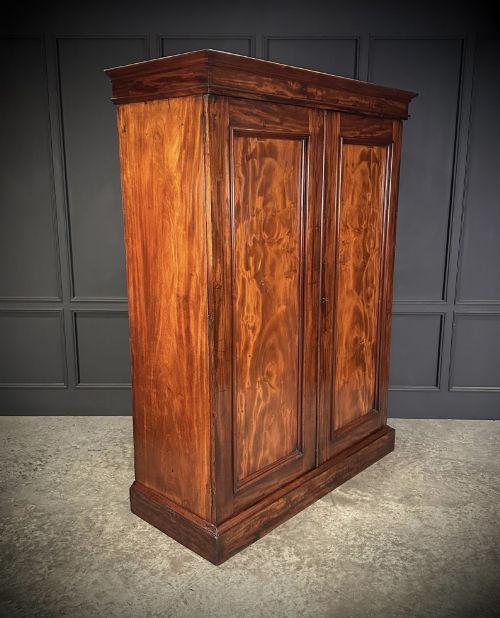
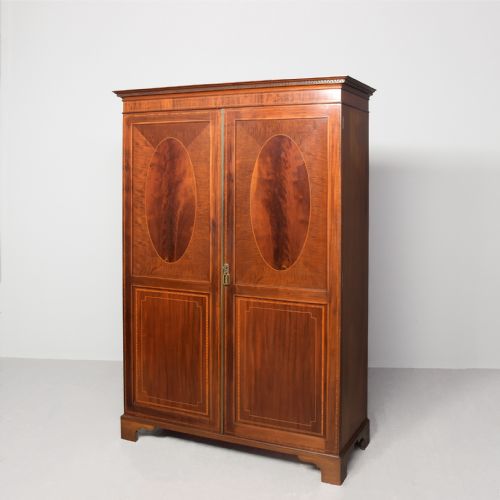
Cabinetmakers constructed these wardrobes using solid timber carcases faced with figured flame mahogany veneer, rosewood crossbanding, or satinwood inlay. Secondary woods such as pine provide internal structure for drawers and sliding trays, while brass hardware secures doors and pull-out slides.
Techniques such as blind fretwork carving, marquetry inlay, and curved bowfront construction demonstrate the high level of joinery employed. Knockdown pine versions relied on pegged joints and pegged panels so large pieces could be dismantled and moved between rooms.
French polishing and wax finishes brought out the natural grain patterns in Cuban mahogany and golden oak surfaces. Cornices often featured dentil moulding or Greek key motifs, finished by hand to create crisp architectural shadows.
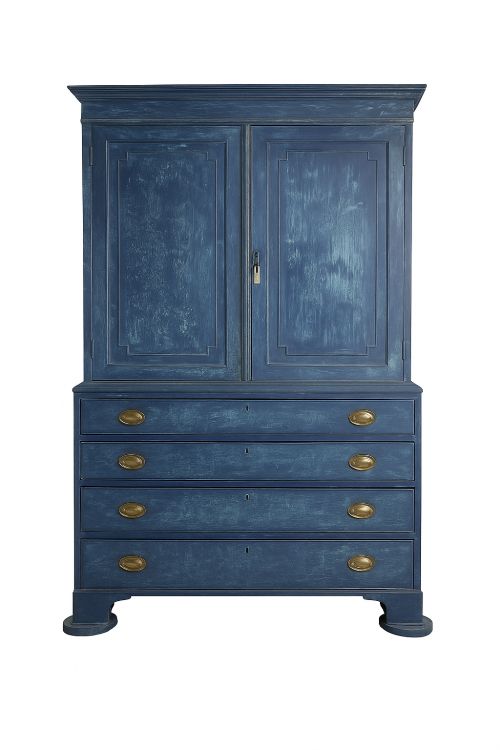
Some pine wardrobes remain ready to paint, inviting buyers to pick up a brush and finish the piece themselves.
What varies in quality
The refinement of timber selection dictates visual success, where book-matched flame mahogany veneers and intricate boxwood stringing elevate a simple carcass into a high-status commission. Poorer examples rely on plain flat-sawn boards with minimal figuring and crude internal joinery.
Proportion and architectural detailing set high-grade pieces apart from utilitarian workshop output. Crisp carving on cornices, well-executed bracket feet, and original brasses indicate a maker working at the height of their trade, whereas later revivals can appear heavy or stiff.
Internal configuration also marks the distinction between standard utility and superior craftsmanship. Original sliding trays running smoothly within panelled interior tracks represent better workshop standards than stripped-out or hastily altered hanging spaces.
The Georgian Bedroom Wardrobe Glossary
- Linen press
- A tall storage piece comprising an upper section with sliding trays enclosed by doors, positioned above a chest of drawers. This form evolved to keep freshly laundered textiles flat and protected from dust before hanging garments became common.
- Compactum
- A multi-functional wardrobe offering a combination of hanging space, drawers, and sliding trays within a single cabinet. These fitted interiors allowed owners to consolidate various types of clothing into one piece of furniture.
- Flame mahogany
- A veneer cut from the fork of the mahogany tree where the branch meets the trunk, producing a rippling, flame-like pattern. Cabinetmakers reserved this prized timber for drawer fronts and primary door panels.
- Bowfront
- A convex curved cabinet front that swells outward in the centre, softening the rigid angles of traditional case furniture. This shape required advanced joinery to bend or shape solid timbers and matching veneers.
- Blind fretwork
- Carved ornamentation applied to a flat wooden surface to simulate pierced fretwork without cutting entirely through the timber. It appears frequently on the friezes and cornices of mid-eighteenth-century case pieces.
- Crossbanding
- A narrow strip of veneer laid around the border of a panel so its grain runs at right angles to the central wood. This technique created a decorative framing effect on doors and drawer fronts.
Georgian Bedroom Wardrobe: Frequently Asked Questions
How do I fit a wardrobe in a modern room?
Measure your ceiling height and floor space carefully before selecting a piece, as these wardrobes were built for high-ceilinged period rooms. Knockdown pine versions offer an advantage if access stairs are narrow.
Ensure you account for the clearance needed to open heavy timber doors and pull out internal linen slides or lower drawers fully.
Can I convert a linen press for hanging clothes?
Many period linen presses retain their original sliding trays, which collectors prefer to keep intact for storing folded garments and linens. If you need full-length hanging space, look for pieces already configured as hanging wardrobes.
Some owners choose to install a discreet brass hanging rail inside by resting it on existing shelf supports without altering the historic fabric permanently.
How do I distinguish George III from Regency pieces?
George III pieces generally display classical architectural proportions, straight bracket feet, and restrained mahogany or satinwood veneers. Carved details often reference neoclassical or Chippendale motifs.
Regency examples frequently incorporate bolder rosewood crossbanding, brass inlay, campaign handles, and an influence from ancient Roman or Greek design forms.
What is the best way to care for old mahogany?
Keep timber furniture away from direct sunlight and sudden temperature shifts from central heating to prevent the mahogany veneers from lifting or splitting. Dust regularly with a dry, soft cloth.
Apply a traditional beeswax polish sparingly a couple of times a year to nourish the wood and maintain a soft, natural lustre.