
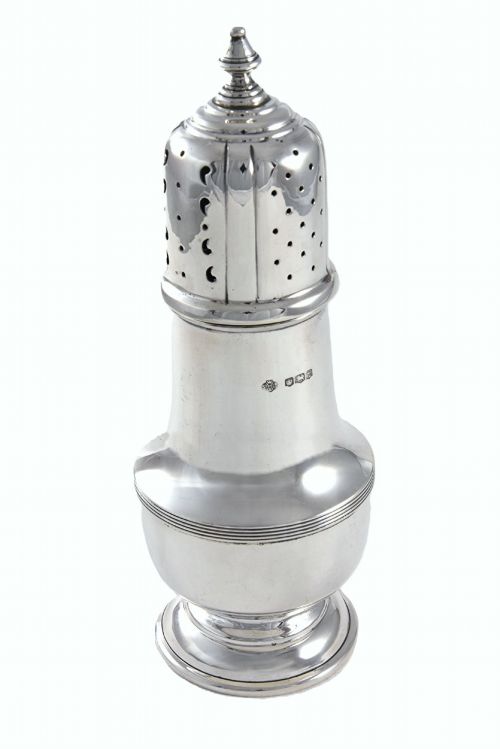
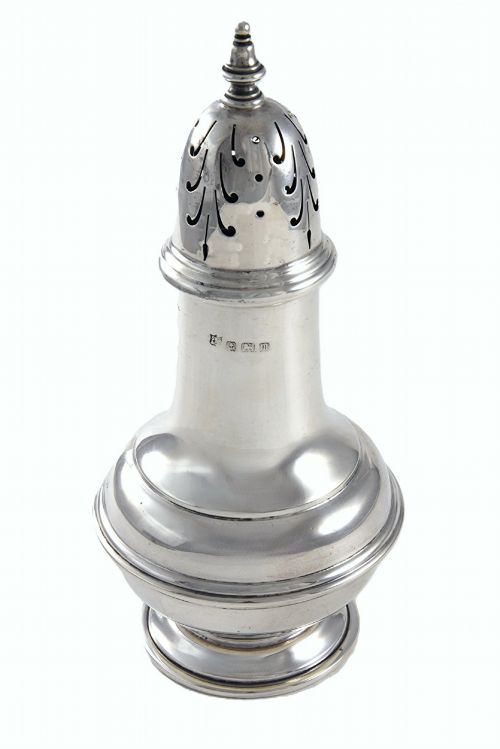


George V Silver Caster
When you handle a george v silver caster, you hold a functional piece of dining history designed to distribute sugar or spices.
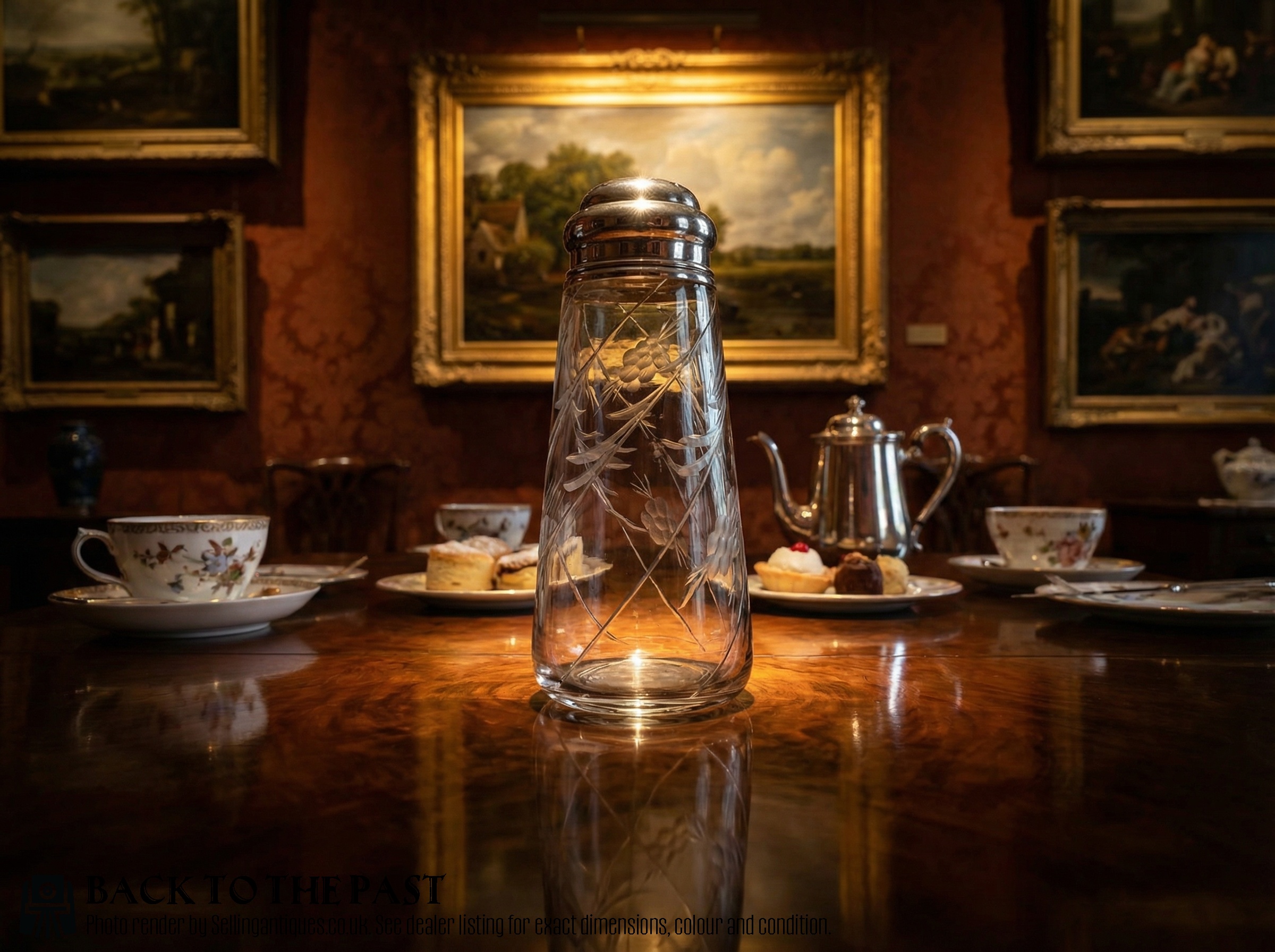
George V Silver Caster
A george v silver caster primarily takes the form of a sugar shaker or dredger, alongside related condiment vessels like pepperettes and cruet sets.
The pieces appearing on this page span the 18th century through to the mid-20th century, encompassing Georgian, George V, and Art Deco styles.
Originating as tall table vessels for sugar or spice, these items frequently appear alongside cut glass bodies or ebonised wood stands.
Materials and Technique
Makers shaped sterling silver into balanced baluster and octagonal bodies, piercing the removable lids with patterns for sifting.
Many examples combine heavy sterling silver mounts with cut glass or cranberry glass bodies, while others incorporate materials such as silk, velvet, and leatherette within fitted presentation cases.
Among the table condiments sit curious animal-themed pepperettes shaped like foxes.
Evaluating the Workmanship
Quality rests upon the crispness of the pierced lid pattern, the balance of the proportions, and the weight of the silver relative to the size of the vessel.
Maker attribution and the clarity of the town and date hallmarks elevate certain examples, separating standard utilitarian items from finer workshop output.
James Goodwin·Simon Pantin·Barker Brothers·James Dixon And Sons·Mappin And Webb·Viners·John Sherwood And Son·Walker And Hall
The George V Silver Caster Glossary
- Caster
- A small container with a perforated top used for sprinkling sugar, flour, or spices onto food.
- Hallmark
- An official stamp struck into precious metals indicating the standard of purity, the assay office, and the year of manufacture.
- Pounce pot
- A small shaker used to sprinkle sand or gum sandarac powder over wet ink to hasten drying.
- Cruet set
- A matched group of bottles or containers holding condiments like oil, vinegar, salt, pepper, and sugar, often set within a frame.
- Baluster
- A vertical architectural form with a swelling lower portion, frequently utilised for the curved profile of silver caster bodies.
George V Silver Caster: Frequently Asked Questions
What is a george v silver caster used for?
These vessels were designed for the dining table to dispense fine sugar, flour, or dried spices onto food or beverages.
Their perforated lids allowed guests to control the flow of the contents evenly across the plate.
How do I clean sterling silver casters?
Cleaning requires warm soapy water and a soft cloth to remove tarnishing without scratching the soft silver surface.
Harsh chemical dips should be avoided, particularly on pieces featuring integrated glass bodies or textile linings.
Can I use these casters for daily dining?
Many examples remain entirely functional for everyday table use, provided the threaded or slip-on lids fit securely.
Careful hand washing is essential after use to prevent sugar residues from corroding the interior metal.
How do I date a silver caster?
Dating relies primarily on the stamped hallmarks, which reveal the assay office and the exact year letter.
Stylistic shifts, such as the transition from Georgian baluster shapes to geometric Art Deco forms, offer further clues.