




George III Style Console
A george iii style console brings refined neoclassical elegance to a hall or drawing room, prized for balanced proportions and graceful timber work.
George III Style Console
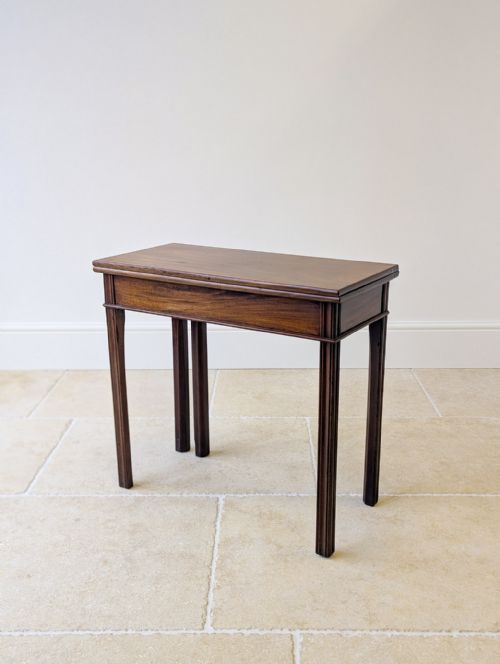
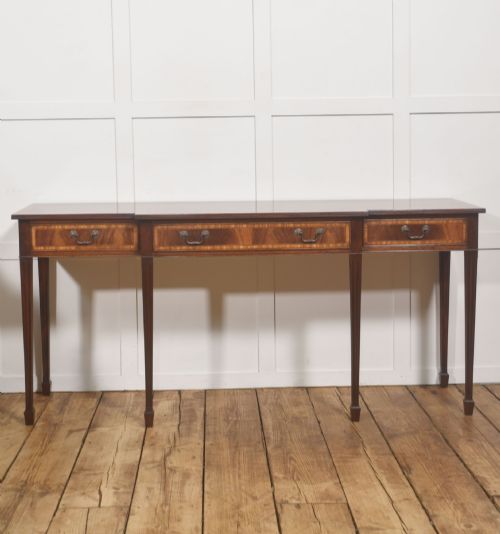
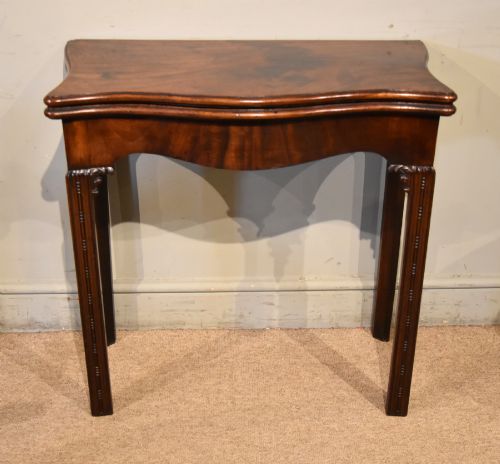
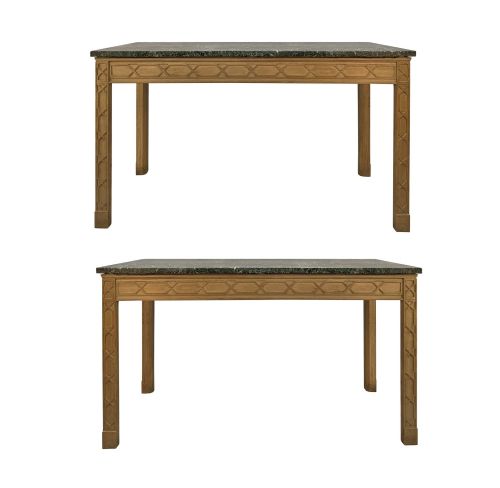
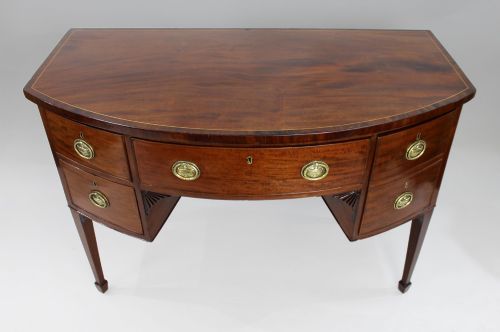
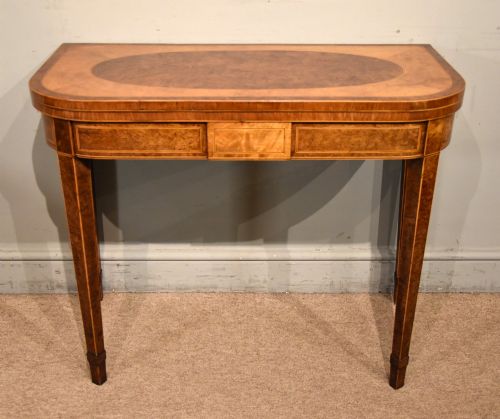
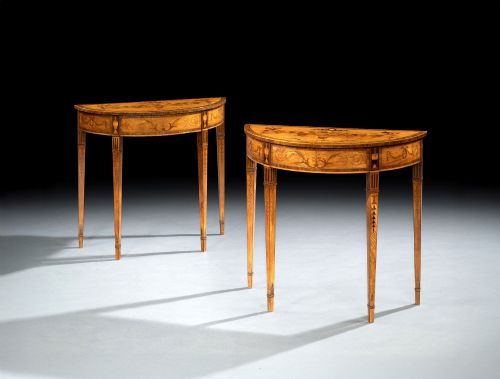
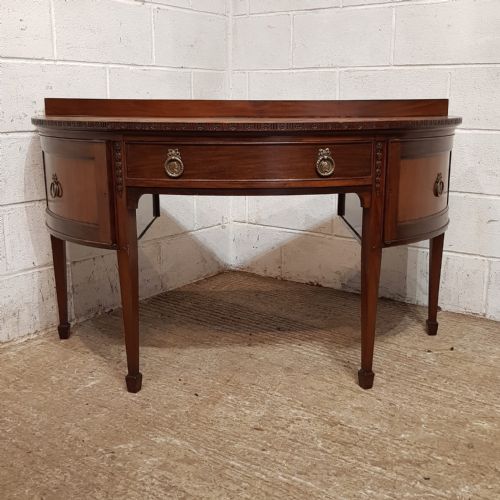
A george iii style console generally takes the form of a demi-lune, serpentine, or elliptical side table intended to stand against a wall. These pieces frequently appear alongside card tables, serving tables, and pier tables originating from periods spanning the eighteenth century through the Edwardian era.
Makers working within this idiom employ familiar archetypes such as the demi-lune card table or the painted serving table. The selection on this page demonstrates how cabinetmakers reproduced classical lines and restrained proportions across mahogany, satinwood, and pine structures.
Materials and construction methods
Makers constructed the primary carcases using solid timbers like mahogany, walnut, and pine, often applying finer veneers of satinwood, rosewood, burr yew, and padoukwood to visible surfaces. Crossbanding, stringing in boxwood, and intricate marquetry panels define the decorative vocabulary of these pieces.
Additional surface enrichment involves hand-painting and neoclassical brass inlay, reflecting the high standards of period cabinet work. Structural support often relies on tapered legs or carved frames that complement the sweeping curves of serpentine and demi-lune tops.
George III Style Console Retail Price Guide 2026
Typical asking prices for george iii style console among the pieces listed under this phrase on Sellingantiques today, from the lower quarter to the upper quarter. They describe what is for sale here now, not the wider market.
Card tables often conceal fold-over tops designed to double their surface area instantly when the stakes rose.
The markers of distinction
Excellence in a george iii style console rests upon the crispness of the carving, the integration of classical inlay, and the natural figuring of the chosen veneers. Superior examples display meticulous attention to timber selection, where book-matched grain patterns flow harmoniously across the curved top.
Lesser pieces rely on simpler construction and minimal surface decoration, lacking the depth of marquetry or the refined hand-finishing seen at the top of the range. The harmony between the structural silhouette and the delicacy of the inlay ultimately determines the standing of the piece.
George Bullock
The George III Style Console Glossary
- Demi-lune
- A half-moon shape characteristic of side and console tables designed to fit flat against a wall. This profile became particularly popular during the neoclassical revival.
- Marquetry
- Decorative patterns formed by inserting thin pieces of wood, shell, or ivory into a veneered surface. Craftsmen utilise contrasting timbers to create floral or geometric motifs.
- Crossbanding
- A border strip of veneer laid around the edge of a table top so that the grain runs at right angles to the central panel. This technique frames the primary timber with a contrasting ribbon.
- Serpentine
- A gently undulating line featuring a convex centre flanked by concave curves. This contour adds movement and visual interest to table fronts.
- Lowboy
- A small side table or dressing table fitted with drawers, standing on relatively tall legs. These functional forms frequently share decorative details with console tables.
George III Style Console: Frequently Asked Questions
Where do you place a console table?
A console table naturally inhabits entrance halls, narrow corridors, or the spaces beneath large wall mirrors. Its shallow depth ensures it occupies minimal floor space while providing a surface for decorative objects.
In reception rooms, these tables anchor wall displays and complement existing seating arrangements without obstructing pathways.
How do you distinguish georgian from later revival pieces?
Original eighteenth-century pieces exhibit construction methods, timber ageing, and secondary woods consistent with the period of manufacture. Tool marks on internal drawer components and hand-cut dovetails offer reliable indicators.
Revival pieces, such as those from the Edwardian era or the nineteen-thirties, often utilise machine-sawn elements and uniform timber stocks while closely imitating neoclassical design motifs.
What is the difference between a console and a side table?
Console tables historically relied upon wall brackets or legs for support, frequently designed as companion pieces to mirrors. Side tables are free-standing items of furniture finished on all sides.
In modern usage, the terms often overlap, particularly with demi-lune and pier table forms designed to stand against vertical surfaces.
How should I care for veneered mahogany surfaces?
Protect antique timber from direct sunlight and sudden shifts in humidity to prevent veneer lifting or splitting. Regular dusting with a soft, dry cloth preserves the polished finish.
Application of appropriate wax polish periodically nourishes the wood and maintains the natural lustre without building up heavy residues.