

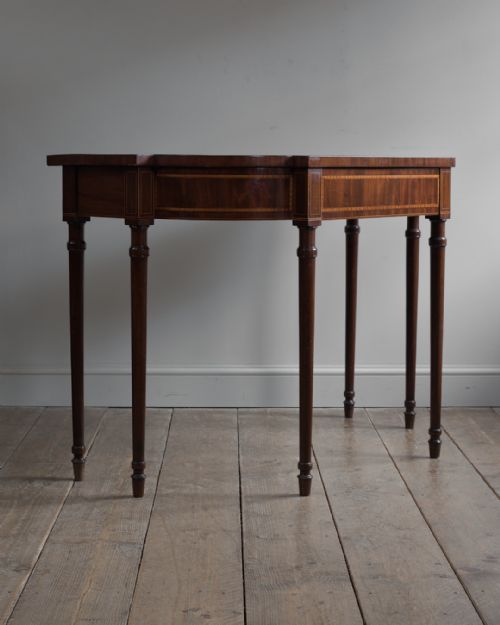
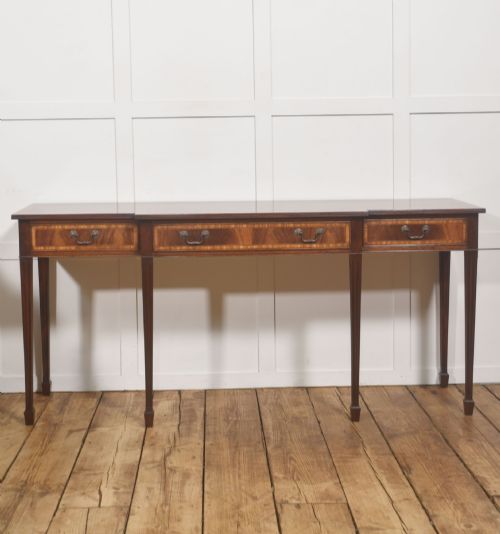
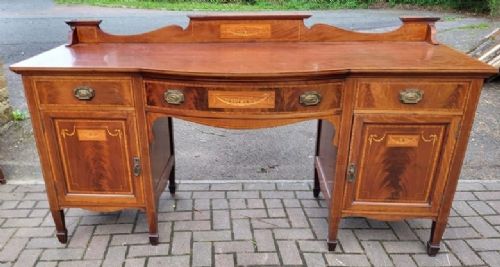
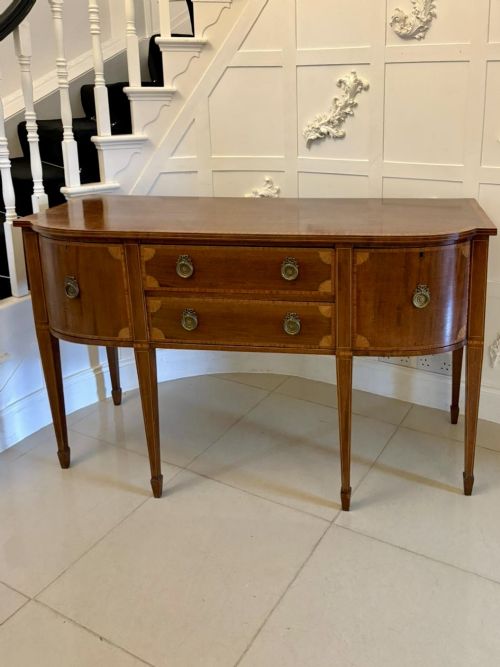


Edwardian Breakfront Table
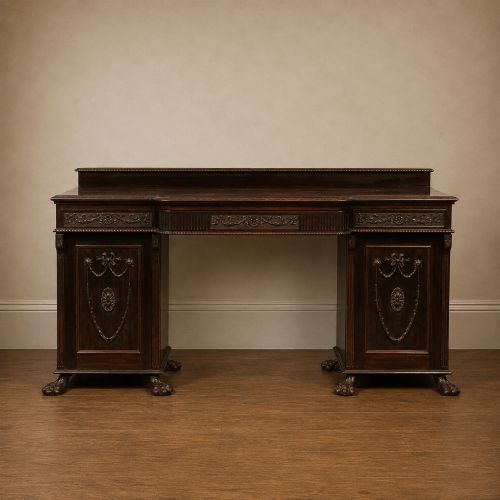
An edwardian breakfront table offers balanced proportion and fine timber work, standing as a practical centrepiece for any traditional interior.
Edwardian Breakfront Table
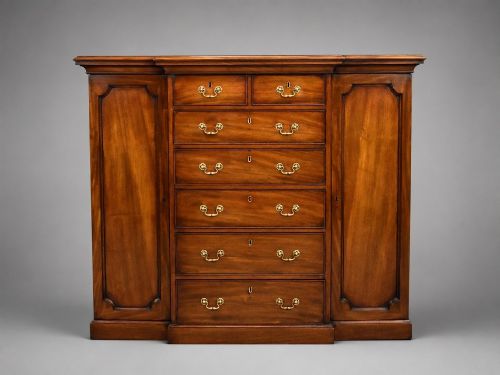
When you search for an edwardian breakfront table, you are looking at substantial pieces of furniture defined by a central projecting section flanked by recessed wings, mostly originating from the Edwardian period or the broader nineteenth century. Sideboards, console tables, and desks form the main object types encountered in this group.
The aesthetic leans heavily towards classical revivals, with Adam Revival, George III Neoclassical, and Chippendale Revival styles appearing frequently alongside simpler Edwardian and Victorian forms. Mahogany dominates the selection, often enhanced by satinwood or flame mahogany veneers and intricate crossbanding.
Makers and workshops of the era employed rich materials including walnut, burr walnut, and brass details, sometimes pairing timber frames with marble tops or leather writing surfaces. These furnishings range from large scale sideboards with paw feet to refined hall tables and pedestal desks.
Materials and construction
Cabinet makers constructed these pieces using dense hardwoods like mahogany and walnut as the primary structural carcass, frequently selecting flame mahogany or burr walnut for decorative surfaces. Satinwood crossbanding provides contrasting borders that highlight the recessed and projecting planes of the breakfront profile.
Decorative elements rely on fine inlays and carved details, while functional surfaces incorporate inset leather writing tops or heavy marble slabs. Brass hardware such as handles, feet, or gallery rails frequently completes the construction of desks and sideboards.
Edwardian Breakfront Table Retail Price Guide 2026
Typical asking prices for edwardian breakfront table among the pieces listed under this phrase on Sellingantiques today, from the lower quarter to the upper quarter. They describe what is for sale here now, not the wider market.
The documented forms range from large pedestal desks and breakfront sideboards to marble-topped hall tables and bedroom suite components.
Evaluating craftsmanship and merit
Quality in these pieces rests upon the selection of timber and the precision of the veneer work, where matched flame mahogany or figured walnut indicates superior workshop practice. The crispness of carved details, such as paw feet or classical revival motifs, separates standard production from finer cabinet work.
Structural integrity shows in the seamless alignment of the breakfront geometry and the careful integration of crossbanding. The inclusion of secondary materials like quality marble tops or meticulously tooled leather writing surfaces elevates the overall standing of the piece.
Lamb of Manchester
The Edwardian Breakfront Table Glossary
- Breakfront
- A piece of furniture where the central section projects forward from the flanking side sections. This architectural arrangement creates depth and shadow across the front elevation.
- Crossbanding
- A strip of veneer applied perpendicularly to the grain of the main surface, creating a decorative border. It frames panels of flame mahogany or satinwood.
- Flame mahogany
- Timber cut from the fork of the mahogany tree where the branches join the trunk, producing a distinctive fire-like pattern. Cabinet makers utilised this veneer on prominent drawer fronts and cupboard doors.
- Adam Revival
- A neoclassical style popular in British architecture and furniture design, drawing on ancient Roman and Greek motifs. Pieces in this style feature symmetrical lines and delicate carved ornamentation.
- Compactum
- A large fitted wardrobe combining hanging space with internal drawers, shelves, and compartments. These multi-functional pieces formed part of Edwardian bedroom suites.
Edwardian Breakfront Table: Frequently Asked Questions
How do I identify Edwardian furniture?
Edwardian pieces date from the reign of King Edward VII between 1901 and 1910, though the style extends slightly either side. They often combine traditional timbers like mahogany with lighter satinwood inlays and draw on earlier Georgian and Adam revivals.
Construction during this period benefited from industrial machinery while retaining high standards of hand finishing and cabinet work, resulting in lighter and more refined proportions than heavy Victorian designs.
Where were these tables used?
These tables and sideboards originally served formal reception rooms, entrance halls, and large bedrooms in substantial homes. Hall tables welcomed visitors, while breakfront sideboards served dining rooms for the display of silver and service of meals.
Today, they adapt easily to modern interiors as statement sideboards in living spaces, grand hall surfaces, or functional writing desks in home studies.
What is satinwood crossbanding?
Crossbanding is a decorative technique where narrow strips of wood veneer are laid with the grain running across the border rather than following the main panel. Satinwood provides a bright, pale yellow-gold contrast against darker timbers like mahogany.
This method frames the central panels of tabletops and drawer fronts, highlighting the geometric lines of the breakfront construction.