







George III Slant Front Bureau
A george iii slant front bureau brings classic Georgian proportion and practical writing space into a modern room.
George III Slant Front Bureau
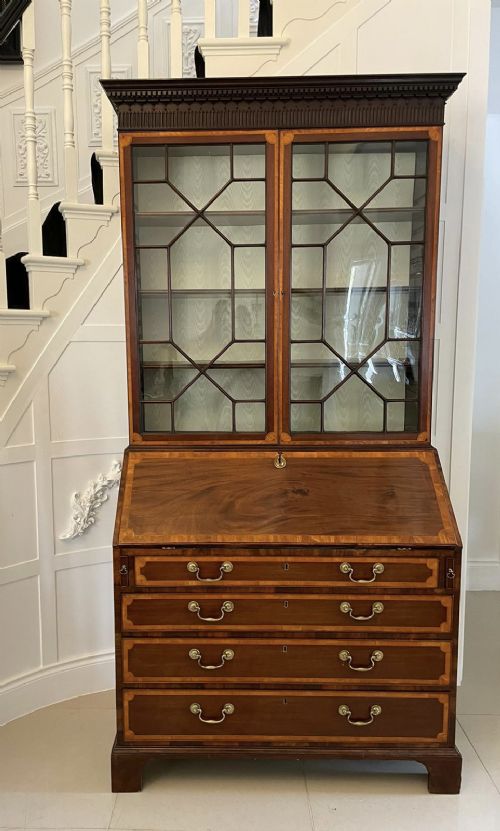
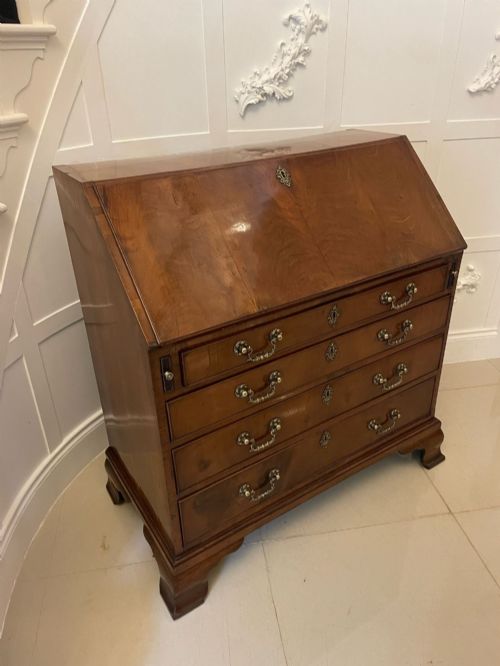
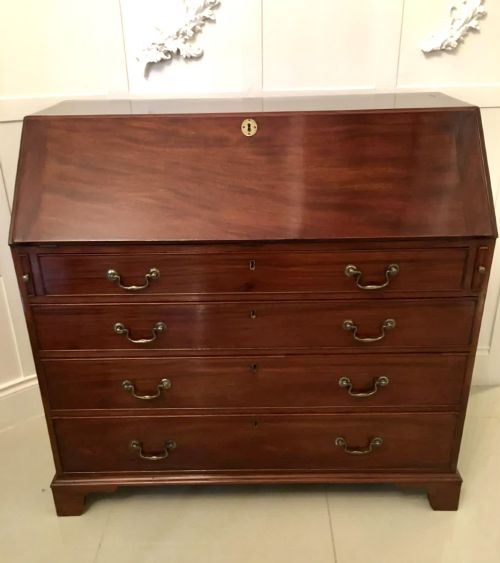
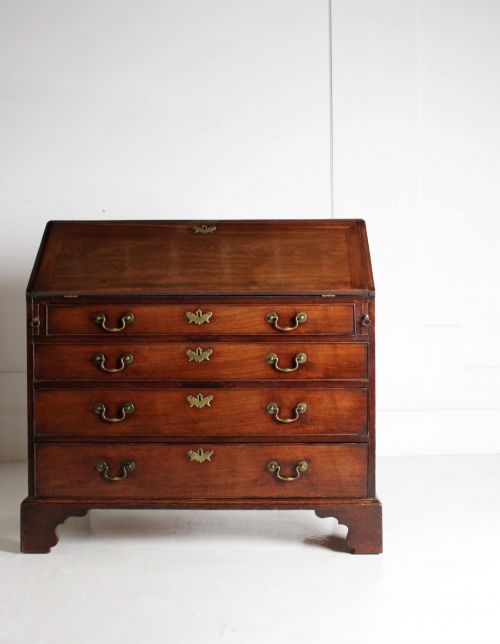
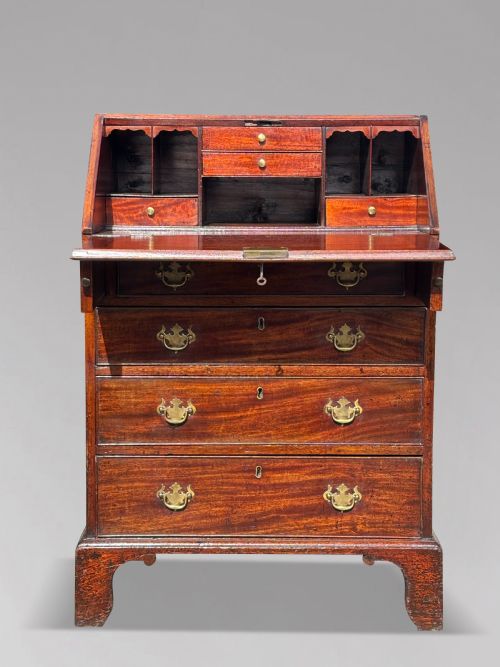
A george iii slant front bureau is a writing cabinet featuring a sloping lid that drops down to reveal an internal arrangement of small drawers and pigeonholes. Most examples on this page date from the eighteenth century, spanning the Georgian period and the year eighteen hundred.
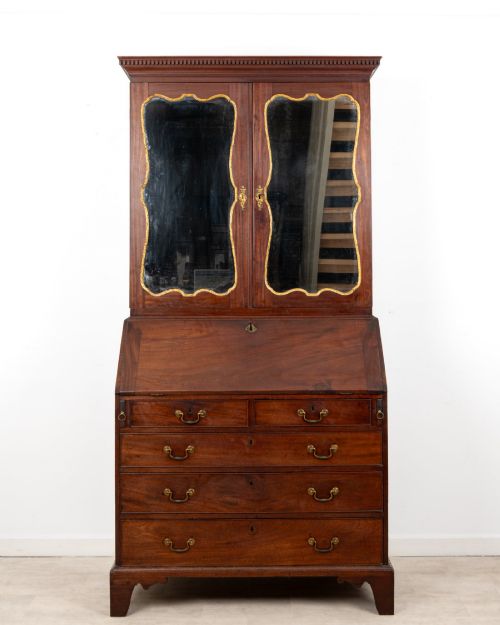
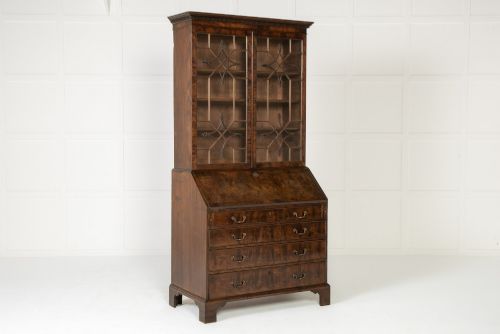
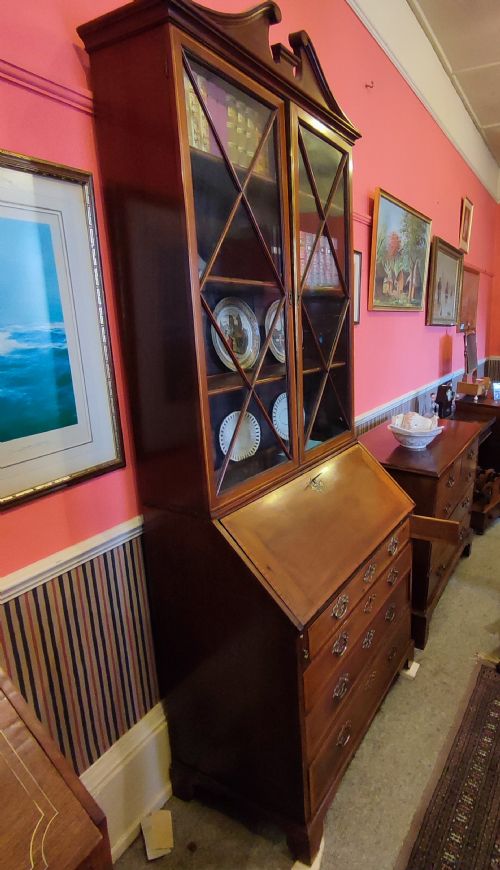
The primary forms available here range from standard writing desks to taller bureau bookcases topped by glazed shelving. Woods vary between solid mahogany, oak, and figured timbers such as satinwood and pollard oak, often accented with decorative stringing.
Materials and construction
Cabinet makers relied heavily on dense tropical hardwoods like mahogany, alongside native timbers such as oak, building carcases with dovetailed joints for structural strength. Drawers were constructed with hand-cut dovetails and fitted with brass handles and escutcheons.
Surface decoration frequently involved contrasting veneers and cross banding using satinwood, burr yewwood, or inlaid wood to frame the writing flap and drawer fronts. Interior compartments were painstakingly carpentered from softer secondary woods to house correspondence and valuables.
George III Slant Front Bureau Retail Price Guide 2026
Typical asking prices for george iii slant front bureau among the pieces listed under this phrase on Sellingantiques today, from the lower quarter to the upper quarter. They describe what is for sale here now, not the wider market.
Periods represented span the seventeenth century, the eighteenth century, the Georgian era, and the year eighteen hundred.
Judging the standard
Quality rests upon the selection of timber figures and the crispness of inlaid stringing across the fall front and drawer edges. Untouched surfaces retain a depth of polish that highlights the natural grain without heavy modern restoration.
The internal arrangement of the writing compartment defines the craftsmanship of the piece, particularly where secret drawers, carved pigeonholes, and panelled doors are present. Proportion also dictates value, with diminutive or child-sized examples commanding distinct interest.
The George III Slant Front Bureau Glossary
- Slant front bureau
- A writing desk featuring an angled flap that lowers to serve as a writing surface. This hinged lid conceals a fitted interior of small drawers and compartments.
- Bureau bookcase
- A dual-purpose piece combining a sloping desk base with an upper shelving cabinet enclosed by doors. These taller structures often feature glazed panels.
- Fall front
- An alternative term for the sloping writing flap found on bureaus. It drops forward on hinges to provide access to the writing deck.
- Cross banding
- A decorative border of veneer laid around the edges of drawer fronts or writing flaps so that the grain runs at right angles to the central panel.
- Dovetailed
- A method of joining two pieces of wood by interlocking wedge-shaped fingers. This traditional technique provides robust corner joints for drawers and carcases.
George III Slant Front Bureau: Frequently Asked Questions
How do I use a bureau daily?
Lower the sloping front flap to reveal the internal pigeonholes and small drawers, which create a compact writing station. When finished, simply lift the lid to conceal papers and stationery.
Most models include internal compartments suitable for modern correspondence or small laptops while maintaining a tidy appearance in a living space.
What is the difference between a bureau and a secretary?
In British cabinet making, a bureau describes a desk with a sloping fall front, whereas a secretary often includes a vertical pull-down writing flap concealed behind upper doors.
Both terms occasionally overlap in period descriptions, particularly when referencing taller cabinet combinations.
Are these desks suitable for small rooms?
Many examples are designed with compact proportions, including diminutive and child-sized variants that occupy minimal floor space.
The vertical height of bureau bookcases also maximises storage without increasing the footprint of the piece.
How do I identify a Georgian piece?
Look for construction details such as hand-cut dovetails, timber choices like mahogany and oak, and characteristic brass hardware. Period pieces from this era reflect eighteenth-century design standards.
Secondary woods inside the drawers and the style of the internal stationery compartments further indicate the period of manufacture.