

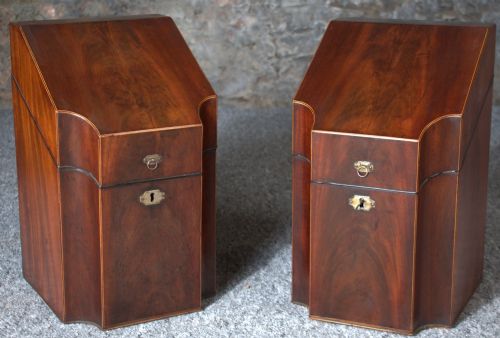


George III Serpentine
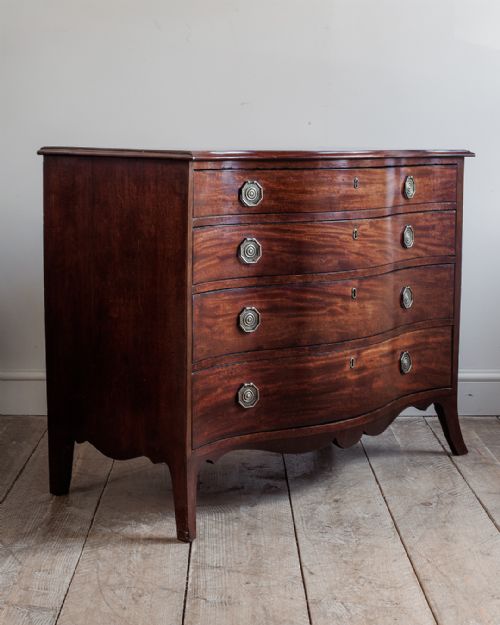
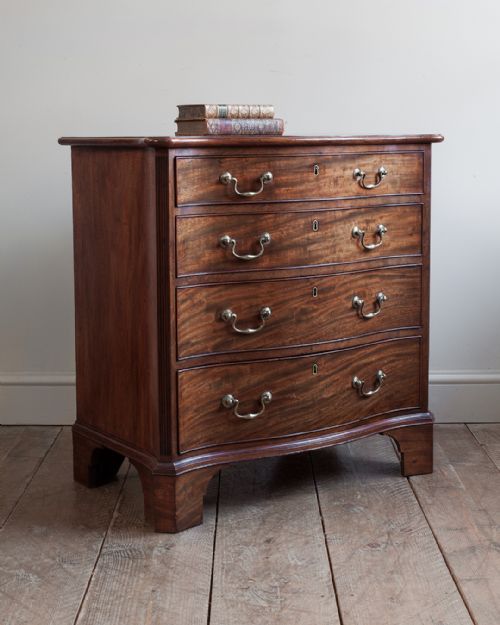
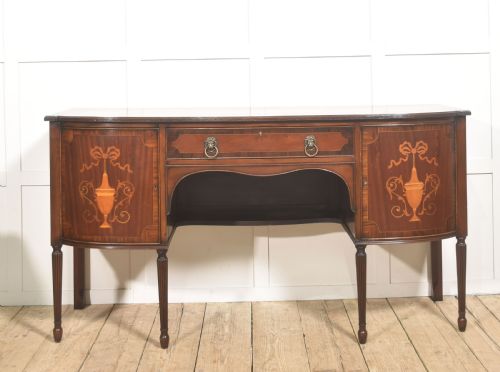
George iii serpentine pieces bring a fluid, sweeping outline to formal interiors, most commonly seen in eighteenth-century mahogany chests of drawers and sideboards.
George III Serpentine
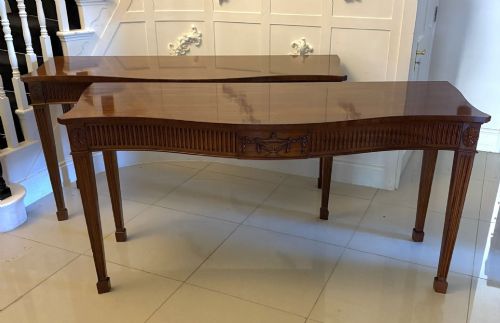
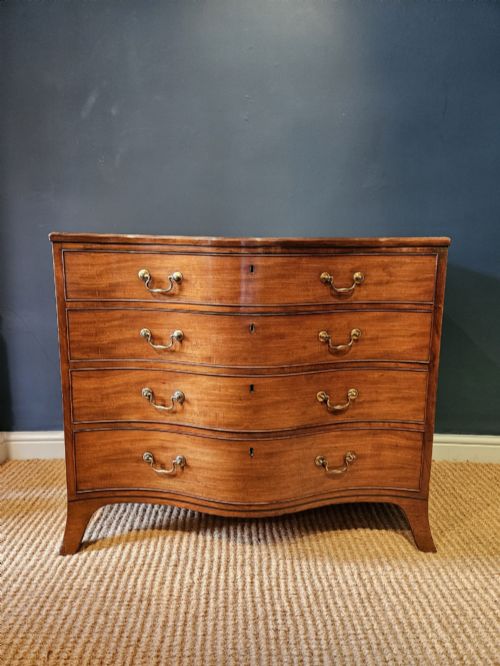
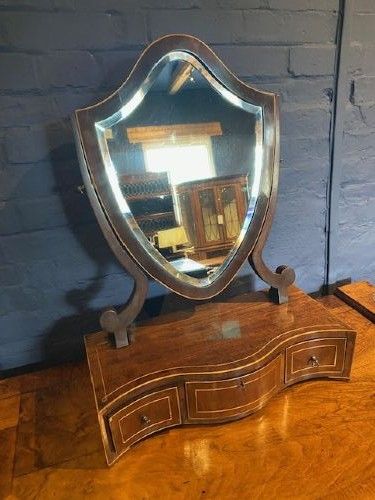
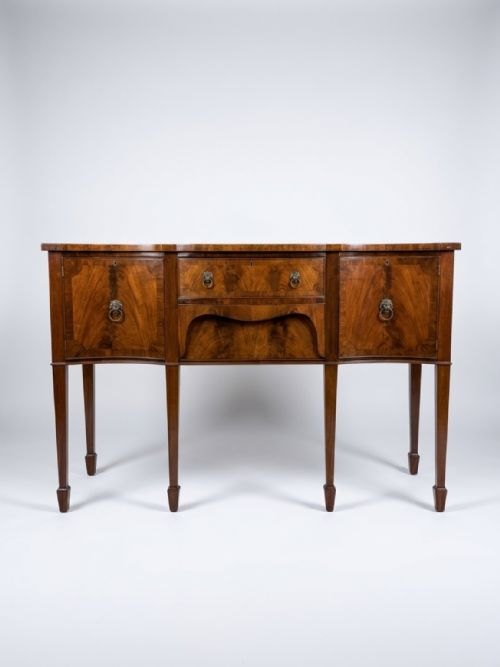
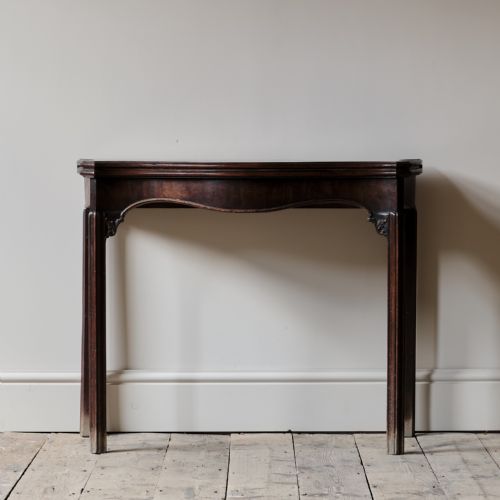
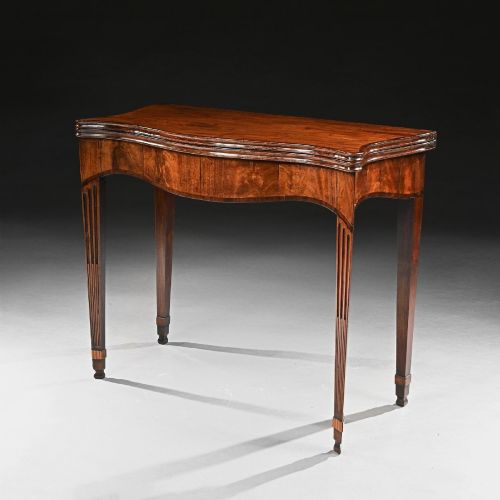
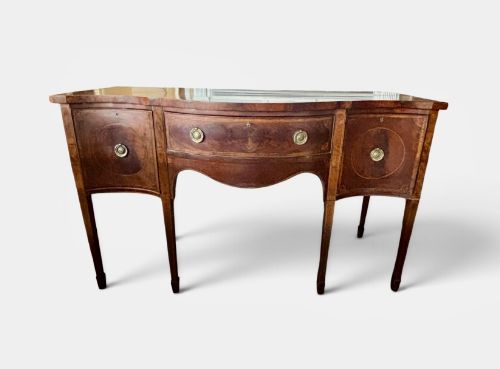
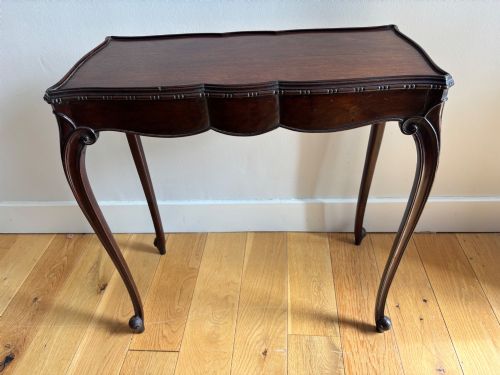
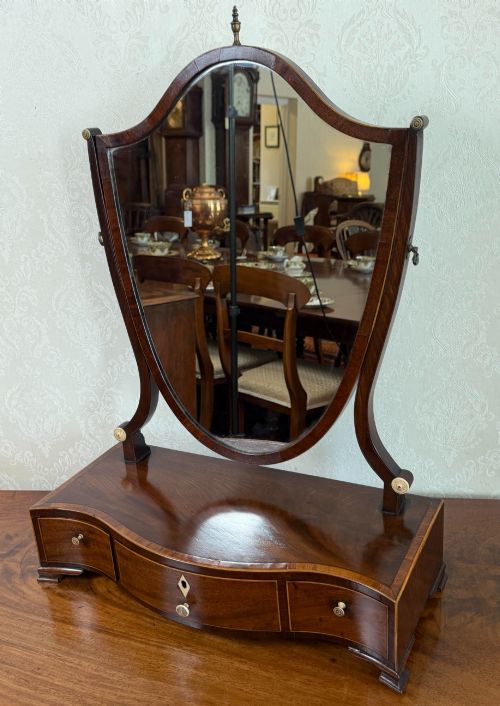
When browsing george iii serpentine items, the buyer encounters a distinct category of antique furniture defined by a convex centre flanked by concave ends, creating a graceful, undulating front. The vast majority of these pieces on this page take the form of chests of drawers and sideboards, alongside occasional side tables, dressing mirrors, and tea tables originating from the eighteenth century and later revival periods.
Alongside the primary case furniture, the category encompasses smaller domestic items such as knife boxes, console tables, and bedside night tables. While many examples date directly to the Georgian era, subsequent Edwardian and early twentieth-century makers also produced pieces adhering to this distinct aesthetic.
How they were made
Makers constructed these undulating forms predominantly from solid mahogany and flame mahogany veneer, often enhanced by decorative boxwood inlay and contrasting stringing. Timber selection prioritized rich grain patterns such as figured mahogany and fiddleback figure to accentuate the sweeping curves of the facade.
Secondary structural elements incorporated brass for handles, escutcheons, and fender mounts, while glass featured in dressing mirrors and bookcase doors. Artisans shaped the characteristic serpentine line by carefully sawing solid timber or bending laminated veneers to achieve the required convex and concave geometry.
Listings feature eighteenth-century pieces alongside Edwardian and 1920s revivals, constructed primarily in mahogany with brass and boxwood elements.
What varies in quality
The standard of a george iii serpentine piece rests largely on the quality of its timber selection and the precision of its curved joinery. Superior examples display carefully matched flame mahogany veneers that flow seamlessly across the undulating drawer fronts, whereas simpler items utilise plain mahogany without matched figuring.
The crispness of the carving, particularly on neoclassical console tables or sideboards, separates standard production from exceptional cabinetwork. Furthermore, the retention of original brass hardware and the overall depth of patination significantly influence the standing of an individual piece.
Henry Hill Of Marlborough·Thomas Chippendale
The George III Serpentine Glossary
- Serpentine
- A furniture front characterised by an undulating line featuring a convex central section between two concave ends. This contour requires specialised shaping of both the frame and the drawer fronts.
- Flame mahogany
- A veneer cut from timber where the branch meets the trunk, producing a distinctive flame-like pattern. It was frequently applied to the principal drawer fronts of high-status case pieces.
- Boxwood inlay
- Narrow strips of pale wood embedded into darker timber to create geometric borders or decorative lines. It provides sharp contrast against dark mahogany surfaces.
- Secretaire bookcase
- A tall case piece featuring a fitted writing drawer that pulls down to reveal small compartments and pigeonholes, surmounted by glazed shelving doors.
George III Serpentine: Frequently Asked Questions
What is a serpentine front?
A serpentine front is an undulating furniture contour that curves outward in the middle and inward at the sides. This shape was favoured by eighteenth-century cabinetmakers to soften the rigidity of large case pieces.
Crafting this profile required advanced woodworking skill, as every drawer and frame had to follow the complex curve precisely. It remains a hallmark of high-status Georgian design.
How do I date these pieces?
Dating relies on examining timber species, construction methods, and secondary woods like oak or pine used in drawer linings. Eighteenth-century examples often feature hand-cut dovetails and distinct patination acquired through decades of use.
Later revival pieces from the Edwardian period or the early twentieth century generally show machine-processed timber and different secondary woods. Comparing handles and hinges also helps establish the correct period of manufacture.
Where were sideboards used?
Sideboards served in formal dining rooms for the preparation and serving of food, as well as the display of silver and porcelain. Their substantial presence anchored large dining spaces during the Georgian era.
Smaller variants, such as console tables and serving tables, fulfilled similar roles in hallways and reception rooms. They provided functional surface area while contributing to the neoclassical interior scheme.
Are dressing mirrors adjustable?
Dressing mirrors of this era typically feature pivoted plates mounted on upright supports above a small serpentine base box containing drawers. The glass angle can be tilted to suit the user.
These pieces sat atop dressing tables or chests of drawers in private chambers. The undulating base often mirrored the larger case furniture in the room.