
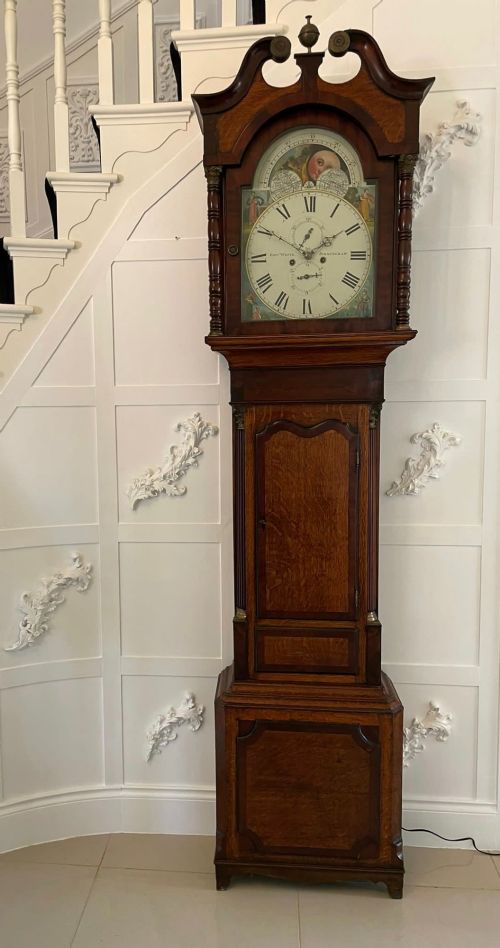
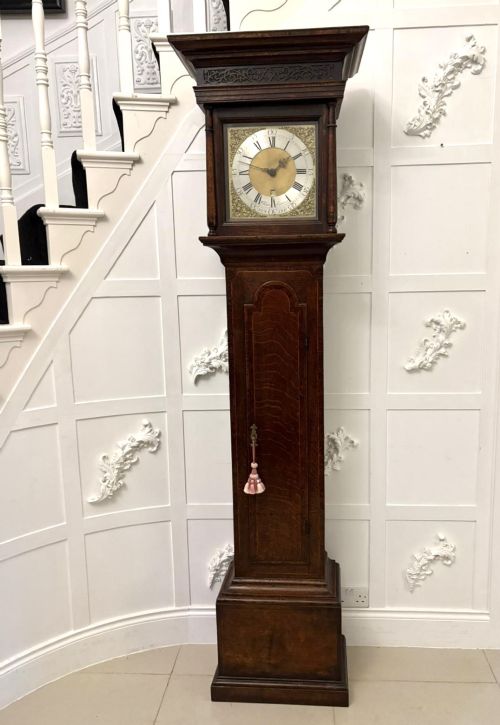
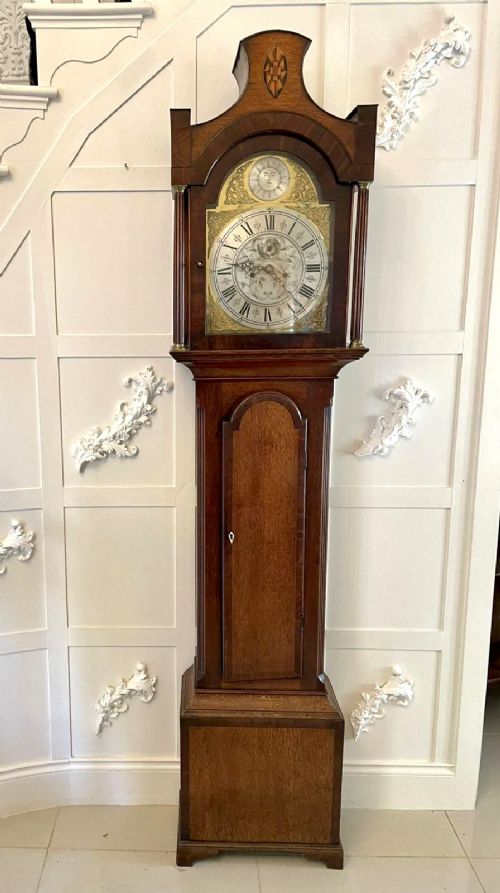
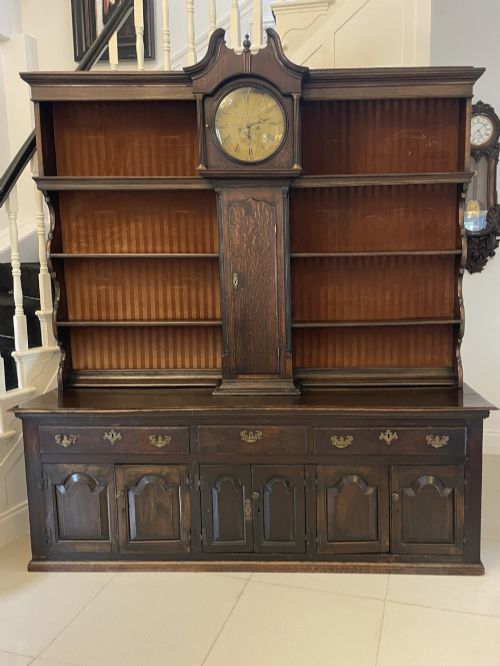
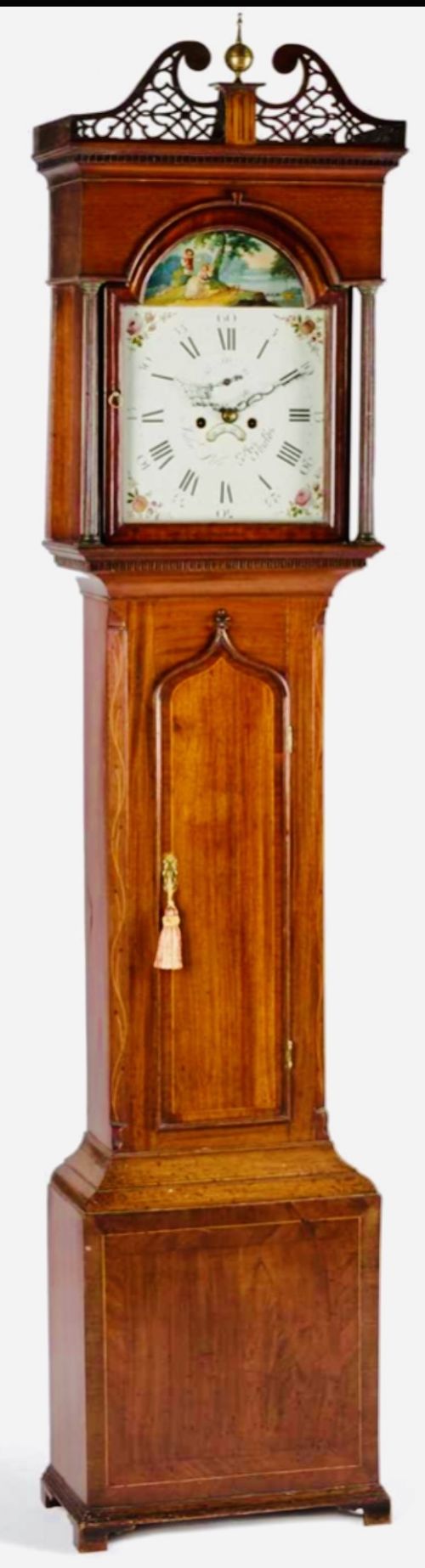


George III Oak Clock
A george iii oak clock anchors a room with tall timber presence and steady movement, offering the heavy warmth of eighteenth-century craftsmanship.

George III Oak Clock
When searching for a george iii oak clock, buyers encounter tall floor-standing timepieces primarily framed in domestic timbers like oak and burr oak, often accented with mahogany or crossbanding. These pieces span the Georgian era, originating from provincial workshops as well as growing towns.
The version most commonly met on this page is the longcase clock, frequently referred to as a grandfather clock, housing either brass or painted dial faces. Some examples incorporate moon phase mechanisms or carved details reflecting regional English cabinet-making traditions.
Materials and Construction
Cases rely heavily on solid oak and mahogany, with secondary timbers supporting interior framing, while brass and enamel form the structural and decorative surfaces of the dials. Iron and steel components drive the internal movements, paired with glass panes protecting the clock face.
Joinery techniques combine traditional pegged framing for the heavy oak cases with specialised metalworking for the gear trains, escapements, and dial engravings. Dial decoration often integrates silvered brass chapter rings, cast brass corner spandrels, or hand-painted lunar diagrams.
Listings feature oak, mahogany, and burr oak timbers paired with brass, steel, and painted enamel dials across the Georgian period.
Evaluating Quality and Finish
Quality rests in the harmony between the clockmaker's movement and the cabinetmaker's case, where secondary woods like mahogany are deployed with deliberate restraint to frame the primary oak. Superior examples display crisp dial engraving, refined chapter rings, and well-proportioned hoods with sound architectural mouldings.
The presence of specialised mechanical complications, such as eight-day movements, centre second sweeps, or moon phase indicators, separates standard thirty-hour timepieces from the more complex iterations recorded across the period.
Edward White Birmingham·Walker of Nantwich·Hudfon Of Nottingham·William LIster·John Collier Cheadle·Benjamin Barlow Of Oldham·Barlow of Ashton·Jackson Of Frodsham·Fisher of Preston·John Smith Chester·Rowntree York·Henricus Baker of Appleby
The George III Oak Clock Glossary
- Longcase clock
- A tall pendulum clock enclosed in a wooden case, commonly known as a grandfather clock. These standing timepieces house weights suspended by cords or chains.
- Brass face
- The metal dialplate forming the clock's facade, typically engraved with maker details and hour numerals. These plates often feature decorative cast brass corner spandrels.
- Moon phase
- A mechanical dial feature tracking the lunar cycle through a rotating painted disk. This complication appears on more elaborate movement configurations.
- Eight day
- A clock movement requiring winding once a week rather than daily. This specification denotes a gear train driven by two separate suspended weights.
- Crossbanding
- A decorative border technique using thin strips of veneer laid across the grain direction. Mahogany strips frequently border primary oak panels on these pieces.
George III Oak Clock: Frequently Asked Questions
How do I wind an eight day clock?
Insert the winding key into the holes on the dial face and turn gently clockwise until resistance indicates the weights are raised.
Avoid over-winding to prevent strain on the internal gut lines or chains supporting the heavy metal weights.
Where were these clocks made?
Makers operated workshops across English counties and cities, signing dials with their home towns from Cheshire to Yorkshire.
Provincial horologists often sourced local oak for the cases while purchasing specialised brass dial components from larger industrial centres.
What is the difference between brass and painted dials?
Brass dials feature engraved numerals and cast corner ornaments, typical of earlier eighteenth-century production methods and traditional aesthetics.
Painted dials emerged later, offering colourful floral motifs, maritime scenes, and detailed lunar tracking capabilities beneath protective glass.
How do I keep a longcase clock running accurately?
Position the case on a level floor against a sturdy wall to ensure the pendulum swings with an even beat.
Move the small regulating nut on the pendulum rod up to make the clock run faster or down to slow it.