




George III Mahogany Washstand
A george iii mahogany washstand brings practical Georgian design into a modern room with solid timber and clean lines.
George III Mahogany Washstand
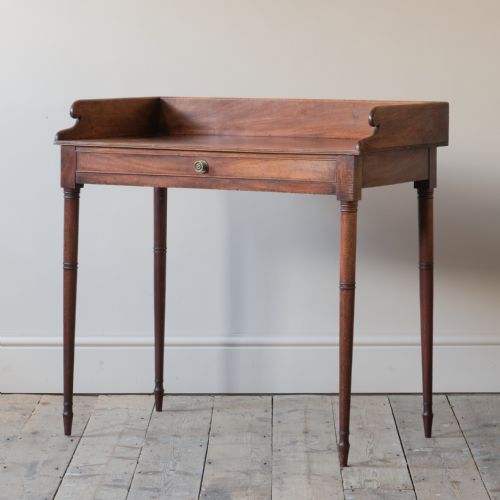
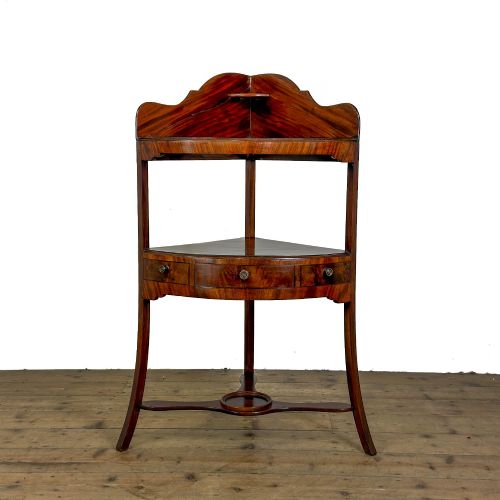
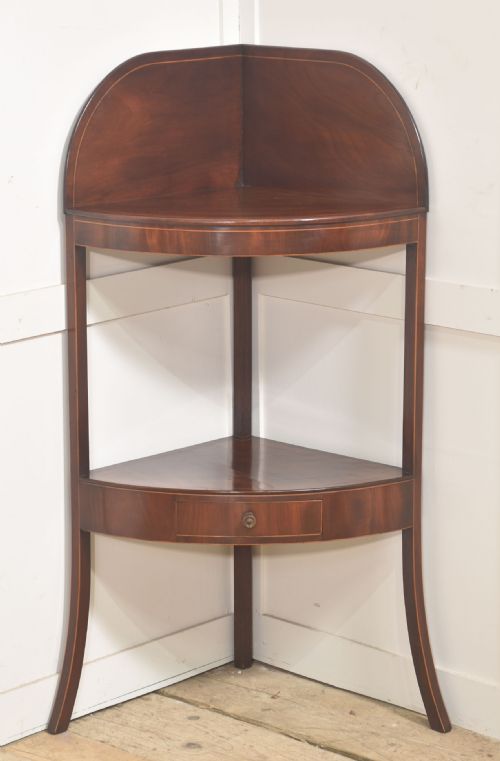
A george iii mahogany washstand is a functional piece designed for personal grooming in the bedroom or dressing room during the Georgian period. These items appear on this page primarily in corner formats or square freestanding configurations, often featuring tiers and enclosed lower sections.
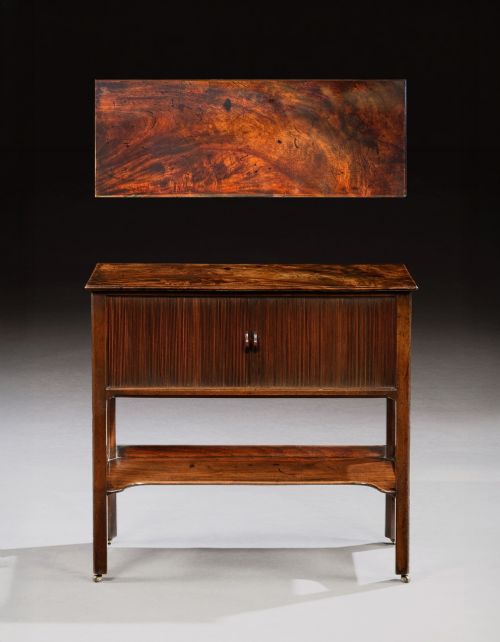
The pieces listed span the Georgian era through to later nineteenth century interpretations, with many showing the characteristic proportions of 1800. Buyers encounter everything from simple corner basins to elaborate gentleman's wash stands fitted with tambour cabinets and folding tops.
Alongside standard washstands, the evidence includes related forms such as dressing tables, bedside cupboards, night stands, and campaign dressing chests. These alternative forms share the same timber and period aesthetics while serving adjacent functions in the historic bedchamber.
Markers of quality
Quality rests in the selection of timber figures, where rich flame mahogany and crisp boxwood inlay elevate a piece beyond standard utility. The integration of clever internal mechanisms, such as folding mirrors and tambour doors, demonstrates superior cabinet-making ambition.
Proportion and structural restraint distinguish finer examples, particularly where galleries, upstand backs, and tier supports meet cleanly without heavy joints. Maker attribution, seen in workshop stamps, adds distinct provenance that separates standard utilitarian items from high-end commissions.
Listings feature George III, Victorian, and early nineteenth-century periods, constructed primarily in mahogany with boxwood inlay and brass fittings.
Gillows Lancaster
The George III Mahogany Washstand Glossary
- Washstand
- A piece of furniture designed to hold a basin, jug, and washing apparatus. Many George III examples use corner designs to fit efficiently into bedrooms.
- Corner washstand
- A triangular form specifically built to tuck into the corner of a room. This space-saving layout is one of the most common configurations found in the evidence.
- Gentleman's wash stand
- A more comprehensive dressing unit often equipped with mirrors, compartments, and storage. These pieces cater to male grooming rituals of the late eighteenth century.
- Tambour cabinet
- A small cupboard enclosed by a door made of thin vertical slats sliding in a track. This mechanism conceals interior storage while maintaining a curved profile.
- Gallery
- A raised wooden border surrounding the top surface of a table or washstand. It prevents items from sliding off the edge during use.
George III Mahogany Washstand: Frequently Asked Questions
What is a george iii mahogany washstand?
A george iii mahogany washstand is a historical wooden piece built to hold washing basins and grooming equipment in eighteenth and nineteenth-century bedrooms. They typically feature tiers, cut-outs for bowls, and sometimes enclosed cabinets or folding tops.
These items reflect the functional domestic requirements of the Georgian era, combining sturdy mahogany construction with refined cabinet-making techniques. Today they function well as decorative tables or plant stands in modern homes.
How were corner washstands used?
Corner washstands were designed to fit neatly into the unused angles of historic bedrooms to save floor space. They allowed owners to wash their hands and face without taking up the centre of the room.
The top tier held the basin, while lower shelves accommodated jugs, soap, and chamber pots, keeping all washing equipment in one tidy unit.
How do I style a washstand today?
You can use a george iii mahogany washstand as a bedside table, a hallway surface, or a bathroom accent piece. The top tier provides a convenient spot for lamps, books, or decorative ceramics.
Their compact footprints, especially the corner variants, allow them to fit into narrow spaces where standard tables are too bulky.
How can I tell the period?
Dating relies on timber selection, structural joinery, and stylistic markers characteristic of the late eighteenth and early nineteenth centuries. Pieces from this era often employ solid mahogany, boxwood stringing, and tapered legs.
Comparing the hardware, secondary woods, and overall proportions against documented workshop pieces helps confirm whether a piece belongs to the George III period.