
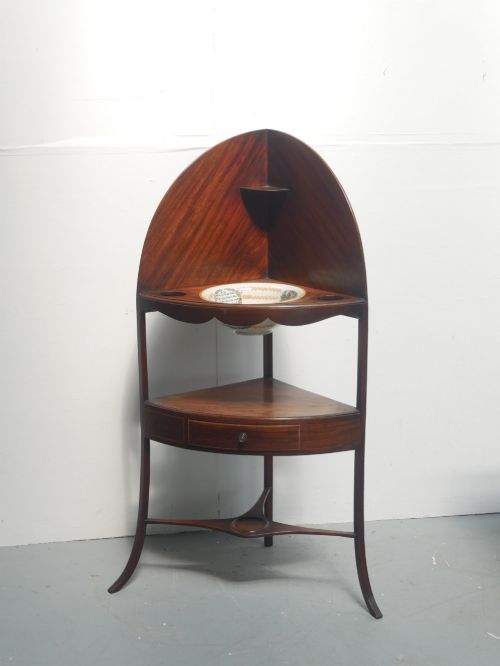
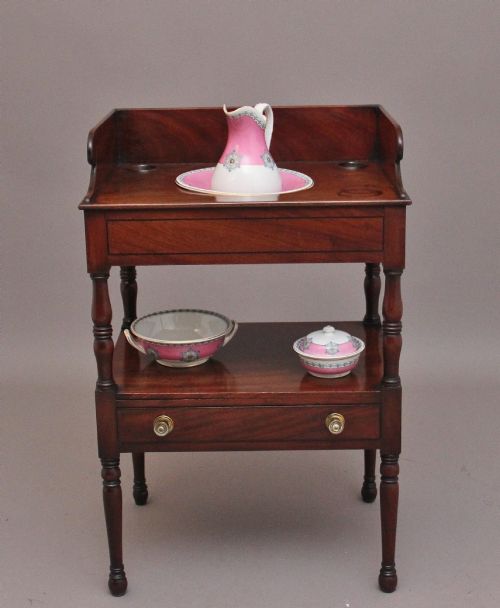
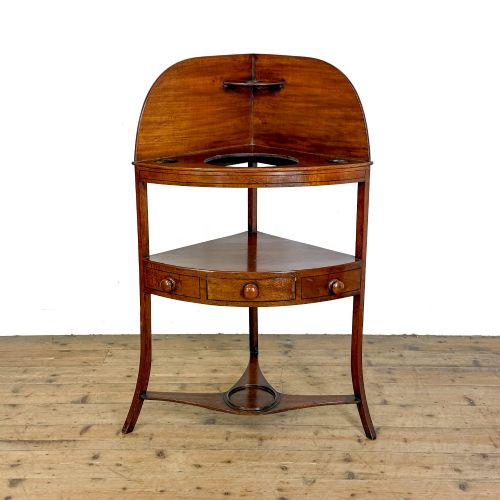
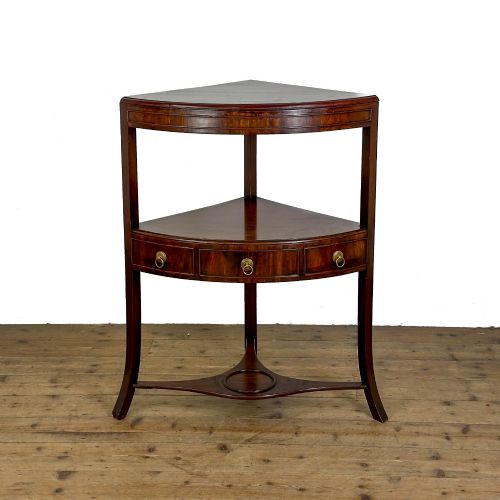


Georgian Wash Table
A georgian wash table is a practical timber stand built for morning ablutions, offering solid mahogany construction and period cabinetwork for modern rooms.
Georgian Wash Table
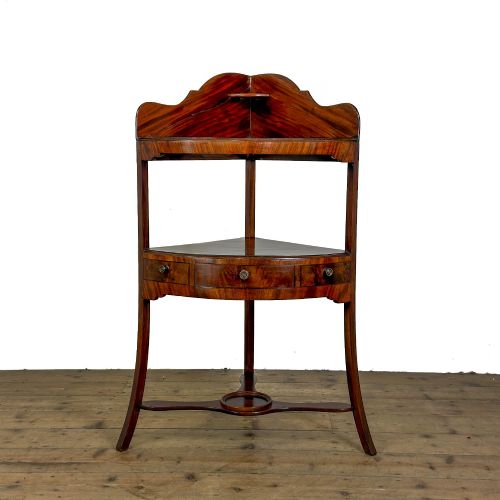
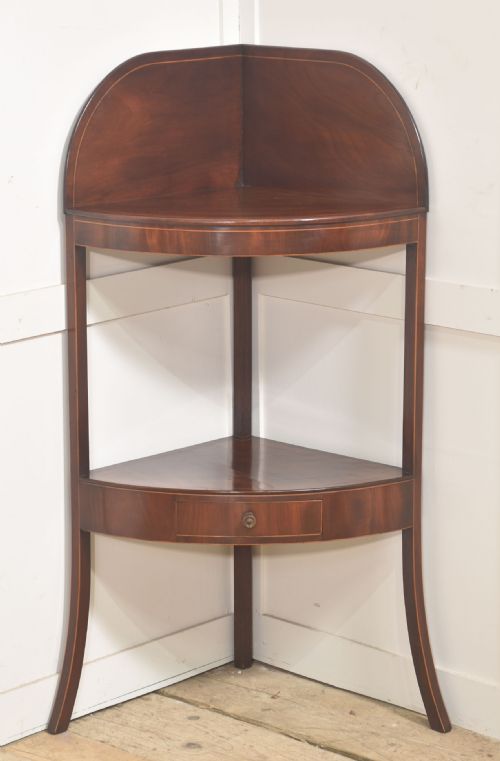
A georgian wash table spans periods from the eighteenth century into the nineteenth, including George III and Regency eras. Buyers encounter corner formats most frequently, designed to fit cleanly into chamber angles.
Makers shaped these pieces as washstands, bedside tables, and occasional stands with compartments for basins and jugs. Many examples function today as lamp or plant tables in hallways and reception rooms.
Materials and construction
Workshops relied primarily on mahogany, supplemented occasionally by oak and satinwood for contrasting surfaces. Timber sections often featured boxwood inlay to articulate edges and door panels.
Cabinetmakers constructed hinged tops and corner tiers with brass fittings and glass accessories where appropriate. Joinery followed traditional standards of the period to support daily chamber use.
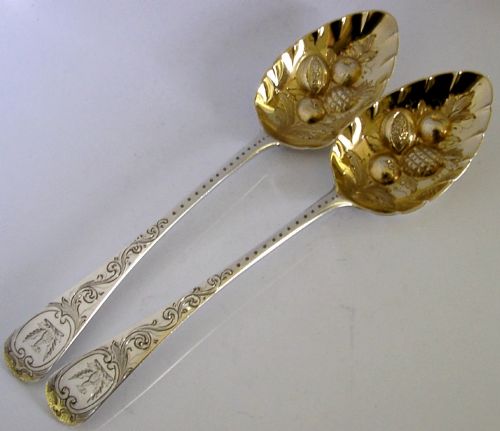
Listings feature mahogany, brass, glass, boxwood inlay, ceramic, and silver materials across Georgian, Regency, and Victorian periods.
Judging execution
Superior examples display crisp boxwood inlay and well-figured mahogany grain across structural surfaces. Poorer instances show dull timber selection and heavy secondary replacements.
The sophistication of internal framing and original cabinet doors distinguishes workshop standards. Finer pieces retain proportion and balanced brass hardware without clumsy alterations.
The Georgian Wash Table Glossary
- Corner washstand
- A triangular furniture form designed to fit snugly into the corner of a room, saving floor space while providing basin storage.
- Boxwood inlay
- Contrasting pale wood inserted into dark timber surfaces to create decorative linear borders and geometric patterns.
- Tray top
- A raised rim around the upper edge of a table designed to prevent wash jugs and accessories from sliding off.
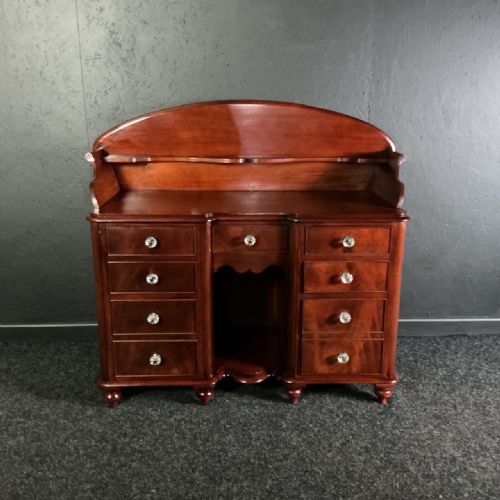
- Gentleman's wash stand
- A fitted cabinet piece often housing compartments for shaving gear, washing basins, and personal accessories.
Georgian Wash Table: Frequently Asked Questions
What is a georgian wash table used for today?
These pieces function readily as bedside tables, lamp stands, or decorative plant tables in contemporary interiors. Their compact footprints suit corners and smaller reception spaces.
Original basin cut-outs frequently support modern placement as occasional furniture while retaining their distinct eighteenth-century character.
How do I identify a george iii wash stand?
George III pieces typically display solid mahogany construction, precise boxwood stringing, and corner configurations designed for chamber use. Look for period proportions and traditional joinery.
Many examples double as bedside cupboards or square washstands with enclosed lower storage sections characteristic of the late eighteenth century.
Are corner washstands stable?
Corner washstands rely on three or four supporting legs arranged to brace tightly against intersecting walls. This geometry provides inherent stability for daily chamber routines.
Heavier mahogany frames anchor the pieces firmly to the floor, making them reliable supports for lamps and decorative items today.
What woods were used in these tables?
Mahogany forms the primary material across the majority of surviving examples, often paired with contrasting boxwood inlay. Oak and satinwood appear in specific variants and internal framing components.
Cabinetmakers selected these hardwoods for durability and rich grain patterns that responded well to polishing.