

George III Mahogany Dining Chairs
George iii mahogany dining chairs bring substantial 18th-century presence to the table, offering robust timber frames and classic silhouettes that anchor a formal interior.
George III Mahogany Dining Chairs
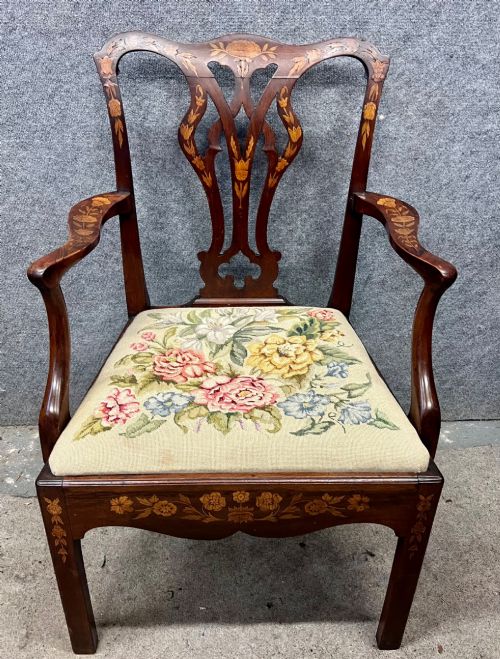
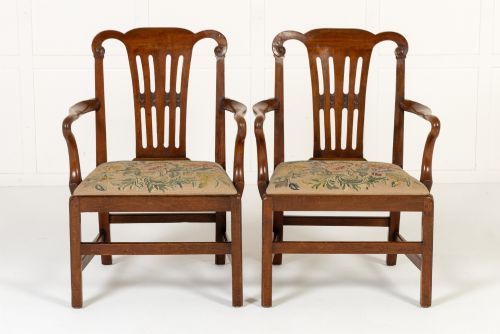
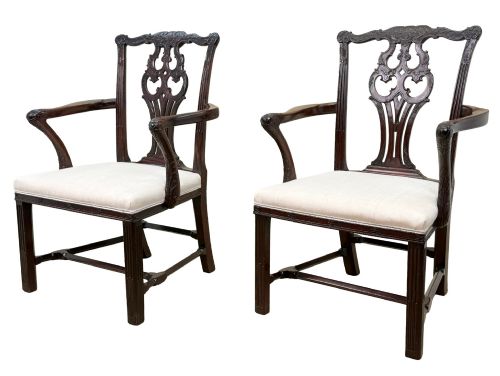
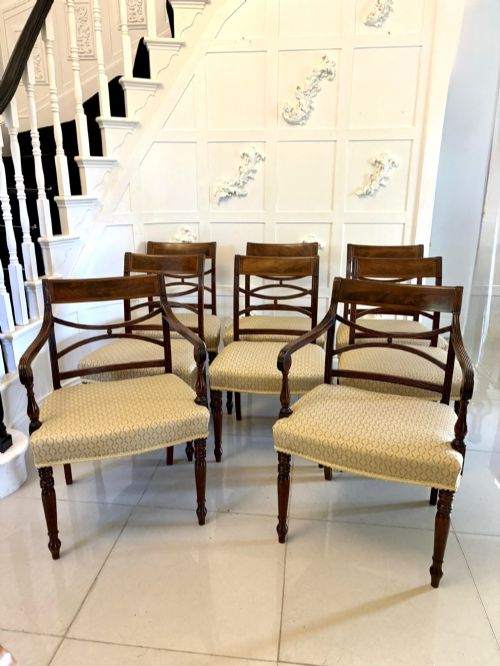
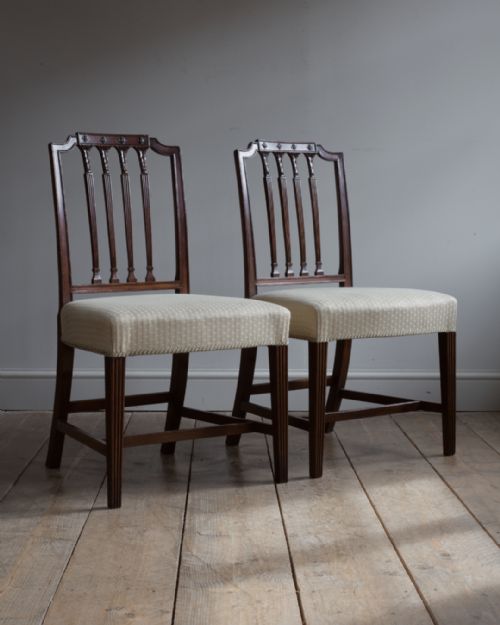
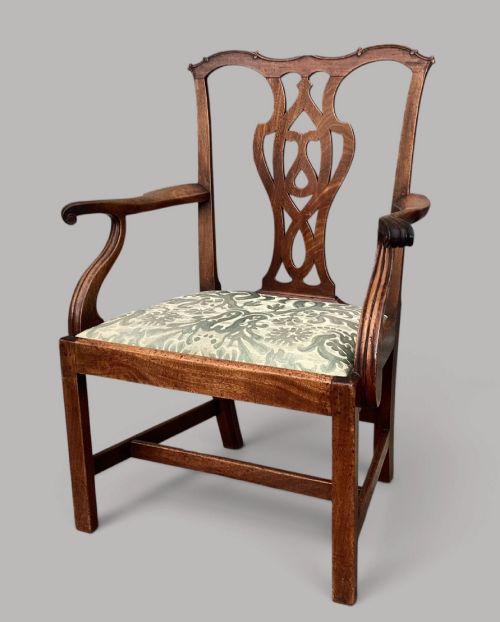
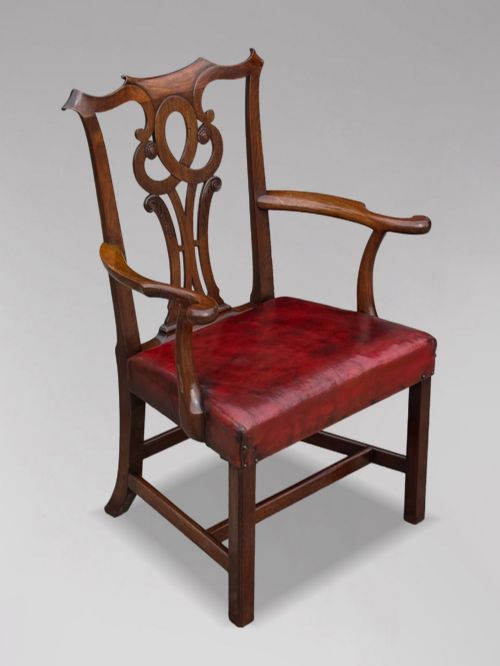
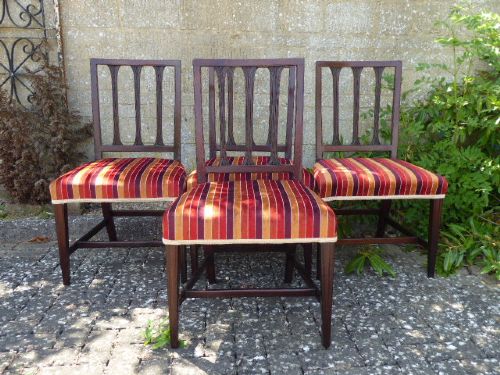
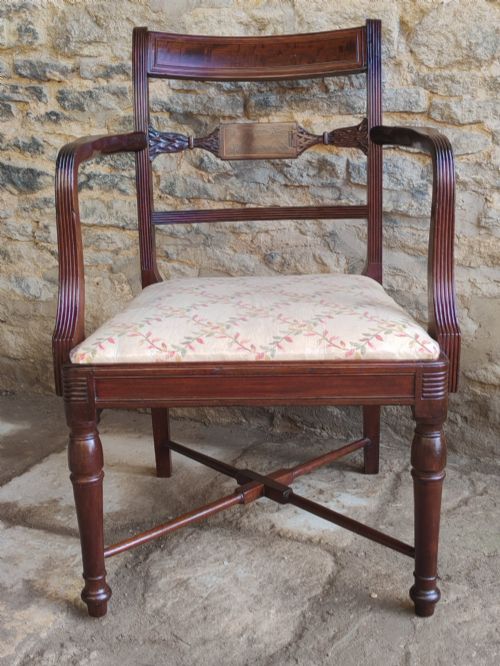
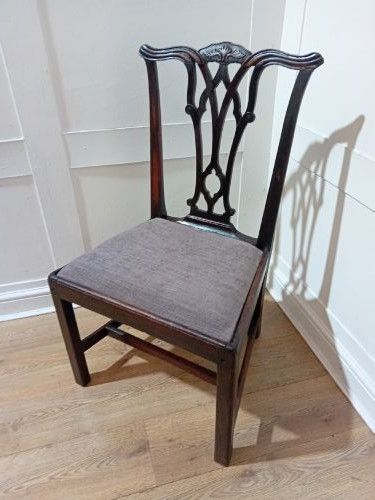
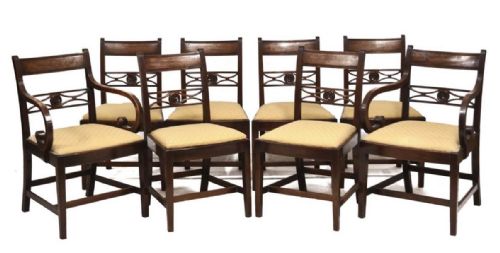
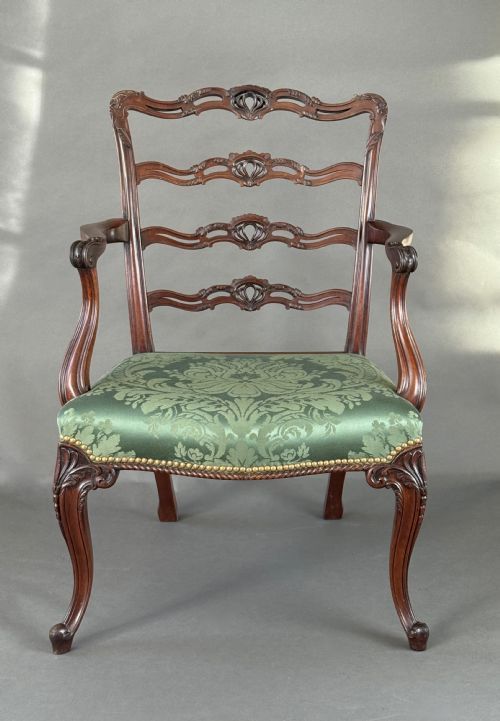
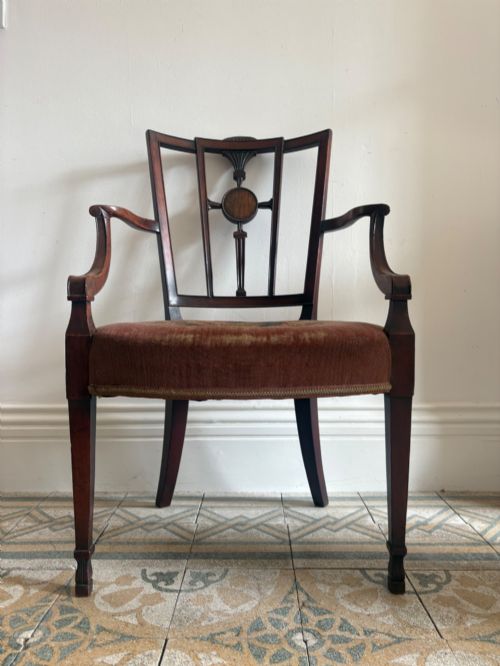
George iii mahogany dining chairs encompass dining chairs, armchairs, side chairs, dining armchairs, and carver chairs dating from the Georgian period through to later revival eras.
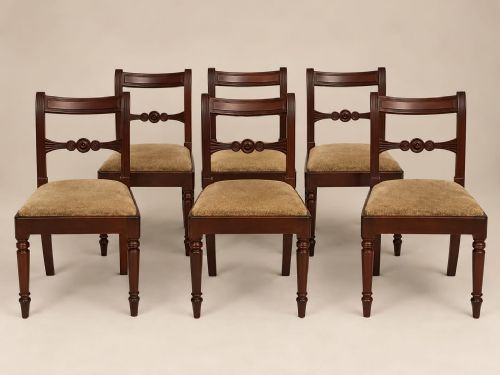
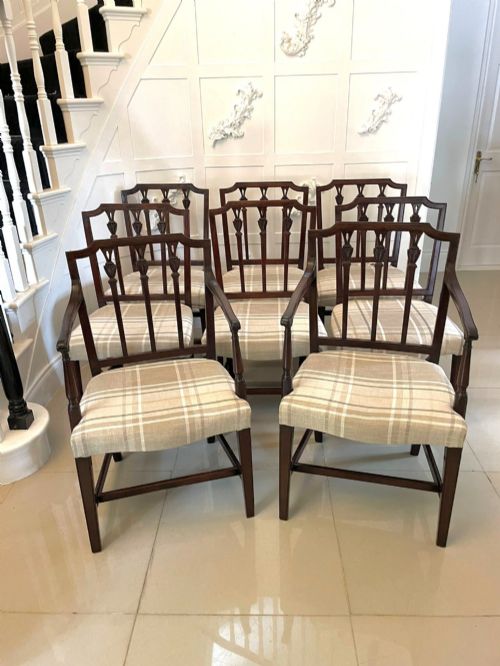
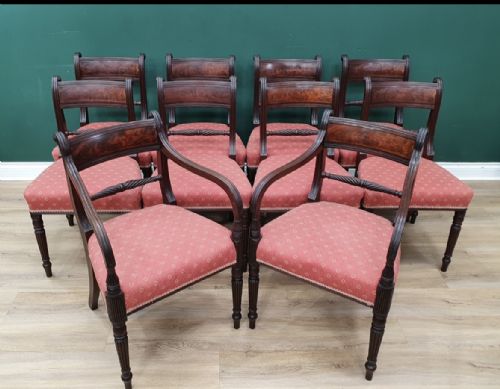
Buyers frequently encounter sets comprising single chairs paired with matching armchairs, alongside pairs and individual carver chairs constructed from dense tropical timber.
The aesthetic bridges straight-legged architectural forms and curved shield-back designs, incorporating regional variations such as Scottish craftsmanship alongside English workshops.
Materials and Construction
Makers utilised solid mahogany for structural integrity and rich grain patterns, occasionally accented with contrasting inlay work or specific decorative roundels.
Seats required supportive webbing and stuffing finished in various coverings including fabric, leather, tapestry, velvet, and damask.
Joinery relied on traditional mortise and tenon techniques, while brass fixtures appeared on specific desk and library variants.
George III Mahogany Dining Chairs Retail Price Guide 2026
Typical asking prices for george iii mahogany dining chairs among the pieces listed under this phrase on Sellingantiques today, from the lower quarter to the upper quarter. They describe what is for sale here now, not the wider market.
Some armchairs feature cleverly shortened elbow heights designed to accommodate the voluminous skirts of the Georgian era.
Assessing the Range
The distinction between standard examples and the finest sets rests on the crispness of carved details in the timber and the uniformity across larger matched dining sets.
Original structural timber condition and the integrity of the joints dictate longevity, separating well-preserved seats from those requiring extensive restoration.
The refinement of the back splat design and the proportional balance between single chairs and armchairs define the upper tier of surviving pieces.
Gillows·Howard And Co
The George III Mahogany Dining Chairs Glossary
- Carver chair
- An armchair designed specifically for the head of a dining table, featuring supportive armrests. These pieces matched the narrower side chairs in a set.
- Shield back
- A chair back shaped in the outline of a heraldic shield, popularised during the late 18th century. This design often incorporated carved vertical splats.
- Mahogany
- A durable, reddish-brown tropical hardwood favoured by cabinetmakers for its stability and carving qualities. It took a high polish.
- Elbow chair
- An alternative term for an open armchair, possessing low armrests designed to support the elbows. They frequently accompanied larger dining sets.
- Inlay
- A decorative technique where contrasting woods or materials are inserted into recesses within the primary mahogany surface. This added linear pattern to the rails and splats.
George III Mahogany Dining Chairs: Frequently Asked Questions
How many chairs came in a standard set?
Sets varied widely depending on the original commission, ranging from small groupings of four to extensive sets of twelve or more.
Larger dining sets typically combined six or eight single chairs with a pair of matching armchairs for the heads of the table.
What is the difference between a carver and a side chair?
Side chairs lack armrests and were built to slide neatly beneath the dining table when not in use.
Carver chairs include armrests to accommodate the host, sharing the same stylistic motifs and back design as the accompanying side chairs.
How do I identify a revival piece from the original period?
Revival pieces produced in later centuries often utilise different secondary woods in the internal frame construction and display less wear to the foot surfaces.
Original 18th-century examples exhibit natural patina and hand-cut joinery consistent with Georgian cabinetmaking methods.
What upholstery fabrics are appropriate for these chairs?
Historical evidence shows that horsehair fabric, damask, leather, and woven tapestry suited formal dining environments.
Modern restorations often replicate these traditional textures using durable velvet, patterned upholstery fabric, or traditional leather.