
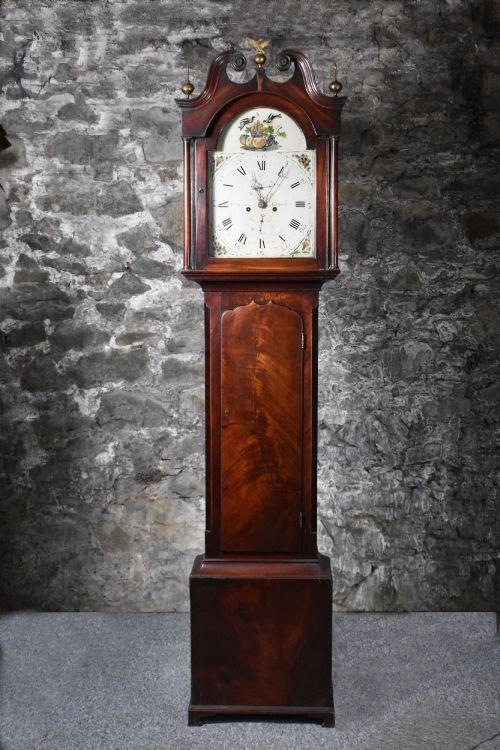


George III Mahogany Clock
When you encounter a george iii mahogany clock, you are looking at an instrument combining precision mechanics with cabinetmaking of enduring presence.
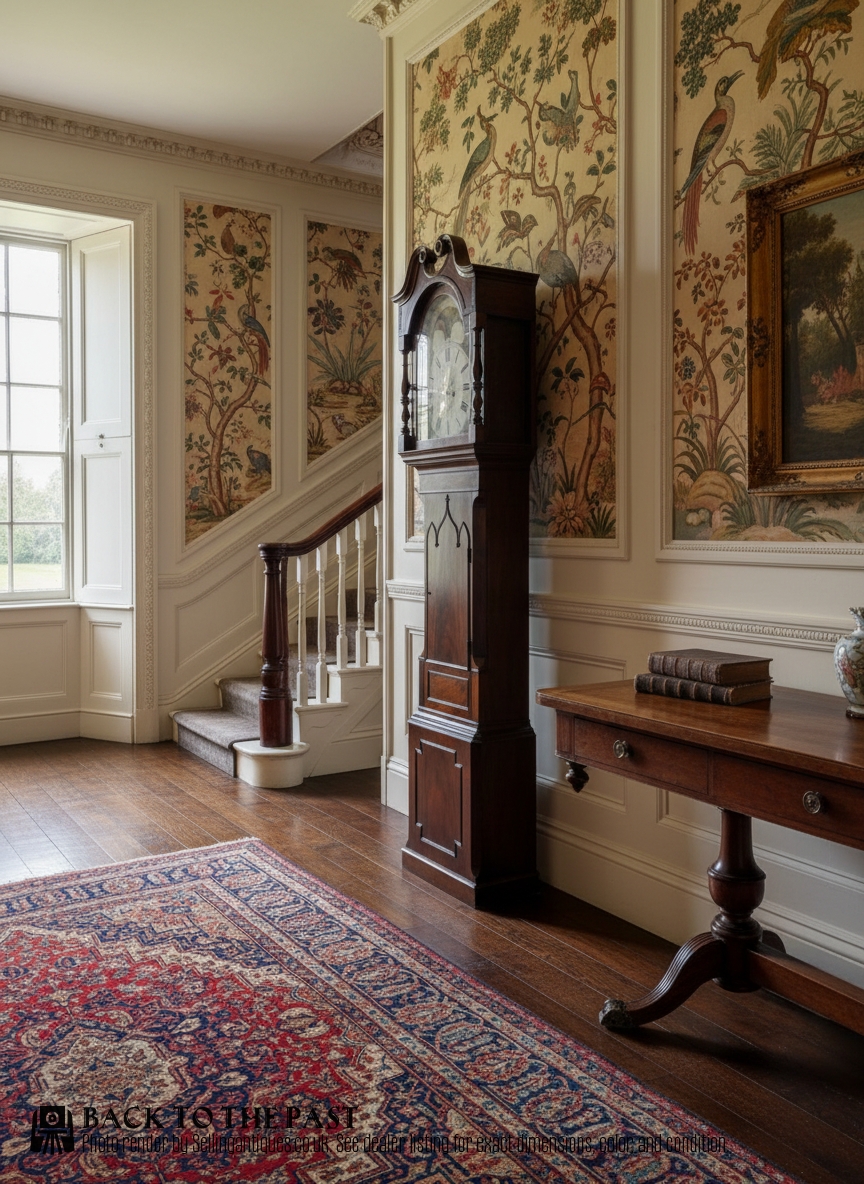
George III Mahogany Clock
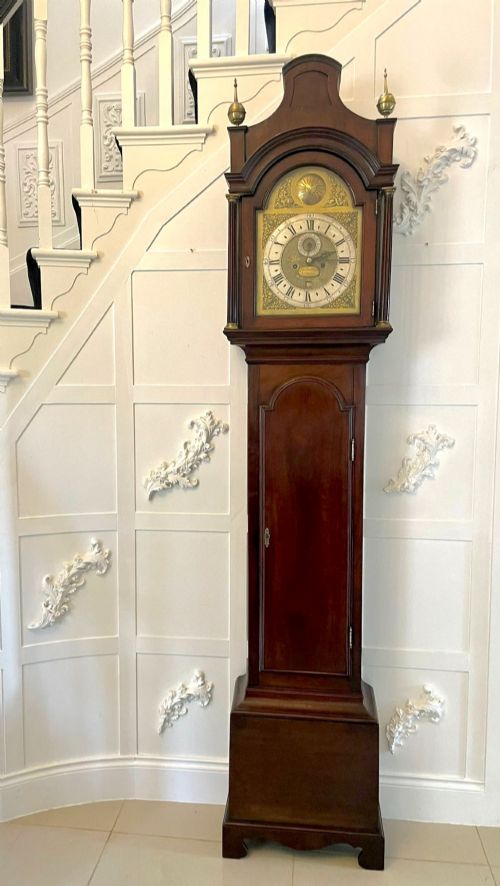
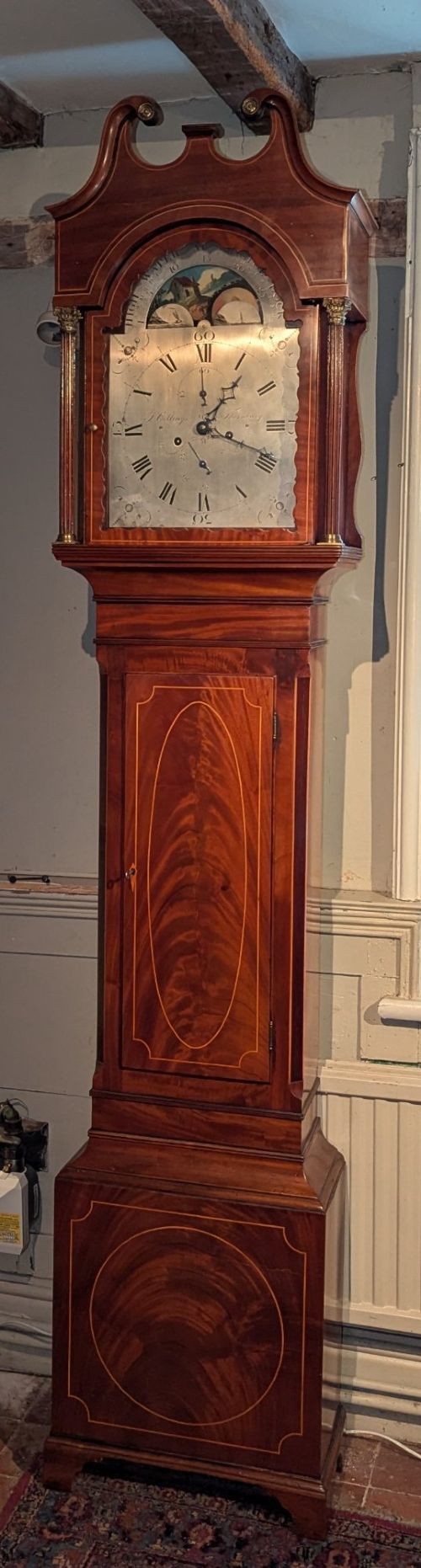
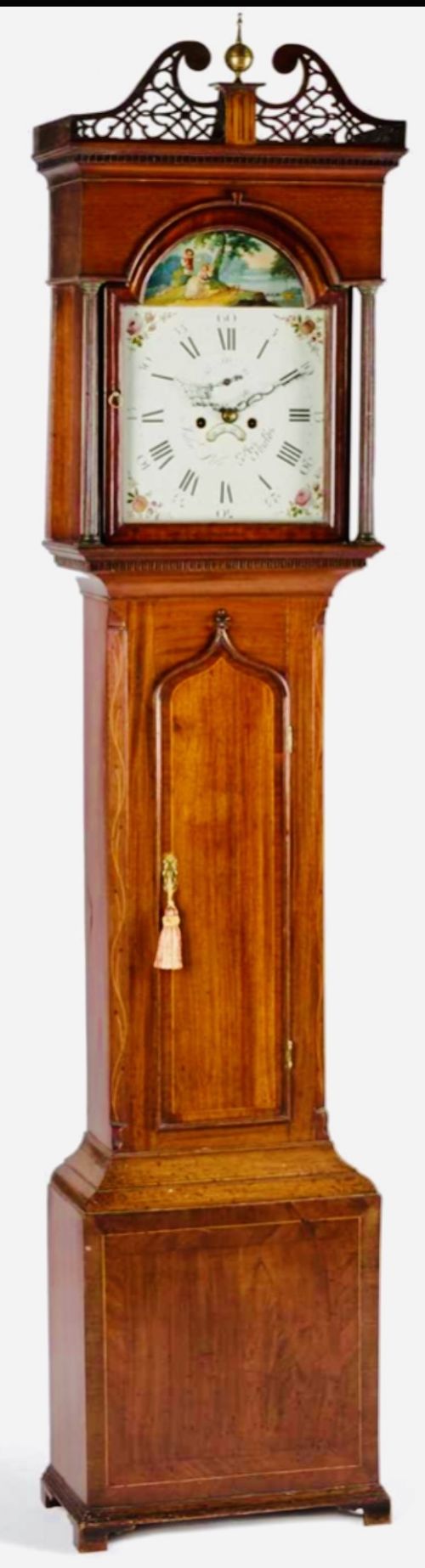
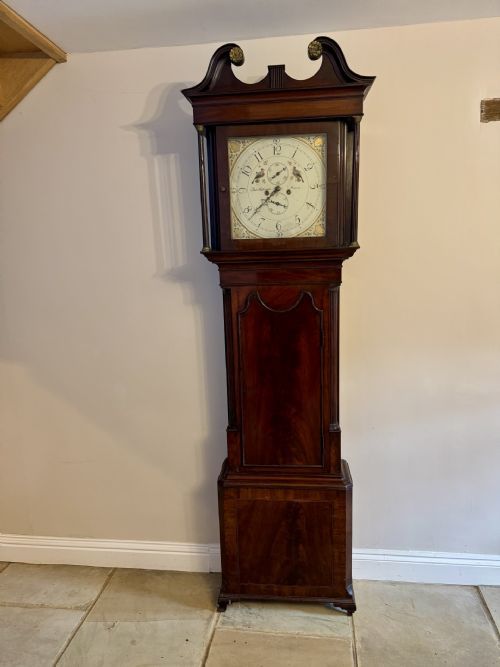
A george iii mahogany clock encompasses tall standing timepieces, table models, and wall regulators created during the Georgian era. The selection centres heavily upon longcase clocks, often referred to as grandfather clocks, alongside bracket clocks and wall-mounted dial clocks.
The floor-standing variations dominate the available pieces, typically featuring arched brass or painted iron dials framed by mahogany cabinetry. These taller examples range from provincial provincial workshop productions to signed London masterworks.
Smaller formats such as single pad top or bell-top bracket clocks appear alongside drop-dial tavern clocks. These alternative forms offer the same mechanical complexity in a format designed for smaller rooms or specific wall locations.
How They Were Made
Cabinetmakers utilised solid and veneered mahogany, frequently combining the timber with secondary woods such as oak for internal structures and carcases. Brass featured extensively for movement plates, dial spandrels, bezels, and decorative pendulum bobs.
Movements relied upon iron and steel wheels, pinions, and escapements, powered by lead or cast iron weights suspended by cords or chains, or driven by brass spring barrels with fusees. Dials combined engraved brass, silvered chapter rings, and hand-painted iron with delicate steel hands.
Listings feature movements spanning standard thirty-hour and eight-day durations, alongside specialised quarter-chiming and musical bracket variations.
What Varies in Quality
The distinction between ordinary and superior pieces rests in the execution of the cabinetwork and the sophistication of the internal movement. Finer examples display figured flame mahogany veneers, intricate brass inlay, and robust eight-day movements signed by notable makers.
Provincial pieces often present simpler oak carcases faced with mahogany, housing reliable standard movements. London-made instruments frequently incorporate secondary complications such as moon phase dials, quarter-chiming mechanisms, or musical bracket capabilities.
Charles Shuckburgh·William McEwan·Francis Perigal·Charles Dowsett·John Denbigh·Edward White·James Tregent·John Pollard·Dan Williams·Dwerrihouse And Carter·Matthew And Thomas Dutton·Thomas Best
The George III Mahogany Clock Glossary
- Fusee
- A conical pulley used in spring-driven clocks to equalise the declining power of the mainspring as it unwinds. This mechanism ensures consistent force is delivered to the gear train.
- Verge Escapement
- An early type of escapement mechanism that controls the release of the wheel train using a vertical rod and pallets. It is typically paired with a short pendulum or balance spring.
- Spandrel
- The decorative corner ornamentation applied to the dial face outside the chapter ring. These figures are usually cast in brass and chased or gilt.
- Chapter Ring
- The circular band on a clock dial that bears the numerical hour markings. They are frequently silvered and engraved.
- Moon Phase
- A mechanical display on the dial tracking the lunar cycle through a rotating painted disc. It reveals the phases of the moon through an arched aperture.
George III Mahogany Clock: Frequently Asked Questions
How do eight day and thirty hour movements differ?
An eight day movement requires winding once a week using a key inserted through the dial face. These mechanisms typically employ two weights suspended by cords.
Thirty hour movements demand more frequent winding and generally rely on a simpler single-weight drive train. They were traditionally produced for more modest household environments.
Where were these clocks originally placed in homes?
Tall longcase models stood in hallways, stairwells, or principal living spaces where their striking mechanism could be heard throughout the house. Their height required ceilings capable of accommodating cases exceeding seven feet.
Smaller bracket clocks sat upon tables, mantelpieces, or dedicated wall brackets in parlours and drawing rooms. Tavern clocks hung prominently in public houses and large commercial offices for public timekeeping.
What is a moon dial used for?
The rotating painted disc tracks the synodic lunar month over roughly twenty-nine and a half days. This visual complication held practical value for navigation, tides, and agriculture before widespread urban lighting.
Collectors prize the feature for the artistic execution of the painted moons and starry skies. It adds visual movement and complexity to the upper arch of the dial.
How should a mechanical clock be maintained?
Professional cleaning and oiling every few years ensures the brass pivots and steel teeth avoid excessive wear. The clock must stand on a level surface to keep the pendulum beating in a regular, even rhythm.
Moving the hands backwards should be avoided, particularly on models with striking trains or calendar complications. Setting the time requires advancing the minute hand gently from hour to hour.