

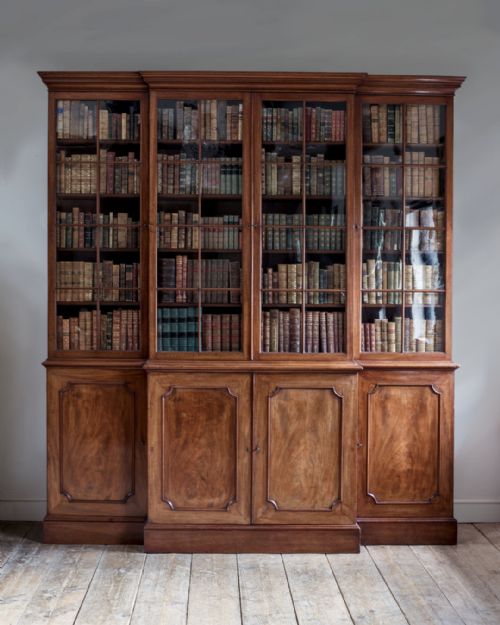
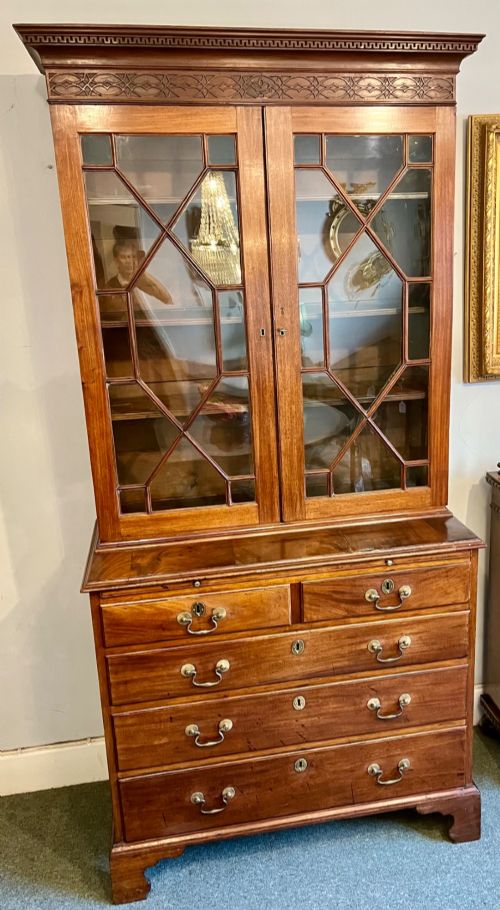
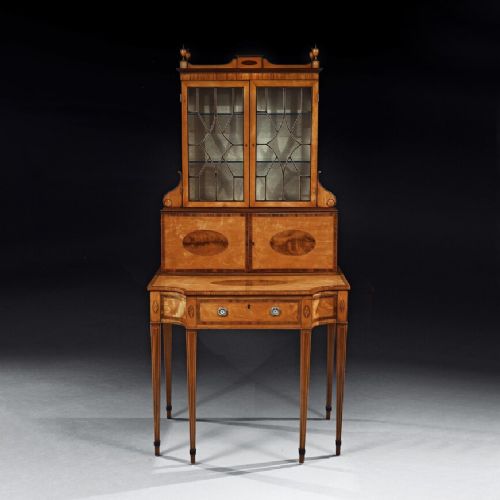
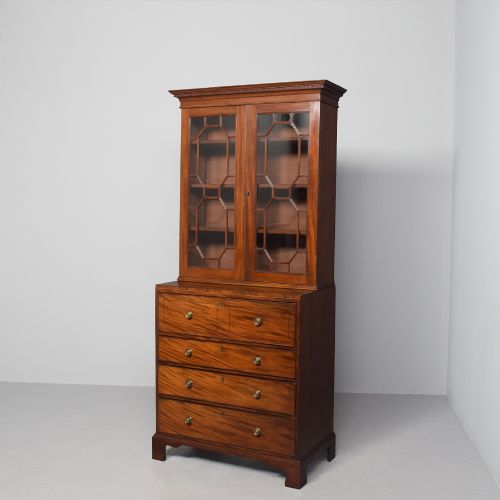




George III Glazed Cabinet
A george iii glazed cabinet brings the considered proportions and fine timbers of the late eighteenth century directly into a modern room.
George III Glazed Cabinet
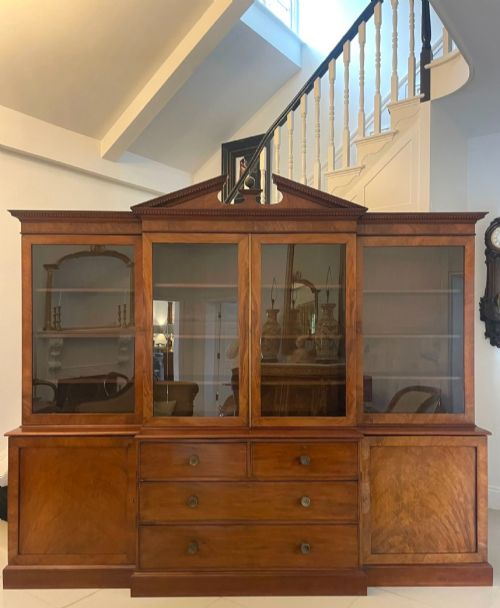
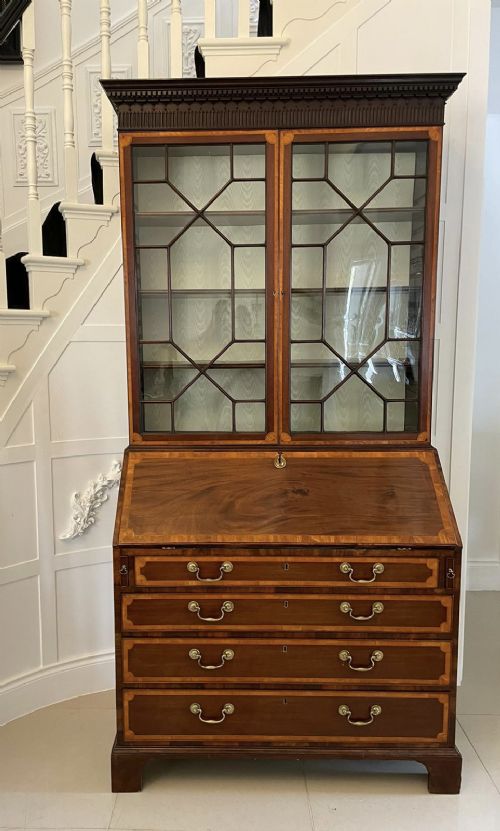
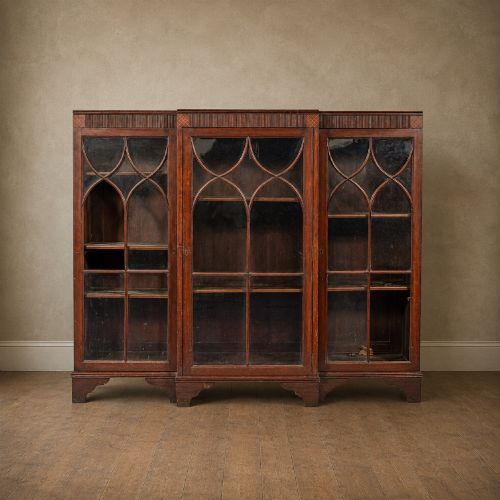
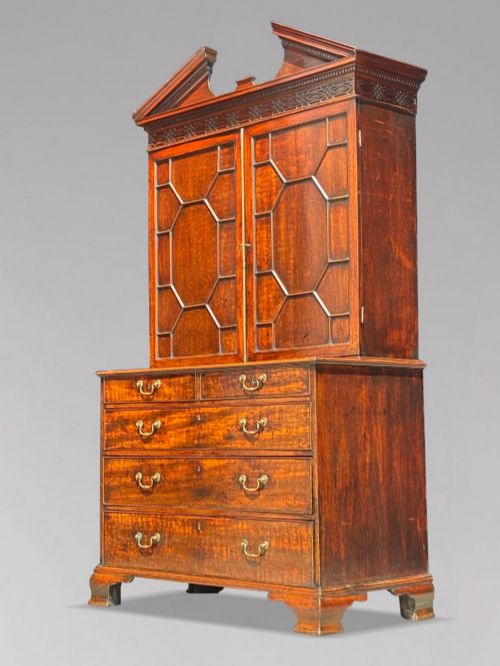
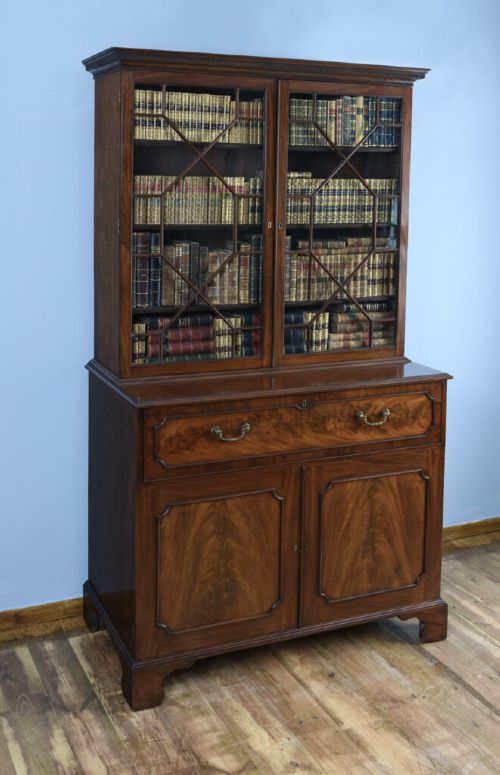
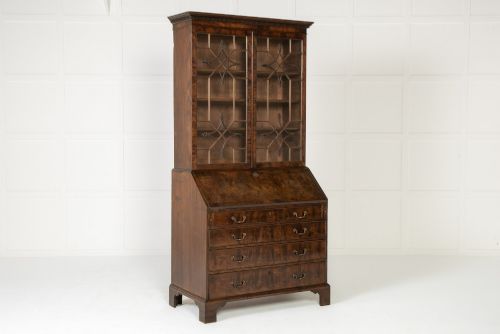
When searching for a george iii glazed cabinet, a buyer encounters a diverse group of case furniture designed to display and store books, writing materials, or collected objects. The most prevalent versions on this page are breakfront bookcases, secretaire bookcases, and wall-hanging or standing corner cabinets spanning the Georgian period and the nineteenth century.
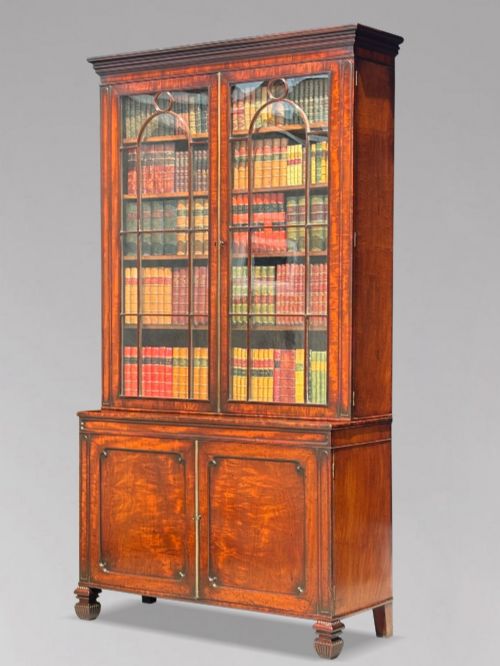
These pieces primarily originate from English workshops operating during the reign of George III and subsequent revival periods. The selection ranges from architectural library bookcases with multi-pane glazed doors to compact corner cupboards intended for domestic chambers.
How they were made
Cabinet makers relied heavily on solid and veneered mahogany, often selecting figured flame mahogany, satinwood, and oak to construct the carcasses and drawer linings. Glass panes are held within timber frames, frequently featuring astragal mouldings that divide the upper doors into geometric lights.
Brass hardware, including escutcheons, handles, and hinges, provides functional and decorative contrast against the dark wood. Inlaid details, such as satinwood bands and contrasting stringing, punctuate the surfaces of finer examples.
George III Glazed Cabinet Retail Price Guide 2026
Typical asking prices for george iii glazed cabinet among the pieces listed under this phrase on Sellingantiques today, from the lower quarter to the upper quarter. They describe what is for sale here now, not the wider market.
Some secretaire drawers hide secret compartments triggered by secret wooden pins.
What varies in quality
The distinction between standard domestic pieces and top-tier examples lies in the selection of timbers and the crispness of the carving and inlay. Master workshops employed highly figured veneers and precise joinery that remain tight and true over centuries.
Proportion and architectural harmony also dictate distinction, where balanced breakfront facades and refined cornice mouldings elevate the visual impact of the cabinet.
Thomas Chippendale·Gillows
The George III Glazed Cabinet Glossary
- Astragal
- Timber or metal moulding bars that divide a glazed door into smaller panes. These delicate divisions are characteristic of eighteenth-century cabinet design.
- Secretaire
- A desk component featuring a drop-front drawer that conceals a fitted interior of small drawers and pigeonholes. This addition turns a bookcase into a compact writing station.
- Breakfront
- A cabinet design where the central section projects forward from the flanking wings. This architectural arrangement creates depth and shadow across the front elevation.
- Flame mahogany
- Timber cut from the fork of the mahogany tree to produce a dramatic, flickering flame-like grain pattern. Cabinet makers reserved this veneer for primary focal points such as drawer fronts and door panels.
George III Glazed Cabinet: Frequently Asked Questions
What is a secretaire bookcase?
A secretaire bookcase combines a top section of glazed shelving with a middle drawer that pulls down to reveal a writing desk. It offers practical storage and a concealed workspace in one tall case.
This form was popular in Georgian libraries and parlours where space efficiency mattered.
How do I fit a corner cabinet into a room?
A corner cabinet makes use of dead space by slotting neatly into a ninety-degree room junction. Wall-hanging versions attach directly to plaster or stud walls, while standing models rest on the floor.
They work well in dining rooms or hallways for displaying glassware and ceramics.
Are these cabinets made of solid mahogany?
Most pieces combine solid timbers for structural parts with fine veneers applied to flat surfaces like doors and drawer fronts. Mahogany, oak, and satinwood appear frequently across these constructions.
Veneering allowed makers to display striking grain patterns without compromising the stability of the carcass.
How do I distinguish George III from later styles?
Original pieces date from the eighteenth or early nineteenth century and show period construction methods like hand-cut dovetails. Later revival pieces from the Victorian era or nineteen-hundreds often employ heavier proportions or machine-assisted finishes.
Examining the secondary timbers inside drawers helps confirm the age of the piece.