



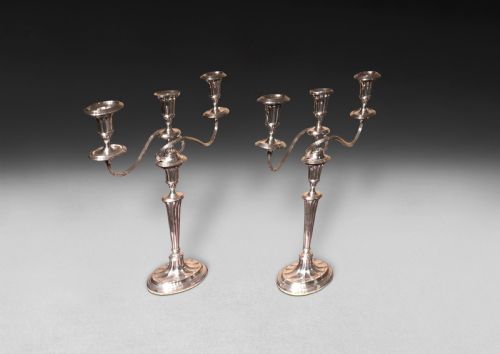

George III Candle Holders
George iii candle holders bring genuine Georgian light and proportion into a room, spanning brass, silver, Sheffield plate, and timber.
George III Candle Holders
When you search for george iii candle holders, you enter a field defined by candlesticks, candelabra, wall sconces, and candle stands in brass, silver, Old Sheffield plate, and various timbers. The pieces range from straightforward brass petal base examples to elaborate four-piece suites and telescopic designs.
The selection here includes period items alongside later 19th-century and Edwardian revivals in the george iii style. You will encounter practical chambersticks alongside heavy silver table candlesticks and walnut or mahogany stands.
How they were made
Metal items rely on brass casting, silver working, and Old Sheffield plate techniques where a thin layer of silver is fused to a copper core. These methods created sturdy domestic lighting that held up to daily handling and snuffing.
Wooden examples utilise timber such as mahogany, oak, walnut, and giltwood, sometimes pairing carved timber bodies with brass sconces. The construction reflects standard cabinetmaking and joinery practices of the Georgian period and later revivals.
George III Candle Holders Retail Price Guide 2026
Typical asking prices for george iii candle holders among the pieces listed under this phrase on Sellingantiques today, from the lower quarter to the upper quarter. They describe what is for sale here now, not the wider market.
The listings span brass, silver, copper, Old Sheffield plate, and timber across Georgian, 18th century, 19th century, and Edwardian periods.
What varies in quality
Quality rests in the crispness of casting for metals and the precision of turning or carving for timber. Heavier metal weight and clean joinery distinguish the finer examples from simpler utilitarian pieces.
The integrity of the plating on silver-plated items and the survival of original components, such as matching sconces or telescopic mechanisms, separate standard survivals from superior specimens.
Matthew Boulton
The George III Candle Holders Glossary
- Old Sheffield plate
- A composite material made by fusing a sheet of silver to a copper base, typical of better domestic wares before electroplating.
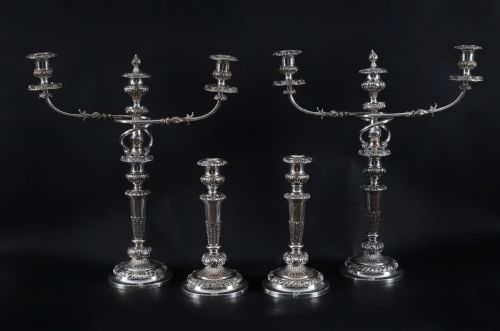
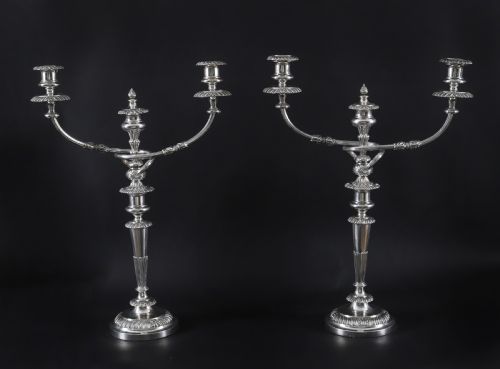
- Candelabra
- A branched lighting fixture holding multiple candles, often designed as a matching pair or part of a larger suite.
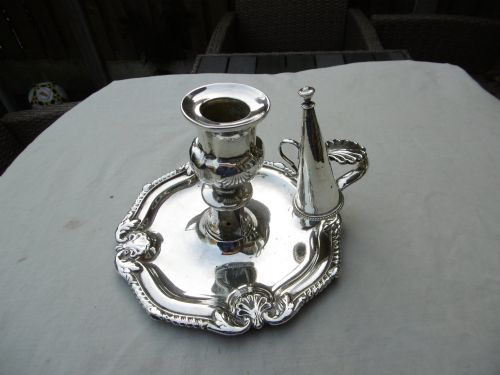
- Chamberstick
- A low candlestick fitted with a handle and a shallow pan to catch wax, intended for carrying about a house.
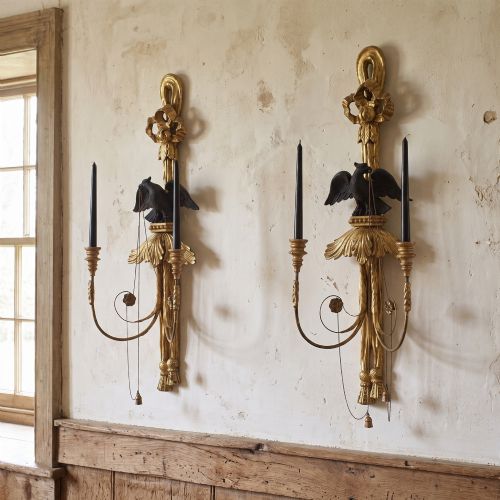
- Sconce
- A wall-mounted lighting fixture designed to hold one or more candles and reflect light into the room.
- Telescopic
- A shaft design that allows the height of the candlestick to be adjusted up or down.
George III Candle Holders: Frequently Asked Questions
What is a chamberstick?
A chamberstick is a low portable candlestick equipped with a small tray base and a finger ring handle. It was used to light a person's way through a house at night.
The shallow pan catches dripping wax while the handle makes carrying safe. Many include a small conical snuffer resting in the tray.
How do I spot Old Sheffield plate?
Old Sheffield plate involves fusing silver to copper, which produces a distinctive appearance where the underlying copper sometimes shows through at high wear points. It differs from later electroplate.
Look closely at the edges and seams to spot the thin copper line beneath the silver layer. This technique predates mid-19th-century electroplating methods.
What are telescopic candlesticks?
Telescopic candlesticks feature a sliding shaft mechanism that lets the user raise or lower the candle height. They appeared in silver and plated metal during the Georgian period.
The extending tubes allowed for adjustable lighting levels on dining tables or desks. Check that the sliding mechanism moves smoothly without excessive wobble.
Are wooden candlesticks genuine Georgian?
Wooden candlesticks from this sphere include both period Georgian items and later revivals made in the george iii style during the 19th and early 20th centuries.
Mahogany, walnut, oak, and giltwood versions appear with turned bodies and often feature metal brass sconces at the top for safety. Examine the timber grain and turning style to help determine the age.