

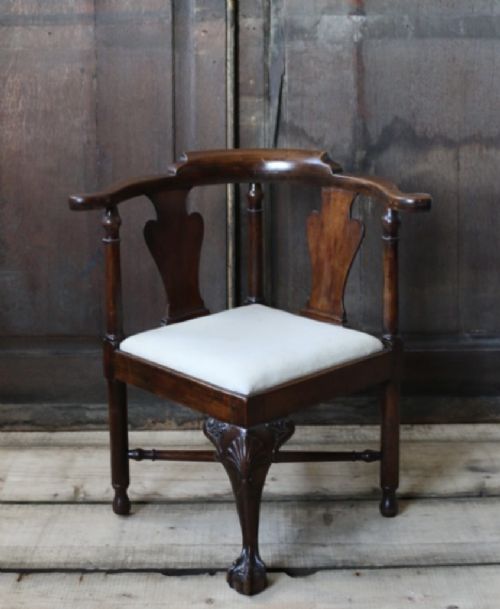


George II Seating
George II seating brings robust walnut and carved mahogany into a room, offering sturdy frames and deep seats built for enduring utility.
George II Seating
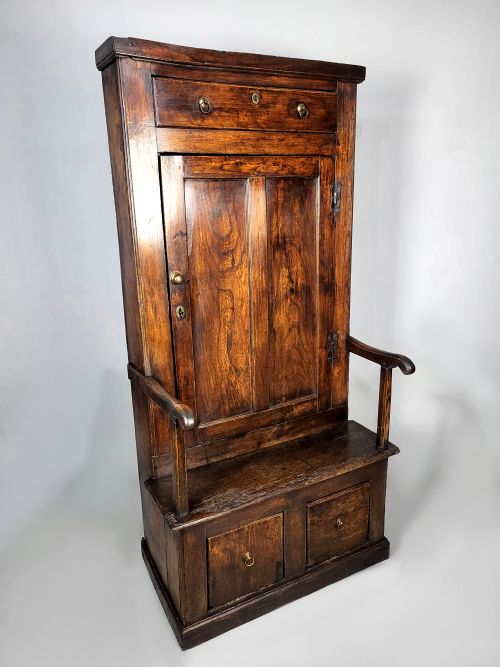
When you search for george ii seating, you encounter a solid body of 18th-century forms alongside later revival pieces produced across the 19th and early 20th centuries. The selection spans dining chairs, side chairs, armchairs, corner chairs, hall chairs, stools, footstools, and settees.
Original pieces date primarily from the 1750s and adjacent decades, whilst revival iterations emerge from Victorian, Edwardian, and later workshops. Walnut and mahogany predominate, appearing both in plain timber and with carved or painted details.
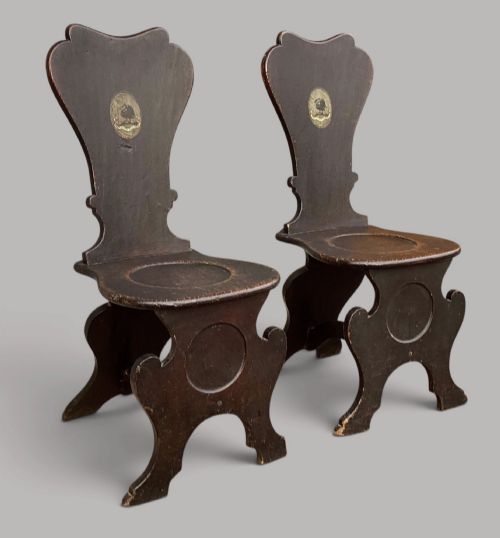
Irish regional variants surface frequently among these listings, often displaying distinctive red walnut or painted armorial backs. Buyers regularly find single pieces, pairs, and larger sets suitable for formal or domestic interiors.
Materials and construction
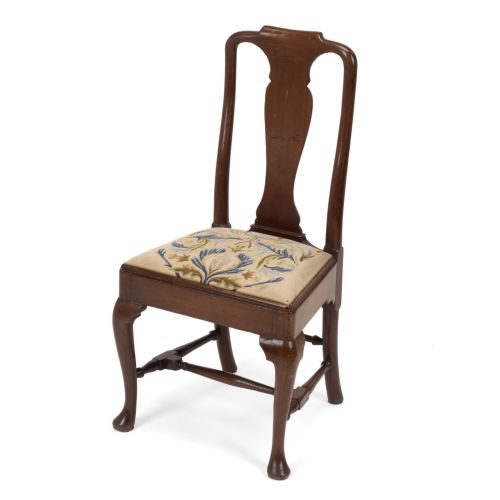
Cabinetmakers constructed these frames using dense timbers like mahogany, walnut, burr walnut, and oak, joined with traditional framing methods. The timber was frequently shaped into cabriole legs and supportive stretcher bases.
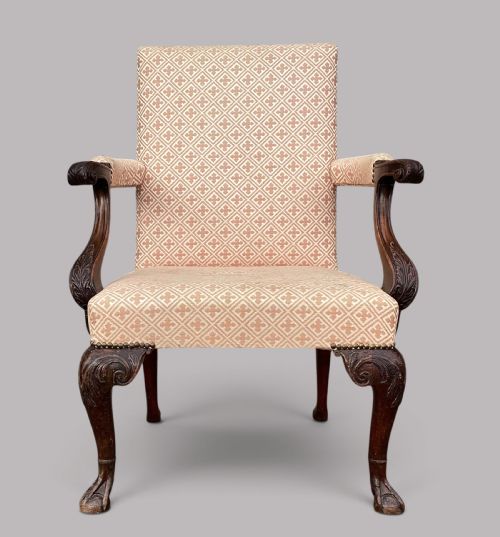
Upholstery relied on natural stuffing materials covered in contemporary or period-appropriate textiles such as floral needlework, leather, velvet, tapestry, and plain fabric. Brass elements occasionally appeared in structural or decorative applications.
George II Seating Retail Price Guide 2026
Typical asking prices for george ii seating among the pieces listed under this phrase on Sellingantiques today, from the lower quarter to the upper quarter. They describe what is for sale here now, not the wider market.
One walnut hand chair waits patiently on this page, offering a literal grasp on 18th-century design.
Judging quality in the range
Quality rests upon the crispness of the carved detail on knees, arms, and crest rails, alongside the integrity of the underlying timber frame. Finer examples display harmonious proportions and heavier, well-selected cuts of burr walnut or figured mahogany.
The sophistication of the upholstery work and the fidelity of revival craftsmanship distinguish standard commercial production from the finest cabinetmaker pieces. Original 18th-century examples command attention for their honest patination, whereas later revival sets depend on the precision of their carving.
Robert Strahan Dublin·Giles Grendey
The George II Seating Glossary
- Cabriole leg
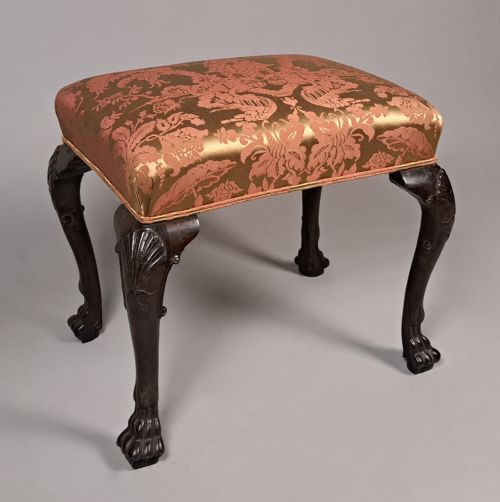
- A furniture leg that curves outward at the knee and tapers inward toward the ankle, ending in a pad, claw, or hoof foot. This form provides structural strength without heavy bracing.
- Sgabello
- A light wooden chair featuring solid side panels or trestles instead of conventional legs. The style originates from the Italian Renaissance but appears in Irish 18th-century hall seating.
- Gainsborough chair
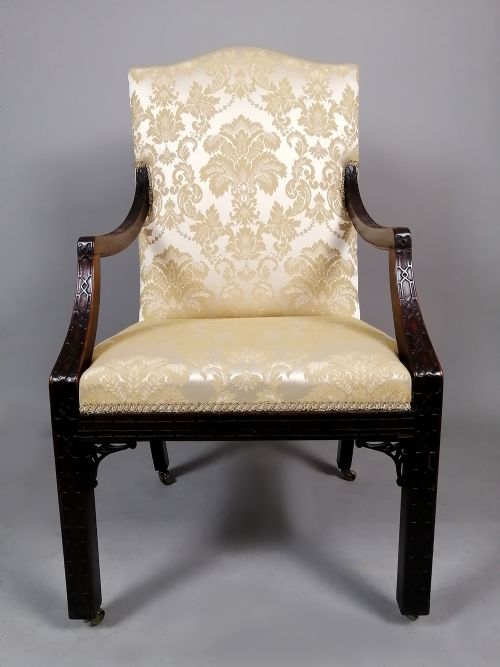
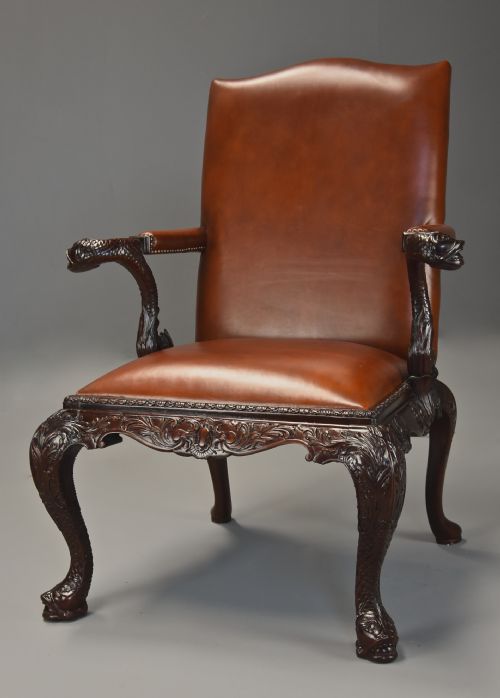
- A wide, open-armed armchair with a padded back and seat, designed for writing desks or libraries. The form typically stands on four legs connected by stretchers.
- Corner chair
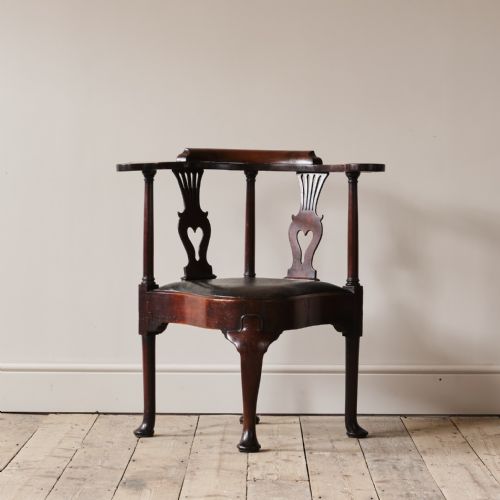
- A chair designed to fit into the corner of a room, featuring a continuous semi-circular arm rail supported by turned columns and a central leg at the front.
- Armorial
- A painted or carved coat of arms displayed upon furniture, often marking the family lineage of the original owner.
George II Seating: Frequently Asked Questions
How do I spot a revival piece?
Revival seating is identified by examining the timber's internal weathering, tool marks, and construction techniques, which often align with 19th- or 20th-century workshop practices rather than 18th-century methods.
Makers working in the Victorian and Edwardian eras utilised machine-sawn components and standardised joints that differ subtly from the hand-Hewn frames of the original period.
Are these chairs comfortable?
The comfort of george ii seating depends entirely on the upholstery webbing, springs, and stuffing density within the seat frame.
Original dining and hall chairs offer firm, upright seating intended for formal dining, while library armchairs and Gainsborough chairs provide deeper, more relaxed proportions for prolonged sitting.
Can I use these in a modern room?
These forms blend easily into contemporary interiors due to the warm tones of walnut and mahogany and the clean lines of cabriole legs.
Pairing a single side chair or a library armchair with minimalist surroundings highlights the timber grain and the sculptural quality of the 18th-century silhouette.