

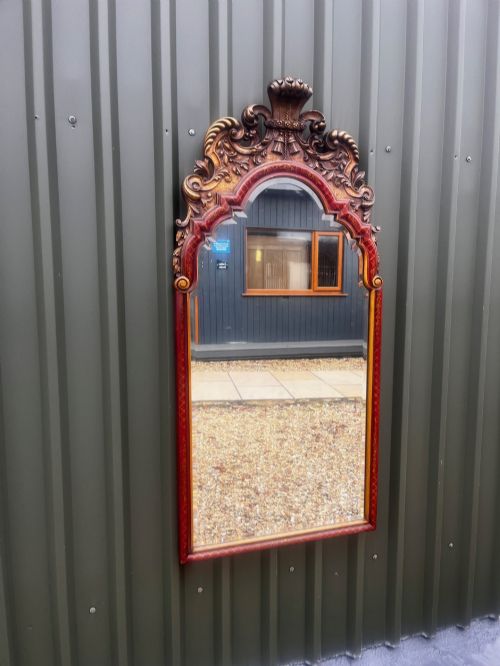
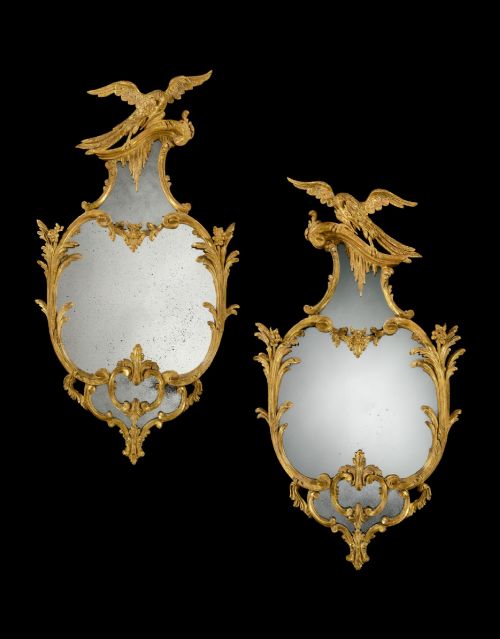
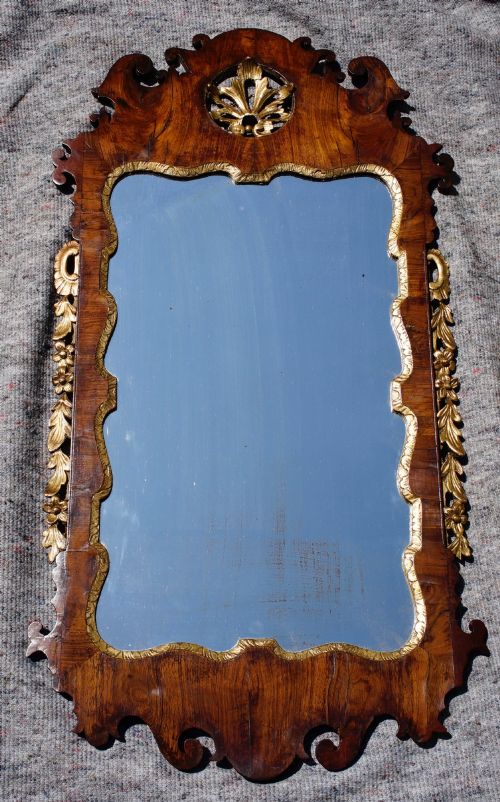
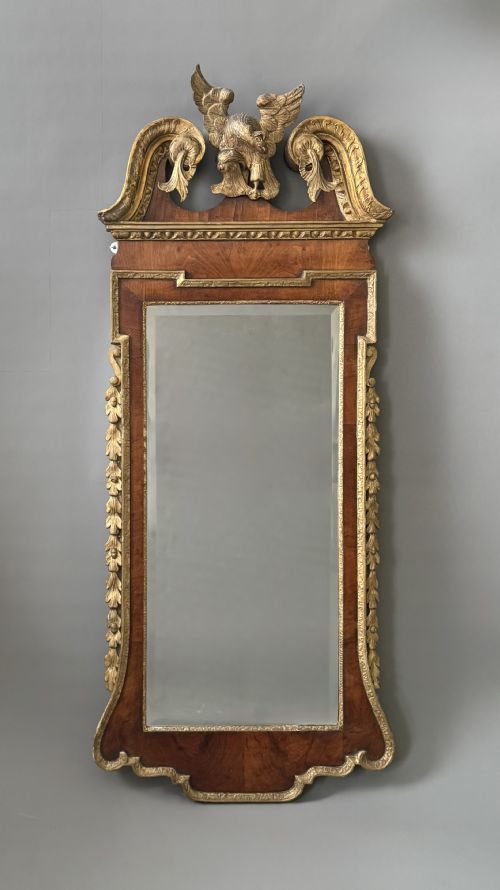
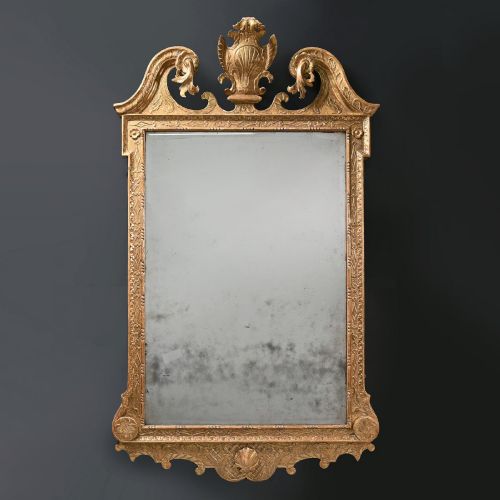
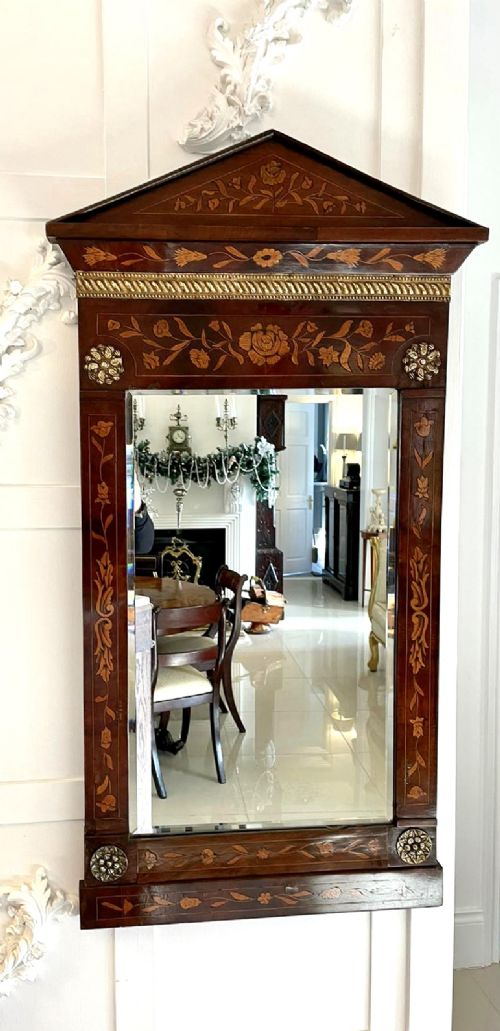
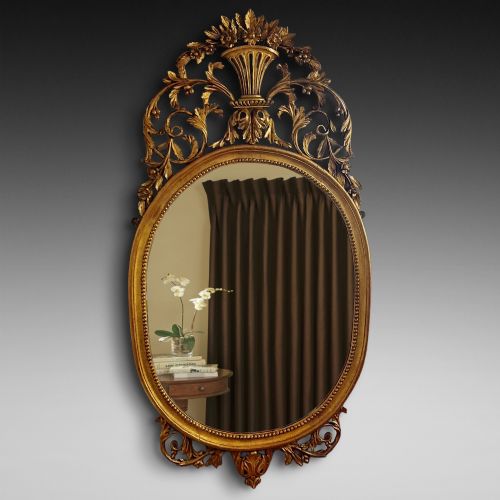
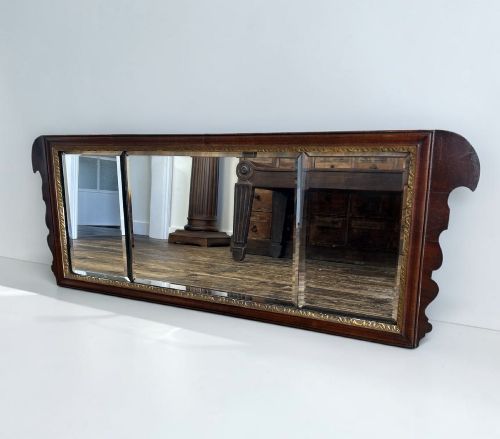
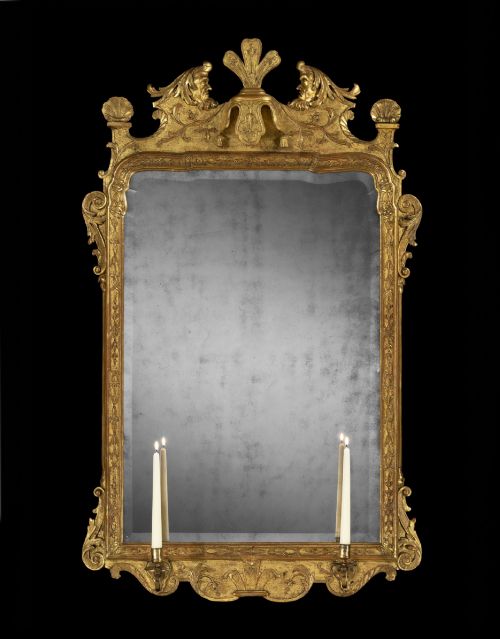
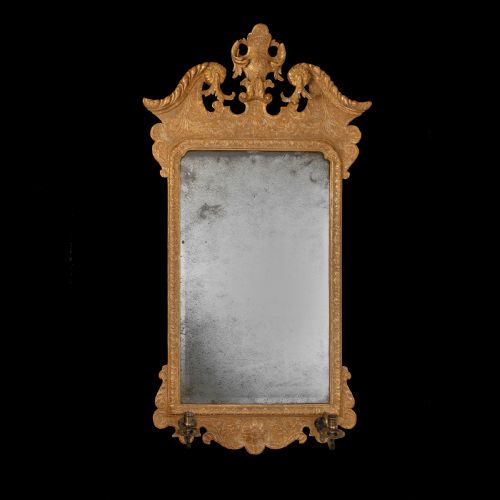
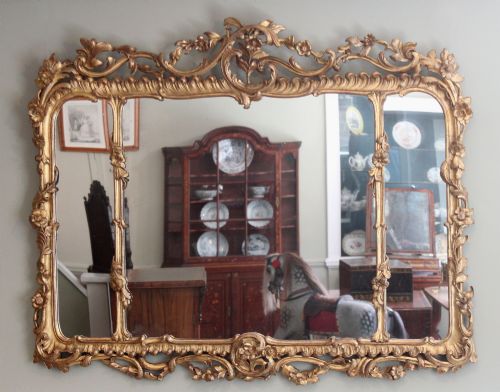
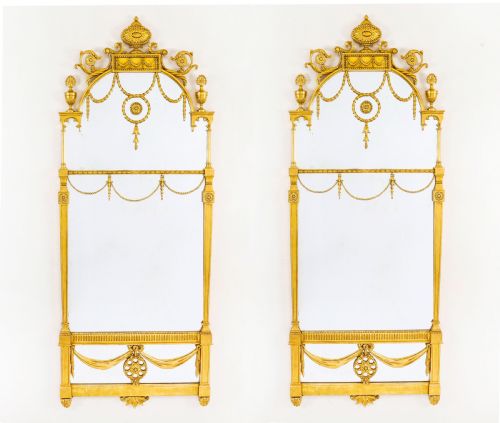
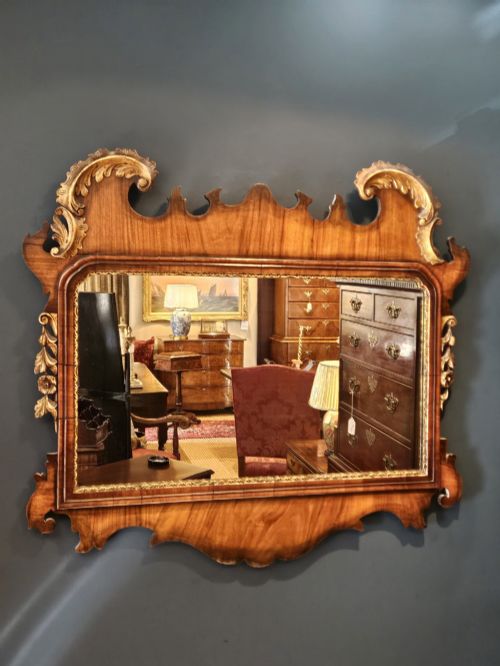


George I Wall Mirror
A george i wall mirror brings early eighteenth-century proportion and warm timber grain into a room, offering both decorative presence and reflective light.
How They Were Made
Maker workshops constructed primary frames from dense hardwoods like walnut and mahogany, often applying thin layers of gold leaf over carved gesso details. Parcel gilt highlights enhanced the carved architectural motifs and wooden grain.
Glass plates were silvered by hand, resulting in characteristic imperfections and subtle distortions across the reflective surface. Fretwork panels were shaped using delicate fretsawn techniques, creating intricate pierced silhouettes.
What Varies in Quality
The degree of hand-carving intricacy distinguishes standard workshop output from exceptional cabinet work, particularly in the depth and sharpness of gesso foliage. Original mirror plates and untouched backing boards retain higher historical integrity than replaced elements.
Proportion and scale dictate visual success, where well-balanced margins between the timber frame and glass plate demonstrate superior design sensibility. The crispness of parcel gilt detailing against the underlying walnut or mahogany grain further marks superior execution.
George I Wall Mirror Retail Price Guide 2026
Typical asking prices for george i wall mirror among the pieces listed under this phrase on Sellingantiques today, from the lower quarter to the upper quarter. They describe what is for sale here now, not the wider market.
Listings feature walnut, mahogany, and giltwood frames spanning from the eighteenth century through nineteenth-century revival periods.
John Belchier·Benjamin Goodison·William Kent
The George I Wall Mirror Glossary
- Gesso
- A prepared plaster mixture applied to wood frames before gilding. This substance was built up in layers to receive crisp carved details.
- Parcel gilt
- A decorative technique where specific areas of a wooden frame receive gold leaf while the underlying walnut or mahogany remains exposed.
- Fretwork
- Openwork ornamentation cut with a thin saw from thin boards. This technique creates geometric or figurative patterns along the outer borders.
- Pier mirror
- A tall vertical looking glass designed specifically to hang on the wall space between two windows. These pieces often matched console tables placed below them.
- Triple plate
- A mirror configuration utilising three separate adjoining glass sections within a single frame. This layout widens the reflective surface without requiring a single massive sheet of glass.
George I Wall Mirror: Frequently Asked Questions
How do I identify a true period piece?
Examination of the timber backing, construction pegs, and silvering on the glass reveals age-related indicators. Original surfaces display authentic oxidation and wear patterns consistent with eighteenth-century production.
Secondary characteristics include the weight of the primary walnut or mahogany boards and the hand-mixed composition of the underlying gesso layers.
Where should I hang a pier mirror?
These tall vertical glasses suit placement above low furniture pieces, mantelpieces, or narrow wall spaces between architectural openings. Their original purpose involved maximising light reflection between windows.
Positioning the glass at eye level ensures balanced interaction with the surrounding room proportions and light sources.
Are later revival pieces considered authentic antiques?
Nineteenth-century revival examples represent distinct historical periods of craftsmanship in their own right, often replicating earlier eighteenth-century forms with considerable skill. These items carry their own value based on age and execution quality.
Distinguishing between original Georgian production and later nineteenth-century interpretations relies on examining tool marks and timber ageing.
How do I care for historic giltwood surfaces?
Maintenance requires dry dusting with a soft brush, avoiding any moisture, chemical polishes, or abrasive cloths that might damage the fragile gold leaf. Preserving the original gilding depends on gentle handling.
Stable indoor humidity prevents the underlying gesso from cracking or separating from the wooden frame foundation.