
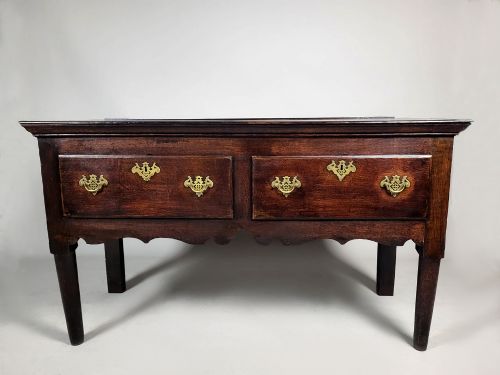

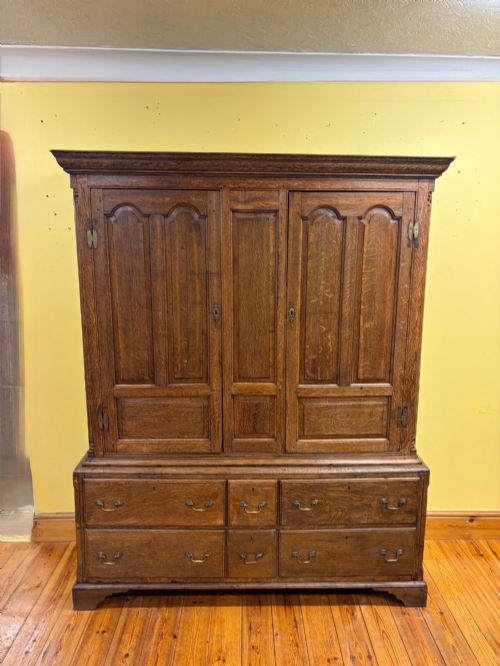
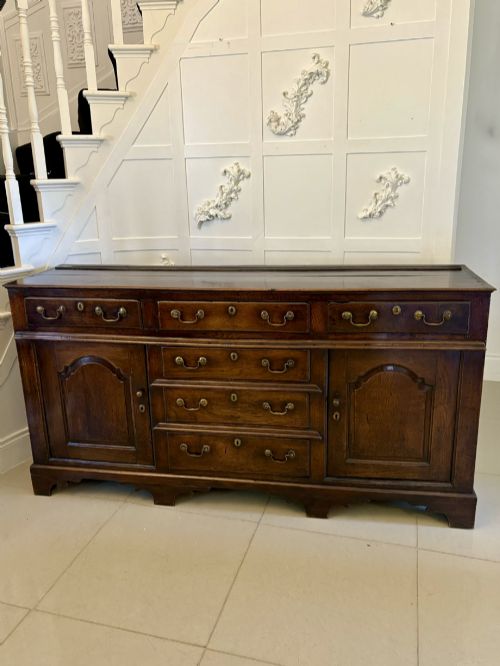
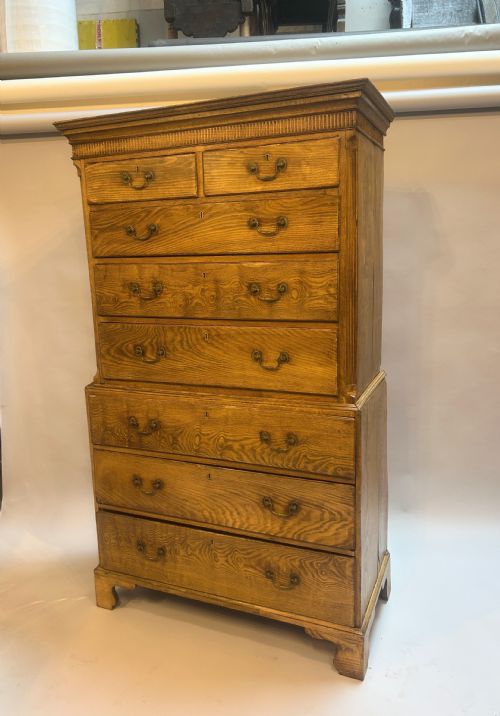

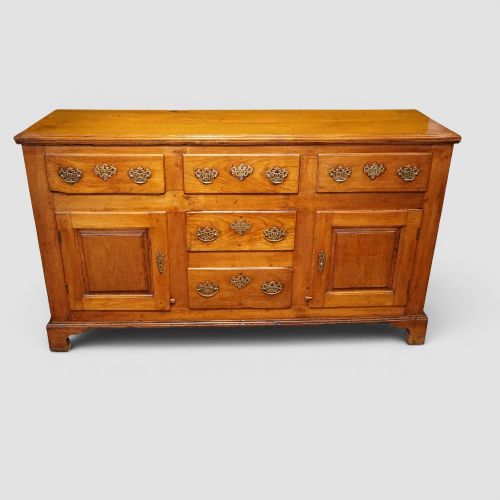
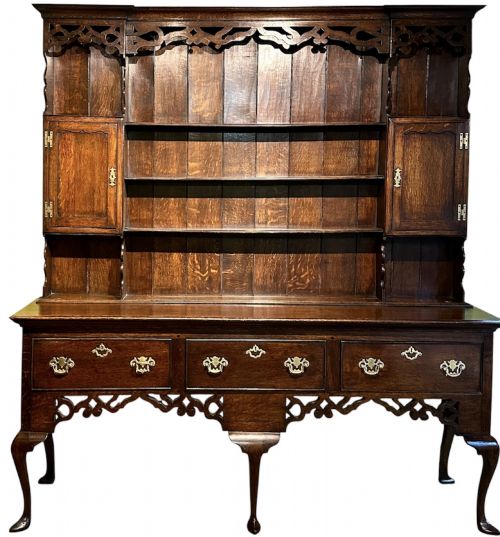
George I Oak Dresser
A george i oak dresser brings solid early timber and functional storage into a room, offering both display shelves and deep base drawers.
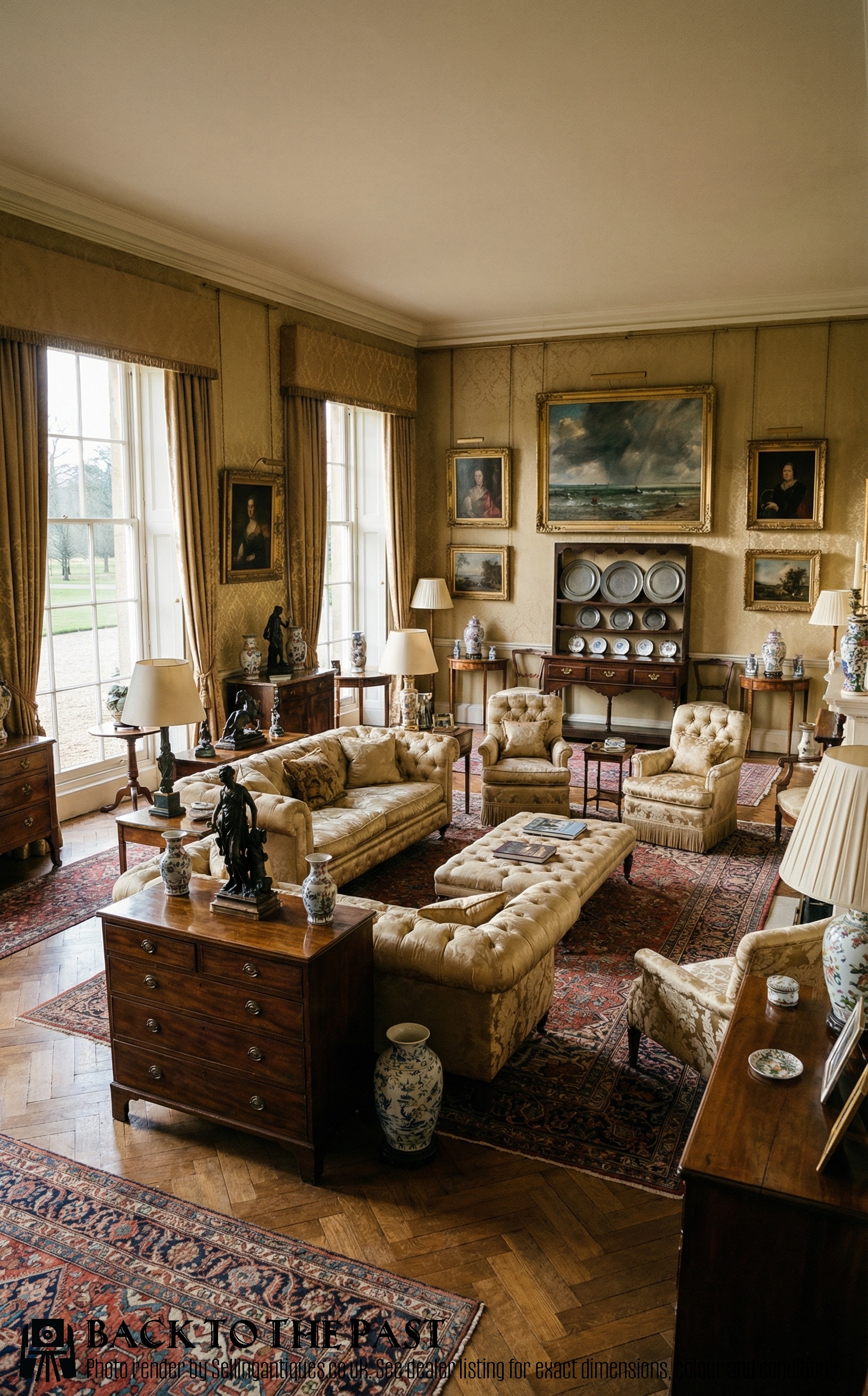
George I Oak Dresser
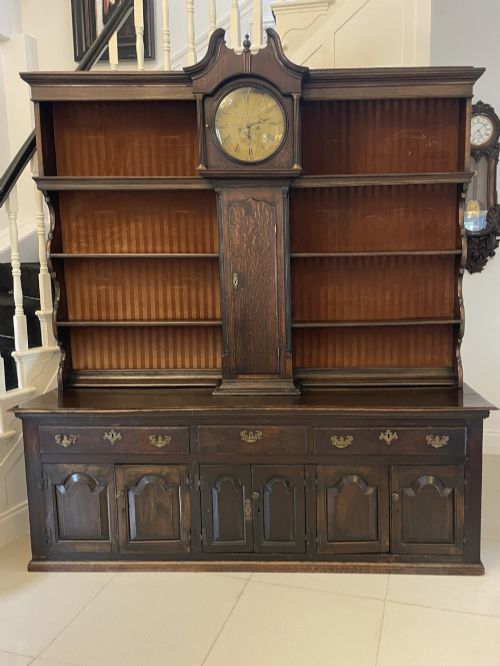
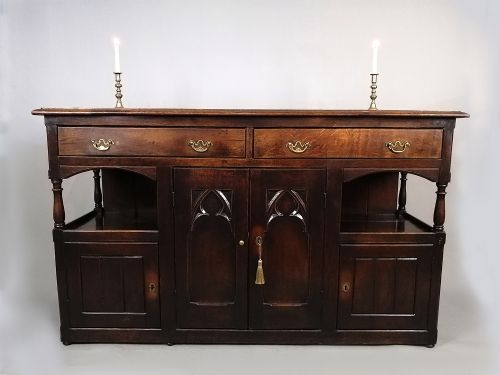
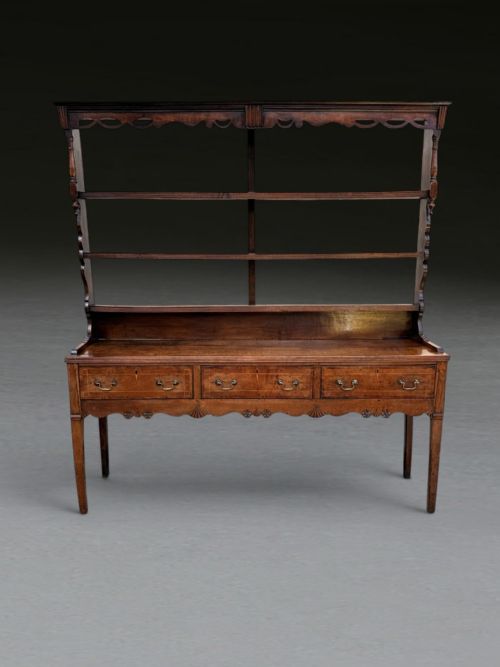
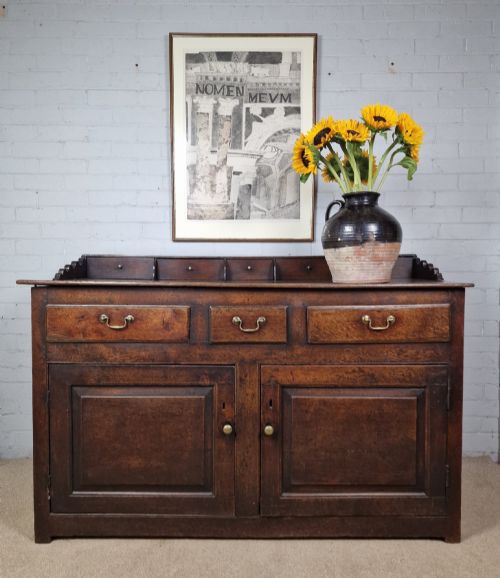
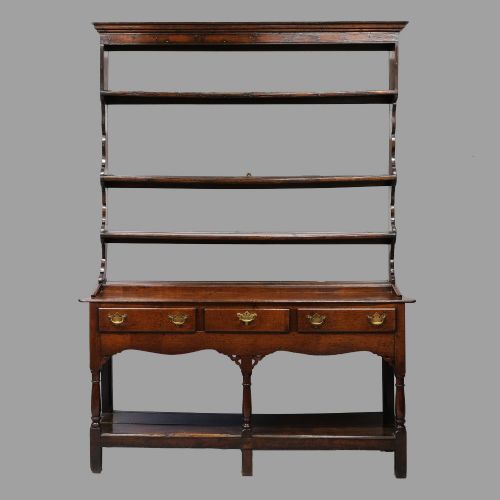
A george i oak dresser is a substantial utilitarian piece originating primarily from the eighteenth century, built to store and display household provisions. The examples found here span diverse forms including open potboard bases, two-part designs with plate racks, and low dresser variants.
Most pieces encountered in this category date from the broader Georgian era, incorporating styles from George I through to George III and occasionally extending into later nineteenth-century revivals. They function today as anchor furniture in dining spaces and hallways, retaining their historic utility.
Materials and construction methods
Solid oak forms the primary structural material across these pieces, frequently complemented by secondary timbers such as fruitwood, cherrywood, or mahogany in specific decorative elements. Cabinetmakers utilised robust mortise and tenon joinery to endure heavy daily use in domestic kitchens and country houses.
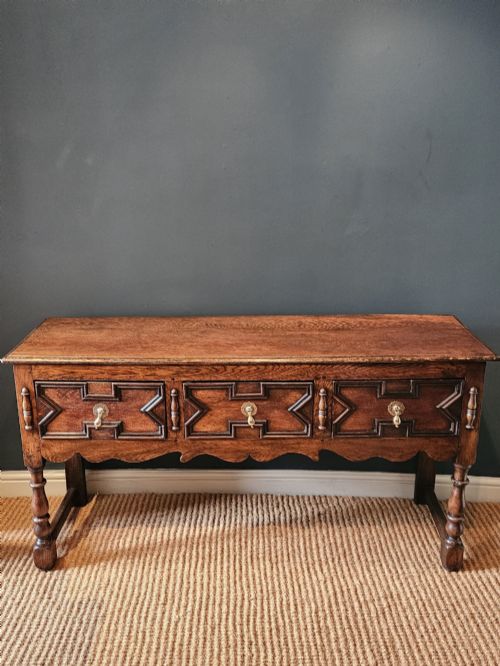
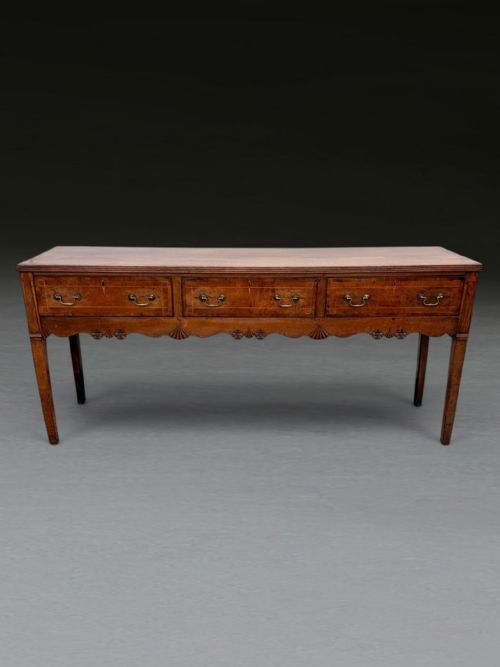
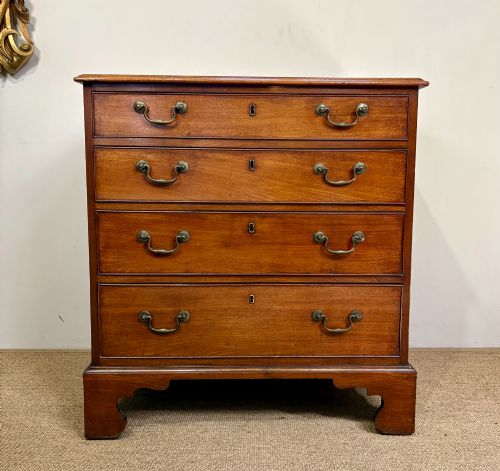
Metal fittings typically consist of brass drop handles and escutcheons, often attached to cockbeaded or geometric moulded drawer fronts. Potboards and open racks were constructed to bear the weight of pewter and ceramic plates, showing hand-planed surfaces and pegged joints.
Listings span multiple centuries, capturing forms from 17th-century vernacular pieces to 19th-century Gothic revival interpretations in oak and fruitwood.
Evaluating quality and proportion
Quality reveals itself in the figuring of the timber and the retention of original brasses rather than surface polish. Pieces featuring crisp geometric mouldings, untouched potboards, and harmonious proportions command higher regard among collectors.
The integration of the upper plate rack with the lower base distinguishes standard utility items from superior country house examples. Alterations to feet, replacement boards, or married upper and lower sections shift a piece away from its original state.
The George I Oak Dresser Glossary
- Potboard
- An open lower shelf beneath a dresser base traditionally used for storing pots and large utensils. This feature defines many vernacular and country house examples.
- Plate rack
- The wooden shelving unit mounted on top of a dresser base, designed with grooves to hold plates upright for display. These are frequently detachable from the base section.
- Geometric moulding
- Raised wooden detailing applied to drawer fronts in repeating patterns, characteristic of early eighteenth-century cabinet work. It adds architectural depth to flat surfaces.
- Lowboy
- A small table with drawers, often featuring cabriole legs, serving a similar domestic function to a miniature dresser base. They appear frequently alongside larger case furniture.
- Cockbeading
- A thin, rounded strip of wood projecting around the edge of a drawer front. This technique protects the drawer edges from impact and frames the opening.
George I Oak Dresser: Frequently Asked Questions
How do I date a george i oak dresser?
Dating relies on examining construction methods, timber choice, and hardware styles. Early pieces often feature hand-pegged joints, board backs, and geometric mouldings characteristic of the early eighteenth century.
Later variations introduce mahogany crossbanding, different drawer configurations, and distinct brass handle designs that reflect the transition through the Georgian period.
Were plate racks original to these dressers?
Many dressers were constructed as two-part items where the rack and base were designed together. However, racks were also built separately or married to bases at later dates.
Checking the timber grain, wear patterns, and fixing points helps determine whether the upper rack and lower base share the same history.
How should I care for antique oak?
Antique oak benefits from stable indoor humidity and protection from direct sunlight, which can dry out and fade the timber. Regular dusting with a dry, soft cloth maintains the finish without needing heavy polishes.
Applying a traditional beeswax sparingly helps nourish the wood and preserves the natural patina accumulated over centuries of use.
What is a potboard base?
A potboard base is a dresser configuration featuring an open shelf situated near the floor beneath the main bank of drawers. This open space allowed households to store heavy earthenware and metal pots off damp flagstone floors.
Today, this lower shelf provides an ideal platform for displaying large decorative objects or baskets.